The Scottish Fairy Book

scots01.jpg

A post with some connection to the main news of the week, namely the vote for Scottish independence. At the time of writing the outcome is still in a quantum superposition between Yes and No. I’ve lived in England all my life but I’m half-Scottish (and a quarter Welsh) so the question has a personal relevance beyond being a citizen of the United Kingdom. For the record I would have voted Yes if I’d had the opportunity.

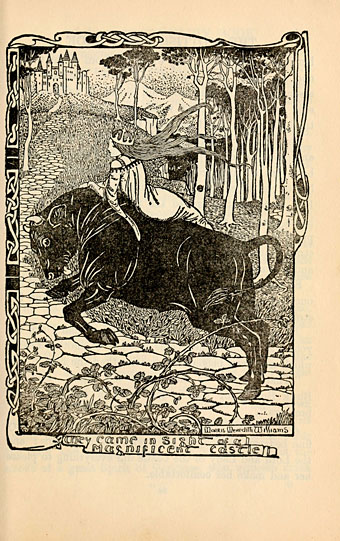
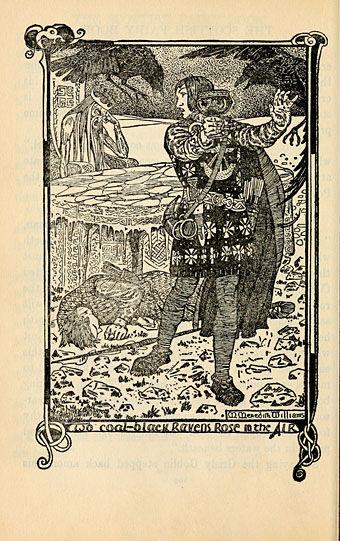
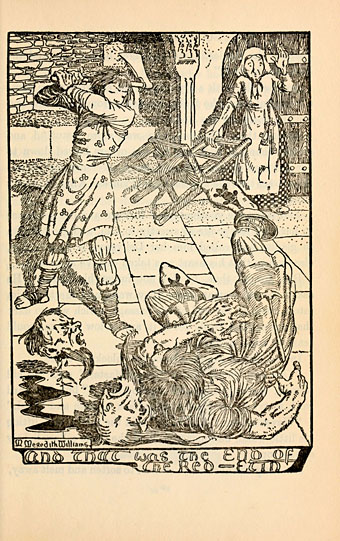
The Scottish Fairy Book (1910) is a popular retelling by Elizabeth Grierson of fairy stories and folk tales. The illustrations are by Morris Meredith Williams (1881–1973), an artist who was born in Wales but lived in Edinburgh for several years. This is only a small selection of Williams’ illustrations for the book which also include many half-pages, vignettes and two self-contained pictorial sequences: Times to Sneeze, and a dialect version of Monday’s Child. Browse the rest of the book here or download it here.

scots02.jpg

scots03.jpg

Continue reading “The Scottish Fairy Book”

The art of Fabrizio Clerici, 1913–1993

clerici1.jpg

Un istante dopo (1978).

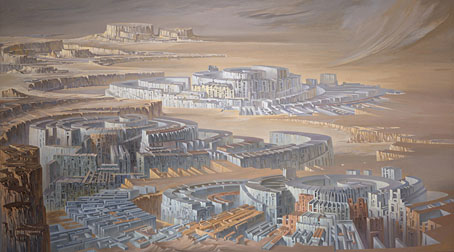
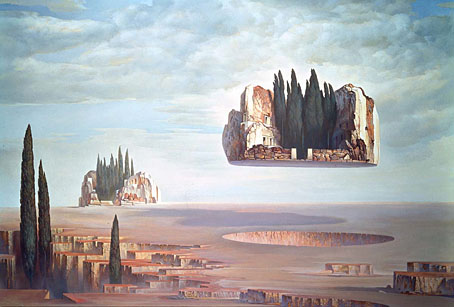
An Italian painter of the fantastic who’s managed to stay off my radar for one reason or another despite doing many of the things I like to see: weightless structures, imaginary architecture, and (towards the end of his career) a series of variations on Arnold Böcklin’s endlessly adaptable The Isle of the Dead. The latter paintings are some of the best Böcklin variants I’ve seen. These alone would have made him worthy of attention but the rest of his oeuvre is an equally accomplished development of late Surrealism (or, if you need another category, Fantastic Realism). The official website is a very good one so there’s plenty more to see. (Thanks to Michelangelo for the tip!)

clerici2.jpg

La tromba d’aria (1965).

clerici3.jpg

Latitudine Böcklin (1974).

Elsewhere on { feuilleton }
The fantastic art archive

Previously on { feuilleton }
A Picture to Dream Over: The Isle of the Dead
The Isle of the Dead in detail
Arnold Böcklin and The Isle of the Dead

The art of Victor Linford, 1940–2002

linford1.jpg

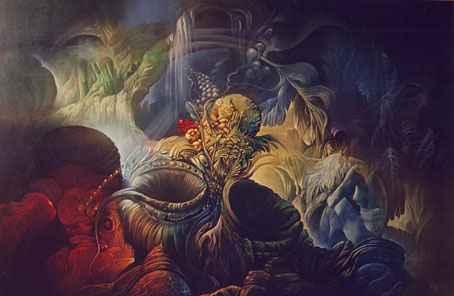
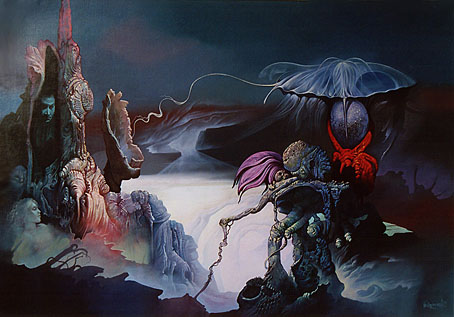
Victor Linford was a British artist who relocated to the Netherlands so his work seems to be more familiar there than elsewhere. According to the Johfra Museum site, Linford was part of the Dutch Meta-Realist group in the 1970s, along with Johfra Bosschart himself and five other painters. Johfra’s art has been mentioned here before but I hadn’t heard of the others, Linford included. You’d think someone who spent so much time producing detailed oil paintings of surreal/alien landscapes would be better known. Some of his works were used on a series of Dutch sf paperbacks in the 1970s, unsurprisingly when many of his paintings resemble the alien landscapes being produced by Bruce Pennington for British sf books throughout the decade.

There are two main sites showing Linford’s works, here and here. I prefer the landscapes that don’t have too many human figures inserted into them but even the ones that do are worth a look. (None of the paintings are titled or dated.)

linford2.jpg

Continue reading “The art of Victor Linford, 1940–2002”

Weekend links 222

wicker.jpg

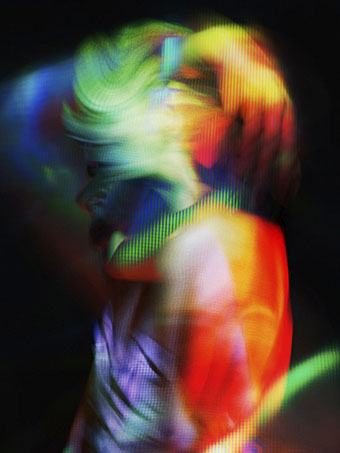
A self-portrait by Nadia Wicker from her Projectie series.

• “And boy, did that Rain Parade sleeve look cool with its picture of the insouciant band sitting in front of large hot-house (or glass palace), the sky behind them tinted a sickly shade of apocalypse pink…” Joe Banks on the Rain Parade’s finest moment, Explosions In The Glass Palace.

• “…there are pleasures to be had from books beyond being lightly entertained. There is the pleasure of being challenged; the pleasure of feeling one’s range and capacities expanding…” Rebecca Mead on the pleasure of reading to impress yourself.

• “If Gengoroh Tagame performed the acts he drew in his comics he’d probably be dead or in jail,” says Zac Bayly, interviewing Tagame for BUTT.

Crime does not fascinate James Joyce as it fascinates the rest of us—the suggestion of crime dismays him. He tells me that one of his handicaps in writing Work in Progress is that he has no interest in crime of any kind, and he feels that this book which deals with the night-life of humanity should have reference to that which is associated with the night-life of cities—crime. But he cannot get criminal action into the work. With his dislike of violence goes another dislike—the dislike of any sentimental relation. Violence in the physical life, sentimentality in the emotional life, are to him equally distressing. The sentimental part of Swift’s life repels him as much as the violence of some of his writing.

Padraic Colum attended Joyce’s 47th birthday party.

• I’m currently reading The Wanderer, “a weird document” by Timothy J. Jarvis, which is officially published this week.

The Changes, another remarkable children’s TV series from the 1970s, is out on DVD next week.

Sir Richard Bishop has made all 14 of his solo albums available as free downloads.

• “How long do CDs last? It depends, but definitely not forever,” says Laura Sydell.

• “Readers absorb less on e-readers than on paper, study finds

• Book designer Craig Mod wants to talk about margins.

• Mix of the week: a mix for The Quietus by Helm.

Ozu’s passageways

• The Rain Parade: No Easy Way Down (BBC TV, 1984) | No Easy Way Down (studio, 1984) | No Easy Way Down (Tokyo, 1984)

Invasion, a film by Hugo Santiago

invasion1.jpg

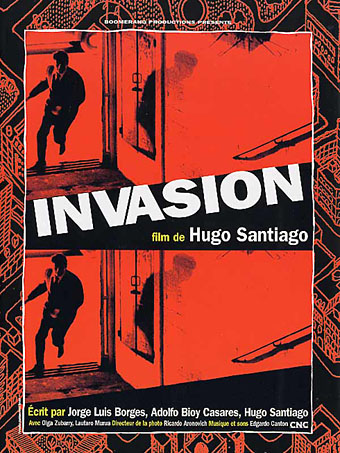
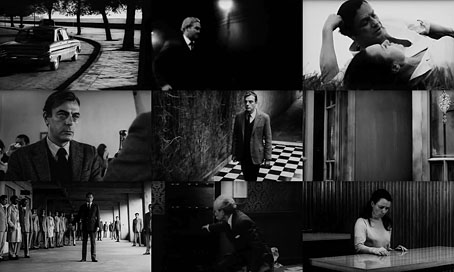
From a film adapted from Borges to a film co-written by the man himself. Invasion (1969) is not to be confused with the British science fiction film of the same name made three years earlier, this is an Argentinian production and a much stranger piece of work. Hugo Santiago is an Argentinian director who moved to France where he worked for a while as assistant to Robert Bresson before establishing himself with this debut feature. Borges’ co-writer was his friend and regular collaborator Adolfo Bioy Casares.

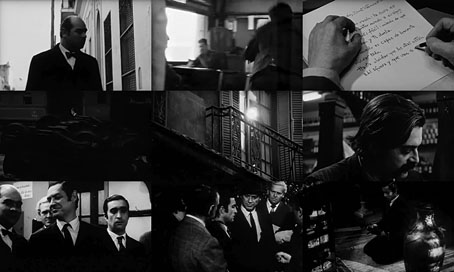
I’ve not watched this yet, the two copies on YouTube are in Spanish with no subtitles but this is a blog with an international readership so there’s no need to exclude it on that account. Even without subtitles the film is visually intriguing, possessed of a moody and enigmatic style which online reviewers compare favourably to Antonioni and some of the Nouvelle Vague directors.

invasion2.jpg

In 1957, a small group of middle-aged men fight a clandestine battle against forces quietly invading and taking control of their city, Aquilea. Enigmatic in its story-telling, Hugo Santiago’s once-lost film obscures the motivations of either side, leaving only a series of moves and counter-moves that evokes past dictatorial oppression and those still to come.

This post at Make Mine Criterion—a site dedicated to potential Criterion DVD releases—goes into considerable detail examining the film they describe as “part fantasy, part science fiction, part political thriller”. Given this and the rest of the film’s evident qualities it’s surprising it isn’t better known. I only have one Borges biography, The Man in the Mirror of the Book (1996) by James Woodall, but there’s no mention in there of Santiago’s film or of The Others (1974), a later Santiago feature that was also scripted by Borges and Bioy Casares. For those wishing to pursue the film further there are subtitles available if you can be bothered searching for them then trying to synch them up with a YT rip. It might be better to look for a Spanish DVD and hope it has a good choice of subtitles.

invasion3.jpg

Previously on { feuilleton }
Spiderweb, a film by Paul Miller
The Library of Babel by Érik Desmazières
Books Borges never wrote
Borges and I
Borges documentary
Borges in Performance