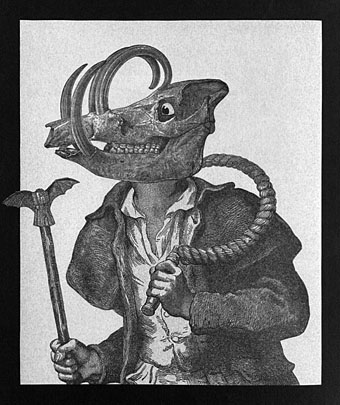
Typografia, 1903–04

typografia01.jpg

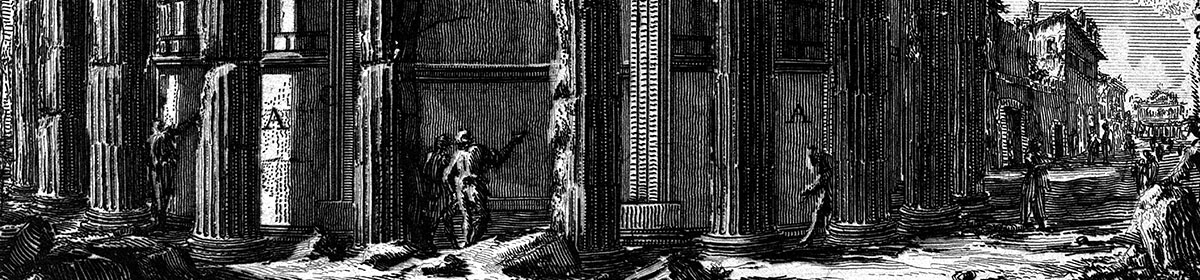
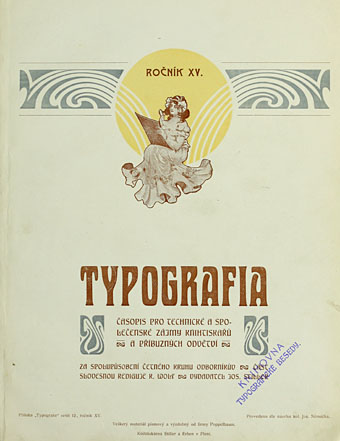
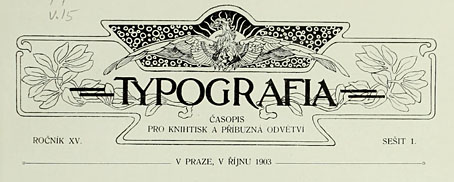
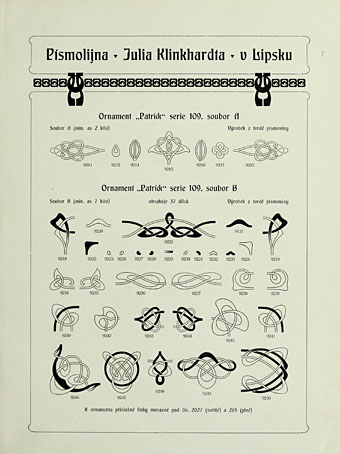
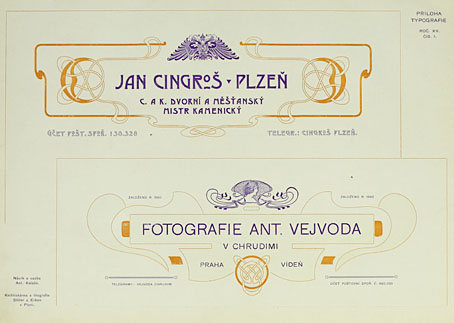
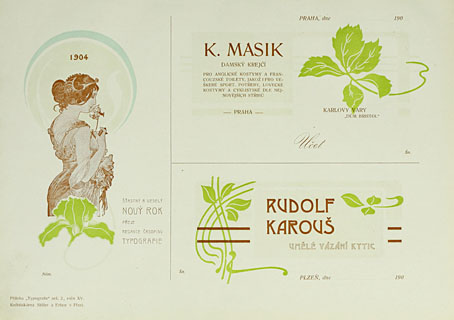
The Internet Archive has a few bound volumes of this Czech print journal in its collection, although not a complete run, unfortunately. The most interesting one for me is Volume 15 which covers the years 1903 to 1904, a period in which the Art Nouveau style predominates. Prague is often listed as a centre of Art Nouveau but good examples of this aren’t always easy to find. Typografia does at least demonstrate that all the familiar elements—sinuous borders, floral motifs, stylised female figures—had found their way into Czech design even if many of the typefaces being showcased had their origins in Germany.

typografia02.jpg

typografia03.jpg

typografia04.jpg

typografia05.jpg

Continue reading “Typografia, 1903–04”

Gene Szafran album covers

szafran01.jpg

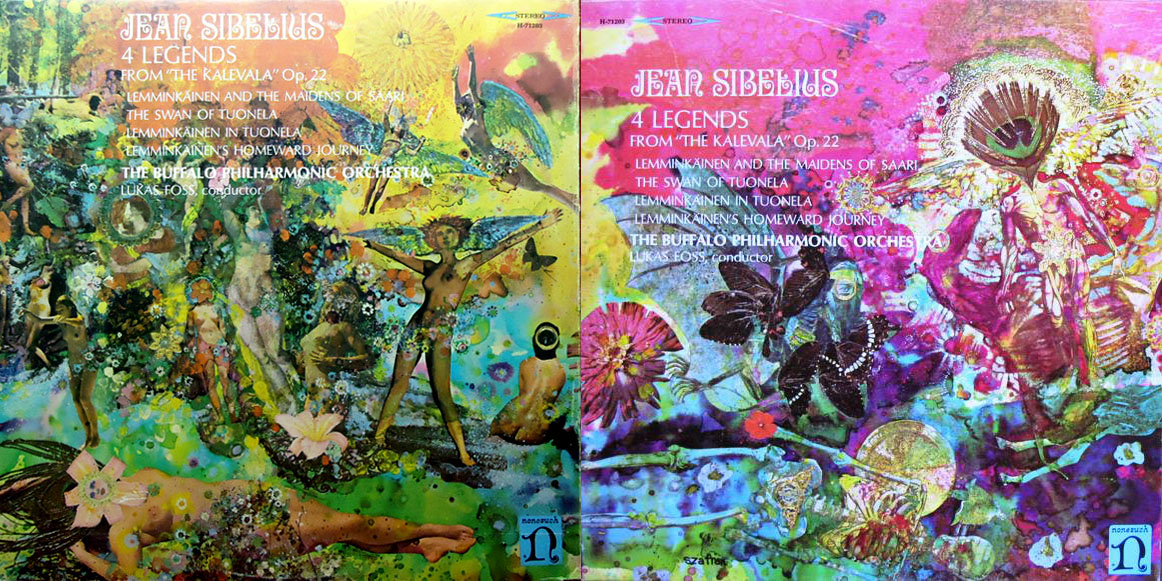
Sibelius: 4 Legends From “The Kalevala”, Op. 22 (1968); Buffalo Philharmonic Orchestra, Lukas Foss.

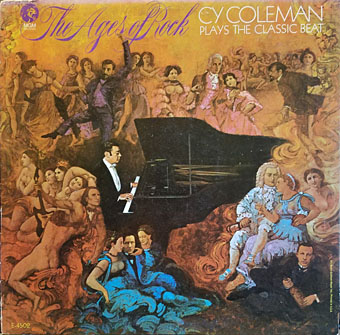
Gene Szafran (1941–2011) was an American artist who painted illustrations for magazines and provided cover art for many science-fiction paperbacks throughout the 1970s. He shared with fellow paperback artist Bob Pepper a parallel career producing album cover art for Elektra Records and Elektra’s subsidiary for classical recordings and contemporary composition, Nonesuch, the latter contributing to William S. Harvey’s policy of making classical albums look as vibrant and contemporary as their neighbours in the rock sphere. Bob Pepper’s album covers, however, tend to resemble his book covers whereas Szafran’s book covers are simpler in style than his album art which fills out the larger space in a post-psychedelic style that’s often very detailed and done in a variety of media. It took me a while to realise that I’d known Szafran’s name for a long time via his cover for Pictures At An Exhibition by Tomita, the art for which isn’t a painting but a relief sculpture of the head of Tomita-san. A similar use of three-dimensional elements occurs on other album covers, and extends to a form of collage in which painted backgrounds are overlaid with physical objects, a technique which became a common sight in the 1980s but which wasn’t common at all in the 1960s. There might have been more work like this but Szafran’s career was cut short by multiple sclerosis in the late 1970s. Glimmer Graphics has several pages dedicated to his life and art.

szafran02.jpg

The Ages Of Rock (1968) by Cy Coleman.

szafran03.jpg

John Cage: Concerto For Prepared Piano & Orchestra / Lukas Foss: Baroque Variations (1968).

szafran04.jpg

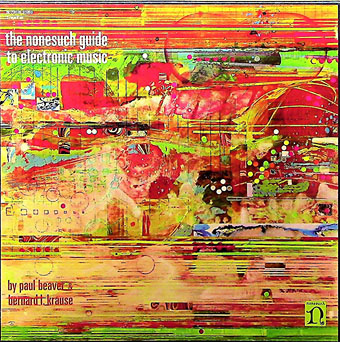
The Nonesuch Guide To Electronic Music (1968) by Paul Beaver & Bernard L. Krause.

szafran05.jpg

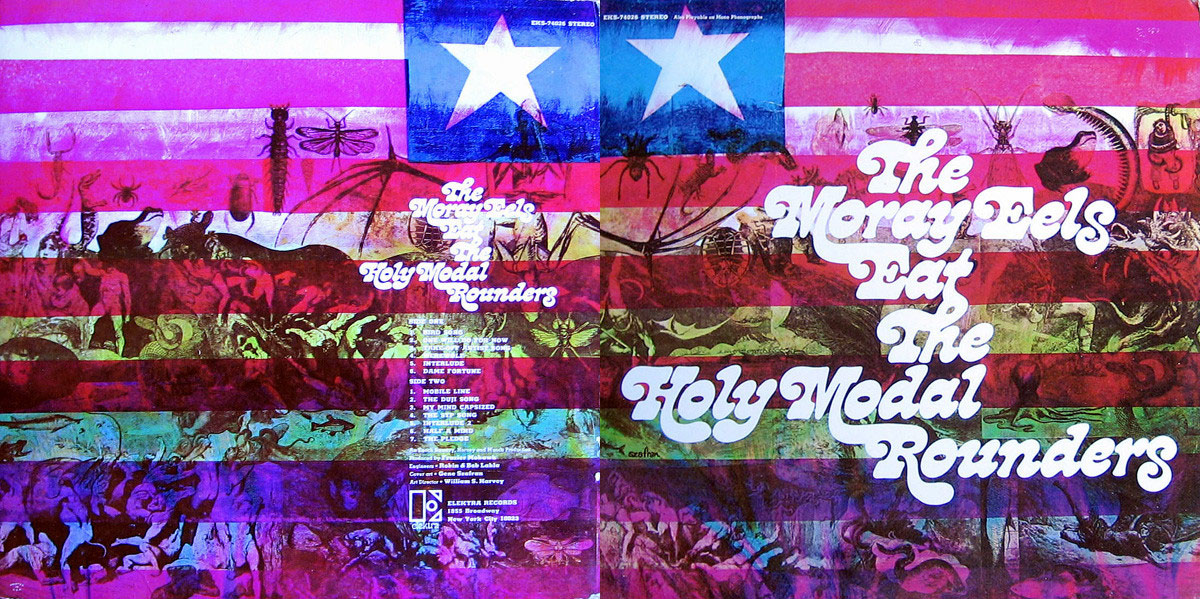
The Moray Eels Eat The Holy Modal Rounders (1968) by The Holy Modal Rounders.

Continue reading “Gene Szafran album covers”

Music for people with three ears

teb.jpg

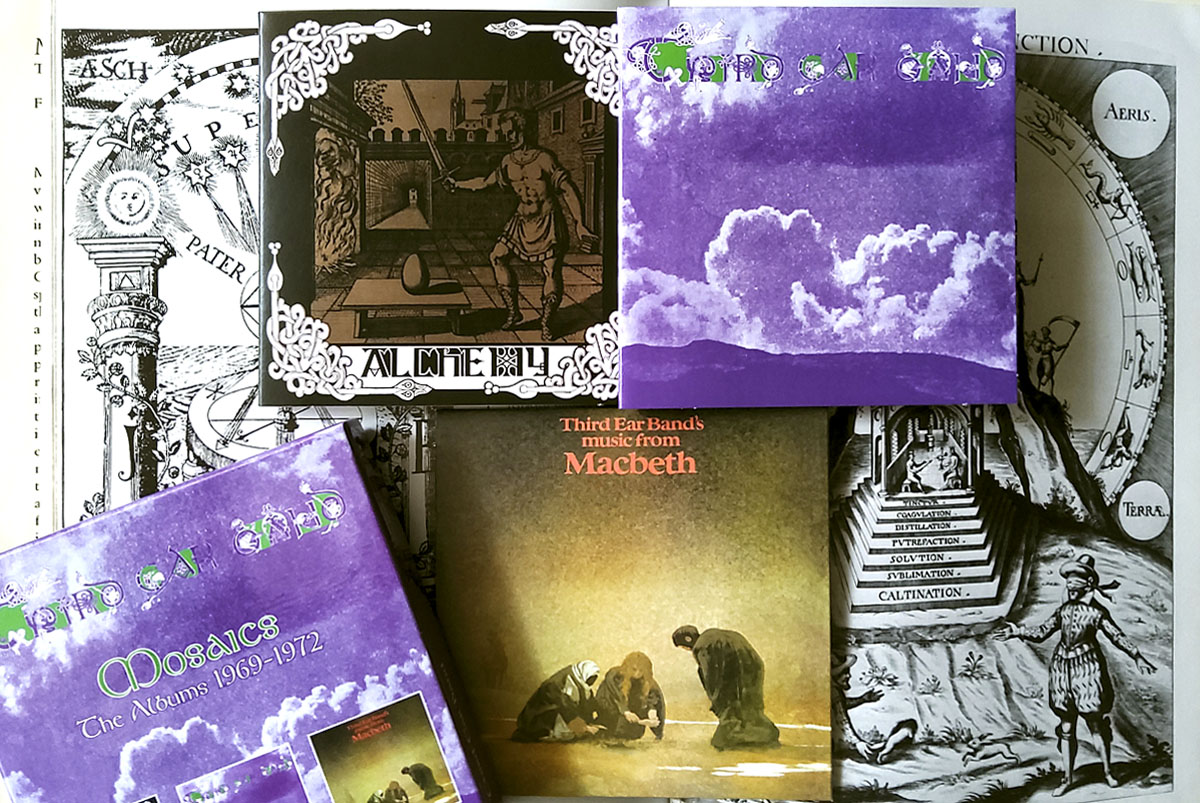
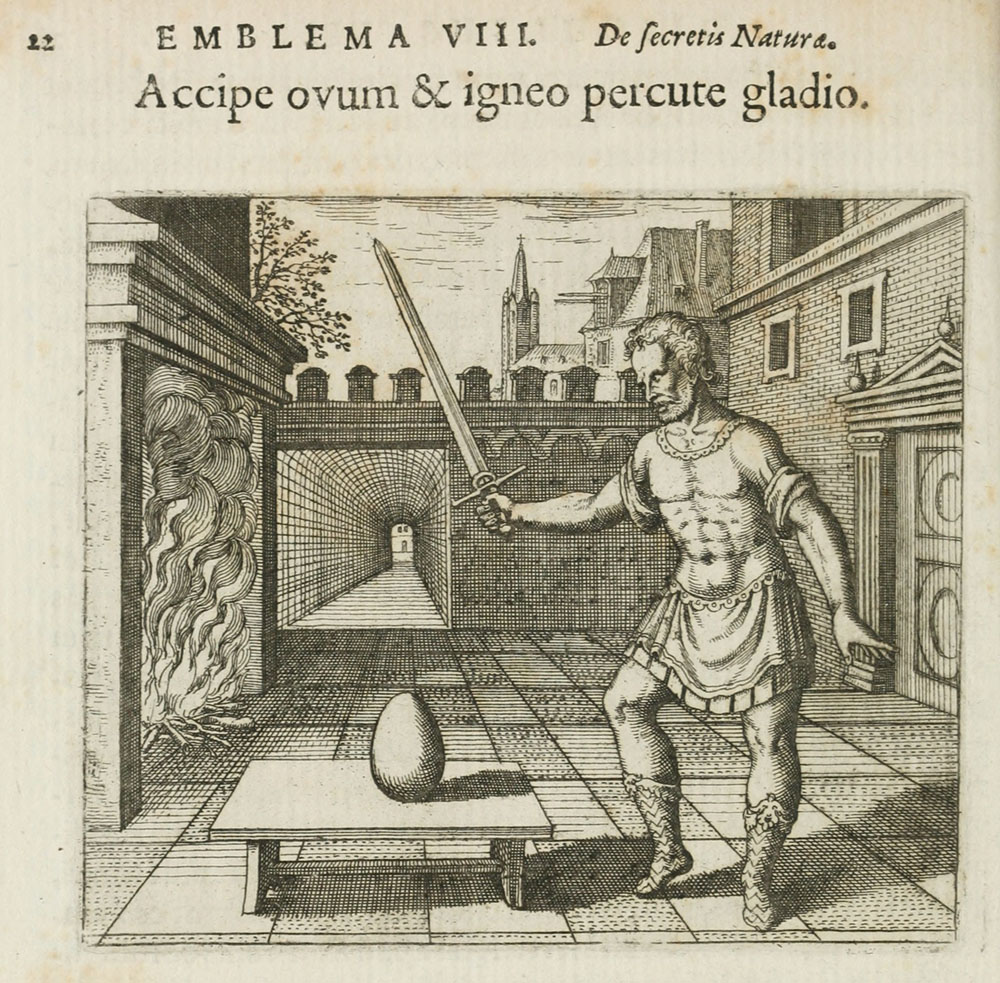
Cherry Red Records this month reissues the first three albums by the unique and wonderful Third Ear Band. I like CDs, and I especially like having them collected into boxes with Japanese-style facsimile sleeves, so this collection is irresistible. The group’s first two albums, Alchemy (1969) and Third Ear Band (1970), still sound timeless despite being products of their time, with the track you’d most expect to sound dated, Ghetto Raga, being free of sitars or Indian pastiche. Third Ear Band music is a kind of improvised folk, predominantly the product of oboe, violin and percussion, which sounds like something the group might have tuned into when they were playing for Druids at ancient sites (Stone Circle and Druid One are further track titles). The first two albums also have the additional attraction for this listener of a heavy emphasis on medieval mysticism, from the Atalanta Fugiens illustration by Matthäus Merian on the cover of Alchemy, and the symbols and astrological diagrams that fill out the inside cover of the second album, to the titles of that album which continue the alchemical theme: Air, Earth, Fire and Water. The group also borrowed some graphics from Aubrey Beardsley when they issued their musical manifesto in 1969.

merian.jpg

Music From Macbeth (1972) is constrained in comparison to the albums that precede it, being subservient to Roman Polanski’s feature film, although there’s more music here than was used in the film. It’s also closer to rock music in places, with occasional fuzzed guitar, a Mellotron, and rumbles from a VCS 3 synthesizer played by a future member of Hawkwind, Simon House. The cover painting by Roger Dean isn’t one of his best. In Views Dean complains that Polanski “got the imagery wrong” for the scenes with the witches, a comment I’ve never understood. Polanski’s film is a naturalistic interpretation of the play which is well-served by the Third Ear Band’s drones and medievalisms. Incidentally, I’m sure the phrase “music for people with three ears” was used on a Harvest records press ad but if it was I’ve been unable to find any evidence of it. Anyone out there know the source?

Previously on { feuilleton }
Night’s black agents
Atalanta Fugiens

Weekend links 580

kausch.jpg

The Collective Lie We All Live By, a cut-paper collage by Allan Kausch from Maintenant 15, A Journal of Contemporary Dada Writing and Art.

• “It’s unusual that an album manages to be at once so much of its moment, yet so much outside it. Time was unmistakably a response to the electronic and synth waves that rose in the wake of punk. It was also a concept album about time travel, which couldn’t have been more pre-punk had it been focus-grouped that way.” David Bennun on Time (1981), ELO’s masterwork of science-fiction pop. The first song on the album, Twilight, is a thundering piece of synth bombast that prefigures Trevor Horn’s equally bombastic productions, and was used to memorable effect in the copyright-infringing animation made in 1983 for the opening of Daicon IV.

• New music: Disciples Of The Scorpion by The Rowan Amber Mill, and Shade by Grouper.

• “Psychedelic spirituality: Inside a growing Bay Area religious movement“.

• “It’s time to farewell this project,” says Ballardian.

• At Wormwoodiana: the seven greek vowels.

• A playlist for The Wire by Douglas Benford.

Norman Blake‘s favourite albums.

Astronomia Playing Cards.

• RIP Dusty Hill.

Time (1973) by David Bowie | Time (1976) by La Düsseldorf | Time (1992) by Lull

Eiko Ishioka album covers

ei01.jpg

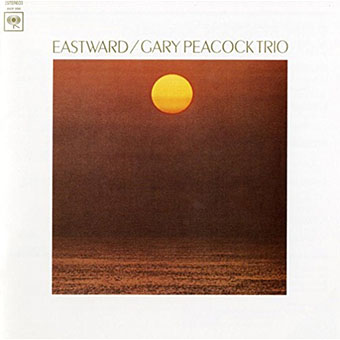
Eastward (1970) by Gary Peacock Trio. Photography by Hiroshi Asada, Tadayuki Naitoh.

Continuing an occasional series about artists or designers whose work has appeared on record sleeves. Also another jazz-related post which includes Herbie Hancock via the V.S.O.P. album.

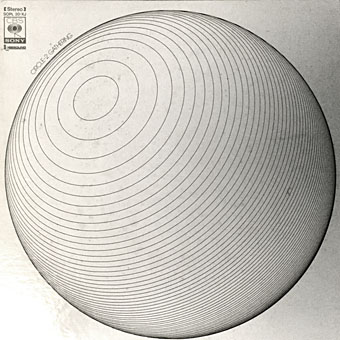
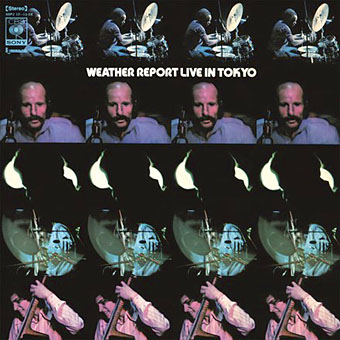
Eiko Ishioka is best known outside Japan for the costume designs she created for feature films, especially those in Francis Coppola’s Dracula, but she also had a parallel career as a graphic designer and art director, working with photographers and other designers on a large number of album covers. The examples here are a partial selection, many of which were created for East Wind, a label established by Nippon Phonogram to promote Japanese artists overseas.
ei02.jpg

Circle 2: Gathering (1971) by Circle. Design by Eiko Ishioka, Seiya Sawayama, Yoshio Nakanishi.
ei03.jpg

Weather Report Live In Tokyo (1972) by Weather Report. Design by Eiko Ishioka, Yoshio Nakanishi.
ei04.jpg

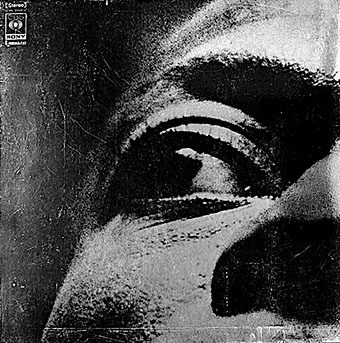
Miles Davis Story Vol. 2 (1972) by Miles Davis. Design by Eiko Ishioka, Yoshio Nakanishi. Photography by Columbia Records Photo Studio, Tadayuki Naitoh.

Black ink on silver foil, something that always looks impressive but doesn’t wear very well. This cover may have led to Ishioka’s work on Tutu (see below).
ei05.jpg

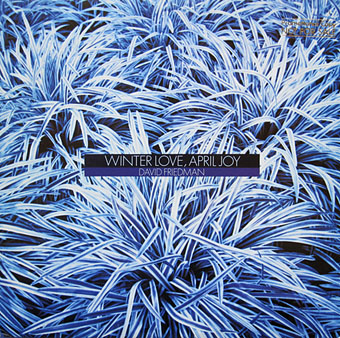
Winter Love, April Joy (1975) by David Friedman. Design by Eiko Ishioka, Motoko Naruse.

Continue reading “Eiko Ishioka album covers”