Weekend links 647

oneill.jpg

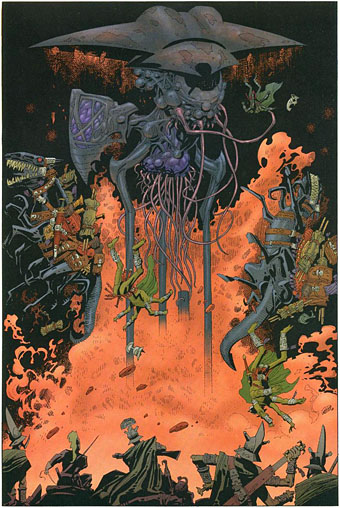
A local dispute on the planet Mars. Art by Kevin O’Neill from The League of Extraordinary Gentlemen.

• “…this image has puzzled enthusiasts of the scientific mystic’s works, both for its obscure provenance and cryptic symbolism. With its pastiche of Renaissance visual style and medieval caption — “A missionary of the Middle Ages tells that he had found the point where the sky and the Earth touch” — the illustration was once thought to have originated centuries before Flammarion published his text.” Hunter Dukes on the enduring mystery of the “Flammarion Engraving”.

• “For Spare, radio, and the waves that carried the music he loved to listen to, were more than just a metaphor for the spirit world. They were an active mode of conveyance for occult energies and vibrations – the swirling, ectoplasmic tendrils from which odd figures emerge in some of his most dense and haunting work.” Mark Pilkington explores Austin Osman Spare’s influence on the world of music.

• At Spine: Design studio Milk & Bone’s designer Alicia Raitt re-imagines all 14 of Kurt Vonnegut’s book covers to celebrate his 100th birthday.

• Farewell to Kevin O’Neill and Nik Turner, both of whom headed to the Western Lands this week.

Mean, moody and magnificent: film noir studio portraits – in pictures.

• Mix of the week: XLR8R Podcast 773 by Roméo Poirier.

• New music: Evergreen by Patrick Shiroishi.

Brainstorm (1972) by Hawkwind | Hurricane Fighter Plane (1985) by Inner City Unit | Brainstorm (1993) by Monster Magnet

The Legend of Charlie Fish

charliefish.jpg

I’ve had several new book covers waiting in the wings for the past few months. The most recent of these, the cover for The Legend of Charlie Fish by Josh Rountree, was made public earlier this week so I can reveal it here.

In this debut, neo-gothic Western novel, an unlikely found family flees to Galveston, Texas, and a psychic young girl bonds with an enigmatic gill-man. While two bounty hunters are determined to profit by the spectacle Charlie Fish, the Great Storm—the worst natural disaster in US history—is on its way.

The brief for this one was to create something similar to the covers I designed for Mike Shevdon’s Courts of the Fayre series. Having already been asked to imitate the look of that series for a Marianne Williamson cover I was a little reluctant to do so again, but the final version of this one feels sufficiently different from the others to stand apart. One advantage of the graphic treatment was being able to use silhouettes to hint at the nature of the “enigmatic gill-man” without being too specific. When the appearance of characters is more alluded to than described you have to take care that your artwork isn’t too literal.

The Legend of Charlie Fish will be published by Tachyon in July 2023.

Twinkle, twinkle little stars

turner1.jpg

Xitintoday (1978) by Nik Turner’s Sphynx.

It’s been a long time since I’ve had a reason to write about Barney Bubbles but I’ve finally worked out why one of his more mysterious album covers looks the way it does.

When Nik Turner was unceremoniously kicked out of Hawkwind in 1976 he headed to Cairo to consider his next move. While there he recorded an hour or two of flute improvisations inside the sarcophagus in the King’s Chamber of the Great Pyramid of Cheops. The resulting tapes provided the basis for his first solo album, Xitintoday, which was released in 1978 on the Charisma label, and credited to Nik Turner’s Sphynx. Steve Hillage produced the album, helping to craft the meandering solos into a suite of songs based on passages from The Egyptian Book of the Dead. Xitintoday is one of the more unusual concept albums from a decade filled with such things. I’ve always liked it, in many ways it’s closer to Hillage’s oeuvre than Turner’s, as well as being very different to anything else in the Hawk-sphere.
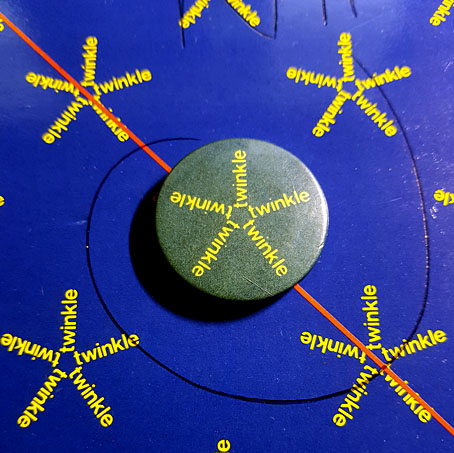
turner2.jpg

A faded promo badge. The ballpoint scrawl is Mr Turner’s autograph.

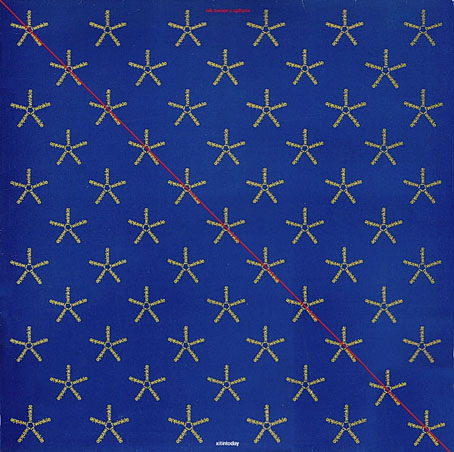
Barney Bubbles’ design for the album is also very different to anything else in the Hawk-sphere, an example of what might be called his High Modernist period, when the hippy motifs and decorative pastiches of his earlier work were replaced with bold, flat colours and playful graphic designs. Xitintoday was released with a square booklet containing lyrics, notes about the mythological theme, and a series of pictures which combine diagrams and Ancient Egyptian reliefs with calligram-like wordplay. The back cover of the album exemplifies the latter, with the word “Day” spelled out in much smaller words reading “Night”; inside the booklet there’s a page for Isis the Moon Goddess where the words “Isis is is is is…” form a curve around a photograph of the Moon. The cover design continues the cosmic theme with a field of star shapes in which each star is created by the word “Twinkle”. The star field makes sense in the context of the booklet but I’ve wondered for a long time why Barney Bubbles thought it was a suitable cover design rather than simply being another booklet page.
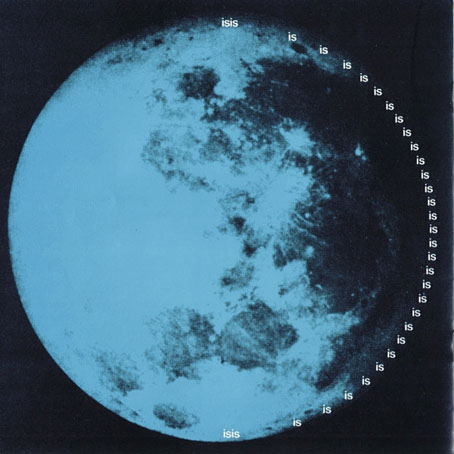
turner3.jpg

The solution arrived last week when work-related research had me looking through old design books for examples of Ancient Egyptian ornamentation. One of these, The Grammar of Ornament (1856) by Owen Jones, contains several pages of full-colour plates filled with Egyptian pattern samples.
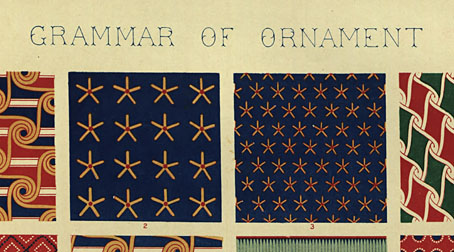
egypt1.jpg

And on one of those pages there are these two squares which made me think immediately of the Xitintoday cover. This might seem tenuous when the cover design doesn’t feature any red dots but Barney Bubbles was an avid Egyptophile, avid enough to name his son after one of the Egyptian gods. A quick search revealed many more examples of this pattern which are closer matches for the cover design.
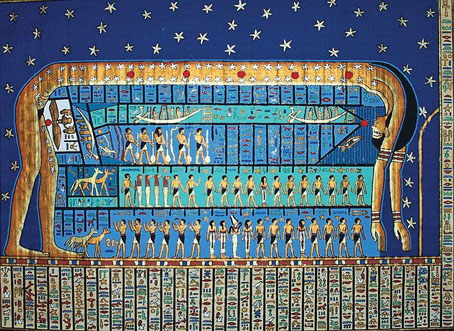
egypt2.jpg

It turns out that the yellow star on a blue background was a common way of representing the night sky in Egyptian art, you’ll find the same stars in wall paintings and on the ceilings inside royal tombs.

egypt3.jpg

For years I’ve regarded the Xitintoday cover as being uncharacteristically random and abstract, surprisingly so when Bubbles designs from the same period are all so smart and well-considered. This discovery puts the Sphynx album in the same category, a design which avoids many more obvious solutions for a combination of the very old and the very new. Another feature of Barney Bubbles design is a kind of “Aha!” moment, when your appreciation of the design catches up with the thinking behind it. The appreciation this time has taken an outrageously long time to arrive but I’m pleased to have got there in the end.

Previously on { feuilleton }
Led Zeppelin IV: Jimmy Page versus Little Bo-Peep
The Grammar of Ornament revisited
On the pyramid

Weekend links 646

wallpaper.jpg

It’s that lethal book again. A sample of wallpaper impregnated with arsenic, one of many such pages in Shadows from the Walls of Death: Facts and Inferences Prefacing a Book of Specimens of Arsenical Wall Papers (1874) by RC Kedzie.

• “I like to spend time in the now because there I can create something new but in the past I cannot.” Damo Suzuki, former vocalist in Can, on creativity and his resilience in the face of long-term illness. Related: a trailer for Energy: A Documentary about Damo Suzuki.

• “I enjoy Carnival of Souls, but it is a dark form of enjoyment, with high stakes, because the enjoyment is predicated on me being able to shake myself free of the film after it is over, and that can be a struggle.” Colin Fleming on fear as entertainment.

• “Some people like fantasy epics or Regency romance or Sudoku or science-fiction world-building or the gentle challenge of cozy mysteries; I like the undead.” Sadie Stein on encounters with ghosts.

• “You’re now standing on the blocks of the Great Pyramid at Giza. For the first time ever you can explore the entire pyramid interior.” The Giza Project.

• “What do we think about when we watch films set in vanished decades that many of us experienced at first hand?” asks Anne Billson.

• At Bandcamp: Touch celebrates forty years of not being a record label.

• “Why scientists are sending radio signals to the Moon and Jupiter.”

• At DJ Food’s: Retinal Circus gig posters 1966–68.

• Steven Heller’s font of the month is Feneon.

The Pyramid Spell (1978) by Nik Turner | I Am Damo Suzuki (1985) by The Fall | Carnival Of Souls Goes To Rio (2001) by Pram

Marabout Fantastique book covers

marabout15.jpg

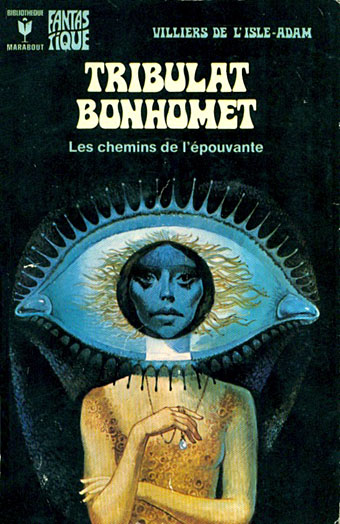
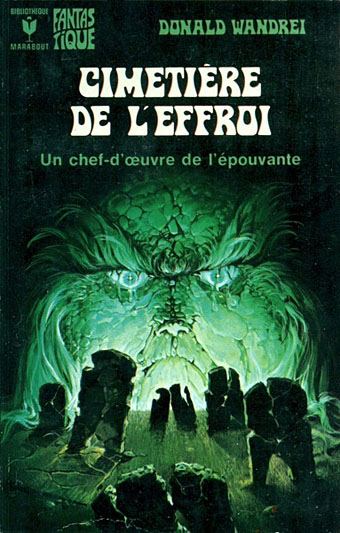
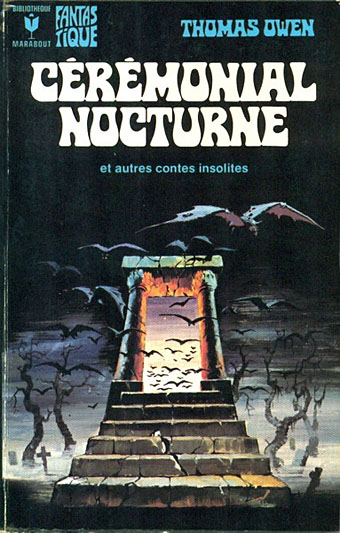
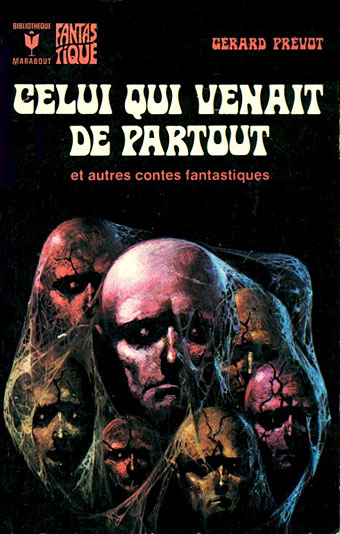
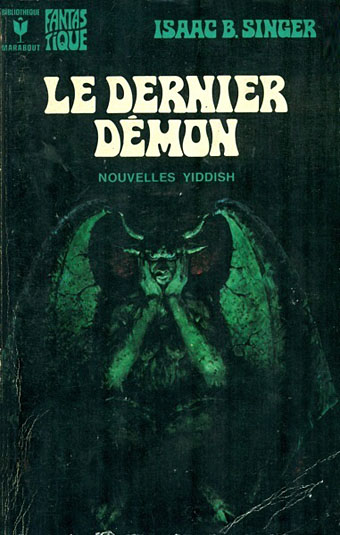
A post for Halloween featuring a selection of covers from the “Fantastique” imprint of Belgian publisher Bibliothèque Marabout. The imprint, which was only labelled “Fantastique” on later editions, was launched around 1969 and ran through the 1970s before petering out in the early 1980s. The uniform cover design—almost always black with titles set in Roberta—is an attraction for paperback collectors even when the titles are very familiar ones, and when the cover art, most of which was the work of Henri Lievens (1920–2000), is sketchy and vague.

marabout02.jpg

Among the Belgian writers rubbing shoulders with their more famous foreign counterparts are Jean Ray, author of the cult novel Malpertuis, playwright Michel de Ghelderode, and Thomas Owen (the pen-name of Gérald Bertot). Not all of the artwork is credited but most of the examples here are the work of the prolific Lievens, an artist whose cobwebbed eccentricities sometimes exceed the bounds of their brief; that flapping creature on the cover of The White People by Arthur Machen has no analogue in any of Machen’s stories. Later covers in the series saw contributions from Jean Alessandrini, with collages that were the subject of an earlier post. Marabout is still publishing today, albeit in a reduced fashion, having relocated to France where the company is now a tiny part of the Hachette empire.

marabout03.jpg

marabout01.jpg

marabout07.jpg

Continue reading “Marabout Fantastique book covers”