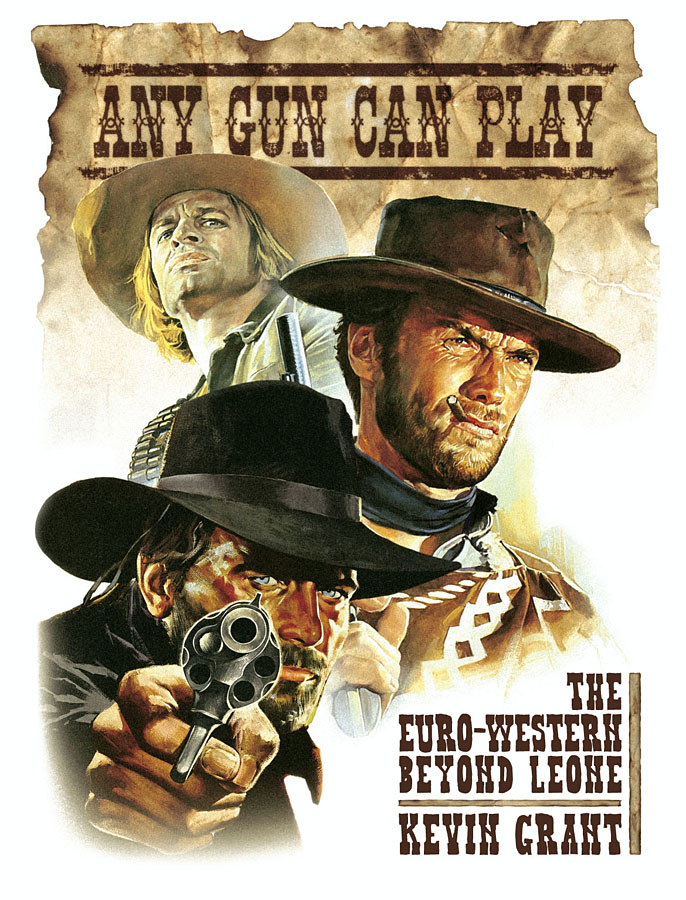
Any Gun Can Play by Kevin Grant

anygun.jpg

This was something I put together last year for FAB Press but the book has only been published in the past month. The design was little more than an assembly job on my part, with Harvey at FAB requesting a montage of the three poster-art gunmen plus suitable Western typography. We went through a number of generic fonts then I added a little creative touch with the background for the title type which was a sheet of paper scorched and stained using tap water, a tea bag and a gas-ring. Forget Photoshop filters, you still can’t beat the trusty tea bag for random stains.

Cynical and stylish, bloody and baroque, Euro-westerns replaced straight-shooting sheriffs and courageous cowboys with amoral adventurers, whose murderous methods would shock the heroes of Hollywood Westerns. These films became box-office sensations around the world, and their influence can still be felt today.

Any Gun Can Play puts the phenomenon into perspective, exploring the films’ wider reaches, their recurrent themes, characters, quirks and motifs. It examines Euro-westerns in relation to their American ancestors and the mechanics of the Italian popular film industry, and spotlights the unsung actors, directors and other artists who subverted the ‘code’ of the Western and dragged it into the modern age.

Based on years of research backed up by interviews with many of the genre’s leading lights, including actors Franco Nero, Giuliano Gemma and Gianni Garko, writer Sergio Donati, and directors Sergio Sollima and Giuliano Carnimeo, Any Gun Can Play will satisfy both connoisseurs and the curious.

Despite my minimal contribution, this is a very handsome volume to be connected to. I’ve had Christopher Frayling’s Spaghetti Westerns (1981) book for years so I’m already disposed towards the subject. Frayling’s book is a semi-academic analysis which for a long time was the only serious study of the subgenre. Additional studies by Frayling and others have followed but Kevin Grant’s book, subtitled The Essential Guide to Euro-Westerns, looks like a tough one to beat: 480 pages, detailed analyses, a who’s who section, filmography, and a huge quantity of photos and poster graphics, many in colour. There’s also a foreword by actor Franco Nero, threatening everyone on the cover in his Django guise. To test the author’s thoroughness I looked up Se sei vivo spara (1967) (If You Live, Shoot!), a film also known as Django Kill! even though it’s nothing to do with the Django series. Giulio Questi’s film is a very bizarre (and occasionally inept) blend of Spaghetti tropes and horror-style scenes of graphic gore, featuring (among other things) a crucified hero, a vampire bat, and a band of black-clad homosexual cowboys. Frayling’s book devotes a few paragraphs to the film while Grant gives it two-and-a-half pages plus pictures. IMDB may tell us the facts about a film’s production but the barely-literate reviews and troll-filled discussion boards on that site are useless. For authoritative review and analysis you still need a book like this. Any Gun Can Play can be ordered direct from FAB Press where they’re selling a limited number signed by Franco Nero and the author.
Weekend links 67

hofstatter.jpg

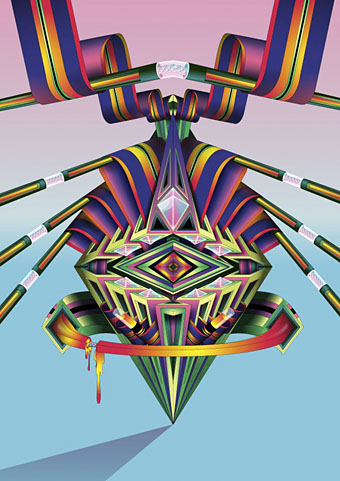
Neutron Drip (2011) by Amrei Hofstätter.

The Lavender Scare is “the first feature-length documentary film to tell the story of the U.S. government’s ruthless campaign in the 1950s and ’60s to hunt down and fire every Federal employee it suspected was gay”. A film by Josh Howard based on the book by David K Johnson which the author has made a free download here.

• “Annette Peacock, the avant garde American composer, collaborator with Salvador Dalí, friend of Albert Ayler and Moog-synth pioneer, brought this seismically influential session out in 1972…” John Fordham reviews Annette Peacock’s I’m The One which can be purchased here.

• Writer and graphic design historian Steven Heller looks at The Steampunk Bible (edited by SJ Chambers & Jeff VanderMeer) in his column for The Atlantic. He also talks to Galen Smith about the book’s design.

M John Harrison reveals more about his forthcoming sf novel Pearlent, a partial sequel to Light and Nova Swing. I just re-read Light, and I’m currently In The Event Zone with the follow-up, so I’m looking forward to this one.

The Raven, a book by Lou Reed & Lorenzo Mattotti (and Edgar Allan Poe). A Journey Round My Skull previewed this in 2009.

Orson Welles’ Falstaff film, Chimes at Midnight, emerges into the light once more. When do we get a decent DVD release?

• More of the usual concerns: Iain Sinclair’s struggles with the city of London and Erik Davis talks to Alan Moore about psychogeography, John Dee, comic gods, and the art of magic.

Eddie Campbell takes a tip from Jim Steranko. Related: “Hey! A Jim Steranko effect!

Lambshead Cabinet: Win Jake von Slatt’s Mooney & Finch Somnotrope!

• Tilda Swinton is The Woman Who Fell to Earth.

XXth Century Avantgarde [sic] Books at Flickr.

Sound sculptures & installations by Zimoun.

I’m The One (1972) by Annette Peacock.

Detmold’s insects

detmold1.jpg

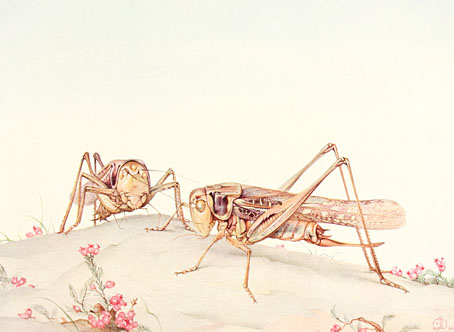
The White-Faced Decticus.

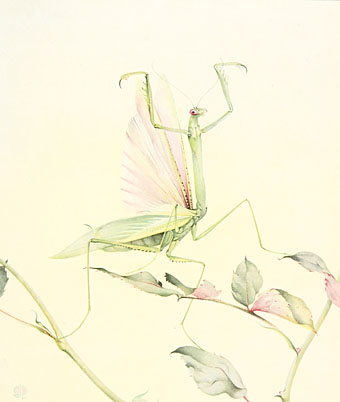
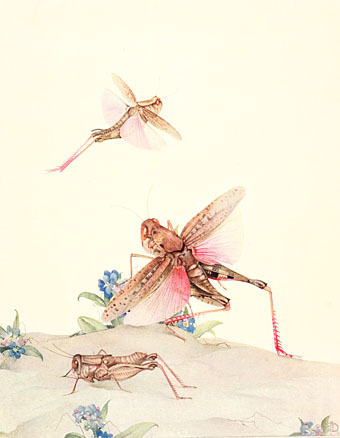
Edward Julius Detmold’s (1883–1957) skill at drawing animals gave him a great advantage when it came to illustrating Kipling’s The Jungle Book and Aesop’s Fables, still among the very best editions of those books. Less well-known are his illustrations for Fabre’s Book of Insects (1921), a guide by naturalist Jean-Henri Fabre. Bud Plant has details about the artist’s unhappy life, while the Internet Archive also has copies of the Aesop and the Kipling.

detmold2.jpg

The Praying Mantis.

detmold3.jpg

Italian Locusts.

Elsewhere on { feuilleton }
The illustrators archive

Previously on { feuilleton }
Entomologia
Fantastic art from Pan Books

Chernobyl’s zone of alienation

prypiat.jpg

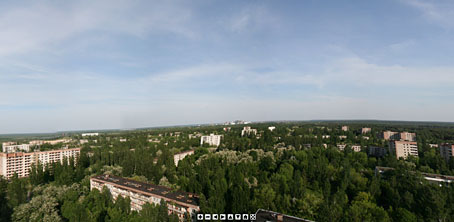
Chernobyl/Pripyat (2011) by Paul Curry.

Everyone’s favourite irradiated town, Pripyat in Ukraine, has been in the news again now that twenty-five years have passed since the the Chernobyl nuclear disaster. This photo of the area by Paul Curry is part of a panorama (with the nuclear plant in the distance) taken from a rootop on a clear day. Most photos of the site show the now-familiar abandoned buildings, empty playgrounds and so on; Curry’s view taken on 29th May this year is remarkable for showing how overgrown the place has become.

Chernobyl has become indelibly twinned with Andrei Tarkovsky’s masterwork of grimy science fiction, Stalker (1979), and the novel upon which the film was based, Arkady and Boris Strugatsky’s Roadside Picnic, a mesh of connections I explored in an earlier post. Darren Nisbett’s series of photos currently showing at the Rhubarb and Custard gallery, Berkshire, are good examples of how Stalker-like the place is now looking. Nisbett calls his series, many of which are infra-red views, Chernobyl’s Zone of Alienation although there’s no indication of whether he’s alluding to the hazardous Strugatsky/Tarkovsky “Zone”. The photos are on display until the end of this month, and the prints are for sale. The Independent has a gallery feature about the exhibition here.

Update: Simon Sellars from Ballardian alerts me to this blog which is currently running reports from a visit to the Chernobyl exclusion zone.

Previously on { feuilleton }
Rerberg and Tarkovsky: The Reverse Side Of “Stalker”
The slow death of modernism
The Stalker meme

Clive Barker, Imaginer

barker.jpg

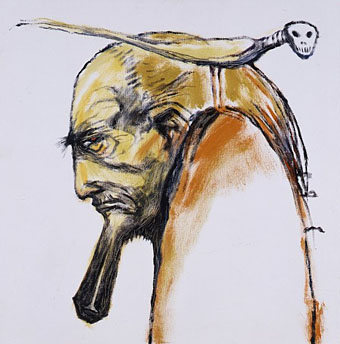
Sea Captain by Clive Barker.

The inhabitants of Carlisle in the north of England are fortunate that the town’s Crown Gallery is hosting the first exhibition of Clive Barker’s artwork outside the US with a show entitled Clive Barker, Imaginer which opens this weekend. The artist will be attending the opening this Saturday, July 16th, and there’s also a signing planned the day after. Tickets are required for both these events so anyone interested will need to contact the gallery. No details as to what will be on display but the exhibition will run to August 23rd, 2011. Barker’s paintings, drawings and photo prints can be purchased through Bert Green Fine Art, Los Angeles.