Orson Welles: The One-Man Band

omb1.jpg

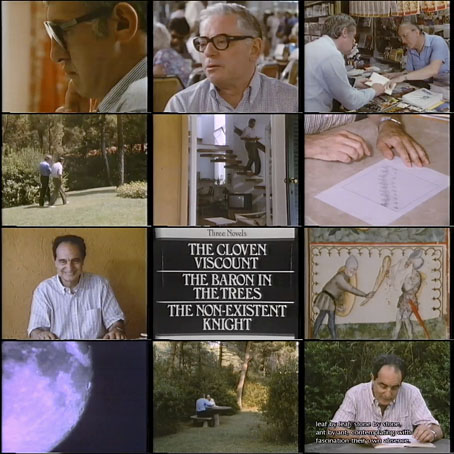
Vassili Silovic’s 90-minute documentary about the uncompleted films of Orson Welles’ later years was a revelation when it appeared in 1995. Orson Welles: The One-Man Band was shown on UK TV as The Lost Films of Orson Welles but “one-man band” is more appropriate, not only because of the bizarre song-and-dance sequence he filmed in London, but also because it’s an apt description of Welles’ approach to filmmaking. Directors who also write and produce are rare but not too uncommon; directors who write, produce and also act in major roles are in a minority. Welles did all those things and often much more, including editing, set decoration and providing voices for minor characters. The latter habit can be distracting in some of the films, especially Mr Arkadin where it often seems he was doing the voices for everyone who wasn’t already a known actor.

omb2.jpg

The One-Man Band is a compendium of clips from footage bequeathed to his partner, Oja Kodar, together with interviews, TV appearances, a witty and duplicitous trailer for F for Fake, and other odds and ends. This was the first public airing of scenes from The Deep, an unfinished feature based on a thriller, Dead Calm (1963) by Charles Williams (later filmed by Philip Noyce as Dead Calm in 1989.) There’s also a sequence from The Other Side of the Wind, another feature that was closer to completion, and which may yet receive a proper release. The sequence showing Welles discussing The Trial with an audience is now available in full on YouTube. The London clips were intended for US TV, part of an unfinished special entitled Orson’s Bag. These were filmed in the late 60s, and the song-and-dance sequence is probably the strangest thing he directed. I’m more taken with the Tailors sketch which has Jonathan Lynn and the wonderful Charles Gray as a pair of disrespectful outfitters.

Previously on { feuilleton }
The Immortal Story, a film by Orson Welles
Welles at 100
The Fountain of Youth
The Complete Citizen Kane
Return to Glennascaul, a film by Hilton Edwards
Screening Kafka
The Panic Broadcast

The Immortal Story, a film by Orson Welles

immortal.jpg

The Immortal Story (1969) is an oddity in the Welles oeuvre, an hour-long adaptation of an Isak Dinesen short story originally made for French TV but subsequently released as a feature. Plans to film two more Dinesen stories foundered when the promised funds disappeared. This was the first of Welles’ films in colour—he always preferred black-and-white—and the last dramatic film to be successfully completed and released during his lifetime. After this there was the “film essay” F for Fake (1973), and many years of unfinished projects.

Welles wrote and directed The Immortal Story, and also plays the manipulative Mr Clay, an aged businessman who wants to see a story he was once told enacted in real life. Jeanne Moreau is Virginie, a woman paid a large sum of money to spend a night with a penniless sailor (Norman Eshley in a blond wig); Roger Coggio is Clay’s assistant, Levinsky. Jeanne Moreau had earlier played Miss Burstner in Welles’ The Trial, Doll Tearsheet in Chimes at Midnight, and would have been in The Deep if Welles had completed it. She’s the liveliest presence in a film that’s rather slow and sombre by Welles’ standards. The Immortal Story is set in Macau but was shot in Spain; Satie’s Gymnopédies and Gnossiennes contribute to the somnolent atmosphere. Watch out for an uncredited (and dubbed) Fernando Rey in the opening scenes.

Previously on { feuilleton }
Welles at 100
The Fountain of Youth
The Complete Citizen Kane
Return to Glennascaul, a film by Hilton Edwards
Screening Kafka
The Panic Broadcast

Welles at 100

welles.jpg

Orson Welles: A First Biography (1946) by Roy Alexander Fowler.

Happy birthday, Orson. The premature celebrity biography is nothing new, as this small volume from the Coulthart library demonstrates. Welles was only 31 in 1946 but was already the director of three feature films. If I’m less of a Welles obsessive today it’s because many of the films and radio plays that were once inaccessible can now be easily seen and heard, although a handful of unfinished projects still wait in the wings. The following is a selection of some favourite Wellesiana, old and new.

• The Mercury Theatre On The Air: Recordings of Welles’ theatre troupe at the Internet Archive and at the dedicated website. The Mercury production of The War of the Worlds is the essential one, of course, but I’m also partial to their production of Dracula which featured Agnes Moorehead playing Mina Harker, Welles as the Count, and a suitably spooky score by Bernard Herrmann. The production of Around the World in 80 Days was later expanded by Welles into an ambitious (and expensive) stage musical in collaboration with Cole Porter.

The Night America Trembled (1957) is a TV dramatisation of the alarmed reaction of some Americans to the War of the Worlds broadcast. Presented live by Ed Murrow, the drama features Warren Beatty, James Coburn, Warren Oates, and Ed Asner (who later presented the BBC’s RKO Story). Closer to Welles is The Night That Panicked America (1975) a TV movie recreation of the original broadcast with Paul Shenar as the director.

Newsreel footage of the final scenes of the so-called Voodoo Macbeth from 1936. As part of the WPA program to return Americans to work, Welles directed an all-black cast with the action of the play moved to Haiti. As usual, Welles wasn’t afraid of rearranging the Bard’s words, and this staging ends with the same lines as his 1948 film version: “Peace! The charm’s wound up.”

• My favourite Welles book is still This is Orson Welles (1992), a collection of Peter Bogdanovich’s interviews edited by Jonathan Rosenbaum. Bogdanovich’s interview tapes can be heard at the Internet Archive.

Orson Welles’ Horrorshow: Colin Fleming on Welles’ Macbeth, “the horror film no one likes to call a horror film”.

Peter Bradshaw on Citizen Kane and the meaning of “Rosebud”.

Six actors who have played Orson Welles onscreen

Previously on { feuilleton }
The Fountain of Youth
The Complete Citizen Kane
Return to Glennascaul, a film by Hilton Edwards
Screening Kafka
The Panic Broadcast

Weekend links 257

tarot.jpg

The Nine of Swords by Pamela Colman Smith, and the same card from The Ghetto Tarot, a Haitian deck created by photographer Alice Smits and Haitian art group Atis Rezistans.

Almost four months after the murders in Paris, Charlie Hebdo continues to be problematic, to use a common epithet. The “p” word occurs with such frequency in current discussions about offence—and those discussions so often seem like a secular version of old religious arguments, with Manichean forces pitted against each other, and the same schisms, heresies and witch hunts—that I’ve taken to translating “problematic” as “sinful”. Charlie Hebdo is nothing if not a heretical text even if many of those pronouncing on its heresies have never read a copy. Back in January I was confident that we’d be seeing a great deal of equivocation (if not outright victim-blaming) when people began to look closely at the magazine, or at least read hasty appraisals of its contents. You didn’t have to be a psychic to predict any of this because the equivocations are merely the current manifestation of a familiar syndrome. This week’s authorial objections about PEN America honouring Charlie Hebdo have led to a reiteration of the grumblings we heard in January: “Yes, of course, we condemn the violence but…” But, what? “But, it’s a sinful publication…”(This piece by one of the PEN objectors in the LRB is typical.) Publication liberties, which in the UK are more constrained than in the US, are apparently best championed for the virtuous (the responsible, the respectful, etc), not the sinful. In 1963 “Yes, but…” equivocations about freedom of speech were being deployed in the letters page of the Times Literary Supplement with worthies such as Victor Gollancz and Edith Sitwell wondering why it was necessary to defend a deplorable book like The Naked Lunch; in 1992 I sat in a courtroom watching a judge make similar comments when grudgingly overturning an obscenity ruling against David Britton’s Lord Horror novel. The same judge then upheld the obscenity charge against Britton & Guidio’s Meng & Ecker comic which he regarded as trashier fare, “luridly bound” and containing “pictures that will be repulsive to right-thinking people”.

So much for old arguments. Jodie Ginsberg at Index on Censorship goes into some detail about the PEN kerfuffle in a piece entitled “I believe in free expression, but…”; Justin EH Smith for Harper’s says:

I heard from [friends and equals] countless variations on the banality that “violence is always wrong.” How did I know that this judgment, though perfectly true in itself, was only a banality, the expression of a sentiment that had little to do with pacifism? By the clockwork predictability of the “but” that always followed.”

Kenan Malik, who writes a great deal about these issues (his new book is The Quest for a Moral Compass: A Global History of Ethics) posted a statement from Jo Glanville from English PEN, and a lengthy piece by Leigh Phillips. This affair will rumble on.

• More sinful material: Samuel R. Delany’s Hogg is a novel so transgressive/offensive that it took 26 years to find a publisher. You seldom see any mention of the book when Delany’s work is being discussed, especially in prudish SF circles, but Dennis Cooper’s blog ran a retrospective feature about it this week. Caveat lector. Related: Stories for Chip: A Tribute to Samuel R. Delany is looking for crowdfunding.

• “[Judy] Oppenheimer relates that Jackson kept a library of over two hundred books on witchcraft, and her interest in the subject was not purely academic.” Martyn Wendell Jones on Shirley Jackson.

The Satyr and Other Tales, a collection by Stephen J. Clark, the title story of which is “inspired by the life and ethos of sorcerer and artist Austin Osman Spare”.

• Mixes of the week: Bacchus Beltane 2: The Mists of Avalon by The Ephemeral Man, and The Ivy-Strangled Path Vol. VI by David Colohan.

Boy and his SIR: BDSM and the Queer Family, a photo series by Kevin Warth, and Xteriors II, a photo series by Desiree Dolron.

• The Quest for Stenbock: David Tibet talks to Strange Flowers about his obsession with the eccentric Count.

Dark Star: HR Giger’s World is a documentary about the artist by Belinda Sallin.

1 in 3 Impressions, a free EP of Moog music by M. Geddes Gengras.

The rise and fall of the codpiece

Blade Runner Reality

Some Weird Sin (1977) by Iggy Pop | Sin In My Heart (1981) by Siouxsie and The Banshees | It’s A Sin (1987) by Pet Shop Boys

La Ronde du Sabbat

hugo1.jpg

This is too late for Walpurgisnacht (although it’s still night at this moment) but the 1st May is Beltane, and this is a very pagan drawing. The artist is Louis Boulanger, a friend of Victor Hugo’s here illustrating one of the author’s poems for Cent Dessins: Extraits des Oeuvres de Victor Hugo, illustrations for Hugo’s poetry, fiction and drama. Much of the work is mediocre or dull but this surprisingly excessive picture would have stood out even among better company. Many of the illustrations are engravings from paintings—one is an adaptation of Delacroix’s Liberty Leading the People—but the copy of Boulanger’s painting wanders freely from the original which is a much more typical piece of Romantic art. The engraver was Fortuné-Louis Méaulle who really ought to share a credit with the original artist.

hugo2.jpg

A few of the more notable illustrations follow, one of which is yet another artwork on the perennial theme of man versus cephalopod.

hugo3.jpg

Continue reading “La Ronde du Sabbat”