Providential

necro1.jpg

As should be evident by now, I’m off to Providence for NecronomiCon 2015 so the blog will be taking a break for a few days. The archive feature will be in operation during this time to pull up random posts from the past.

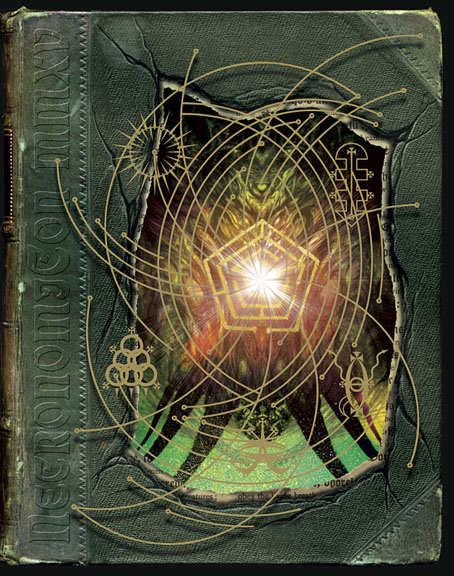
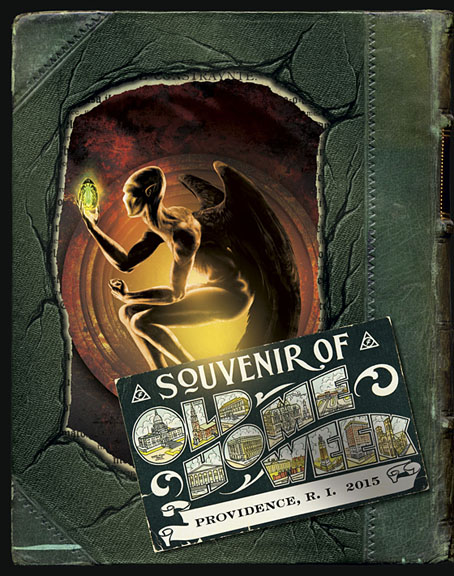
In a previous post about NecronomiCon I mentioned having designed a cover for the convention booklet so here it is. If all goes to plan, the gold lattice should be printed as a metallic ink overlay. The pentagonal labyrinth is a borrowing from the George Hay Necronomicon (see this post) but the sigils are my own invention; each one relates to a specific Lovecraftian deity but I’ll let people guess the assignations. The Providence postcard is a genuine one that I doctored slightly. This was a fortuitous find since some of the locations have connections with the convention. Anyone curious about the convention’s progress is advised to check the Facebook page.

necro2.jpg

Elsewhere on { feuilleton }
The Lovecraft archive

Weekend links 272

sage.jpg

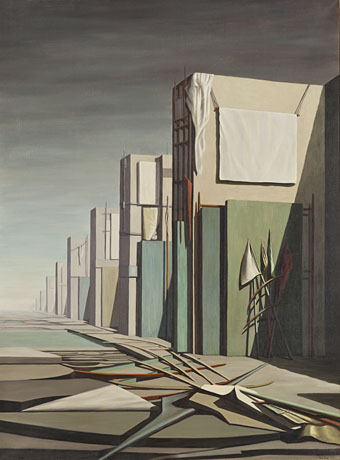
No Passing (1954) by Kay Sage.

• More Lovecraftiana: She Walks In Shadows, an illustrated all-woman Lovecraftian anthology, will be published in October. Related: “The octopus genome and the evolution of cephalopod neural and morphological novelties“, a study that’s been filtering through the press as “Do octopuses have alien DNA?”

• “The right to ‘subject each others’ fundamental beliefs to criticism’ is the bedrock of an open, diverse society,” says Kenan Malik in his TB Davie Memorial Lecture.

Sunn O))) with Attila Csihar at the Berlin Heimathafen. Related: Here’s what you missed at Sunn O)))’s sold out Berlin gig.

Caillois is fascinated by these “beveled buildings,” truly abundant in the Fifteenth, along with an unusually high incidence of blind walls, false façades, and merely ornamental windows, each beloved of his phantoms. In the parts of the arrondissement developed during the postwar period, Caillois’s attention is drawn instead to the ventilator shafts and drainage grates that dot the streets. These structures, built to clear away rainwater or aerate underground garages, have a secret function, according to him. Noting their uncanny similarity to some of the settings in the Weird Tales of HP Lovecraft, he speculates that they may have been constructed to provide the entry points for an extraterrestrial invasion of our planet.

Ryan Ruby on Roger Callois and the phantoms of the Fifteenth Arrondissement

• “I’m really into big moments,” says Julia Holter whose new album, Have You In My Wilderness, is released next month.

Adrian Utley talks to Peter Zinovieff, co-inventor of the EMS synthesizer. Related: What the Future Sounded Like.

• “Tarkovsky’s Solaris is the anti-2001: A Space Odyssey,” says Marissa Visci.

• Mix of the week: Gizehcast #17 by Rutger Zuydervelt.

Modernist architecture on film.

Thaumaturgy at Tumblr

The Call of Ktulu (1984) by Metallica | Cthulhu Dawn (2000) by Cradle of Filth | Cthulhu: A Cryo Chamber Collaboration (2014) by Various Artists

HPL in France

hpl-fr1.jpg

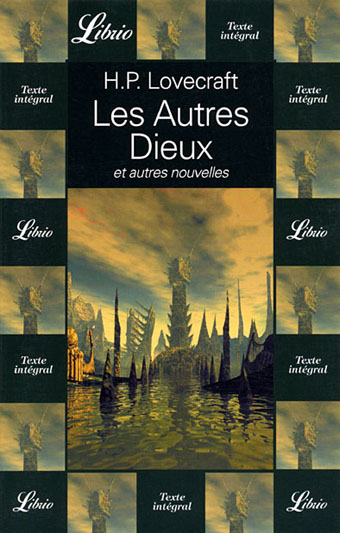
Les Autres Dieux et autres nouvelles (2002).

In 2002, French publisher J’ai Lu used my perennially popular view of R’lyeh on the cover of a small collection of HP Lovecraft’s fiction. This replaced a Michael Whelan painting on an earlier edition which looks fine but which happens to be a detail from one of his old Elric covers.

hpl-fr7.jpg

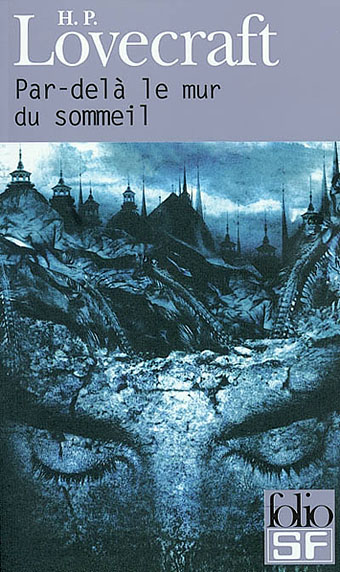
Par-delà le mur du sommeil (2002). Cover art by Eikasia.

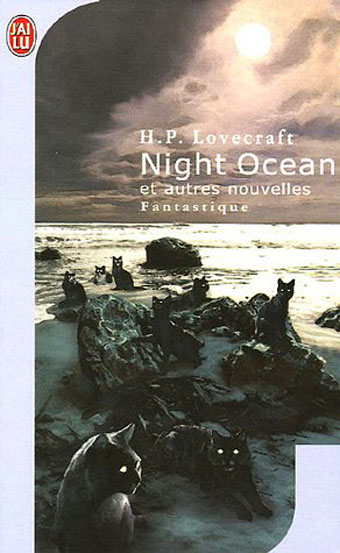
Looking through the Lovecraft pages at Noosfere this week turned up some recent French covers I’d not seen before. One of the striking things about cover art for French genre titles is the amount of artists who also work in comics. This isn’t so surprising given the scale of the French comics world but in the UK the tendency is for people to work in one area alone. Artists such as myself who move freely from comics to cover art to graphic design are a very small minority.

hpl-fr8.jpg

Night ocean et autres nouvelles (2005). Cover art by Richard Guérineau.

Continue reading “HPL in France”

The King in Green

hastur.jpg

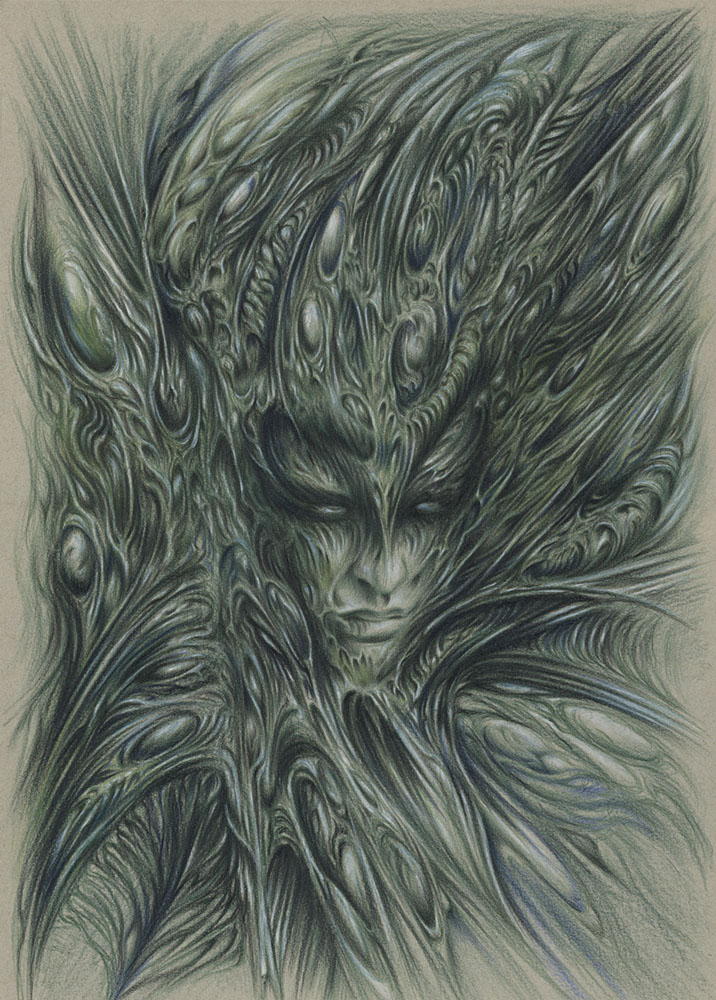
Hastur (1999) by John Coulthart.

Going through some of my old Lovecraft art this week it occurred to me that this drawing hadn’t been made public in its original colour form. Hastur appears as a murkier black-and-white illustration in the Great Old Ones series I produced in collaboration with Alan Moore for The Haunter of the Dark. The drawing was one of several improvised pieces made using coloured pencils on tinted paper. Some people may regard this and similar works as “Gigeresque” but I only apply that label to close imitations of HR Giger’s biomechanical style. This type of improvised drawing or painting predates Giger—Max Ernst’s decalcomania paintings being familiar examples—and you see similar fields of organic or mineral forms in the work of other Surrealist or Fantastic artists. If you have some ability with a pencil or paintbrush it’s relatively easy to produce a lot of this kind of work; the challenge is to do something more than create a mass of writhing abstraction.

Elsewhere on { feuilleton }
The Lovecraft archive

Weekend links 271

flyhead.jpg

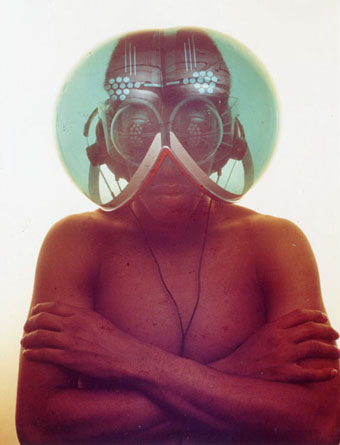
Environment Transformer/Flyhead Helmet by Haus-Rucker-Co (1968). From Hippie Modernism at the Walker Art Center, Minneapolis.

• From 2006: Weird Tales: The Strange Life of HP Lovecraft. Geoff Ward examines Lovecraft’s life and work for BBC Radio 3 with contributions from Neil Gaiman, ST Joshi, Kelly Link, China Miéville and Peter Straub. Meanwhile, Ned Beauman wonders whether Ford Madox Ford is “as scary as Lovecraft”.

• Alexei German’s years-in-the-making feature film, Hard to be a God (previously), receives a UK release this week. Paul Duane reports on an overwhelming viewing experience, while Nigel Andrews says it “may be the greatest film since the millennium began”.

• Mixes of the week: Adventures In Sound And Music, 30 July 2015, hosted by Joseph Stannard, and RCMIX9 by worriedaboutsatan.

As Nabokov insisted, “Literature is invention. Fiction is fiction. To call a story a true story is an insult to both art and truth.” The genre thrives because its deceptions are liberating. For Wood, the thrill of reading fiction is intimately connected with the awareness that fiction constitutes “an utterly free space, where anything might be thought, anything uttered.” The excitement comes when, as readers, we’re allowed to participate in this freedom and experience the fiction imaginatively, without being required to believe that it is true.

Joanna Scott on The Virtues of Difficult Fiction

• “Writing used to be a solitary profession. How did it become so interminably social?” asks Meghan Tifft.

• The original, real-life dystopian cityscape of Kowloon Walled City, and the artwork it inspired.

• The Long, Lonely Walk: Nick Ripatrazone on hallways in horror films.

New cover designs for the Essentials range from Penguin Books.

Lemi Ghariokwu: “How I designed Fela Kuti’s album covers”.

• “Do CDs sound better than vinyl?” asks Chris Kornelis.

• Magic Fly (1977) by Space | Human Fly (1978) by The Cramps | I Am The Fly (1978) by Wire