Weekend links 816

rossignol.jpg

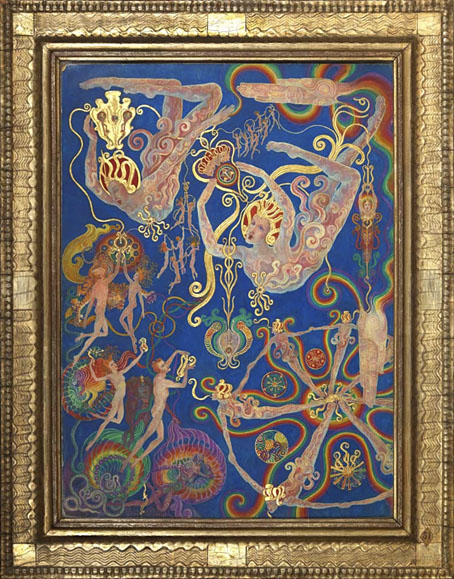
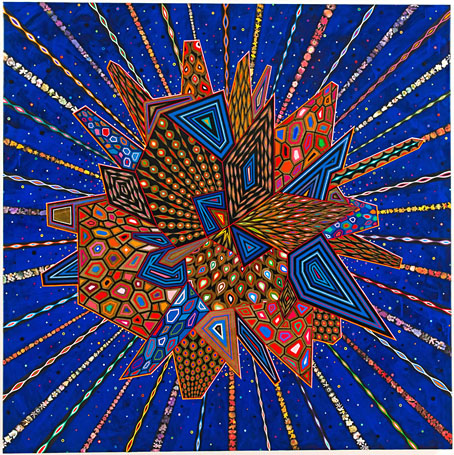
The Creative Power of the Spirit, No. 31 of A Goodly Company series, 1920–1933 by Ethel le Rossignol.

• “One moment it was a little blip. The next, our friends are dying”: the gay porn soundtrack composers lost to the Aids crisis. More gay porn: Pink Narcissus, James Bidgood’s micro-budget homoerotic fantasy, will receive a UK blu-ray release later this year.

• Old music: Thirst by Clock DVA gets a very welcome reissue later this year, having been unavailable in any form since 1992. I’m not so happy about the changes to Neville Brody’s original cover design but the album itself is a major post-punk statement.

• “Graphic design was thought to be a man’s discipline,” she says. “So I think it was quite a surprise for people to find me there.” A profile of Margaret Calvert, designer of (among other things) Britain’s road signs.

• At Colossal: A major survey in Paris chronicles Leonora Carrington’s esoteric Surrealism.

• At Public Domain Review: Sara Weiss’ Journeys to the Planet Mars (1903).

• At the BFI: The mystery music video for The Beatles’ Penny Lane.

Winners and entrants for Close-up Photographer of the Year 7.

• “Cats to blame for octopus deity enshrinement delay.”

• Steven Heller’s font of the month is Cattivo.

• At Dennis Cooper’s it’s Jack Arnold’s Day.

Pink Noir (1996) by David Toop | Pink Dust (2013) by Sqürl | The Pink Room 2 (2024) by Seigen Ono

The Performers: Goya

goya1.jpg

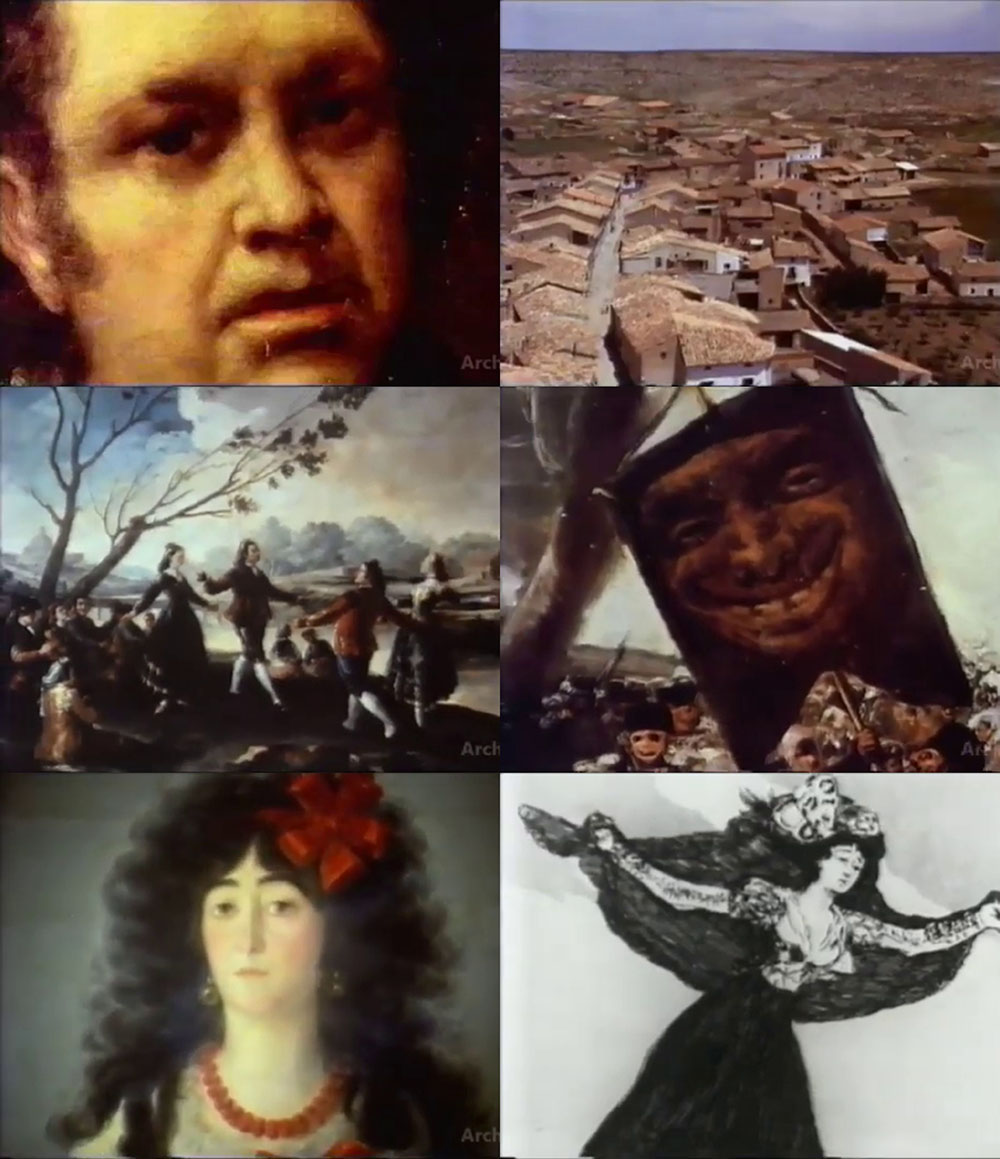
It’s good to find another arts documentary by Leslie Megahey turning up online. Not the best quality, unfortunately; the audio has been subjected to so much digital compression it sounds like it was run through a ring modulator but the visuals are decent enough. The Performers was originally made in 1972 for the BBC’s Omnibus arts strand. It was repeated in 1994 for the same series, with the name “Goya” appended to the title, the life and art of Francisco de Goya being the subject of the film. I remember watching the repeat screening but can’t remember why it was rebroadcast. Films like this usually remained stuck in the BBC’s vaults unless there was a good reason to show them again, as with Megahey’s portrait of György Ligeti which had the director revisiting the composer 15 years after their first meeting.

goya2.jpg

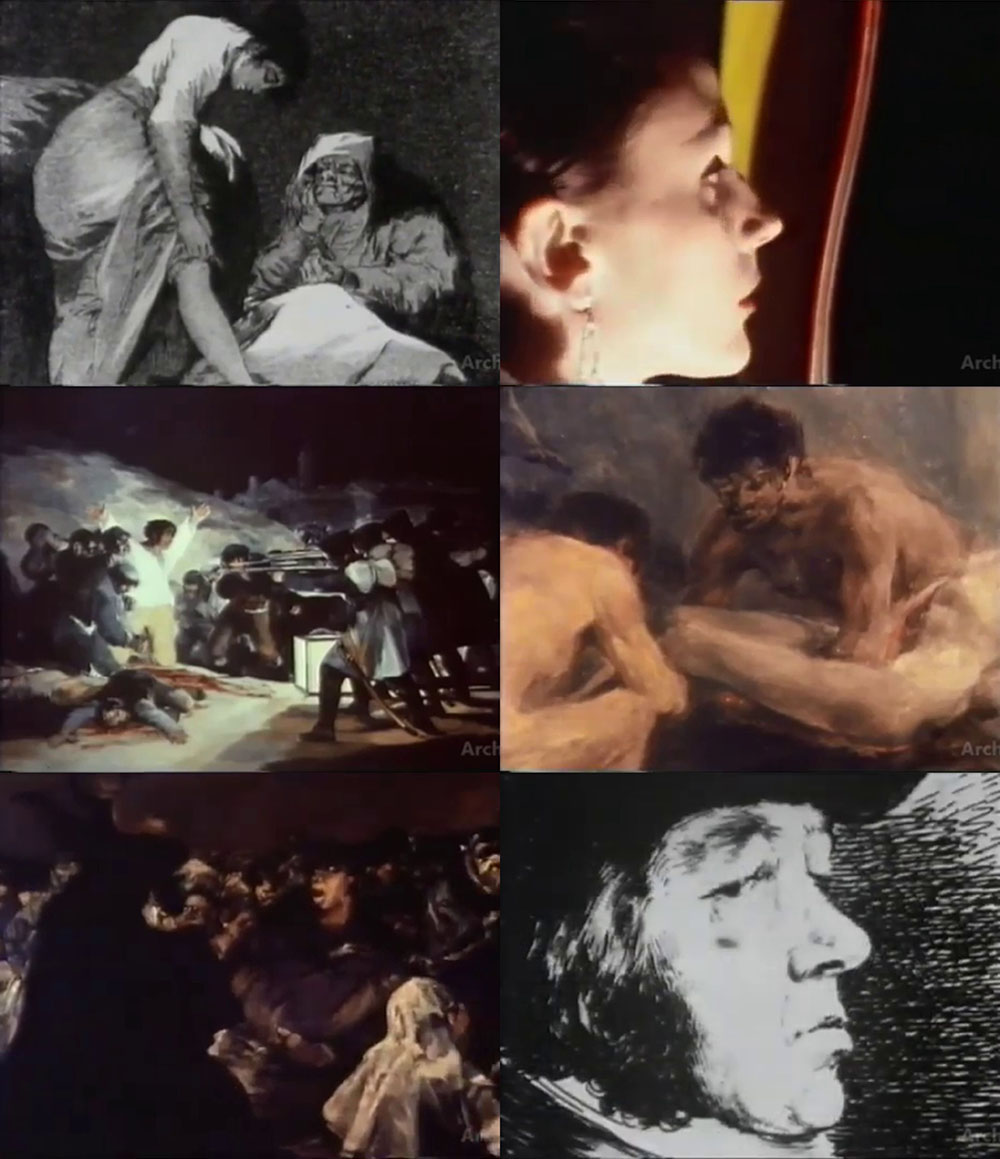
The Performers is less ambitious than Megahey’s later films, the majority of which had art or artists as their subject. The performers of the title are a pair of travelling players in modern Spain who adopt a series of roles in outdoor performances that parallel the stages of Goya’s career, from modestly successful muralist to very successful court portrait painter, and the later years when deafness left him isolated and depressed. The latter period resulted in the famous “Disasters of War” etchings and the so-called “Black Paintings” which were originally murals on the walls of the artist’s home.

The credits are missing from the end of the film but Leslie Megahey was the narrator as well as the director, with Colin Blakely reading from Goya’s diaries, and the performers played by Esperanza Malkin and Vallentin Conde. For a more personal take on the life and art of Francisco de Goya I recommend Robert Hughes’ 75-minute TV film from 2002.

Previously on { feuilleton }
All Clouds are Clocks: György Ligeti
Leslie Megahey, 1944–2022
Men and Wild Horses: Théodore Géricault
The Complete Citizen Kane
Schalcken the Painter revisited
Leslie Megahey’s Bluebeard

Weekend links 813

bruenchenhein.jpg

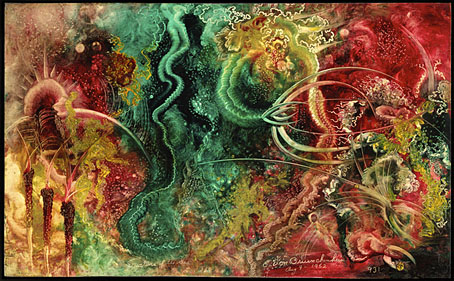
Dwellers of the Sea (1962) by Eugene Von Bruenchenhein.

• Among the new titles at Standard Ebooks, the home of free, high-quality, public-domain texts: Conan Stories by Robert E. Howard.

• At Colossal: “Uncanny personalities appear from nature in Malene Hartmann Rasmussen’s ceramics.”

• New music: Glory Black by Sunn O))); Through Lands Of Ghosts by Foster Neville; Sirenoscape by NIMF.

If we insist that art functions as a tool for promoting a limited set of political principles, what happens when an ideology that doesn’t share our values sweeps into power? Learning to engage with complexity is a necessary skill if we are ever to drag ourselves out of the puerile swamp of the culture wars. But if we continue to reduce art to moralistic soundbites, we will only succeed in stripping it of its capacity to transform us, which would be a huge loss. Art can help us to better understand ourselves, and the world we live in, by expressing those things that words cannot. It exposes us to a vast range of experiences, and asks us to sit with the fundamental ambivalences, moral complexities and conflicting emotions that are a part and parcel of being human.

Rosanna McLaughlin on attempts to make art of the past reflect the moral platitudes of the present

Strange Attractor is having a winter sale with 30% off all its available titles.

• At the BFI: Miriam Balanescu selects 10 great filmmaker biopics.

• Mix of the week: DreamScenes – January 2026 at Ambientblog.

• The Strange World of…Free Jazz & Improvised Music.

Free (1991) by Mazzy Star | The Free Design (1999) by Stereolab | Everything Is Free (2001) by Gillian Welch

Weekend links 812

satantango.jpg

• RIP Béla Tarr. I came late to Tarr’s films, he’d retired from directing by the time I worked my way through most of his oeuvre in 2019. As I’m always saying: better late than never. What I never expected from reading reviews was the irreducible strangeness at the heart of the later films, as well as their meticulous construction. With regard to the latter, mention should be made of the director’s regular collaborators: Ágnes Hranitzky (wife, editor and co-director), László Krasznahorkai (writer), and Mihály Víg (composer).

More Tarr: “The whole fucking storytelling thing is everywhere the same. That’s why I decided I have to do my movies.” Tarr talking to R. Emmet Sweeney in 2012; and at Criterion, Béla Tarr: Lamentation and Laughter by David Hudson.

• “When [Fela Kuti] first saw Lemi Ghariokwu’s work, he said, ‘Wow!’ Then he plied him with marijuana and asked him to design his album sleeves. The artist recalls their extraordinary partnership – and the day Kuti’s Lagos HQ burned.”

• At Smithsonan Mag: “Hundreds of mysterious Victorian-era shoes are washing up on a beach in Wales. Nobody knows where they came from.”

• At Ultrawolvesunderthefullmoon: The collage art of Wilfried Sätty.

• At the BFI: Leigh Singer selects 10 great Lynchian films.

• At Unquiet Things: The vast luminous art of Andy Kehoe.

• At Dennis Cooper’s it’s another Jan Švankmajer Day.

• New music: Light Self All Others by Tarotplane.

• At I Love Typography: Heart-shaped books.

• At Colossal: Luftwerk.

• Sailin’ Shoes (1972) by Van Dyke Parks | Dead Man’s Shoes (1985) by Cabaret Voltaire | New Shoes (2007) by Angelo Badalamenti.

02026

1926-02.jpg

The Basket of Bread (1926) by Salvador Dalí.

Happy new year. 02026? An affectation via the Long Now.

1926-05.jpg

The Cello Player (1926) by Edwin Dickinson.

1926-12.jpg

Portrait of the Journalist Sylvia von Harden (1926) by Otto Dix.

1926-11.jpg

The Virgin Spanking the Christ Child before Three Witnesses: André Breton, Paul Eluard and the Artist (1926) by Max Ernst.

1926-10.jpg

The Musician’s Table (1926) by Juan Gris.

Continue reading “02026”