Comps

comps.jpg

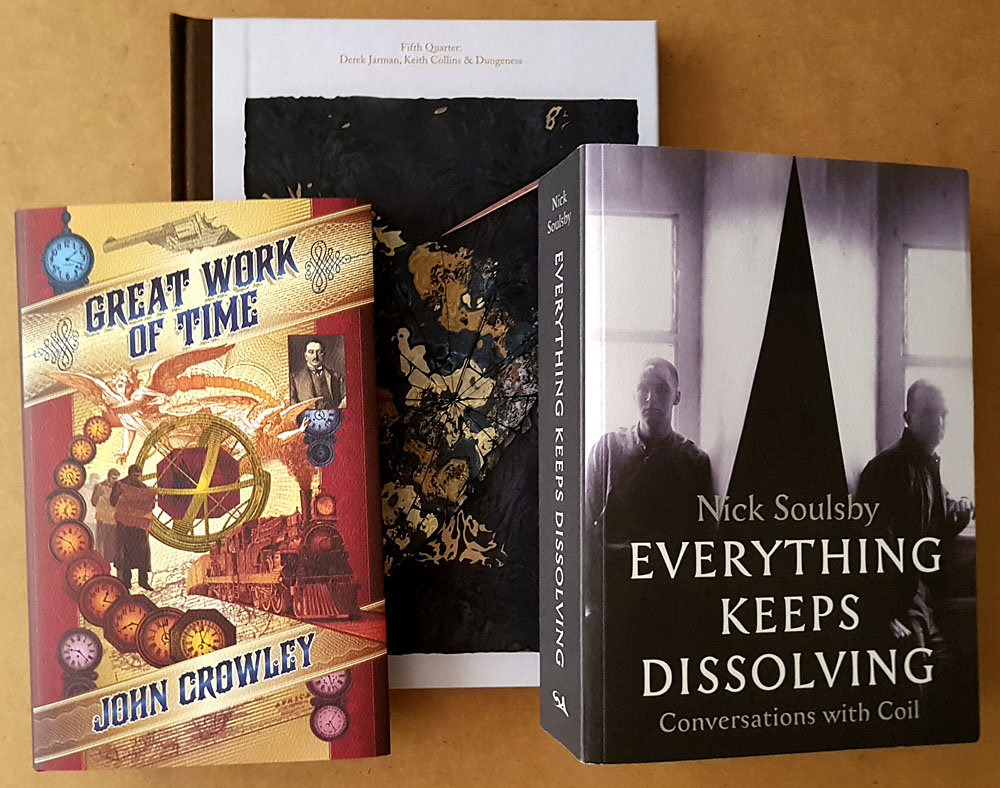
The month in complimentary copies. In publishing you often get sent at least one copy of something you’ve worked on although there are plenty of occasions when this doesn’t happen. This trio turned up while I’ve been waiting for two other books to arrive, both of which I’d contributed to (one of them even has my name on the cover) but still had to request from editors. It’s always a quandary when this happens. You feel reluctant to add to somebody’s working day by making a petty request for a copy of that thing you provided some artwork for a year ago; on the other hand, one of the books I’ve been waiting for is published by an international company with a 70-year history who nevertheless didn’t have a budget to pay for all the artwork they were using. The comp was supposed to be my payment for their use of a single picture. It looks like I’ll be buying this one myself.
crowley1.jpg

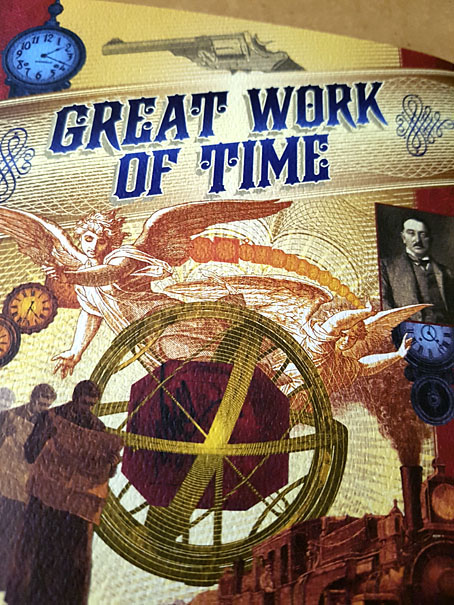
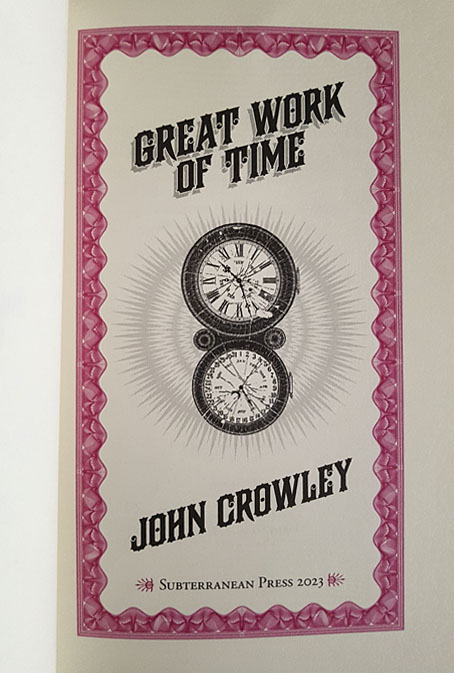
Great Work of Time is a book I’ve already mentioned here, being a hardcover reprint of an award-winning novella by John Crowley. I designed the interior and the cover which has been beautifully printed by Subterranean Press on textured paper. The interiors feature two-colour printing, with various details picked out in magenta ink. A handsome edition that’s also one of the best time-travel stories I’ve read.
crowley2.jpg


soulsby1.jpg

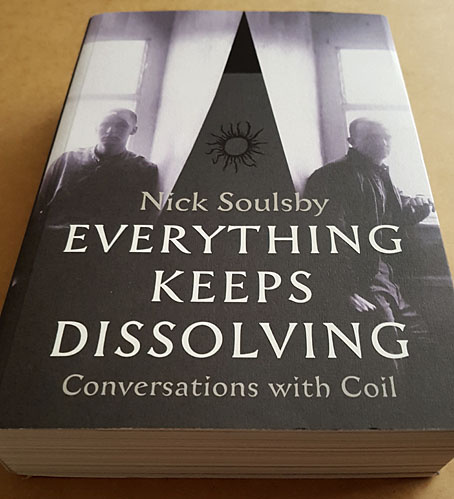
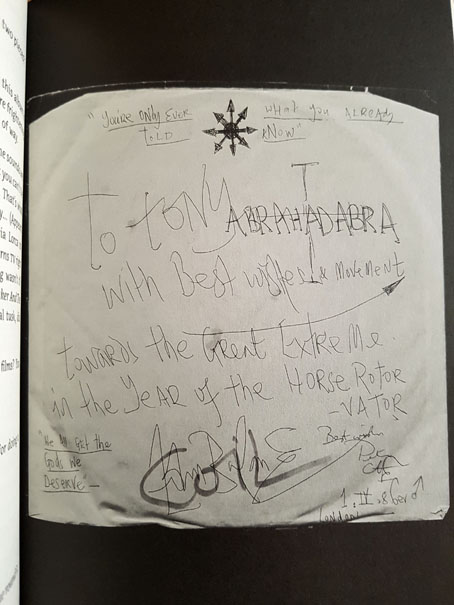
Everything Keeps Dissolving: Conversations with Coil has also been mentioned here before. This is Nick Soulsby’s collection of interviews with Coil, a book that rescues from obscurity and potential loss a wealth of interview material—magazine features, fanzine profiles, video and tape transcripts—which chart the group’s career. I assisted in a very small way with this one, letting Nick see some of my written correspondence with John Balance. I’m also mentioned in one of the interviews which was a surprise to discover after all this time. This is a very large book which will be essential reading for all Coil cultists.
soulsby2.jpg


jarman1.jpg

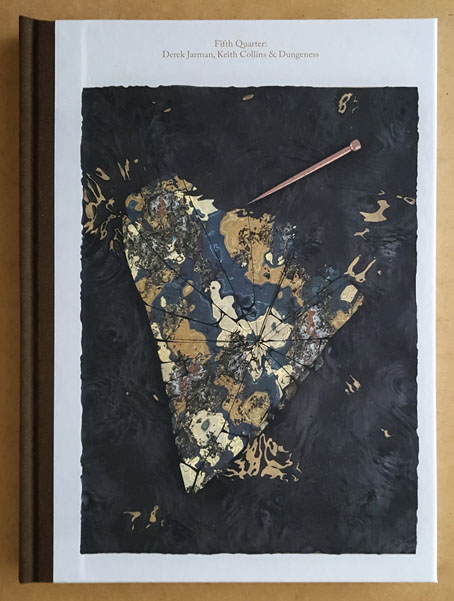
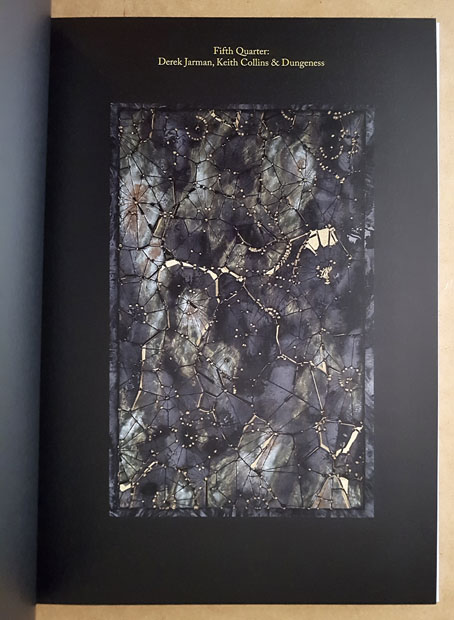
Fifth Quarter: Derek Jarman, Keith Collins and Dungeness is a collection of personal responses to the films and art of Derek Jarman. The book has some slight relation to the Coil volume via the pictures that resemble the Jarman piece used on the cover of How To Destroy Angels. Fifth Quarter has been published by the Subtext record label to accompany Fifth Continent, an album by Alexander Tucker and the late Keith Collins, Jarman’s former partner and custodian of Prospect Cottage. I didn’t contribute to the book but I’ve done a lot of design work for Subtext who have been releasing avant-garde music now for almost 20 years. Book publishing is a new venture for them. The list of contributors to Fifth Quarter is an impressive one: Barry Adamson, Jennifer Lucy Allan, Sarah Bade, Derek Brown, Keith Collins, Garry Clayton, Peter Fillingham, William Fowler, Dan Fox, Elise Lammer, Matthew R. Lewis, James Mackay, Frances Morgan, Garrett Nelson, Stephen O’Malley, Paul Purgas, Damien Roach, Howard Sooley, Mark Titchner, Alexander Tucker, Peter Tucker, Luke Turner, Simon Fisher Turner, and Cosey Fanni Tutti.
jarman2.jpg

Previously on { feuilleton }
Great Work of Time
Man is the Animal, issue three
Derek Jarman album covers

Weekend links 678

hablik.jpg

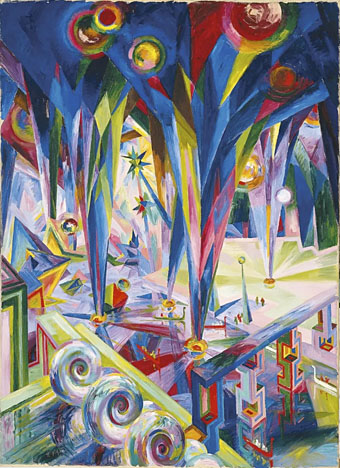
Interior of a Cathedral (1921) by Wenzel Hablik.

• The inevitable Cormac McCarthy features: “Cormac McCarthy took us beneath the surface,” says Kevin Berger at Nautilus magazine, publishers of McCarthy’s essay about the origins of language. At The Paris Review, three writers reminisce about reading McCarthy’s fiction.

• At Bajo el Signo de Libra: Bhupen Khakhar (1934–2003). “Su obra examina las implicaciones políticas y socioculturales de la homosexualidad en la India.”

Dennis Cooper’s favourite fiction, poetry, non-fiction, film, art, and internet of 2023 so far. Thanks again for the link here!

• New music: Telepathic Heights by Hawksmoor, and Golden Apples of the Sun by Suzanne Ciani & Jonathan Fitoussi.

• Mixes of the week: DreamScenes – June 2023, and isolatedmix 121: Oslated & Huinali Showcase mixed by S-Pill.

• At Unquiet Things: Crystal Castles and Harmonious Heavens: Wenzel Hablik’s Glittering Utopias.

• At Public Domain Review: Wonder and Pleasure in the Oude Doolhof of Amsterdam.

• At Spoon & Tamago: Exploring Tokyo’s Hidden Shrines.

• At Aquarium Drunkard: Bush Tetras interviewed.

Ben Chasny’s favourite albums.

• RIP Glenda Jackson.

Utopiat No. 1 (1973) by Utopia | Utopia (2000) by Goldfrapp | Utopia (2013) by Brown Reininger Bodson

The art of Davis Meltzer, 1929–2017

meltzer01.jpg

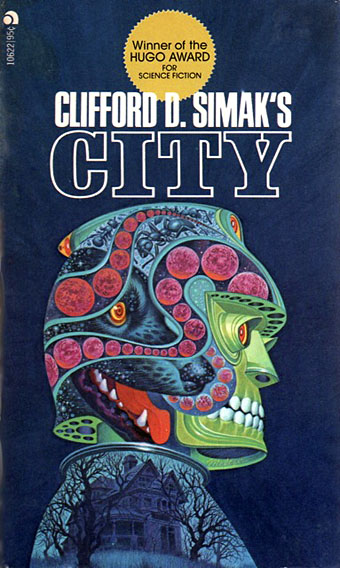
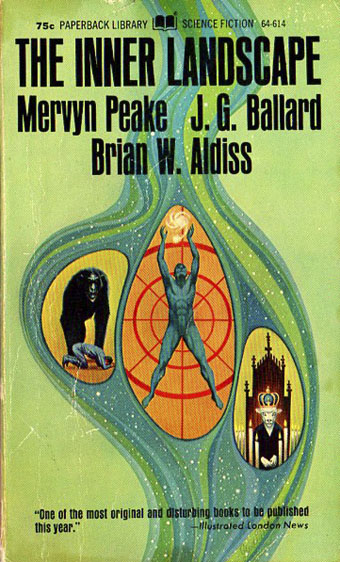
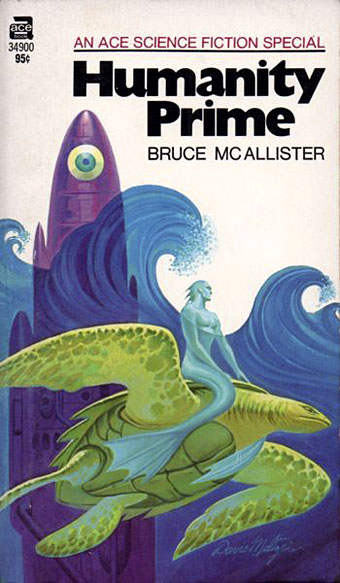
Illustrators were often easy to miss in the pre-internet days, when paperbacks published overseas could be hard to find or even see. Such is the case with Davis Meltzer whose work I hadn’t really noticed before until this cover turned up at 70s Sci-Fi Art. Meltzer had a long career as a scientific illustrator for National Geographic but his work as a cover artist for SF novels only lasted a decade, from 1970 to 1981. Not everything is as dramatically eye-catching as his Simak cover but there’s a unique sensibility at work, with only occasional similarities to other artists of his generation like Kelly Freas.

meltzer22.jpg

The Temptation of St. Gerome.

The piece above is from an auction site which doesn’t reveal any information apart from the title. If this was a religious illustration it’s one of the strangest I’ve ever seen. Auction listings state that Meltzer’s paintings were mostly done in gouache, a common medium for illustrators and graphic designers owing to its flat bright colours. The following selection favours the more visually arresting examples over generic spaceship art.

meltzer06.jpg

meltzer05.jpg

meltzer08.jpg

Continue reading “The art of Davis Meltzer, 1929–2017”

Weekend links 677

cv-brody.jpg

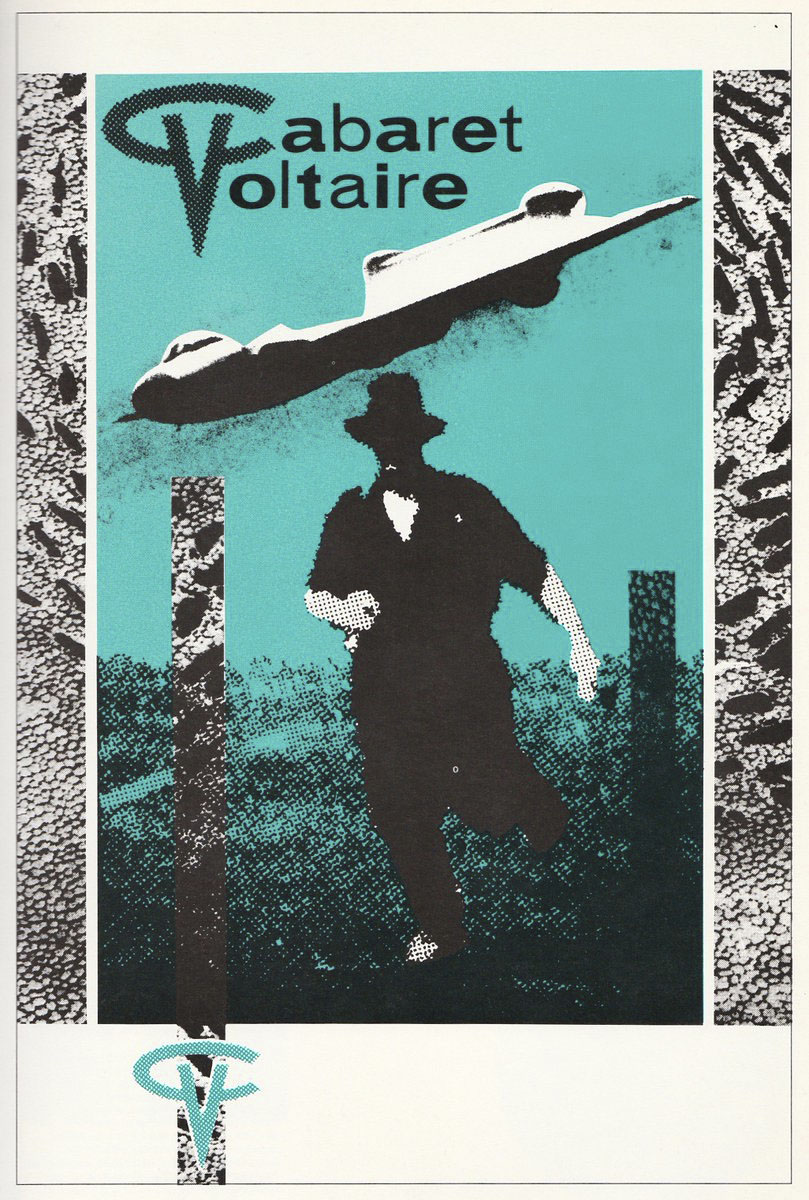
Design by Neville Brody, 1980.

• My work soundtrack for the past couple of weeks has been non-stop Cabaret Voltaire so this is pertinent. Neville Brody designed many of the group’s record sleeves in the 1980s as well as this poster and another one that I’ve only seen as a small picture in the first Brody book. He was also responsible for the CV logo which I never managed to find in badge form.

• “Anger’s preferred mode of artistry in his last decades was self-mythologising, and while he would return to filmmaking late in life, it was less as hierophant than totem—the worn keepsake of a once powerful magick.” Ryan Meehan remembers Kenneth Anger.

• New music: Waves by Ben Chasny and Rick Tomlinson, Topos by UCC Harlo, and Zango by WITCH.

Kafka’s perpetual redescription of his plight suggests that throughout his writing life he was less interested in finding a solution or even arriving at a single, definitive formulation of the problem than he was in exploring the implications and complications of his situation from new, unexpected angles and crafting an ever-expanding lexicon of figures for its inescapability.

Ross Benjamin, the translator of Franz Kafka’s diaries, on the neurotic concerns that Kafka turned into art

• “Why are men seemingly always naked in ancient Greek art?” Sarah Murray investigates.

Artists for Bibi: an auction in aid of Arthur Machen’s great-great-granddaughter.

• At Public Domain Review: Unidentified Floating Object: Edo Images of Utsuro-bune.

• Steven Heller’s font of the month is Acorn.

• Old music: Moon Journey by Mort Garson.

• RIP Tony McPhee.

Kafka (1964) by The Rowdies | Kafka (1982) by Masami Tsuchiya | Kafka (Main Title) (1992) by Cliff Martinez

Beksiński on film

beksinski1.jpg

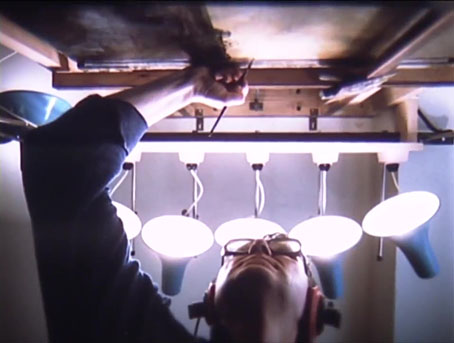
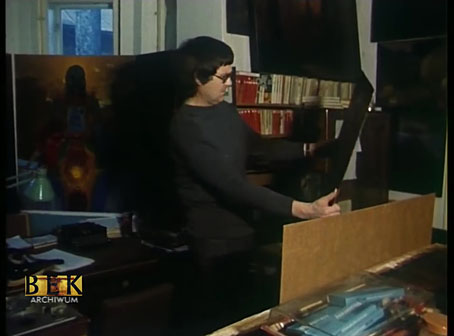
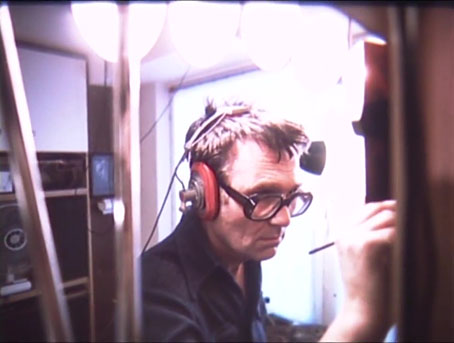
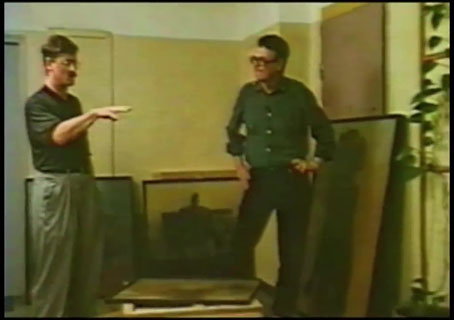
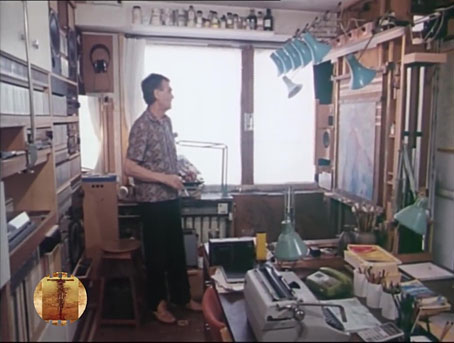
Polish artist Zdzisław Beksiński filmed at different stages of his career. There was more of this than I expected when Beksiński’s work ran so counter to contemporary trends. We have Andy Teszner to thank for making so much footage available and also providing English subtitles. Taken together, the films show the evolution of Beksiński’s workplace as much as his art, a space which becomes lighter, tidier and increasingly filled by audio-visual technology. Don’t expect any enlightening comments where the paintings are concerned. Beksiński was always adamant that they didn’t mean anything beyond what they were. I find this a refreshing attitude, especially when so many artists today attach a pompous explanatory statement to their work.

beksinski2.jpg

Zdzisław Beksiński in 1975. “He always works with music.”

beksinski3.jpg

Beksinski, 1978. “Would you like to say something to the audience?” “No. Absolutely not.”

beksinski4.jpg

Zdzisław Beksiński – A Stroll through Warsaw (1989). A film by Hubert Waliszewski and Elzbieta Dryll-Glinska in which Beksiński and Piotr Dmochowski wander around the city for a while then look at some of Beksiński’s paintings.

beksinski5.jpg

Beksiński at work, 1990.

Elsewhere on { feuilleton }
The fantastic art archive

Previously on { feuilleton }
Beksiński at Mnémos