Jeffrey Catherine Jones, 1944–2011

jones1.jpg

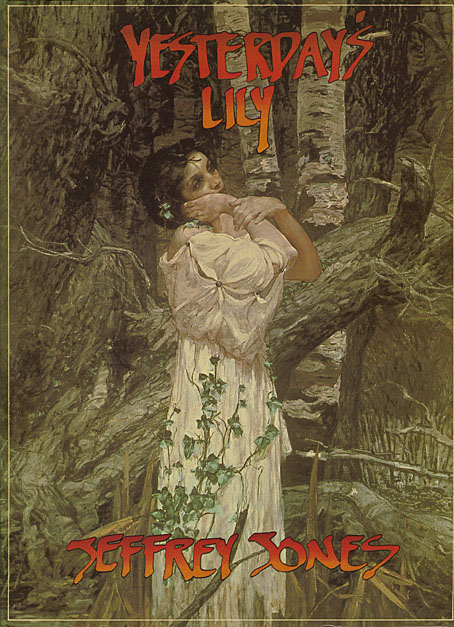
Yesterday’s Lily (1980), a collection of painting and illustration work published by Dragon’s Dream.

Artist Jeffrey Jones, whose death was announced this week, transitioned to Jeffrey Catherine Jones in the late 1990s so we’ll honour that here and won’t insist on referring to her as “he” as I’ve been seeing on some other websites. Jones’ work was significant for me mainly as a result of her participation in The Studio collective from 1975 to 1979, an affiliation of four artists—Jones, Barry Windsor-Smith, Mike Kaluta and Berni Wrightson—who shared a loft studio in New York City. The fruits of that relationship were recorded in one of my favourite art books, The Studio, in 1979. Of the four it was Barry Smith’s Pre-Raphaelite-inspired work which made the greatest impression at the time (especially Pandora), followed by Berni Wrightson’s Frankenstein illustrations. But Jones was the best painter in the group, with a style that blended influences from (among others) JM Whistler, Gustav Klimt and Frank Frazetta. There are galleries of paintings and drawings at the official website. Still to come is Better Things: Life & Choices of Jeffrey Jones, a documentary film by Maria Cabardo. Clips and trailers can be seen here.
A selection of paintings at Golden Age Comic Book Stories
The Studio Pt.1: Jeff Jones

Elsewhere on { feuilleton }
The illustrators archive

Previously on { feuilleton }
Roger Dean: artist and designer
Berni Wrightson’s Frankenstein

In the Land of Retinal Delights

williams.jpg

In the Land of Retinal Delights (1968) by Robert Williams.

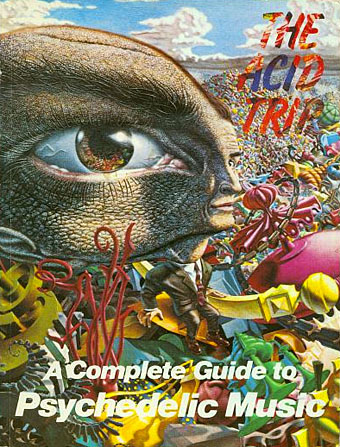
More psychedelia. I’d wanted to link to a decent version of this painting by Robert Williams for some time but it took a while for one to turn up. When people mention psychedelic art it’s usually concert posters they’re talking about. Williams’ super-detailed canvas is a good example of psychedelic painting when it conveys particular aspects of the hallucinogenic experience such as hyper-reality and a sense of physical distortion, something that the posters and album covers seldom convey. That said, Williams’ picture did appear as a cover illustration for The Acid Trip, Vernon Joynson’s guide to psychedelic music in 1984, setting that volume apart from similar books which are often spoiled by poor artwork.

Robert Williams at Beinart

acidtrip.jpg

Elsewhere on { feuilleton }
The fantastic art archive

Previously on { feuilleton }
The art of Mati Klarwein, 1932–2002
The art of LSD

A Book of Images by WT Horton

horton1.jpg

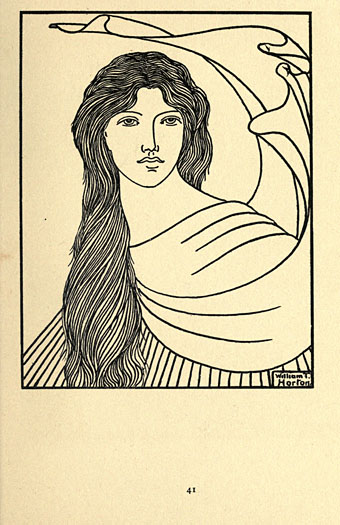
Diana.

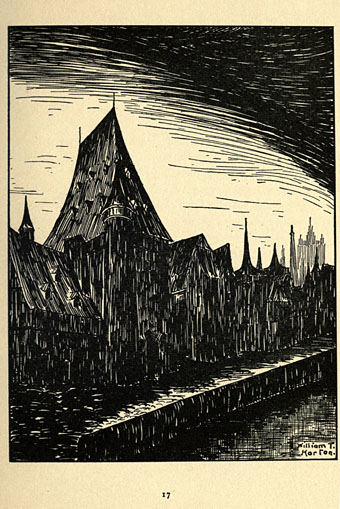
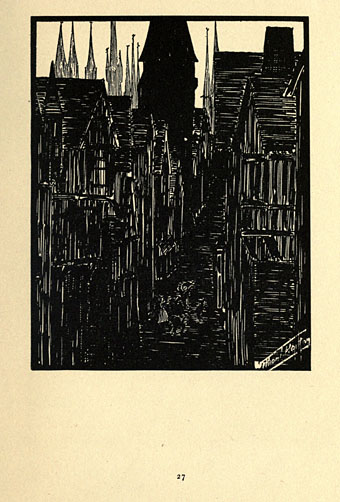
A Book of Images is an odd volume, a small collection of full-page drawings published by the Unicorn Press in 1898. William Thomas Horton (1864–1919) wasn’t in the first rank of black-and-white artists (although he did do better than this later on) but he was fortunate to have his book introduced by WB Yeats who generously lists the artist among some of the great talents of the 1890s. The series evolves from mundane views to mystical vision, and it’s this latter quality which Horton would explore in subsequent works.

horton2.jpg

By the canal.

horton3.jpg

La Rue des Petit-Toits.

Continue reading “A Book of Images by WT Horton”

Origami tessellations

origami1.jpg

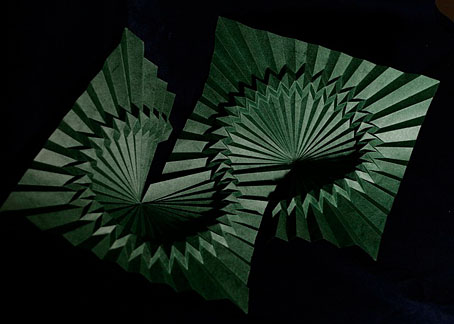
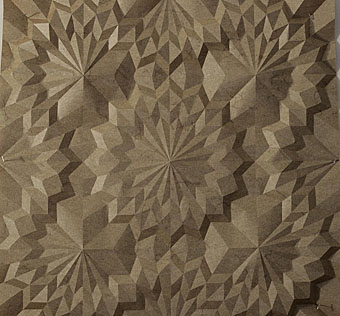
I seldom try origami these days despite an enthusiasm for it when I was younger, but I still like to see how people are developing the artform. These tessellation designs are part of a sub-genre of abstract paper-folding that’s a long way from the traditional Japanese animal shapes. The examples here are by Ray Schamp from his Flickr set. There are many more examples at the Origami Tessellations Flickr pool.

origami2.jpg

Previously on { feuilleton }
Sipho Mabona’s origami insects
Robert Lang’s origami insects

Weekend links 59

duetemmo.jpg

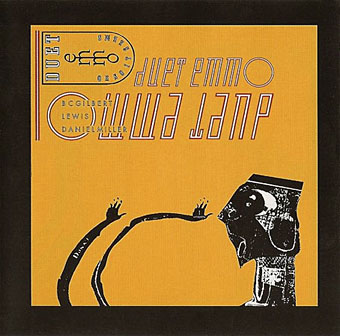
Or So It Seems (1983) by Duet Emmo. Design by The Brothers Quay.

• “Make things, no rules, but be quick.” Bruce Gilbert, musician in (among others) Wire, Dome and Duet Emmo is interviewed. Related: Daniel Miller, Mute label boss and another member of Duet Emmo is interviewed (and provides a mix) at The Quietus. For more electronica with nothing at all to do with Duet Emmo there’s this Matmos interview.

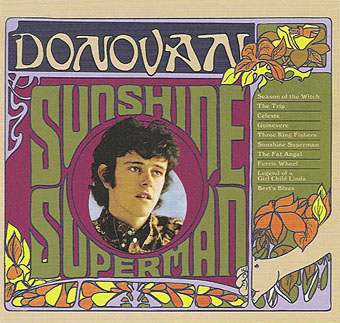
donovan.jpg

Design by Dick Smith.

“It’s psychedelic not because we were stoned before we wrote the songs, or stoned during composing them, but the experiences of searching for the transcendental world though altered states of consciousness were in the songs,” he says, which sounds suspiciously like another way of saying he was stoned before he wrote them, but perhaps it’s best not to quibble with the description of the method in the face of such impressive results…

Donovan revisits one of his finest works, Sunshine Superman.

• Yet more Guardian features: A Clockwork Orange: The droog rides again | Ira Cohen: psychedelic photography master | A life in writing: China Miéville | The stars of modern SF pick the best science fiction.

• There are many stars of the gaseous variety in Nick Risinger’s 5000-megapixel photograph of the Milky Way.

“It is quite true I have worshipped you with far more romance of feeling than a man should ever give to a friend. Somehow I have never loved a woman…. From the moment I met you, your personality had the most extraordinary influence over me…. I adored you madly, extravagantly, absurdly. I was jealous of everyone to whom you spoke. I wanted to have you all to myself. I was only happy when I was with you.”

Salon reviews the new unexpurgated edition of The Picture of Dorian Gray.

• Paul Gorman discovered the gay art origins of the notorious Cowboys T-shirt.

The full complement of Saul Bass’s designs for Vertigo‘s print advertising.

Photos of the recent Dodgem Logic event by Rosie Reed Gold.

Peter Ashworth is still taking great photos.

Jodorowsky’s Dune Finally Revealed?

Sunshine Superman (1966) by Donovan | Or So It Seems (1983) by Duet Emmo.