The art of Aloys Zötl, 1803–1887

zotl.jpg

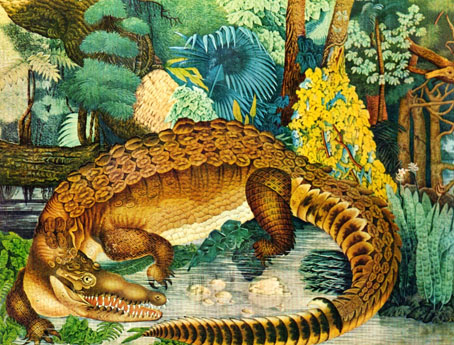
Le caïman (1849).

Two things that everyone seems able to tell you about Austrian artist Aloys Zötl is that his idiosyncratic bestiary was hailed by André Breton as a Surrealist precursor, and that Zötl’s paintings were published in a lavish edition by Ricci in 1977 with accompanying text by Julio Cortázar. Typically for a Ricci book, those editions now sell for excessive sums so we’re left to scour the web for his pictures. Considering their age and Surrealist connections its surprising that there isn’t a decent online collection anywhere. A number of prints can be found on those auction sites which blight the pictures they don’t own with watermarks. Better to look at the examples on this blog or this page at the André Breton site where the copies are small but include quotes from the Ricci volume.

Elsewhere on { feuilleton }
The fantastic art archive

Previously on { feuilleton }
Fantastic art from Pan Books

Weekend links 63

solaris.jpg

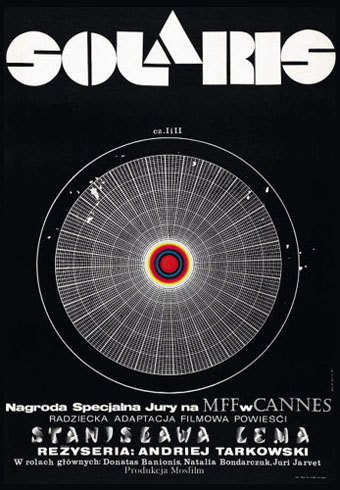
Polish poster by Andrzej Bertrandt for Andrei Tarkovsky’s 1972 film of Solaris.

• Stanisław Lem’s Solaris receives its first ever direct English translation by Bill Johnston (only on Audible for the moment), all previous editions having been sourced from a poor French translation. An all-too-common state of affairs for non-English fiction where bad or bowdlerised translations persist for years.

• Now that Minnesota politician Michelle Bachmann is running for US president it’s a good time to examine her views when (theoretically) her actions could one day impact on us all. The Daily Beast gathered together some of her worst pronouncements, including the following about gay people: “It’s a very sad life. It’s part of Satan, I think, to say that this is gay.” Her husband describes his attempts to counsel (ie: cure) gay teenagers with the words “Barbarians need to be educated.” It’s no surprise that both these people find confirmation of their views in the usual narrow interpretation of Christian doctrine. Not all American Christians are this ignorant or offensive, of course. The Heartland Proclamation calls for “an end to all religious and civil discrimination against any person based on sexual orientation and gender identity and expression”.

Journalist Andrew Sullivan in 2003 proposed a label for people like Bachmann: “I have a new term for those on the fringes of the religious right who have used the Gospels to perpetuate their own aspirations for power, control and oppression: Christianists. They are as anathema to true Christians as the Islamists are to true Islam.” It’s a term that ought to have more widespread use.
solaris-czech.jpg

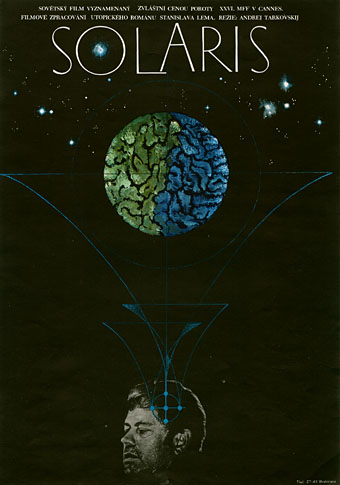
Czech poster for Solaris. No designer credited.

• Probing the secrets of psilocybin: “Scientists at the Johns Hopkins University School of Medicine have zeroed in on the dose levels of the ‘sacred mushroom’ chemical capable of yielding positive, life-changing experiences, while minimizing the chance of transient negative reactions in screened volunteers under supportive, carefully monitored conditions.”

• Rick Poynor relates a visit to the Frederic Marès Museum, Barcelona, home to the 50,000 objects Marès collected over his lifetime. Further details of the collection can be found at the museum website.

In her 1969 essay “The Pornographic Imagination,” [Susan] Sontag insisted that Story of O could be correctly defined as “authentic” literature. She compared the ratio of first-rate pornography to trashy books within the genre to “another somewhat shady subgenre with a few first-rate books to its credit, science fiction.” She also maintained that like science fiction, pornography was aimed at “disorientation, at psychic dislocation.”

If so, that aim is far more interesting than what most generic “mainstream” novels set out to do. No one could describe O as predictable or sentimental. Its vision was dark and unrelenting; everything about it was extreme. Sontag also compared sexual obsession (as expressed by Réage) with religious obsession: two sides of the same coin.

Carmela Ciuraru on the story of The Story of O by Pauline Réage.

• “No hay banda! There is no band. It is all an illusion.” David Lynch will be opening a Club Silencio in Paris (Montmartre, of course). Facebook pages here and here.

• Sad to say that Chateau Thombeau is now closed but Thom has begun a more personal journal here.

• Picture galleries of the Vorticists at the Tate here and here. Related: Into the Vortex.

• Illuminated Persian pages from 1604 at BibliOdyssey.

• Tape drawings by Chris Hosmer.

• Miles Davis and co. at the Isle of Wight Festival, 1970: part 1 | part 2 | part 3 | part 4

Land art

spiral.jpg

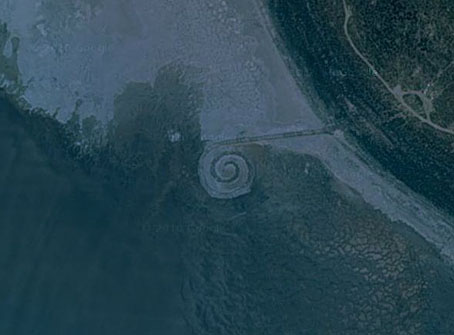
Spiral Jetty.

Reading this story about an ownership dispute over Robert Smithson’s Spiral Jetty in Utah had me searching out his celebrated artwork on Google Maps. It’s easy to find since Google have many of the well-known pieces of 1970s land art marked on their satellite views. Having found Smithson’s construction I went looking for a few more.

city.jpg

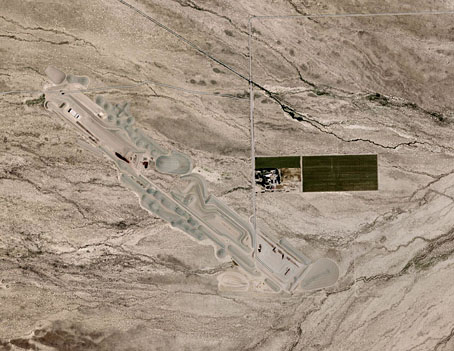
City.

Less easy to find, since it’s not marked and the artist forbids visitors, is Michael Heizer’s enormous and enigmatic City, an earthwork complex he’s been constructing in the Nevada desert since the early 70s. From the air it looks like a secret military base, the art area being the diagonal arrangement of structures on this view while the squares to the right are the artist’s home. I’ve been fascinated by this creation ever since a part of it, Complex One, was featured in Robert Hughes’s The Shock of the New, not least for Hughes’s assertion that these remote works impel an act of pilgrimage on any would-be visitors. This page has more about City and some of the few photos which have been released of its structures. See also A Sculptor’s Colossus of the Desert and Art’s Last, Lonely Cowboy.

roden.jpg

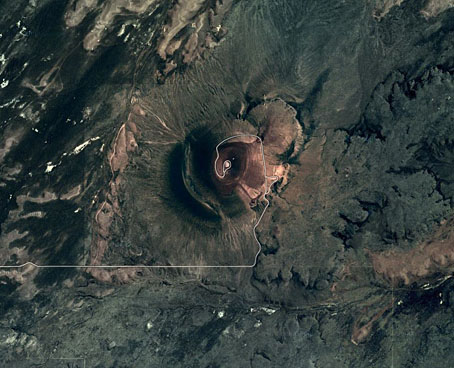
Roden Crater.

Equally remote, and for the time being inaccessible to the public, is James Turrell’s Roden Crater in Arizona, an extinct volcano which Turrell has been converting into an enormous viewing space for astronomical events and the transitory effects of natural light. This was begun in 1978 and seems like it may actually get finished, unlike Heizer’s construction site. This NYT article discusses the work’s history while Paul Schütze has recent photos of site details as well as a free download of some of the music he’s composed for the interior.

Continue reading “Land art”

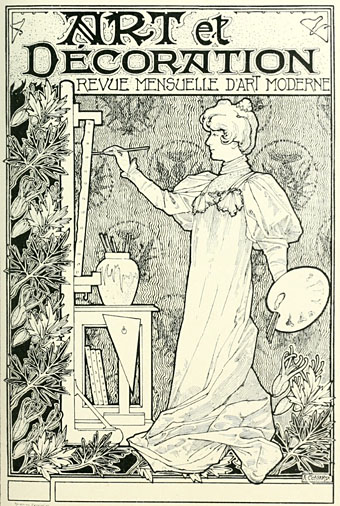
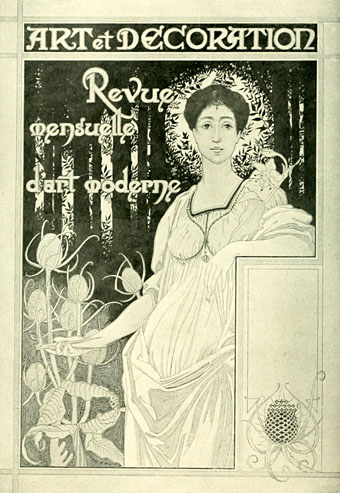
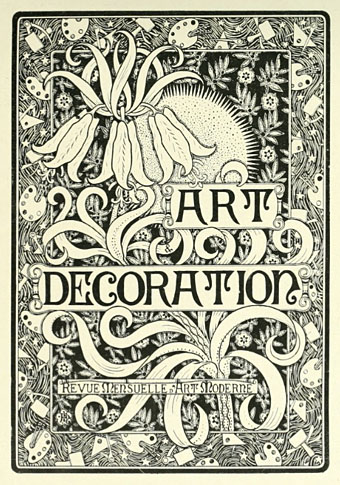
Art et Décoration

aed1.jpg

Another Art Nouveau journal partially emerged from the world’s libraries, Art et Décoration was a French equivalent of The Studio, launched a few years after its British counterpart in 1897. The examples here are from a cover design competition in the first issue which yielded the usual complement of decorous muses and florid borders; The Studio used to hold similar competitions. For now the Internet Archive only has the four issues of A&D, the first two then numbers 41 & 42. Here’s hoping that more become available, I’m naturally curious to see how they treated the Exposition Universelle of 1900.

aed2.jpg

aed3.jpg

Continue reading “Art et Décoration”

Sibylle Ruppert revisited

ruppert1-1.jpg

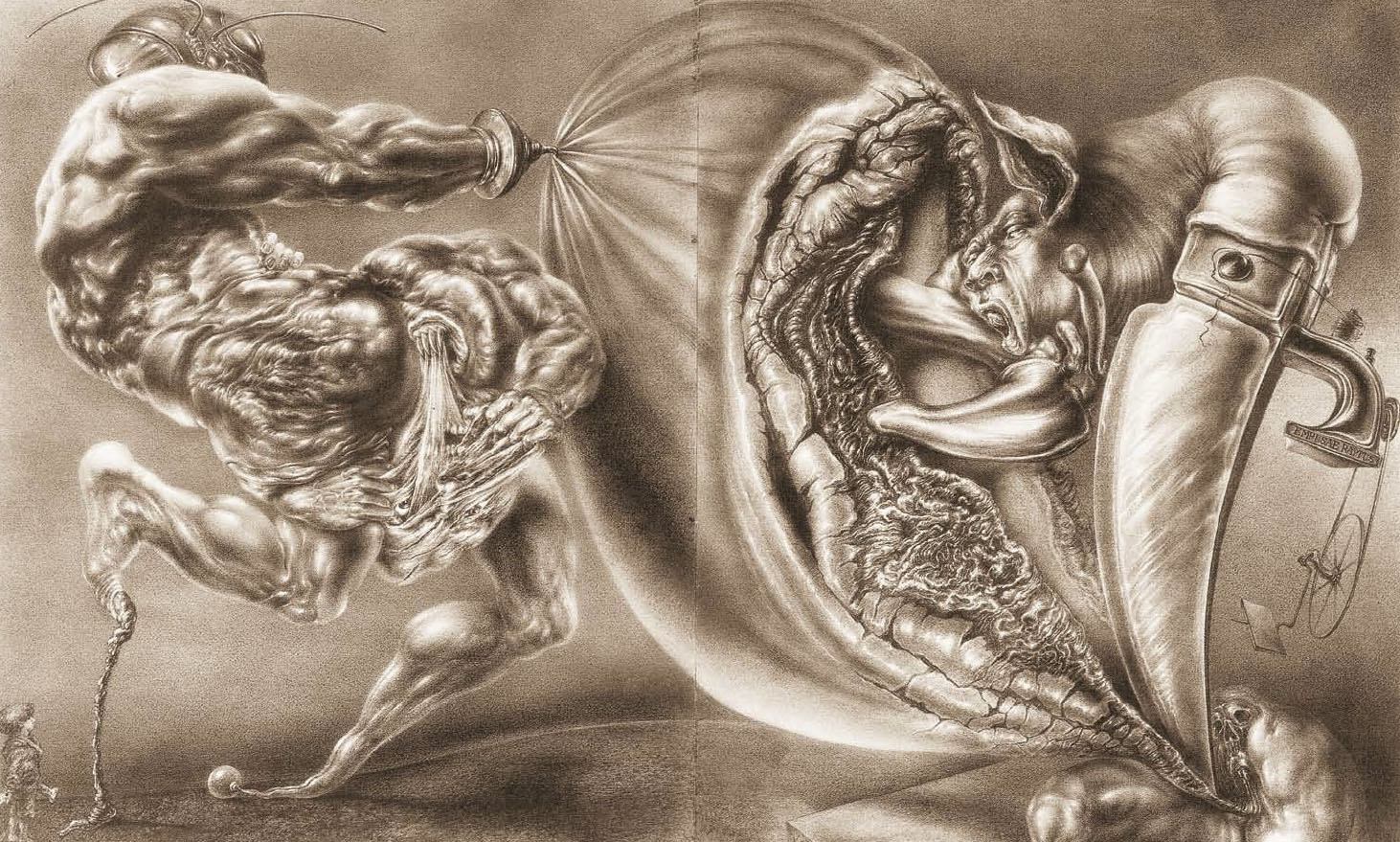
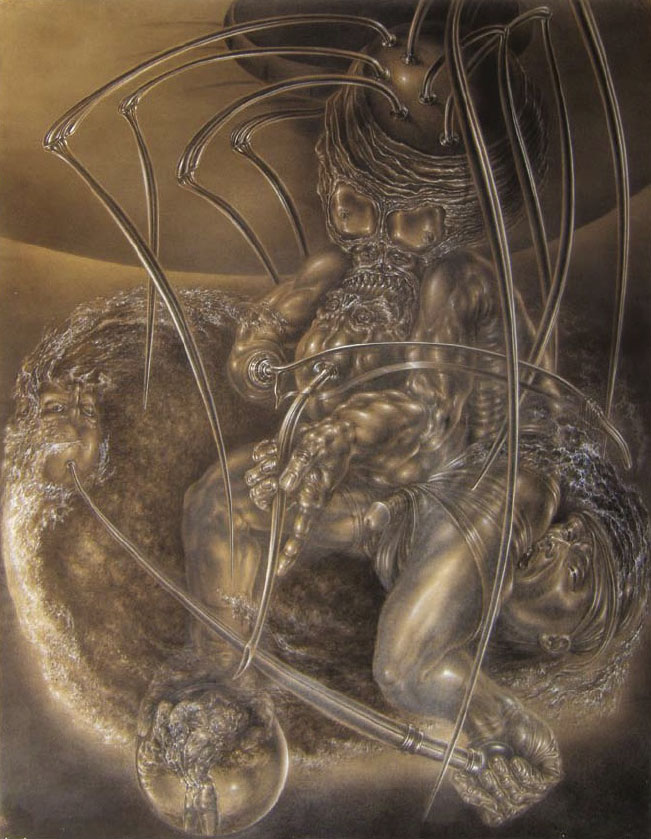
Empusae Raptus (1977).

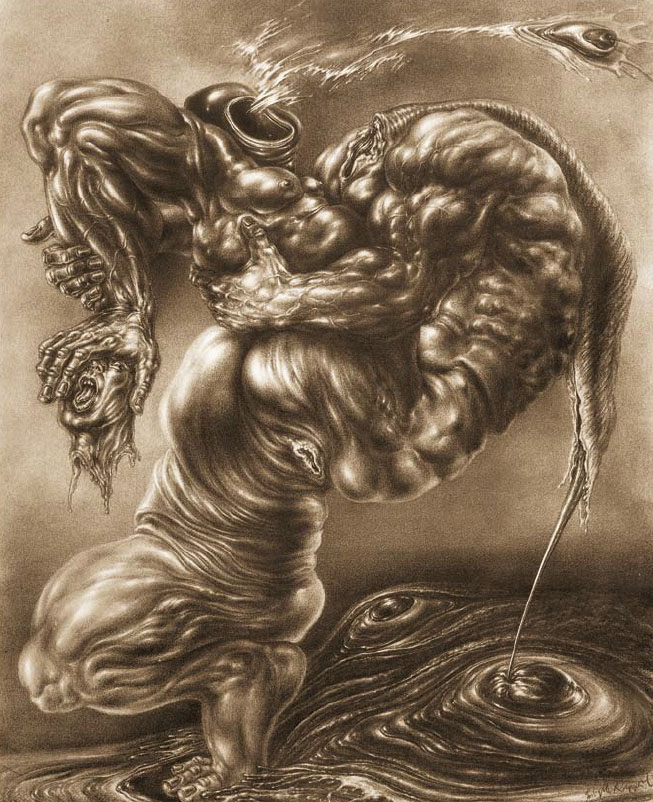
Another post about this astonishing artist (I’ll keep talking about her if no one else does…). The pictures here are taken from the catalogue for the 2010 Sibylle Ruppert exhibition at the HR Giger Museum, Gruyères, Switzerland. Leslie Barany was good enough to send me a copy of this, and the pictures are posted courtesy of the museum. To purchase a copy of the catalogue contact marcowitzig@gigerworkcatalog.com

ruppert2-1.jpg

Le Chant de Maldoror (1978).

Looking over Sibylle Ruppert’s work this week I’ve been pondering why she wasn’t better known. She was working throughout the 1970s and could easily have been swept up in the vogue for fantastic art when it was being popularised by Omni magazine. Giger, Mati Klarwein, Robert Venosa, De Es Schwertberger and others all benefited from Bob Guccione’s publication, and to a lesser degree from appearances in Heavy Metal magazine. Ruppert’s lack of visibility may have been a result of the usual situation whereby women artists were overlooked or marginalised. But I think it’s far more likely that her work was simply too intense and visceral for the newsstands. Giger could get by with paintings like the semi-abstract NY City series which were attached to science fiction stories without causing a stir. It’s difficult to imagine Ruppert’s work gaining such a popular acceptance, especially in the United States where, lest we forget, Giger’s Penis Landscape did cause a stir in 1985. One of the great benefits of the web is the way so much previously buried culture is surfacing and finding new and enthusiastic audiences. Sibylle Ruppert’s greatest audience has yet to find her but they’re surely out there, you can’t keep work of this quality buried forever.

For a few more Ruppert works see that haven of all things grotesque, Monster Brains.

ruppert3-1.jpg

Le Spectacle de l’Univers (1977).

Continue reading “Sibylle Ruppert revisited”