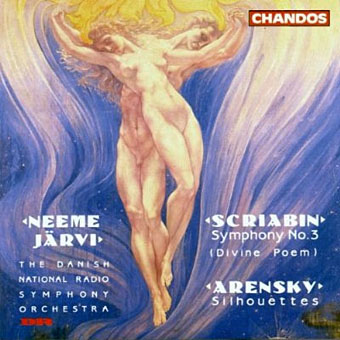
Jean Delville album covers

delville12.jpg

Scriabin: Symphony no 3; Arensky: Silhouettes (1992) by Neeme Järvi.

The Delville painting from yesterday’s post seems popular with classical recordings, this is only one example of its use, chosen here because some of the music is Scriabin for whom Delville created a sheet music illustration in 1912. Delville’s other work is understandably popular in the metal world among whose adherents there’s now a kind of tradition for using interesting paintings as album art. Examples of some of these follow.

delville3.jpg

The Treasures of Satan (1895).

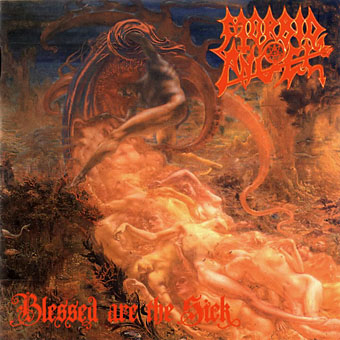
Morbid Angel beat everyone to Delville’s masterwork. I wrote something about using the same painting on a book cover design here.
delville4.jpg

Blessed Are The Sick (1991) by Morbid Angel.
parsifal.jpg

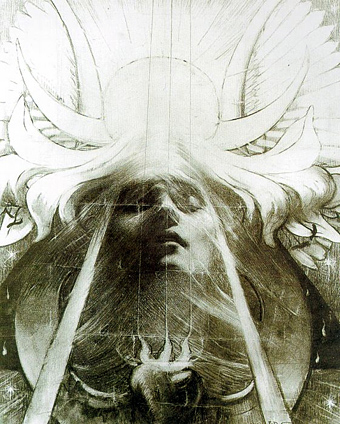
Parsifal (1890).

Another very popular Delville image, that face was used by Stanley Mouse in a poster design in 1991, and even crept into my adaptation of The Call of Cthulhu.
delville6.jpg

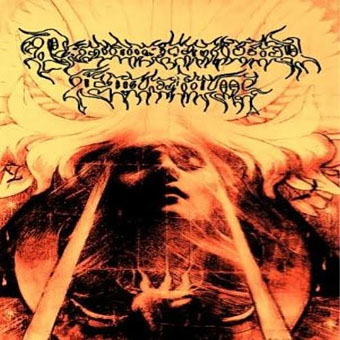
Into The Flames (2004) by Pseudostratified Epithelium.

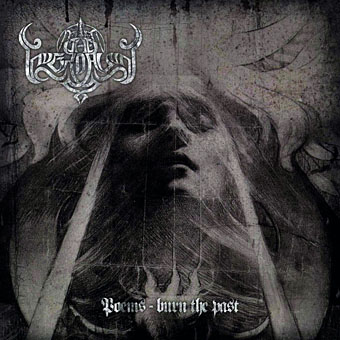
Pseudostratified Epithelium are a death metal band from Costa Rica. A shame they stretched Delville’s drawing; The Everdawn make a better fist of it.
delville7.jpg

Poems – Burn The Past (2012) by The Everdawn.
Continue reading “Jean Delville album covers”

L’amour des âmes

delville1.jpg

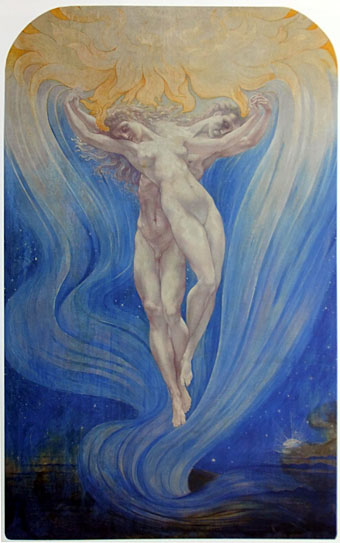
L’amour des âmes (1900) by Jean Delville.

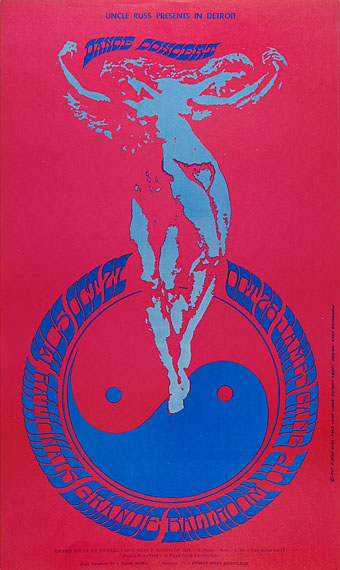
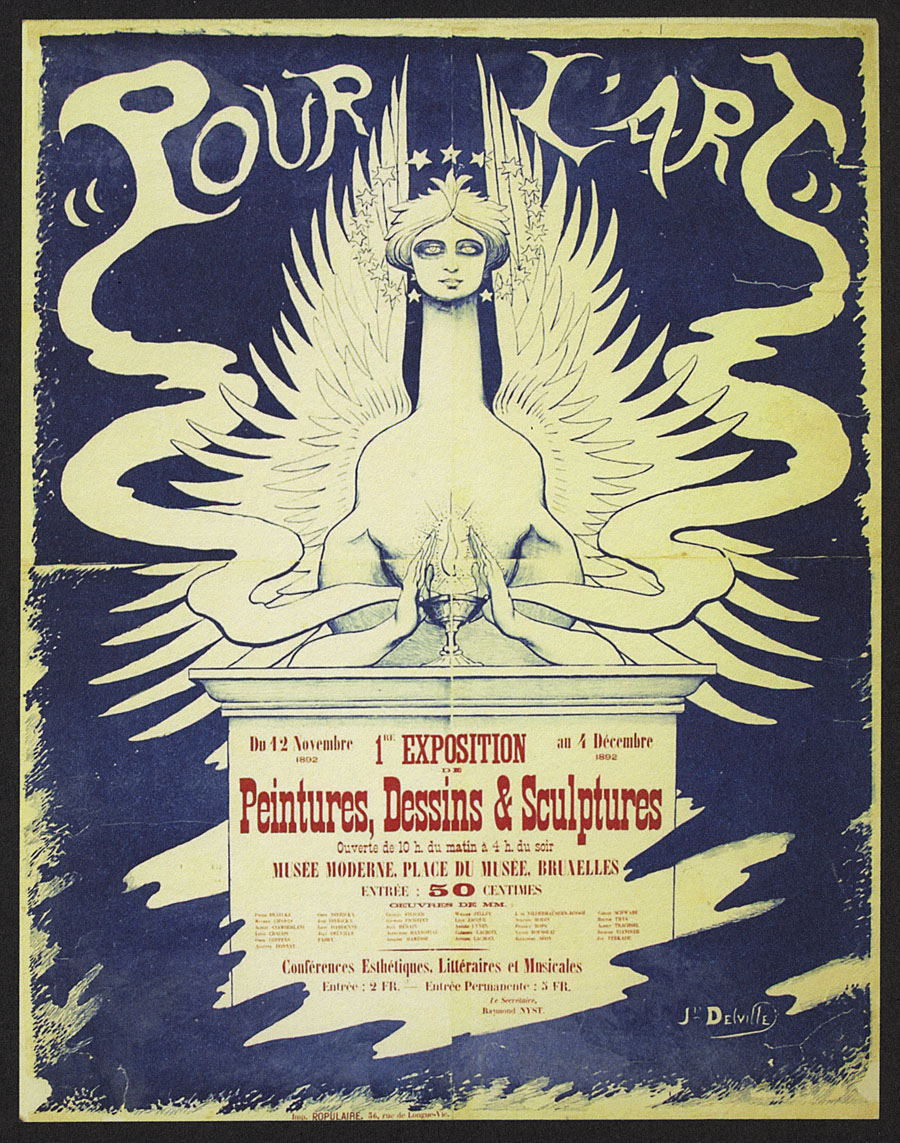
Another of the many connections between the Symbolism and psychedelic poster art, the mystically-inclined Jean Delville (1867–1953) may at least have approved of the addition of a yin-yang symbol to his painting of drifting souls. I was originally going to post Delville’s Pour L’art poster design since I’ve not seen a copy on the web as good as the one below which is scanned from a book. (The principal Delville site has many of his works but in variable quality.) Delville’s pair of floating lovers happen coincidentally to suit the preoccupations of February 14th.

grimshaw.jpg

MC5 at the Grande Ballroom, Detroit (1967) by Gary Grimshaw.

Pour L’art was a Belgian circle of artists formed in Brussels in 1892 to stage exhibitions promoting their work. Delville was the most notable of the group as well as being one of its prime movers. Looking on the Delville website it’s good to see there’s a major study of the artist’s life and work in progress, with publication scheduled for later this year. Too many artists from the late 19th century have been neglected for far too long but attitudes are slowly changing. Anyone interested in Jean Delville is advised to also look at this site which is dedicated to that apostle of androgyny, Joséphin Péladan. One of the strangest characters in the Symbolist menagerie (and the competition for that label is fierce), Péladan’s occult theories inspired Delville and a number of other artists in Belgium and France. It’s good to see he’s also gaining some serious study at last.

delville2.jpg

Pour L’art (1892) by Jean Delville.

Previously on { feuilleton }
Philippe Jullian, connoisseur of the exotic
Delville, Scriabin and Prometheus
The faces of Parsifal
Masonic fonts and the designer’s dark materials
Angels 4: Fallen angels

The recurrent pose 50

vleugels.jpg

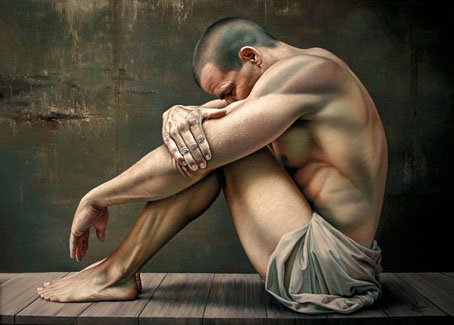
Belator (2013) by Christiane Vleugels.

With this series about the Flandrin pose being the oldest on the blog—the initial post was Feb 16, 2006—the whole thing has gradually evolved from a diverting observation to the unearthing of a trend that runs deeper and further than I expected.

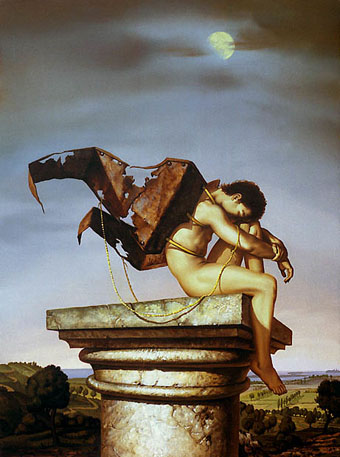
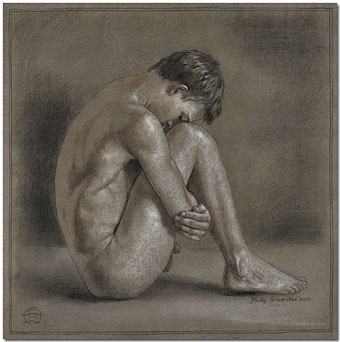
Christiane Vleugels is a Belgian artist with a hyperrealist style. Siegfried Zademack has a painting style closer to Salvador Dalí, here putting Flandrin’s Classical figure onto the pillar of Saint Simeon Stylites. One of Philip Gladstone’s paintings was the subject of an earlier post, and some of his other drawings might be considered Flandrinesque. They show that you don’t have to render every last hair and shadow in order to make an impression.

zademack.jpg

Saint Simon on the Pillar (after Flandrin) (1988) by Siegfried Zademack.

gladstone.jpg

Untitled (seated male nude in the Flandrin pose) (2011) by Philip Gladstone.

Elsewhere on { feuilleton }
The recurrent pose archive

Weekend links 146

snake.jpg

A Chinese postage stamp celebrating the Year of the Snake.

Cyclopean is a collaboration from Burnt Friedman, Jono Podmore and Can founding members Jaki Liebezeit, and Irmin Schmidt. The Quietus has a preview of all the tracks from their forthcoming EP. Great stuff.

Ten Things You (Possibly) Don’t Know About Kraftwerk. Related: a Speak & Spell emulator, and Atomium, a new single by Karl Bartos.

• In 1975 Barney Bubbles designed an inner sleeve for Hawkwind’s Warrior on the Edge of Time album, and this scarce recipe booklet.

• “We should all use language carefully. That is an obligation on the literate. But carefully doesn’t mean fearfully,” says Jenny Diski.

• Faber’s car-crash of a cover design for the 50th anniversary edition of The Bell Jar by Sylvia Plath caused an outbreak of parodies.

• At Strange Flowers: Ancient dreams and antique corruptions, Salomé via Gustave Moreau and Huysmans.

• FACT Mix 368 is a very varied collection of recent music and older pieces curated by Holly Herndon.

• At Ubuweb: eleven out-of-print recordings of Harry Bertoia’s sound sculptures.

Laurie Anderson and Brian Eno in conversation at Interview magazine.

Michael Chabon on Wes Anderson’s Worlds.

Snake Rag (1923) by King Oliver’s Creole Jazz Band | Rattlesnake Shake (1969) by Fleetwood Mac | Snakes Crawl (1980) by Bush Tetras | Ananta Snake Dance (1980) by Suns of Arqa | Snakeblood (2000) by Leftfield

Stuck’s serpents

stuck1.jpg

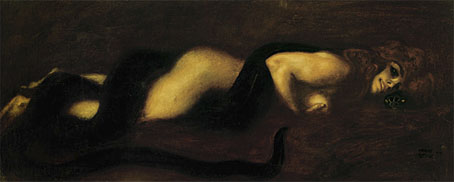
The Sin (1894).

Some pictures in honour of the Chinese year of the Water Snake which begins this Sunday. Paintings of women with snakes are legion, even after you winnow out all the Eve and the Serpent pictures, so you need to narrow the field of view. Artists of the 19th century must have been delighted when Gustave Flaubert published Salammbô in 1862, chapter 10 of which—The Serpent—gave them an excuse to depict an exotic woman involved with a snake completely free of any Biblical trappings.

stuck3.jpg

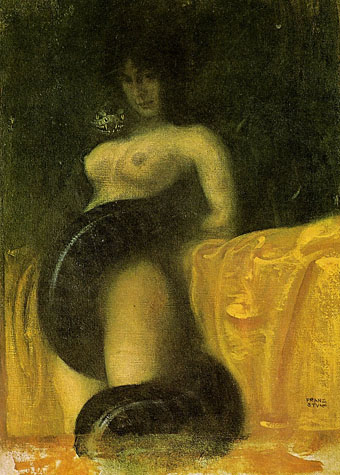
Sensuality (1891).

Franz Stuck’s celebrated trio of serpent women can be read as Eve figures but their provocative posing is more in line with the prurient misogyny common to much art of the period, an attitude which condemned women for being so tempting whilst also secretly lusting after their bodies. Sensuality is remarkable for the way its oiled snake is so firmly lodged between the woman’s thighs. Stuck was never very interested in Christian themes—many of his other works are a Teutonic take on Classical subjects—so I wonder whether his use of the word “sin” was merely a fig leaf for delivering imagery he wouldn’t have otherwise been able to exhibit.

stuck2.jpg

The Sin (1893).

wilson.jpg

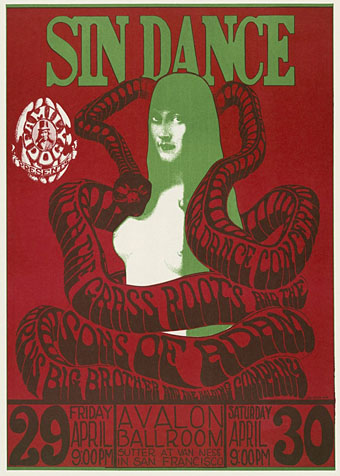
Sin Dance (1966) by Wes Wilson.

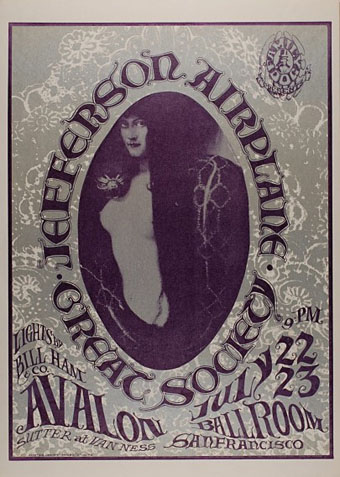
Symbolist art was rediscovered in the 1960s after decades of neglect, and the psychedelic poster artists happily plundered the art books for suitable imagery. Stuck’s Sin returned to the world in these two Avalon Ballroom posters. Wes Wilson’s Sin Dance was a design for an event which was cancelled so this might explain why the same painting appeared a few months later on a Stanley Mouse and Alton Kelley poster. The Mouse & Kelley version was printed with metallic inks.

For more of Franz Stuck’s work see WikiPaintings.

mouse.jpg

Jefferson Airplane at the Avalon Ballroom (1966) by Mouse & Kelley.

Previously on { feuilleton }
Serpentine pulchritude
Salammbô illustrated
The Feminine Sphinx
Men with snakes