Keiichi Tanaami record covers

tanaami01.jpg

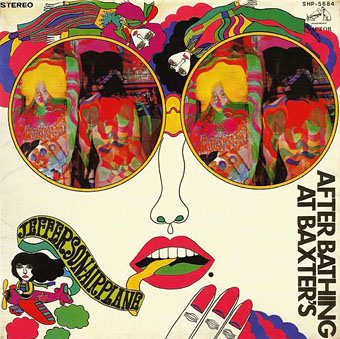
After Bathing At Baxter’s (1968) by Jefferson Airplane (front).

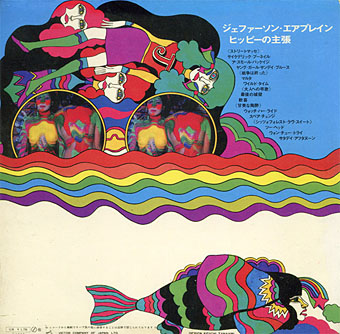
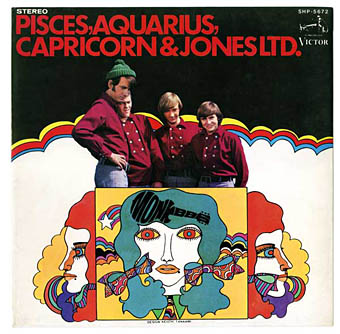
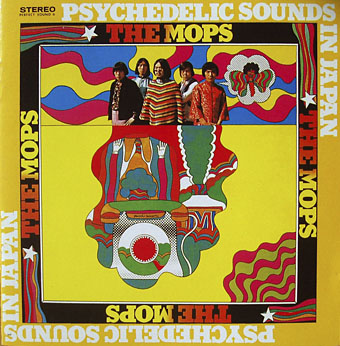
More psychedelia, although Ernst Fuchs could be considered psychedelic to some degree, and I did give him a mention in the piece I wrote for Communication Arts earlier this year. Keiichi Tanaami is less well-known in the west than Tadanori Yokoo despite the pair being contemporaries. This is only a partial discography, there may be more to find as Tanaami’s cover work isn’t always credited properly on Discogs. The Jefferson Airplane and Monkees covers were done specially for the Japanese releases. In the case of the Airplane one I much prefer the cover to Ron Cobb’s literal drawing of an aircraft.

tanaami02.jpg

After Bathing At Baxter’s (1968) by Jefferson Airplane (back).

tanaami03.jpg

Pisces, Aquarius, Capricorn & Jones Ltd. (1968) by The Monkees.

tanaami04.jpg

Psychedelic Sounds In Japan (1968) by The Mops.

Continue reading “Keiichi Tanaami record covers”

Ernst Fuchs, 1930–2015

fuchs6.jpg

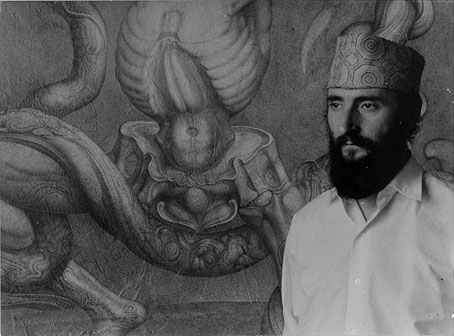
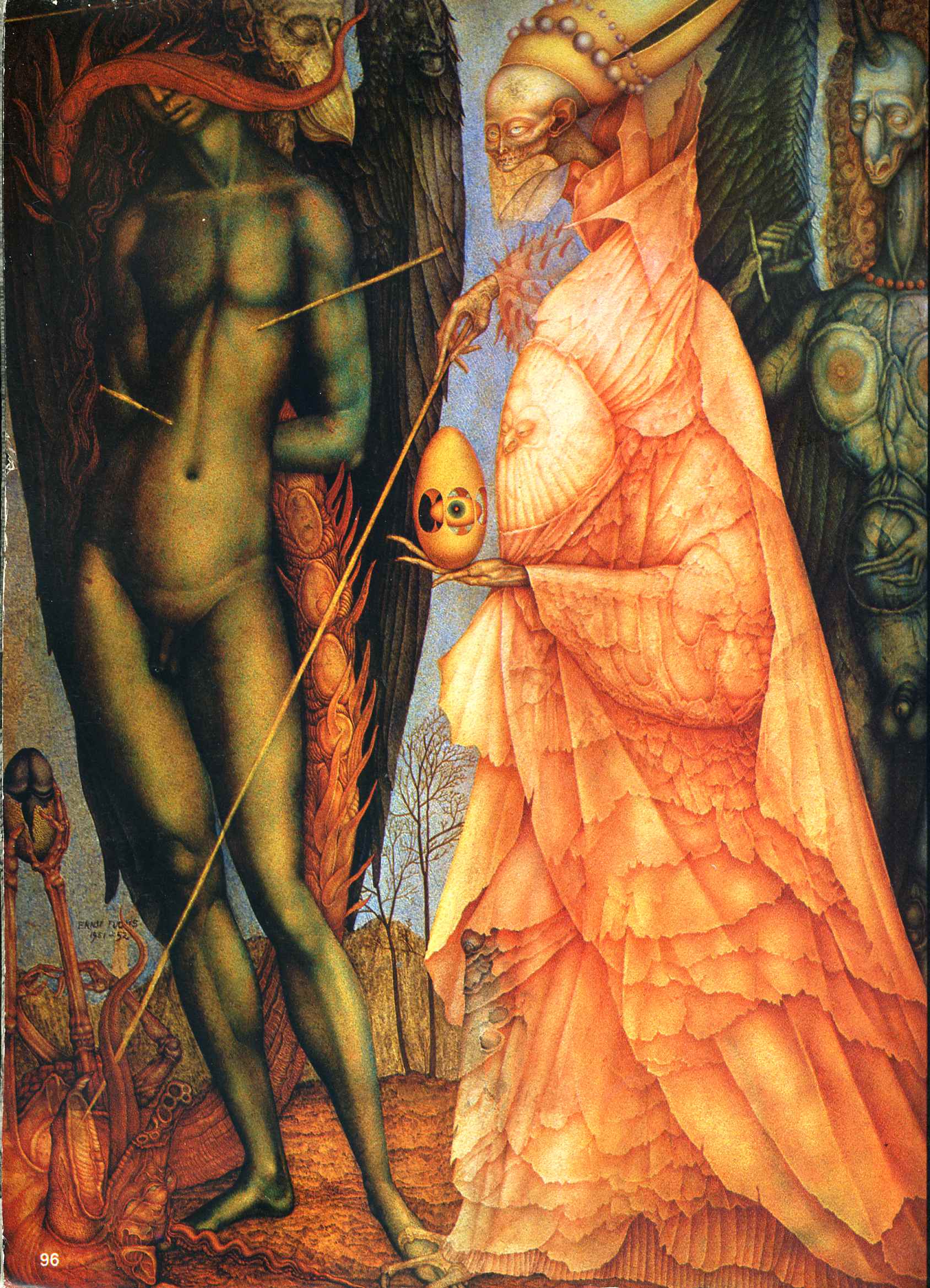
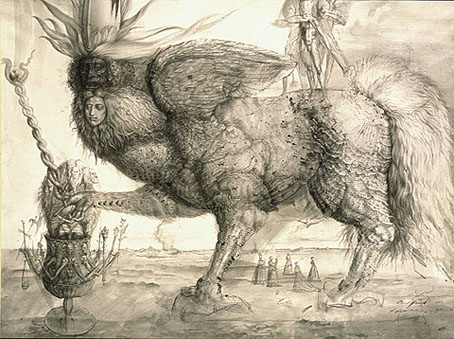
It was a surprise to see the death of Austrian artist Ernst Fuchs mentioned on the BBC website since I’d never seen him mentioned in the British media during his lifetime. Fuchs was one of those artists who would have been a natural Surrealist if he’d been born a few years earlier, and his work does occasionally receive a mention in the more comprehensive guides to Surrealism. The first place I saw any of his paintings was in the pages of Omni magazine when it was launched in the late 1970s. As well as providing a high-profile showcase to science-fiction writers, Omni in its early days avoided generic SF art in favour of the living practitioners of Fantastic Realism: Fuchs, HR Giger, Mati Klarwein, Robert Venosa, Rudolf Hausner, De Es Schwertberger and many others. Fuchs was often seen as the figurehead of this loose movement as a result of founding the Vienna School of Fantastic Realism in the 1940s, but Fantastic Realism as it’s generally applied is an umbrella term used to connect a generation of artists who were using hyper-real techniques to explore their obsessions. Fuchs’ obsessions often concern spirituality of one kind or another but he could be erotic as well, something you can’t always say about his many imitators in the current Visionary Art world. At his best his paintings seem caught midway between the Max Ernst style of the late 40s and Gustave Moreau’s more hieratic moments, with human figures or inhuman creatures emerging from (or melting into) mineral forms.

Official site
Fuchs at Wikiart
Fuchs pages at Fantastic Visions
360-degree panorama of the Apocalypse Chapel, Klagenfurt

fuchs2.jpg

Battle of the Gods that have been Transformed (1952).

fuchs1.jpg

The Spirit of Mercury (1954).

Continue reading “Ernst Fuchs, 1930–2015”

Weekend links 283

wassmann.jpg

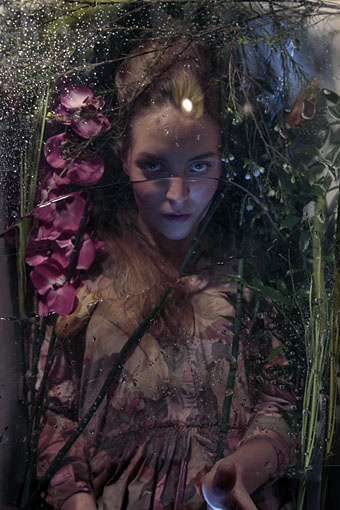
Behind by Lisa Wassmann.

• “Without space art, nobody would know what Mars would look like.” Artist David A. Hardy talking to Nadja Sayej about a life spent painting the cosmos and—briefly—working for Hawkwind. Visions of Space, an exhibition of astronomical art, is at the Wells & Mendip Museum throughout November.

• Mixes of the week: Something Beautiful Happened by Cafe Kaput; Autumn Vybes: Mist, Mystery and Motion by Abigail Ward; and Secret Thirteen Mix 166 by Ron Morelli.

• More Ghost Box: Two new singles in the Other Voices series will be released next month. And the label is profiled in the latest issue of Electronic Sound magazine.

It breaks my heart when one writer tells another what she can or cannot do. I once knew a woman, a professor of literature, who said that Flaubert had no right to write Madame Bovary because he was a man. Such dangerous foolishness! This is just another form that dogmatic thinking takes. And it seems to me that the imagining mind—which is also a profoundly human mind—must be unfettered, boundless. To write from the perspective of another’s world demands a generous and a rigorous leap of the spirit; it demands empathy and mindfulness. Writing is so much about subverting dogmatisms of all kinds, above all the ones that insist you cannot go there! You must not say that! Writers need to go anywhere, to take anything on. And the only rule is to do it well.

Rikki Ducornet in a retrospective feature at Dennis Cooper’s blog

• “Horror at its best has always existed outside the mainstream,” says Brian Ennis in another celebratory piece about Thomas Ligotti.

• Alan Clarke & David Rudkin’s Penda’s Fen receives another cinema screening next week at the Sallis Benney Theatre, Brighton.

• “[David] Lynch’s films abound with gnomic pronouncements and incantations,” says Dennis Lim.

Stars of the Lid play a tremendous hour-long set at St. Agnes Church in Brooklyn.

Drawn in Stereo: a book of music-related art and illustration by Michael Gillette.

• At Dangerous Minds: Only the coolest people get to sit in the wicker peacock chair.

Everything Is Erotic Therefore Everything Is Exhausting by Johanna Hedva.

Moon Mist (1961) by The Out-Islanders | River Mist (1989) by Brian Eno | Black Mist (Long Version) (2013) by Pye Corner Audio
Suspiria details

suspiria01.jpg

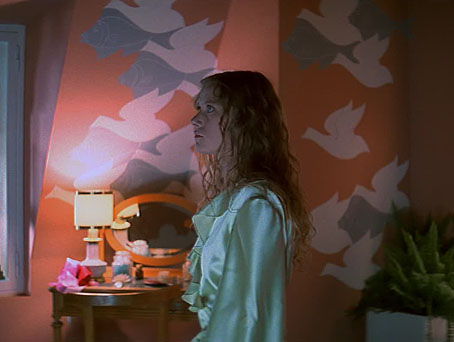
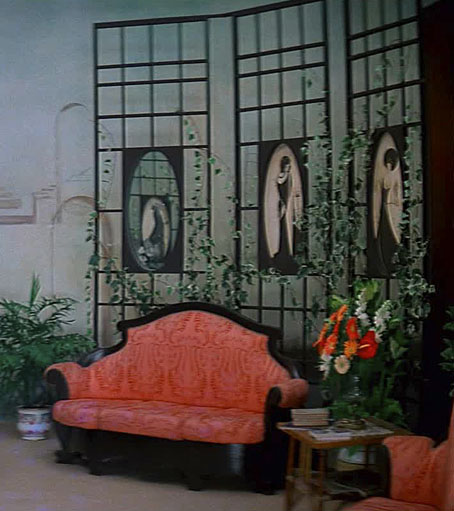
Wall decor based on MC Escher’s Study of Regular Division of the Plane with Fish and Birds (1938).

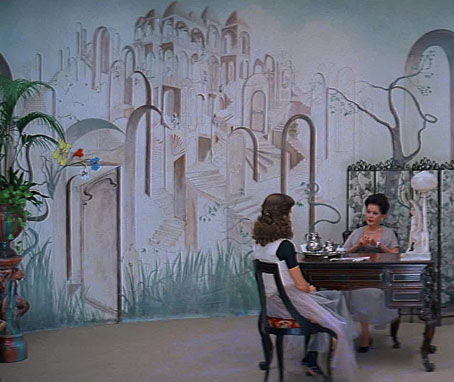
A few screen grabs from the weekend’s viewing of a German Blu-ray disc of Suspiria (1977). My old DVD didn’t look too bad but this is one film where high-definition is required to do justice to the vivid lighting and to Giuseppe Bassan’s marvellous production design. The Art Nouveau splendour of the cursed ballet school contains some notable art references but elsewhere there’s the Escher decoration on the walls of the apartment at the beginning, not the kind of decor you expect to find in a horror film. All these images are details cropped from widescreen frames.

suspiria02.jpg

Suzy (Jessica Harper) and Madame Blanc (Joan Bennett) in the madame’s office. The mural always fascinated me for being a strange confection of Escher motifs, all winding staircases and architecture borrowed from Belvedere (1958).

suspiria03.jpg

The far right of the same shot showing some of the Beardsley figures that fill the panels of Madame Blanc’s screens.

Continue reading “Suspiria details”

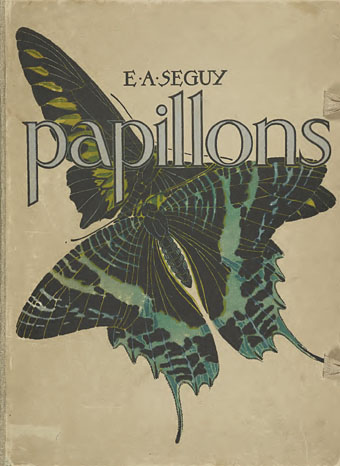
Papillons by EA Séguy

seguy01.jpg

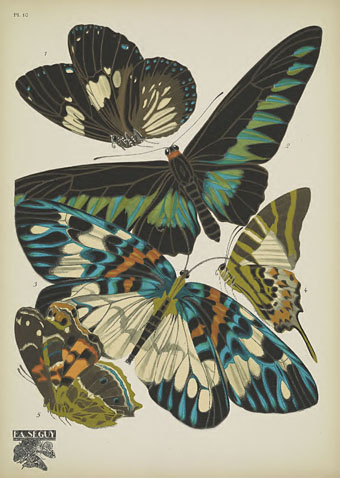
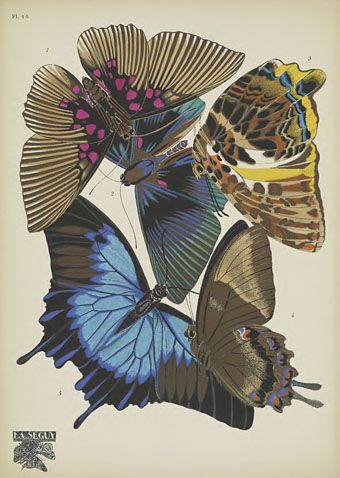
I’d seen a couple of these plates before—BibliOdyssey has a post about Séguy’s insect art—but not the book as a whole. In addition to the butterfly portraits there are also a number of suggestions for textile designs based on butterfly wings. Papillons was published in 1925. Five years later Séguy produced a collection of Art Deco designs, Prismes, which was highlighted a while ago, and which is now also available at the Internet Archive. The Prismes plates tend to abstraction but nonetheless feature some stylised natural elements, butterflies included.

seguy02.jpg

seguy03.jpg

Continue reading “Papillons by EA Séguy”