Franklin Booth’s Flying Islands

booth.jpg

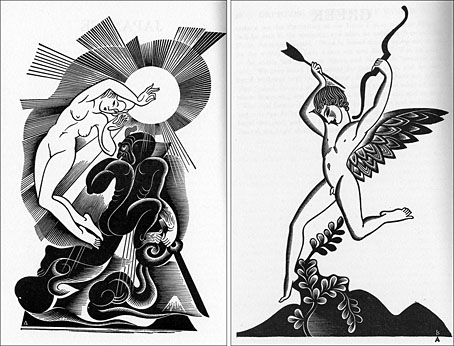
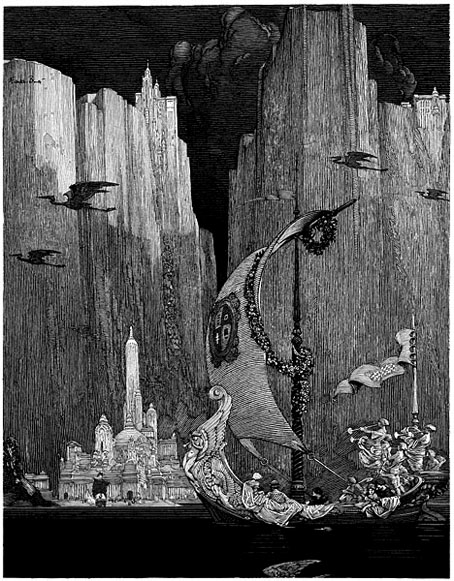
I was rather aggrieved a few weeks ago when I found a copy of James Whitcomb Riley’s The Flying Islands of the Night (1913) at the Internet Archive. Nice to find a free copy of a rare book but the grievance came as a result of an intention to write something about its illustrator, Franklin Booth (1874–1948), and post a picture or two. It turns out that the scanned copy available is complete but all the colour plates have been removed, probably stolen during its career as a library volume. Riley’s story is a piece of light fantasy which might well have been forgotten by now if it wasn’t for Booth’s incredible illustrations; as a result it’s the illustrations that make the book worth seeking out.
booth2.jpg

Booth’s penmanship from Franklin Booth: American Illustrator.

Happily, and by coincidence, Mr Door Tree at the essential Golden Age Comic Book Stories has uploaded scans of his own in the past few days. Beautiful stuff and easily the equal of Booth’s contemporaries in Britain such as Charles and William Heath Robinson, Edmund Dulac et al. Booth’s colour work resembles similar watercolour book illustration of the period but his black & white work was quite unique, being done in a pen style derived from his boyhood interest in engraved magazine illustrations. His careful use of hatched lines went on to influence later American illustrators including Roy Krenkel, Mike Kaluta, Berni Wrightson and others. Golden Age Comic Book Stories has an earlier posting featuring one of Booth’s pen drawings here and a page of Mucha-esque women here.

Bud Plant’s Franklin Booth page
Franklin Booth: American Illustrator

Elsewhere on { feuilleton }
The illustrators archive

The art of Boris Artzybasheff, 1899–1965

artzybasheff1.jpg

Myths of the World (1930).

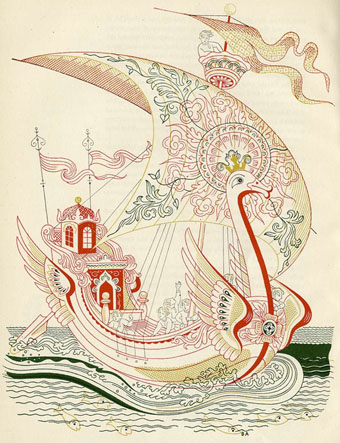
Boris Artzybasheff’s humorous illustrations of anthropomorphic machines have received a lot of attention from Boing Boing recently. But Artzybasheff was a very versatile artist, not a one-trick pony, and his book and other magazine illustration is worth a look as well. These examples are from the indispensable VTS. Some of his early magazine covers brought to light here have a distinct Hannes Bok flavour.

artzybasheff2.jpg

Seven Simeons (1937).

See also:
Artzybasheff’s Neurotica
Artzybasheff’s Machinalia
Another page of illustrations

Elsewhere on { feuilleton }
The illustrators archive

Arthur Machen book covers

machen1.jpg

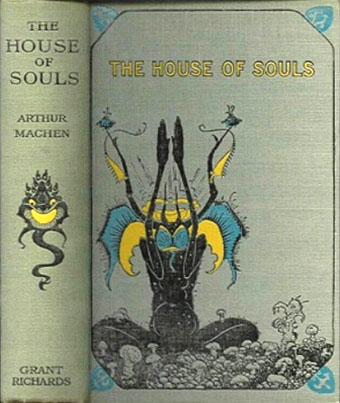
The House of Souls (1923). 

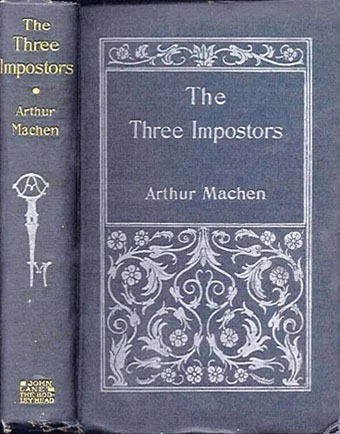
Well, a handful anyway. The late RT Gault put a page of Machen cover scans on his book site which also included the excellent Absolute Elsewhere catalogue of “Fantastic, Visionary, and Esoteric Literature in the 1960s and 1970s”. The cover for The House of Souls is a very odd piece by Sidney Sime and going by some of Sime’s Dunsany illustrations I think this was how he thought souls actually looked. The Three Imposters (below) was part of John Lane’s Keynotes series which also included Machen’s The Great God Pan among the titles, all of which sported covers designed by Aubrey Beardsley.

machen2.jpg

The Three Imposters (1895). 

Elsewhere on { feuilleton }
The book covers archive
The illustrators archive

Meggendorfer’s Blatter

blatter1.jpg

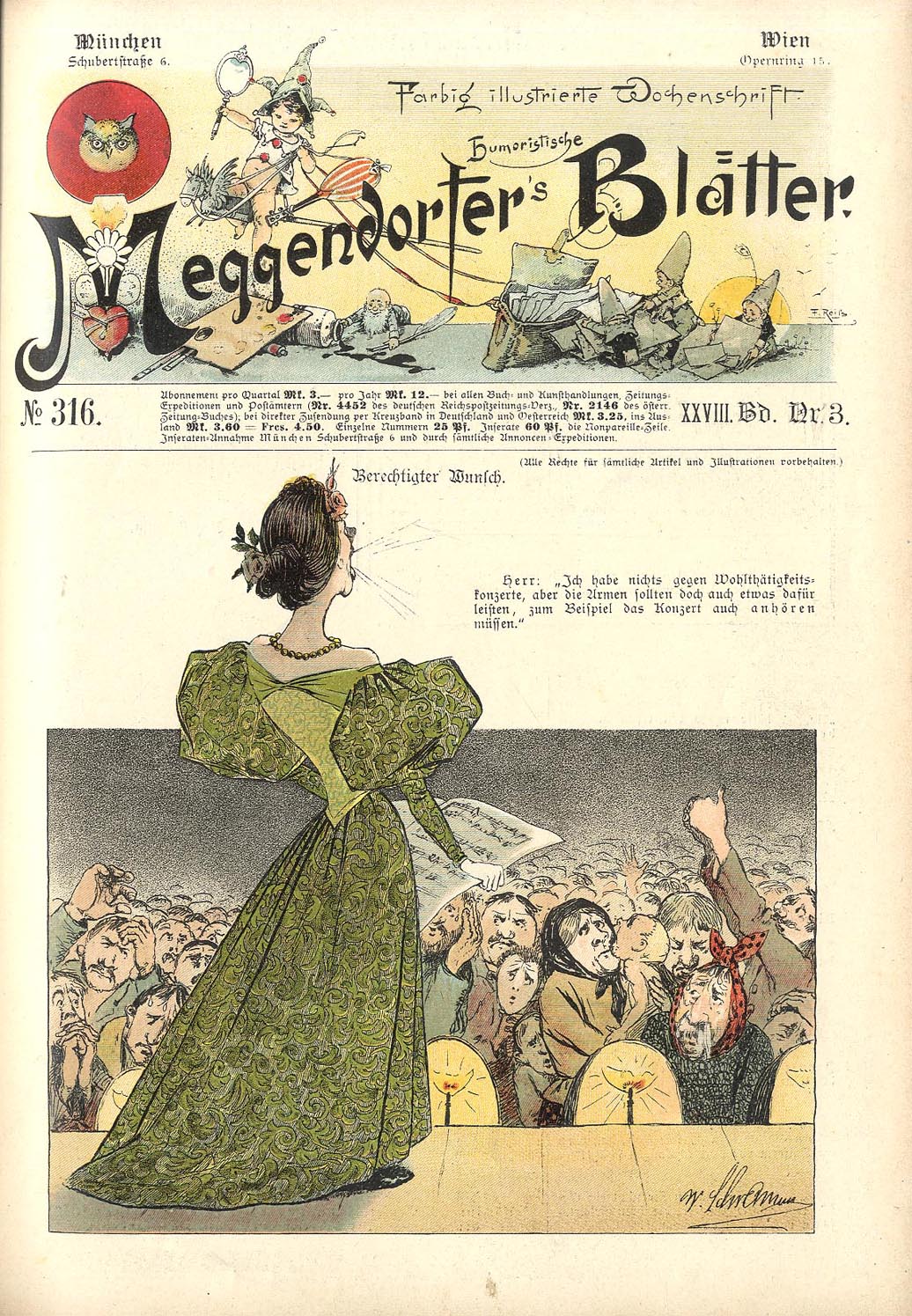
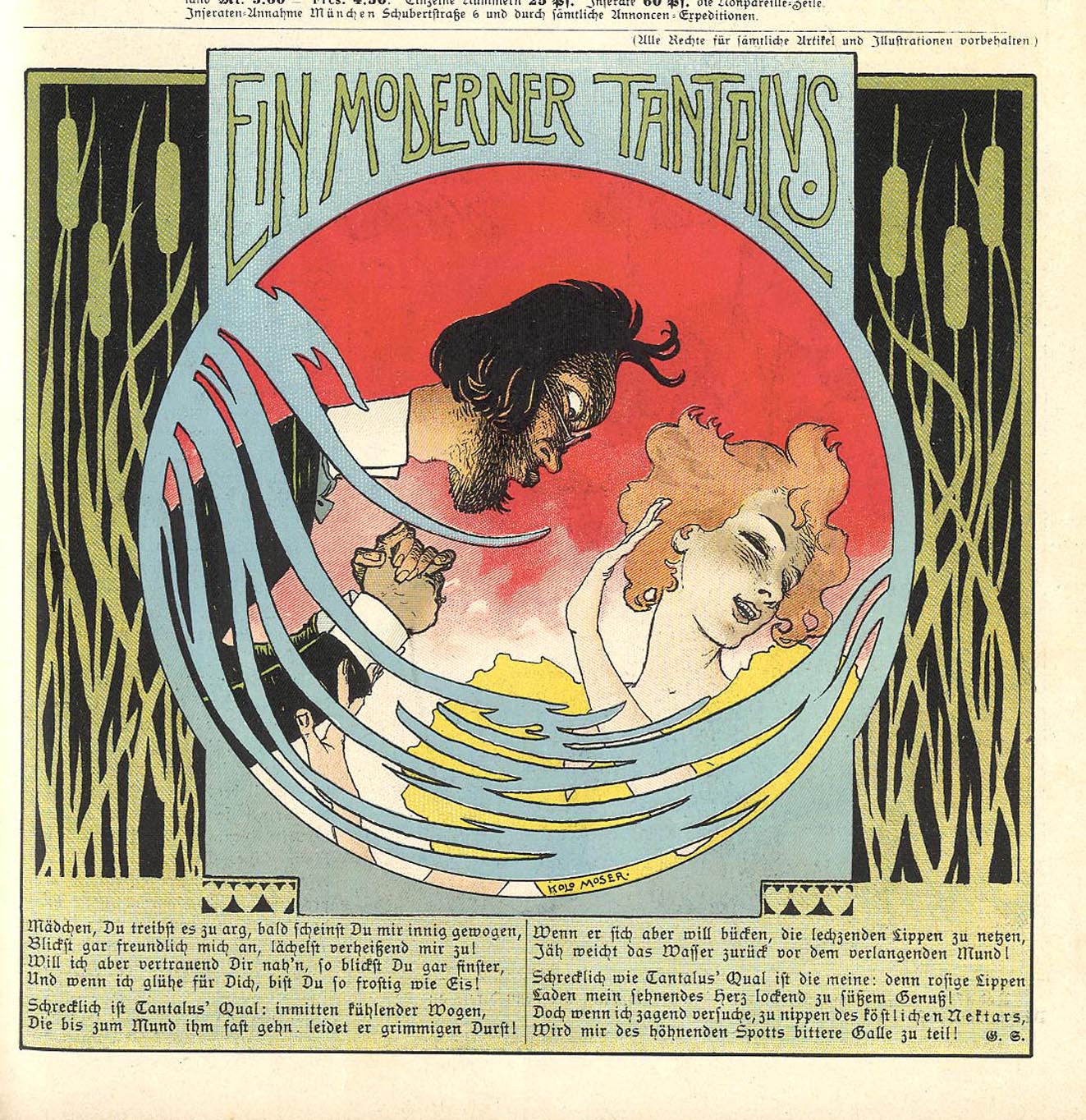
Meggendorfer’s Blatter, Meggendorfer’s Journal, a satirical magazine founded in 1886 by Lothar Meggendorfer. As with Punch and other humorous magazines of the era, much of the humour is lost today (even more so in a foreign tongue) but there’s some fine and stylish illustration on display.

blatter2.jpg

Elsewhere on { feuilleton }
The illustrators archive

Previously on { feuilleton }
George Du Maurier’s Christmas Dream
“Weirdsley Daubery”: Beardsley and Punch
Simplicissimus

Absinthe girls

absinthe11.jpg

The classic absinthe poster from 1896 by Henri Privat-Livemont (1861–1936), one of the best exponents of the post-Mucha style. Don’t let anyone tell you that using unclad women’s bodies in advertising is a new thing.

absinthe2.jpg

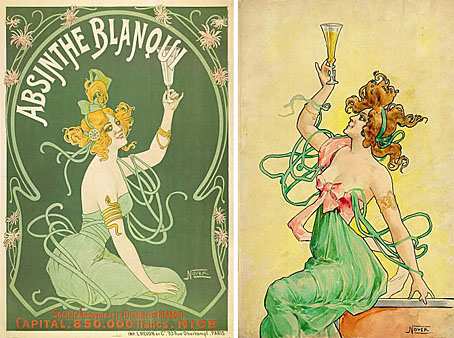
And a couple more Mucha-esque examples circa 1900, both credited to “Nover”, from the wide selection of absinthe graphics at the Virtual Absinthe Museum.

The printer was L. Revon et Cie, situated in Paris at 93 Rue Oberkampf. The artist’s signature “Nover” is a mystery—no designer by that name is recorded. Since however the word is a palindrome of Revon, the assumption must be that the artist was Revon himself, or alternatively an anonymous employee of the firm. The same artist was responsible for the well-known Absinthe Vichet poster, also printed by Revon et Cie.

Interesting that so many of these posters show the women holding the glasses aloft as though receiving a libation from the gods. Privat-Livemont’s painting adds to the sacred effect by putting a halo behind the absinthe-bearer’s head.

Also at the Virtual Absinthe Museum is this warning against the dangers of the Green Fairy which would make a good addition to the Men with snakes post.

Previously on { feuilleton }
8 out of 10 cats prefer absinthe
Smoke
Flowers of Love