The Golden Hind: A Quarterly Magazine of Art and Literature

golden01.jpg

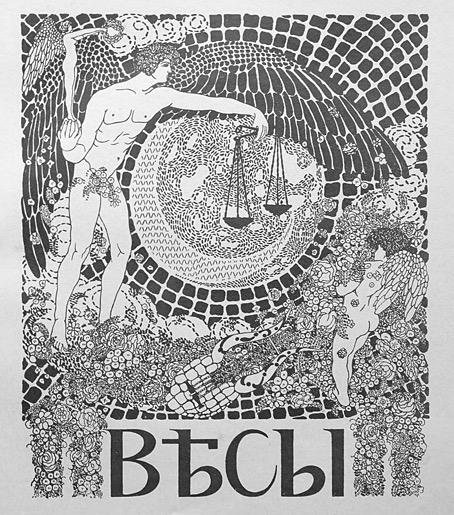
Well, here we are at last… After years of waiting for scanned copies of The Golden Hind to turn up, now that they have done I’m still frustrated. The magazine was one of the many small arts periodicals being published in Britain during the 1920s. It had an erratic, eight-issue run from 1922 to 1924, and remains notable for being the second (and last) magazine to be co-edited by Austin Osman Spare. The artist’s first magazine venture, Form, had been edited by Spare and “Francis Marsden” (Frederick Carter), with the pair publishing two issues before the outbreak of the First World War, followed by a final issue in 1921. Spare co-edited The Golden Hind with writer Clifford Bax, creating a publication whose contents were less mystical than Form had been, while also providing more of a showcase for artists other than Spare himself.

golden02.jpg

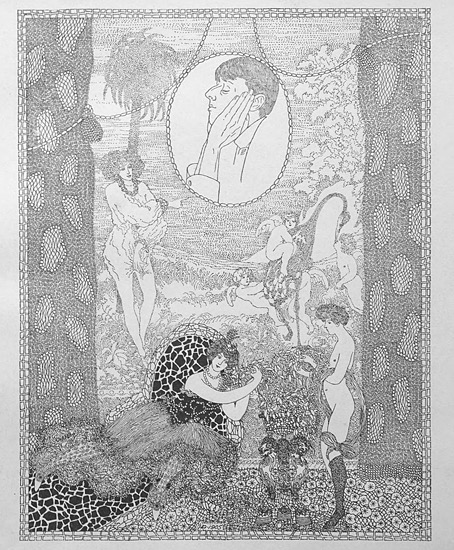
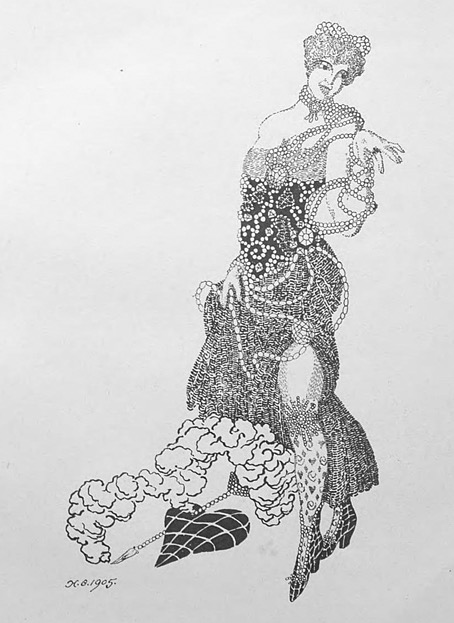
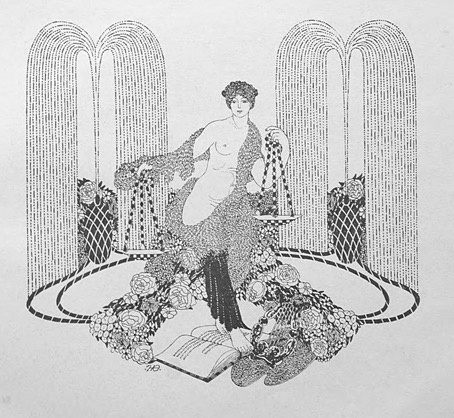
Inevitably, it’s the artists that interest me the most in The Golden Hind, even though the magazine was running pieces by writers like Aldous Huxley and Edith Sitwell. Many of the artists have been featured here before, some of them on many occasions: Alastair (Hans Henning Voigt), John Austen, Harry Clarke, Garth Jones, Henry Keen, and Allan Odle. Spare’s own drawings have since been recycled in various books but most of the other drawings, woodcuts, linocuts and prints remain exclusive to the magazine. The John Austen contributions are especially fine, further examples of his decorated style which borrows heavily from Aubrey Beardsley and Harry Clarke, and which he used so well in his illustrated Hamlet. The spirit of Beardsley’s 1890s is very much in evidence in The Golden Hind, a demonstration, perhaps, that Spare was once again looking back to The Savoy magazine as an example to be followed; one of the essays concerns the poety of The Savoy‘s literary editor, Arthur Symons.

golden03.jpg

In addition to artists whose popular works are still reprinted today there are less well-known figures like Sidney Hunt whose drawings owed more to contemporary trends than many of the other contributors. Hunt later edited an avant-garde magazine of his own, Ray, while producing his own brand of homoerotic prints like the Ganymede with Zeus which may be seen in The Golden Hind’s final issue.

golden04.jpg

The frustration I referred to above is my usual complaint about image quality. All the copies of the magazine have been taken from microfilm archives which means the pages aren’t grey enough to be illegible but their general murkiness is enough to destroy a lot of the artwork, especially the lithographs and other prints. The samples you see here have been brightened a little which does improve some of the line art but can do nothing for the rest. But I’m not going to complain too much. It’s taken a long time to be able to browse a complete run of this magazine, and I feel fortunate to do so even in this compromised manner. Better copies may still surface eventually. Fingers crossed.

golden05.jpg

Continue reading “The Golden Hind: A Quarterly Magazine of Art and Literature”

Weekend links 752

nemo.jpg

Captain Nemo by Alphonse de Neuville, from Twenty Thousand Leagues Under the Seas (1875) by Jules Verne.

• “…physical remoteness is a category of its own. It is an enhancer: It can make the glorious better and the terrible worse. The oceanic pole of inaccessibility distills physical remoteness on our planet into a pure and absolute form. […] Point Nemo is nearly impossible to get to and offers nothing when you arrive, not even a place to stand. It is the anti-Everest: It beckons because nothing is there.” Cullen Murphy explores the remotest place on Earth. A long and fascinating read, but no mention of Point Nemo’s dreaming tenant.

• More Bumper Book business: Smoky Man has posted the second part of his analysis of the book for (Quasi) (in Italian) which includes some comments from myself about the origin of the Moon and Serpent Magical Alphabet, and why the letter Q in the alphabet is assigned to Cthulhu. Elsewhere, Panini have announced an Italian edition of the Bumper Book for May next year, while at The Beat Steve Baxi reviewed the book from a philosophical perspective.

• At the BFI: David Parkinson on where to begin with Louis Feuillade. I’d suggest starting with Fantômas rather than Les Vampires but then I’m biased.

The combination of magic(k)al, ceremonial action, vivid colour and paradoxically serious camp in Jarman’s Super 8 films of the ’70s bears the influence of Kenneth Anger, but the differences between Jarman’s sensibility and Anger’s are more striking than the resemblances. Jarman’s vision is more materialist, austere and hermetic, and less sociological; where Anger identifies the glamour of American popular culture with the Will of the Crowleyan magician, Jarman situates the discovery of the cinematographic mechanism imaginatively within the history of alchemy. Anger cast rock stars as gods and adepts with the intention of harnessing the energy of their recognition; Jarman casts Fire Island, then in its heyday as a gay resort, as a desert defined by sculptural details and occupied by a single masked figure, in scenes that both recall his landscape paintings of the ’60s and ’70s and anticipate the design of his garden at Dungeness.

Luke Aspell on Derek Jarman’s hermetic film/painting, In the Shadow of the Sun

• At Smithsonian Magazine: “Visions of nuclear-powered cars captivated Cold War America, but the technology never really worked”.

• At The Spectator podcast: host Sam Leith talks to Michael Moorcock about 60 years of New Worlds magazine.

• At Public Domain Review: “Light from the Darkness” — Paul Nash’s Genesis (1924).

• At Bandcamp: “Disco godfather Cerrone’s enduring influence on dance music”.

• At Unquiet Things: The Art of Survival: Eyeball Fodder in Dark Times.

• Mix of the week: DreamScenes – November 2024 at Ambientblog.

• New music: The Laugh Is In The Eyes by Julia Holter.

• At The Daily Heller: The College of Collage.

• RIP jazz drummer Roy Haynes.

Thermonuclear Sweat (1980) by Defunkt | Nuclear Drive (1982) by Hawkwind | Nuclear Substation (2005) by The Advisory Circle

Richard Taylor’s Lovecraftiana

taylor1.jpg

The Mask of Cthulhu (1958) by August Derleth.

To look at any of the cartoons drawn for the New Yorker by Richard Taylor (1902–1970) you wouldn’t suspect that the Canadian artist had spent a few years at the end of the 1950s creating a handful of book covers for Arkham House. I’ve never read much about the history of August Derleth’s publishing endeavours so I can’t say how Taylor came to be offered this work. An unlikely choice he may have been but he did a better job with his five covers than many of the artists in the 60s and 70 who attempted to illustrate the eldritch horrors of Lovecraft, Derleth and co. The hand-drawn titles and monochrome colours make the quintet an attractive series within the Arkham House catalogue as a whole.

taylor2.jpg

The Shuttered Room and Other Pieces (1959) edited by August Derleth.

A collection of Lovecraft’s fiction fragments, some of which have been expanded by Derleth. Also remembrances of the writer by Lovecraft’s friends, plus essays and other material.

taylor3.jpg

Dreams and Fancies (1962) by HP Lovecraft.

A cover I’ve known for years as a result of its being featured in that cult volume of mine, The Fantasy Book by Franz Rottensteiner. (Previously.) I used to wonder about the contents of this book, Dreams and Fancies being an unfamiliar title that was absent from the paperback reprints of Lovecraft’s fiction. The title piece is another Derleth fabulation, a collage of Lovecraft’s transcribed dreams as they were recounted in letters to various friends. This is followed by some of the short fiction and poetry that reworked these dreams. The collection ends with the aeon-spanning novella, The Shadow Out of Time, which Tayor has taken as his subject for the cover art.

taylor4.jpg

The Trail of Cthulhu (1962) by August Derleth.

taylor5.jpg

The Horror from the Hills (1963) by Frank Belknap Long.


Note: I’m a little sceptical that the Richard Taylor responsible for these covers is the same one who was drawing cartoons for the New Yorker. The only source for this is isfdb.org, a site whose artist attributions are sometimes erroneous. If anyone can confirm or deny the accuracy of this information then please leave a comment.

Elsewhere on { feuilleton }
The book covers archive
The Lovecraft archive

Weekend links 746

mondrian.jpg

Composition B (No.II) with Red (1935) by Piet Mondrian.

• “Red is practically faultless, save, perhaps, for one hard-to-get-excited-about foray into atmospheric free jazz (Providence), though the sprawling, epic roller coaster of emotion and dexterity that follows (Starless) surely makes up for any shortfall.” Patrick Clarke on 50 years of my favourite King Crimson album. I like Providence, the piece is part of a live performance in Rhode Island so the Lovecraft connection adds to the aura of doom that pervades the album; and the structure of the album’s second side—jazz improv followed by a multi-part, Mellotron-heavy epic—harks back to the group’s debut.

• “It’s important to challenge the common idea of an almost evolutionary procession, where modernist abstract art is somehow the climax, a new and perfectly original approach to the visual world, absolutely different from all that preceded it.” Hunter Dukes on the yellow rectangle that denotes silence in the Silos Apocalypse.

The Art of Sidney H. Sime, Master of Fantasy, an exhibition at the Heath Robinson Museum, Pinner, London. Meanwhile, at the USC Fisher Museum of Art in Los Angeles, there’s Sci-fi, Magick, Queer L.A.: Sexual Science and the Imagi-Nation.

• “I did not realize how much I had done. I am a serial polluter.” Ralph Steadman and his daughter, Sadie Williams, talking to Steven Heller about Steadman’s latest exhibition which is touring the USA.

• New music: Come Back To Me [Demo] by Broadcast; The Last Sunset Of The Year by Marcus Fjellström; Hexa by Cleared.

• At Spoon & Tamago: Artists summon mythical creatures of the Echigo region for the 2024 Wara Art Festival.

• The Italian Art of Violence: Samm Deighan on the giallo cinema boom of the 1960s and 1970s.

Gavin Friday’s favourite albums.

Red (1991) by Jarboe | Red Earth (As Summertime Ends) (1991) by Rain Tree Crow | Red Sun (2012) by Anna von Hausswolff

Robert Lawson’s House of Usher

lawson1.jpg

Spook Month starts tomorrow so it no longer feels too early to post this marvellous (undated) etching of the opening scene from The Fall of the House of Usher by Edgar Allan Poe. Robert Lawson (1892–1957) was an American author and illustrator whose early etchings were featured here some years ago after I turned up another wonderfully atmospheric piece depicting galleons rotting in the weed-tangled waste of the Sargasso Sea. I’m pleased that this gallery page which shows many more Lawson prints is still active over a decade later; they don’t have the Poe etching, however. A few copies may be found on the big auction sites but the best ones are blighted with a watermark.

lawson2.jpg

Preparatory pencil drawing.

The title of Poe’s story refers to two separate falls, the dissolution of the Usher family line, and the physical collapse of the house in which Roderick and Madeline Usher pass their days, a calamity augured by the crack in the masonry which the narrator sees when he arrives at the shore of the black tarn. Lawson pays close attention to all the relevant details which Poe’s narrator is unable to regard as offering a sublime spectacle, something that film-makers and other illustrators (when they depict the house at all) don’t always honour:

I looked upon the scene before me—upon the mere house, and the simple landscape features of the domain—upon the bleak walls—upon the vacant eye-like windows—upon a few rank sedges—and upon a few white trunks of decayed trees—with an utter depression of soul which I can compare to no earthly sensation more properly than to the after-dream of the reveler upon opium—the bitter lapse into every-day life—the hideous dropping off of the veil. There was an iciness, a sinking, a sickening of the heart—an unredeemed dreariness of thought which no goading of the imagination could torture into aught of the sublime. What was it—I paused to think—what was it that so unnerved me in the contemplation of the House of Usher?

Unless there’s more like this from Lawson the only other print of his that approaches horror is the Sargasso one; everything else is historical scenes or the light fantasy he continued to draw in his subsequent career as an illustrator of children’s books.

Elsewhere on { feuilleton }
The etching and engraving archive

Previously on { feuilleton }
Edmund Dulac’s illustrated Poe
The Fall of the House of Usher, 1928
The Purloined Eidolon
Martin van Maële’s illustrated Poe
Mask of the Red Death, 1969
Narraciones extraordinarias by Edgar Allan Poe
Fritz Eichenberg’s illustrated Poe
The Pendulum, the Pit and Hope
Hugo Steiner-Prag’s illustrated Poe
Burt Shonberg’s Poe paintings
Illustrating Poe #5: Among the others
Illustrating Poe #4: Wilfried Sätty
Illustrating Poe #3: Harry Clarke
Illustrating Poe #2: William Heath Robinson
Illustrating Poe #1: Aubrey Beardsley
Poe at 200
The Tell-Tale Heart from UPA
William Heath Robinson’s illustrated Poe