Slothrop’s half-century

pynchon.jpg

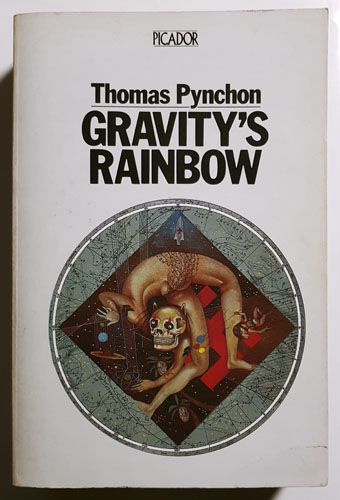
There is nothing in contemporary literature to compare with it, certainly not in English. All the lesser pretenders—John Barth, Richard Powers, David Foster Wallace, Jonathan Franzen, even Don DeLillo—seem small and trivial in the glow of its mad quasar-pulses of brilliance. The risks taken here, in 1973, are so astonishing in retrospect largely because of everybody else’s incapacity to match them.

The burning question will always be: for whom was Pynchon writing? There was no ready readership for a book composed of such disparate, off-putting materials and crazy shifts of tone.

Yet Gravity’s Rainbow created one from scratch, the way Einstein created a new image of the universe and the universe rearranged itself accordingly.

Julian Murphet on Thomas Pynchon’s magnum opus which was published 50 years ago today. Happy birthday, Rocket book. I finally tackled the thing a couple of years ago, and wrote about the experience here.

Previously on { feuilleton }
The Late Show: Thomas Pynchon
Esoterica 49
Pynchonian cinema
Going beyond the zero
Pynchon and Varo
Thomas Pynchon – A Journey into the Mind of [P.]

The Late Show: Thomas Pynchon

pynchon1.jpg

Among other things, I’ll remember 2021 as the year of Too Much Work, but it’s also been the year of reading several thousand pages of Thomas Pynchon’s prose. After finally getting through Gravity’s Rainbow back in June (having also read V. and The Crying of Lot 49) I continued with the rest of the Pynchon oeuvre, working my way through Vineland, Mason & Dixon, and Inherent Vice. And after reading the latter I watched the film adaptation again which I found to be much more enjoyable and less confusing the second time round. (Moral: read the novel first). I’m currently ploughing through Against the Day, not worrying too much about how all the various episodes are supposed to join together.

pynchon2.jpg

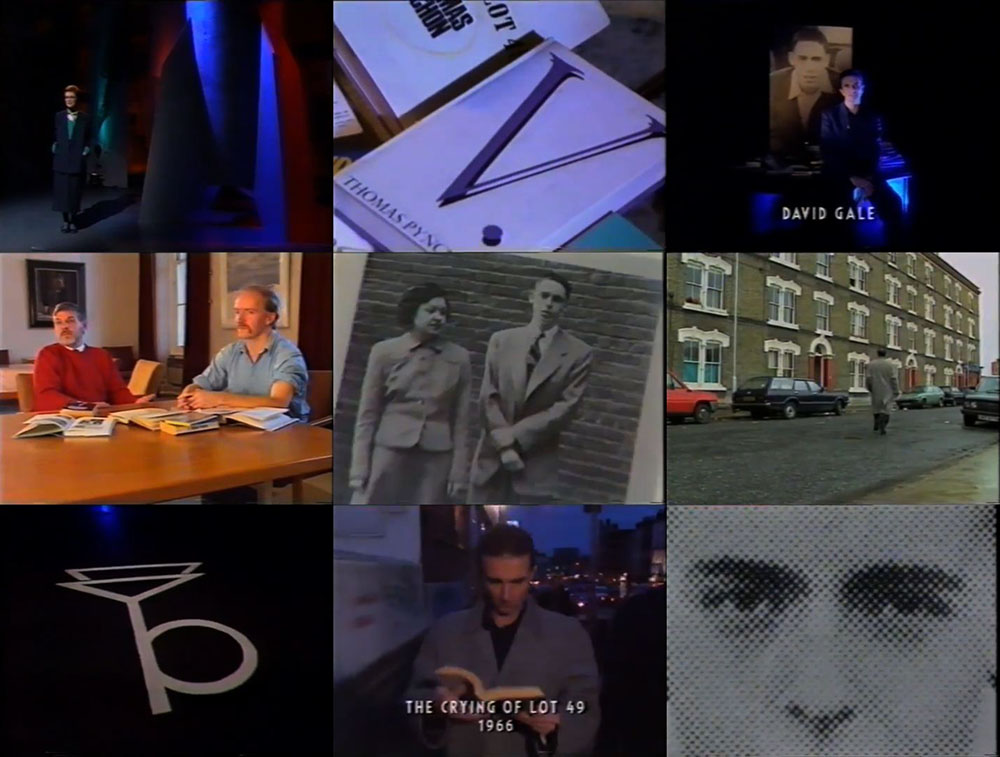
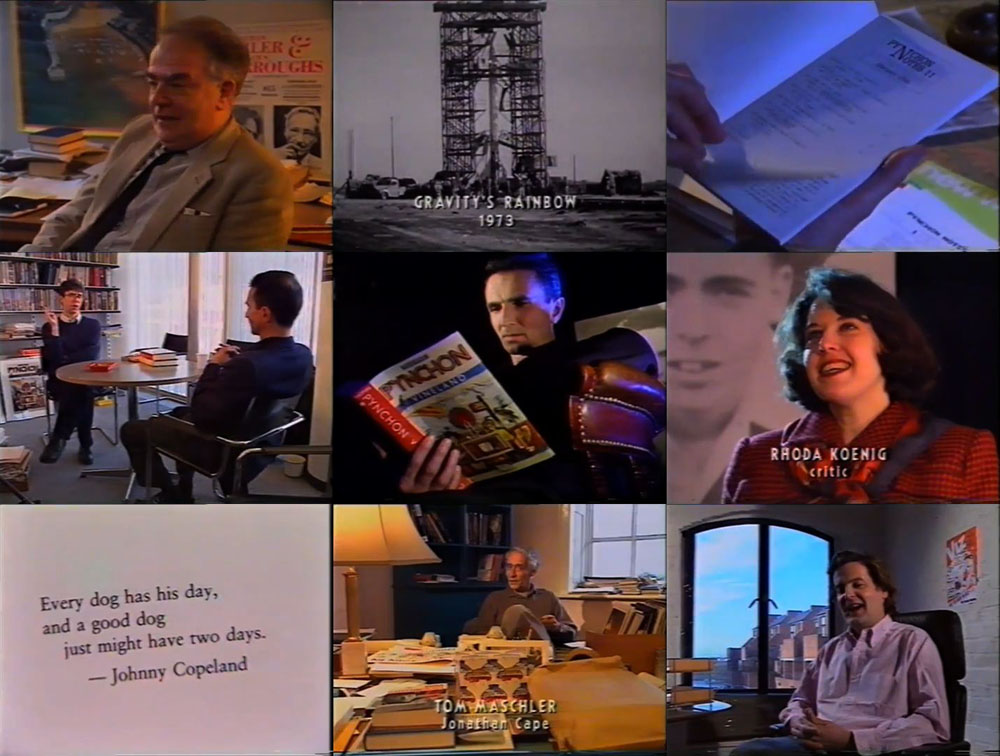
The commendable inaccessibility of Pynchon the man means that documentary features about his books are scarce. Television abhors an authorial vacuum which is why so many TV documentaries about long-dead or otherwise unavailable writers resort to the cliches of a silhouette hammering away at a typewriter, or an actor in period clothing scribbling in a dimly-lit room. The BBC, in the days when it still used to make programmes about books and writers, often evaded the absurdities of docu-drama by the simple expedient of having a suitable actor read portions of prose, which is what we have in this all-too-brief Pynchon feature from 1990. The Late Show was a nightly fixture on BBC 2 at this time, with a remit to cover anything newsworthy in the cultural sphere. Vineland was about to be published in Britain so editor David Gale was called upon to explain to viewers the lure of Pynchon’s novels and their mysterious author. It’s a fascinating piece which achieves in a mere 19 minutes what Thomas Pynchon – A Journey into the Mind of [P.] barely manages in an hour and a half. As with the Dubinis documentary, there’s some discussion of the authorial enigmas but Gale keeps the novels to the fore. It’s amusing with hindsight to hear about the critical disappointment that greeted the arrival of Vineland—Pynchon’s first novel after a silence of 17 years—knowing that the monumental Mason & Dixon would be published a few years later. Commentary is supplied by publishing heavyweights Tom Maschler, Dan Franklin and John Brown (two of whom describe their meetings with the elusive author), together with critic Rhoda Koenig and critic/poet Eric Mottram, here interviewed with a picture of one of his favourite authors, William Burroughs, peering over his shoulder.

Previously on { feuilleton }
Esoterica 49
Pynchonian cinema
Going beyond the zero
Pynchon and Varo
Thomas Pynchon – A Journey into the Mind of [P.]

Esoterica 49

L49-01.jpg

“What is especially needed is great sensitivity: to look upon everything in the world as enigma….To live in the world as in an immense museum of strange things.” —Giorgio de Chirico

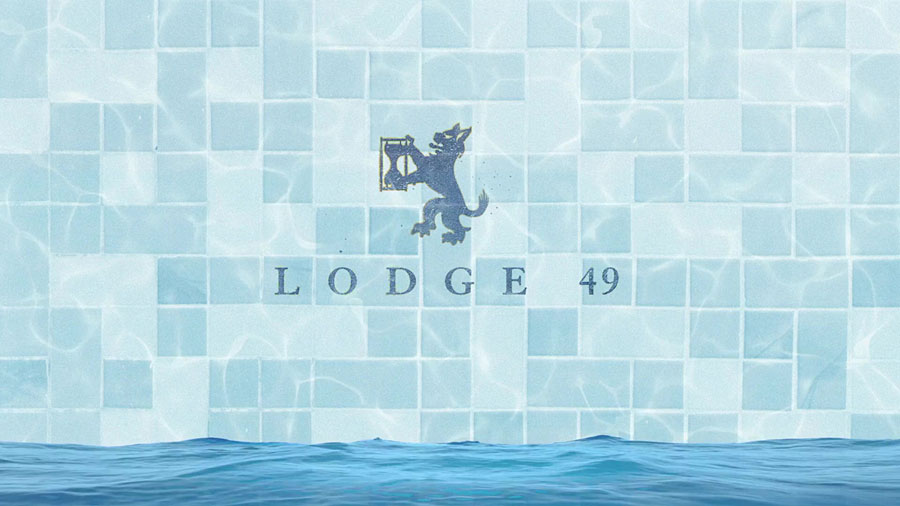
A few weeks ago I made a list of feature films that might be regarded as having the characteristics of a Thomas Pynchon novel without being based on any of Pynchon’s books. The post prompted several suggestions for other candidates, including recommendations to watch Jim Gavin’s TV series, Lodge 49, an American production that ran for two seasons from 2018 to 2019 before being cancelled due to low ratings. Having now watched the series I can say that I enjoyed it very much, and it is very Pynchonian, unsurprisingly when it not only gestures to the title of Pynchon’s second novel, The Crying of Lot 49, but also borrows from its storyline.

L49-02.jpg

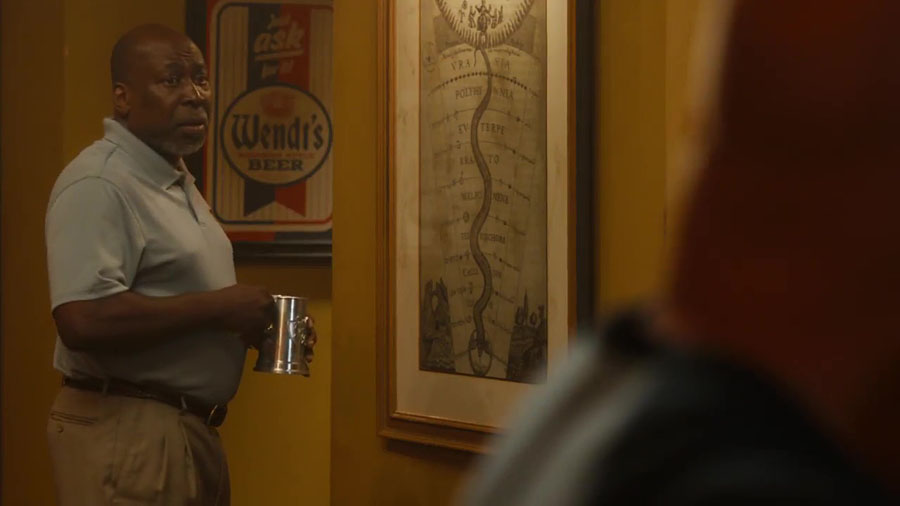
Ernie (Brent Jennings) has just been contemplating a print from the Ars Magna Lucis (1665) by Athanasius Kircher. Near the end of the second series he leaps through an image from the same book.

Lodge 49 presents a unique mélange of alchemy, surfing, secret societies, aerospace engineering, pool cleaning and cryptocurrency, with the added bonus of songs by the much-missed Broadcast being woven into the narrative. The series is consistently funny, humour being another essential Pynchonian ingredient, while the episodes are littered with references to (or correspondences with) Pynchon’s oeuvre: two of the main characters are an ex-surfer and an ex-sailor; the defunct aerospace company, Orbis, is modelled on Pynchon’s Yoyodyne from V. and Lot 49; there’s a trip to Mexico, a visit to an auction, and mention of a Remedios Varo exhibition (Lot 49 again); there are even references to Antarctic mysteries (V.), the Hollow Earth (Mason and Dixon) and the V-2 rocket (Gravity’s Rainbow). And those are only a few of the things I happened to catch as a first-time viewer. This is unusual territory for a small-scale television series, even if American TV has loosened up in recent years to allow a more eclectic range of material.

L49-03.jpg

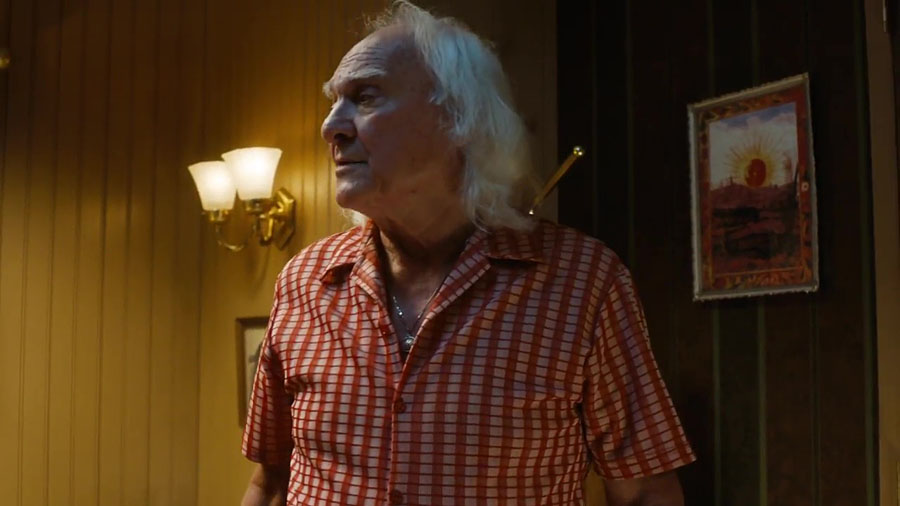
Larry (Kenneth Welsh) in the Sanctum Sanctorum with a plate from the Splendor Solis on the wall.

The Lodge 49 of the title is part of a global network of lodges that form the Ancient & Benevolent Order of the Lynx, a cross between a Masonic order and an occult cabal, founded by one Harwood Fritz Merrill, a Scottish alchemist, writer and explorer. (Merrill’s biography and the history of the Order of the Lynx is detailed here [PDF].) Alchemy is a persistent theme in the series but remains in the background for the most part, literally so inside Lodge 49 (Long Beach, California) and Lodge 1 (London) where the walls are decorated with prints of alchemical engravings. It would have been tempting to identify all of these pictures but most of them can be found in Taschen’s excellent Alchemy and Mysticism picture book so it’s easier to direct the curious to the Taschen volume. The prints also seemed to be there more to provide suitable set decoration rather than be significant in themselves, with one notable exception (see below).

L49-04.jpg

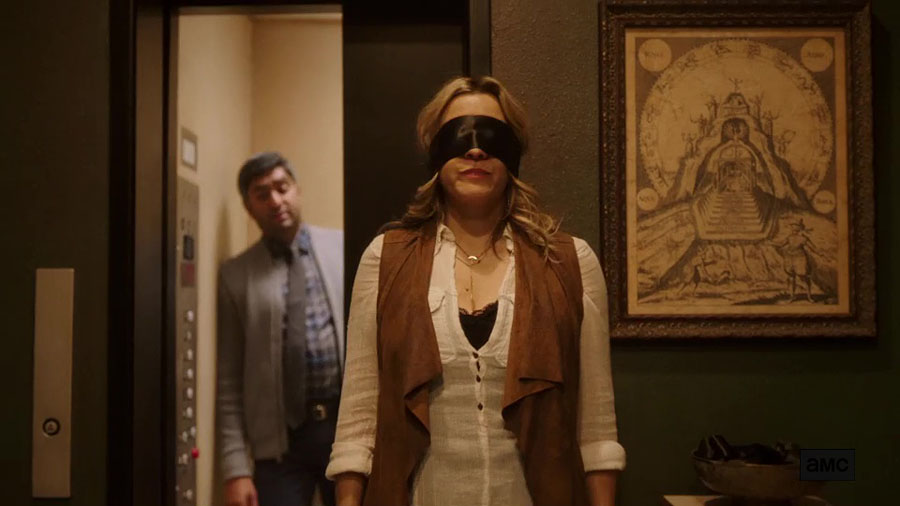
Connie (Linda Edmond) going deeper into the mysteries of Lodge 1. The print is from Cabala, Spiegel der Kunst und Natur: in Alchymia (1615) by Stephan Michelspacher.

More intriguing was the appearance of several paintings which did seem significant although they might equally have been there to generate audience speculation. Film and TV drama is made today in the full awareness that every detail is liable to be screen-grabbed and scrutinised by obsessive viewers, a situation that offers the potential for directors and designers to incorporate details that may have no special significance but are simply there to fuel online chatter. It’s difficult to tell if this is what Gavin and co. were doing, especially when the prematurely truncated series contains so many loose ends and unexplained moments. But paranoia is in part the search for a significance that may not exist outside the mind of the paranoiac so a small degree of concern about being gamed by the creators of Lodge 49 seems warranted here, as well as adding to the general Pynchon factor. Despite all the Pynchoniana mentioned above the series is light on the paranoia that’s a constant in Pynchon’s novels so why not cultivate a little paranoia in the audience itself?

Continue reading “Esoterica 49”

Pynchonian cinema

tpa.jpg

(Pynchonian? Pynchonesque? Pynchon-heads can no doubt supply the most common descriptor but for now Pynchonian will do.)

Is it possible to identify a Pynchonian strand in cinema? This question came to mind while I was reading the end of Gravity’s Rainbow, and probably a little before then during a scene that takes place in the Neubabelsberg studio in Berlin. The Pynchon reading binge is still ongoing here—after finishing the Rocket book I went straight on to Vineland, and I’m currently immersed in Mason and Dixon—so I’ve been watching films that complement some of the preoccupations in the Pynchon oeuvre, at least up to and including Vineland. This is a small and no doubt contentious list but I’m open to further suggestions. Inherent Vice is excluded, I’ve been thinking more of films that are reminiscent of Pynchon without being derived from his work.

Elements that increase the Pynchon factor would include: a serio-comic quality (essential, this, otherwise you’d have to include a huge number of thrillers); detective work; paranoia; songs; and a conspiracy of some sort, or the suspicion of the same: a mysterious cabal–the “They” of Gravity’s Rainbow—who may or may not be manipulating the course of events.

tpa2.jpg

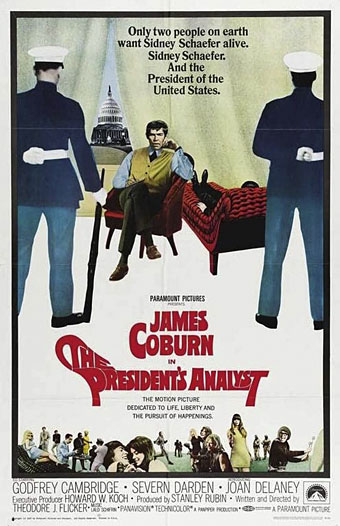
The President’s Analyst (1967)
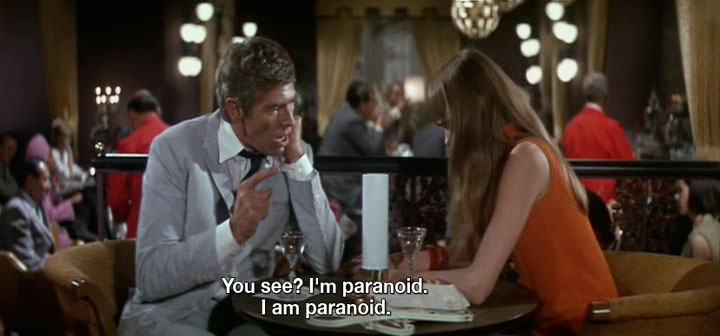
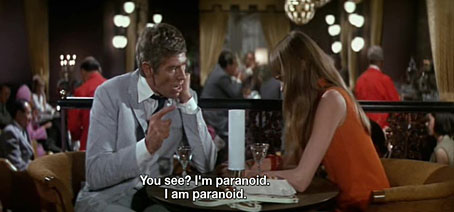
I’d be very surprised if Pynchon didn’t like this one. James Coburn as the titular analyst, Dr Sidney Schaefer, has little time to enjoy his new job in Washington DC before half the security services in the world are trying to kidnap him to discover what he’s learned about the President’s neuroses. This in turn leads the FBI FBR to attempt to kill Schaefer in order to protect national security. Pynchonian moments include a bout of total paranoia in a restaurant, Canadian spies disguised as a British pop group (“The ‘Pudlians”), and a visit to the home of a “typical American family” where the father has a house full of guns, the mother is a karate expert, and the son uses his “Junior Spy Kit” to monitor phone conversations. Later on, an entire nightclub gets spiked with LSD. This is also the only film in which someone evades abduction to a foreign country by the cunning use of psychoanalysis.
Is it serio-comic? Yes.
Is there detection? In the background: the CIA CEA and KGB agents have to work together in order to outwit the FBI FBR and discover who the ultimate villains might be.
Is there paranoia? You only get more paranoia in one of the serious conspiracy dramas of the 1970s like The Conversation or The Parallax View. (The latter includes the same actor who plays the All American Dad, William Daniels.)
Any songs? Yes. Coburn hides out for a while with the real-life psychedelic group Clear Light, and helps with their performance in the acid-spiked nightclub.
“They”? There are multiple “Theys” in this one.
Pynchon factor: 5. Maybe a 6 for the LSD.

nashville.jpg

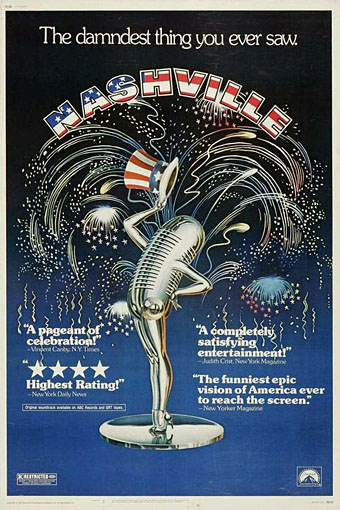
Nashville (1975)
This one is a stretch but Robert Altman is the director I think of as closest to Pynchon’s sensibility even if individual works are light on the Pynchon factor. His films are often rambling, quirky and satirical—especially when he goes the ensemble route—but never too comic to avoid a sudden lurch into the dark. The Long Goodbye might seem a more likely choice, given the way it points to subsequent Chandler variations like The Big Lebowski (see below) and Inherent Vice, but it’s still Chandler’s story. Nashville is pure Altman, the best of his ensemble entries and my choice for his best film of all, a portrait of America in the mid-1970s where someone can be loved by millions yet still be a target for assassination. It’s worth noting that the director of Inherent Vice, Paul Thomas Anderson, was the insurance standby when Altman was directing his final film, The Prairie Home Companion.
Is it serio-comic? Yes.
Is there detection? No.
Is there paranoia? No, although as a portrait of the USA in the 1970s it can’t avoid a lurking sense of unease.
Any songs? Lots of songs.
“They”? No.
Pynchon factor: 2

simon.jpg

Simon (1980)
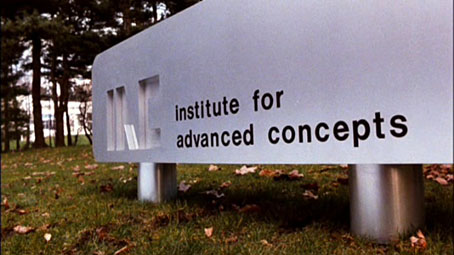
The debut feature from Marshall Brickman, Simon is an overlooked oddity with a great performance by Alan Arkin as a college professor, Simon Mendelssohn, who gets tricked by the Institute for Advanced Concepts into believing he’s an extraterrestrial. Parts of this play like a comic version of Altered States, which coincidentally was released the same year. Both films feature reckless quests for academic glory, flotation tank experiments (Simon includes a reference to Dr John Lilly), and regressions to earlier stages of evolution. Pynchonian moments include a church commune who worship the television, a gas that reduces intelligence, and a self-aware computer called “Mother” whose human interface is a giant phone receiver.
Is it serio-comic? Yes.
Is there detection? No.
Is there paranoia? A little.
Any songs? No.
“They”? The IAC are a small but powerful “They”, with carte blanche to foist their whims on an unsuspecting nation.
Pynchon factor: 2.5

tbl.jpg

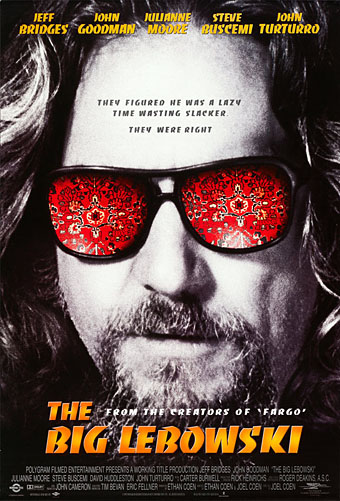
The Big Lebowski (1998)
When the book trailer for Inherent Vice appeared in 2009 (with narration by the author himself…or was it? etc), a common reaction was “This sounds just like The Big Lebowski“. If The President’s Analyst is the closest Hollywood gets to The Crying of Lot 49 then The Big Lebowski may be the closest to Vineland‘s story of the youth of the hippy era coping with life in a world that’s passed them by.
Is it serio-comic? Yes.
Is there detection? Yes.
Is there paranoia? A little. Most of the time The Dude is more concerned with trying to keep up with his continual changes of fortune.
Any songs? Lots of songs on the soundtrack, plus the Busby Berkeley-style dream sequence.
“They”? Yes.
Pynchon factor: 4.5

huckabees.jpg

I Heart Huckabees (2004)
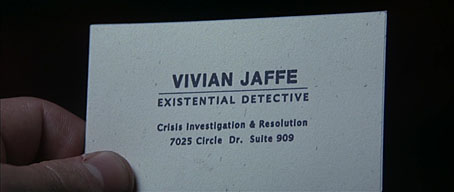
David O’Russell’s mélange of existential philosophy, environmentalism and coincidence is like Wes Anderson with a more political edge, and the kind of quirky comedy there was still space for in the Hollywood of the late 1990s/early 2000s. Jason Schwartzman is Albert Markovski, a poetry-writing environmental activist with a coincidence problem who turns to existential detectives, Vivian Jaffe (Lily Tomlin) and husband Bernard Jaffe (Dustin Hoffman), for a solution. “Everything is connected”, Bernard insists, so it’s no surprise that the presence of Lily Tomlin returns us to Nashville, while the pair require a little of Sidney Schaefer’s psychoanalysis to get to the bottom of Albert’s problems. Meanwhile, the Jaffes’ former pupil, Caterine Vauban (Isabelle Huppert), is lurking in the wings, tempting Albert with the attractions of sex and nihilist philosophy (shades of The Big Lebowski).
Is it serio-comic? Yes.
Is there detection? Yes.
Is there paranoia? A little. Albert is increasingly worried about losing control of his protest group.
Any songs? Shania Twain puts in an appearance but she doesn’t sing.
“They”? The Huckabees Corporation is a small-scale “They”, manipulating the environmentalists for their own ends.
Pynchon factor: 3.5

utsl.jpg

Under the Silver Lake (2018)
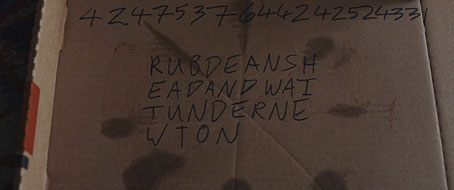
David Robert Mitchell’s surprising follow-up to the excellent It Follows is self-consciously Lynchian, and quite possibly self-consciously Pynchonian too. A long and rambling tale of burgeoning paranoia in the hip Los Angeles enclave of Silver Lake where slacker Sam (Andrew Garfield) discovers a web of interconnected mysteries after trying to find out why his attractive female neighbour has disappeared. It’s sinister, funny and bizarre, with mysterious deaths, hidden codes, treasure maps, chess games, pop music, Californian cults and more. Mitchell wisely avoids explaining too much which means the film now has a cult following determined to dredge its alleged secrets.
Is it serio-comic? Yes.
Is there detection? Yes.
Is there paranoia? Yes.
Any songs? Lots of songs, also a mysterious Songwriter character and an indie band, Jesus and the Brides of Dracula.
“They”? Multiple “Theys”.
Pynchon factor: 5

L49-01.jpg

Lodge 49 (2018–2019)
Several people recommended this TV series (thanks!) so here it is. And while Jim Gavin’s creation may not be a feature film it’s very definitely Pynchonian. See this post for details.
Is it serio-comic? Yes.
Is there detection? Yes.
Is there paranoia? A little. Dud and Ernie have a paranoid episode involving a drone.
Any songs? Yes, from the characters themselves and also from Broadcast and others on the soundtrack.
“They”? Once again, there are multiple “Theys”.
Pynchon factor: 49


Honourable mentions: WD Richter’s The Adventures of Buckaroo Banzai Across the 8th Dimension (1984) makes it to the Pynchon Zone via its appropriation of “Yoyodyne”, the name of the defence contractor from V. and The Crying of Lot 49. Despite this, and much as I like Buckaroo Banzai, I don’t think it’s Pynchonian enough for this list, although the writers at the defunct Pynchon site, Spermatikos Logos, might disagree. This archived page makes a case for the film, and also mentions a possible reciprocation from the author which I missed when I was reading Vineland.

Likewise, Richard Linklater’s debut, Slacker (1990), also came to mind. It has the requisite large cast of idlers and eccentrics (including a couple of conspiracy obsessives), plus a meandering yet connected structure, but it doesn’t otherwise seem Pynchonian enough.

Anything else I’ve missed?

Update 1: Added Lodge 49.
Update 2:
Further recommendations at Letterboxd.
Update 3: Finally added Under the Silver Lake.

Previously on { feuilleton }
Going beyond the zero
Pynchon and Varo
Thomas Pynchon – A Journey into the Mind of [P.]

Weekend links 573

strutt.jpg

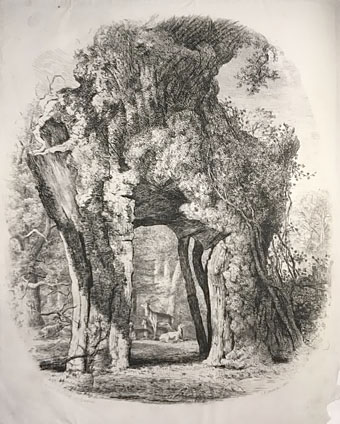
The Greendale Oak, Welbeck, Nottinghamshire, from Joseph George Strutt’s Sylva Britannica (1822/1830).

• “…a single page from Max Ernst’s collage novel Une semaine de bonté (A Week of Kindness, 1934) uncovers the weird brooding threat in Tenniel’s image of Alice in the railway carriage.” Mark Sinker reviewing the Alice: Curiouser and Curiouser exhibition at the Victoria and Albert Museum, London. I don’t know what Ernst page Sinker is referring to but I made the connection between an Ernst collage and Tenniel’s drawing here in 2010.

• At Wormwoodiana: “Calum Storrie’s 36 Elevations is a book of drawings of imaginary architecture, with the emphasis on towers, stairs, ladders, globes, oblique angles, gantries, finials etc.”

• At The Quietus: Jennifer Lucy Allen on The Strange World of…Don Cherry, and Dustin Krcatovich on Don and Moki Cherry’s Organic Music Theatre.

Call it the new orthodoxy of the digital middlebrow, “the rise of safely empowering stories with likeable protagonists who move through short sentence after short sentence towards uplifting conclusions in which virtue is rewarded.” The laudable goal of increasing the diversity of literary voices has somehow morphed into a series of purity tests designed to ensure that any artistic representation ticks the same boxes as its ostensible author. “On this,” Tyree writes, “conservative religious evangelicals secretly agree with their puritanical secularist enemies on a censorious attitude and checklist approach to art as either ‘acceptable’ or ‘offensive’ to whatever program one happens to prefer for cleansing all vileness from the world.” The result?

[A]rt is increasingly viewed by both the right and the left as a sub-branch of medicine, therapy, hygiene, or good manners. Art is no longer that which tells us the truth but rather that which makes us feel better—a deflated ideology that is spawning a sort of unofficial school of palatability.

And this, I fear, is what’s afflicting many of my students…

Justin St. Clair reviewing The Counterforce: Thomas Pynchon’s Inherent Vice by JM Tyree. Since I’m currently in the midst of a Pynchon reading binge this is all very timely

• “Researchers create self-sustaining, intelligent, electronic microsystems from green material“.

• From 2018: Ryuichi Sakamoto and David Toop live at The Silver Building.

• New weirdness: Catwalk Of The Phantom Baroque by Moon Wiring Club.

• Mix of the week:Episode #391 of Curved Radio by radioShirley & mr.K.

• At Dennis Cooper’s: Illegible autographs.

Elevation (1974) by Pharoah Sanders | Elevation II (1997) by Vainqueur | Elevations And Depths (2010) by Locrian