John Osborne’s Dorian Gray

dg1.jpg

I wrote recently about John Selwyn Gilbert’s television play, Aubrey, an hour-long drama concerning the artist Aubrey Beardsley. The play was only screened once in 1982 and, like most one-off studio works of the period, is unavailable on DVD. John Osborne’s 1976 adaptation of The Picture of Dorian Gray is a welcome exception to this neglect and can be acquired in a box set along with three BBC productions of Wilde’s plays and a more recent Wilde documentary.

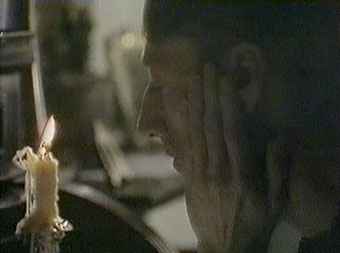
The stage plays are decent enough although the cast in the 1952 film version of The Importance of Being Earnest takes some beating. Dorian Gray is for me the essential work in the collection, even if its 100-minute running time cuts the story to the bone. The principal attraction in an entirely studio-bound work with few actors is the leads, and for this we have two great performances from John Gielgud as Lord Henry and Jeremy Brett as artist Basil Hallward. The tragic Dorian is played by Peter Firth who has difficulty keeping up with these heavyweights, especially in the later scenes when the story concentrates more fully on his predicament. Matters aren’t helped by his Yorkshire accent which frequently rises to the surface in a manner that would surely raise eyebrows in Mayfair drawing rooms.
dg2.jpg

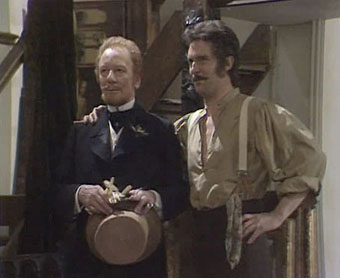
Lord Henry & Basil Hallward admire the portrait.
Continue reading “John Osborne’s Dorian Gray”

Aubrey by John Selwyn Gilbert

aubrey00.jpg

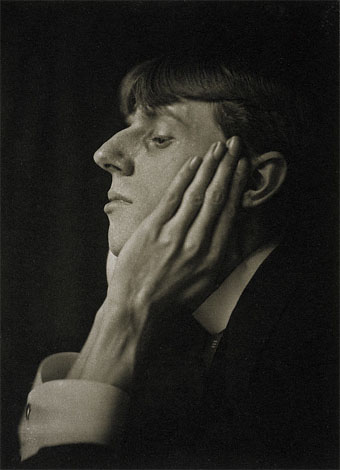
Aubrey Beardsley photographed by Frederick Evans (1894).

I’ve been going through the Coulthart VHS library recently, transferring to DVD recordings which can’t be purchased or found online. Among these is a drama from the BBC’s Playhouse strand, Aubrey by John Selwyn Gilbert, which was broadcast in 1982. This drama follows the life of artist Aubrey Beardsley from the time of Oscar Wilde’s arrest in April 1895—which event resulted in Beardsley losing his position at The Yellow Book—through the foundation of The Savoy magazine, to his tubercular death in March 1898.

aubrey01.jpg

John Dicks as Aubrey.

Playhouse was a BBC 2 equivalent of Play for Today (which usually ran on BBC 1) and Aubrey, like many other dramas of the period, was shot on video in the studio. This was done for convenience as well as being cheaper than shooting on film, since scenes could be filmed using several cameras simultaneously. The drawback is that the image looks very harsh, and historical works such as this often seem unreal and artificial as a result. If you can forgive this deficiency, Aubrey was an excellent production with some great performances, especially Ronald Lacey as Leonard Smithers and Rula Lenska as Aubrey’s sister, Mabel. The details of Beardsley’s life are very accurate, down to his beloved Mantegna prints on the walls, and many of the scenes are arranged to correspond with his drawings, the production design being largely monochrome.

Continue reading “Aubrey by John Selwyn Gilbert”

Recovering Bond

new_bonds.jpg

Penguin is really coming up with the goods these days, living up to their reputation as a house with high standards of cover design, unlike Picador and the shabby way they treated Cormac McCarthy recently.

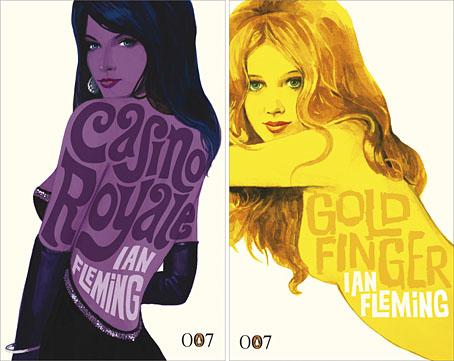
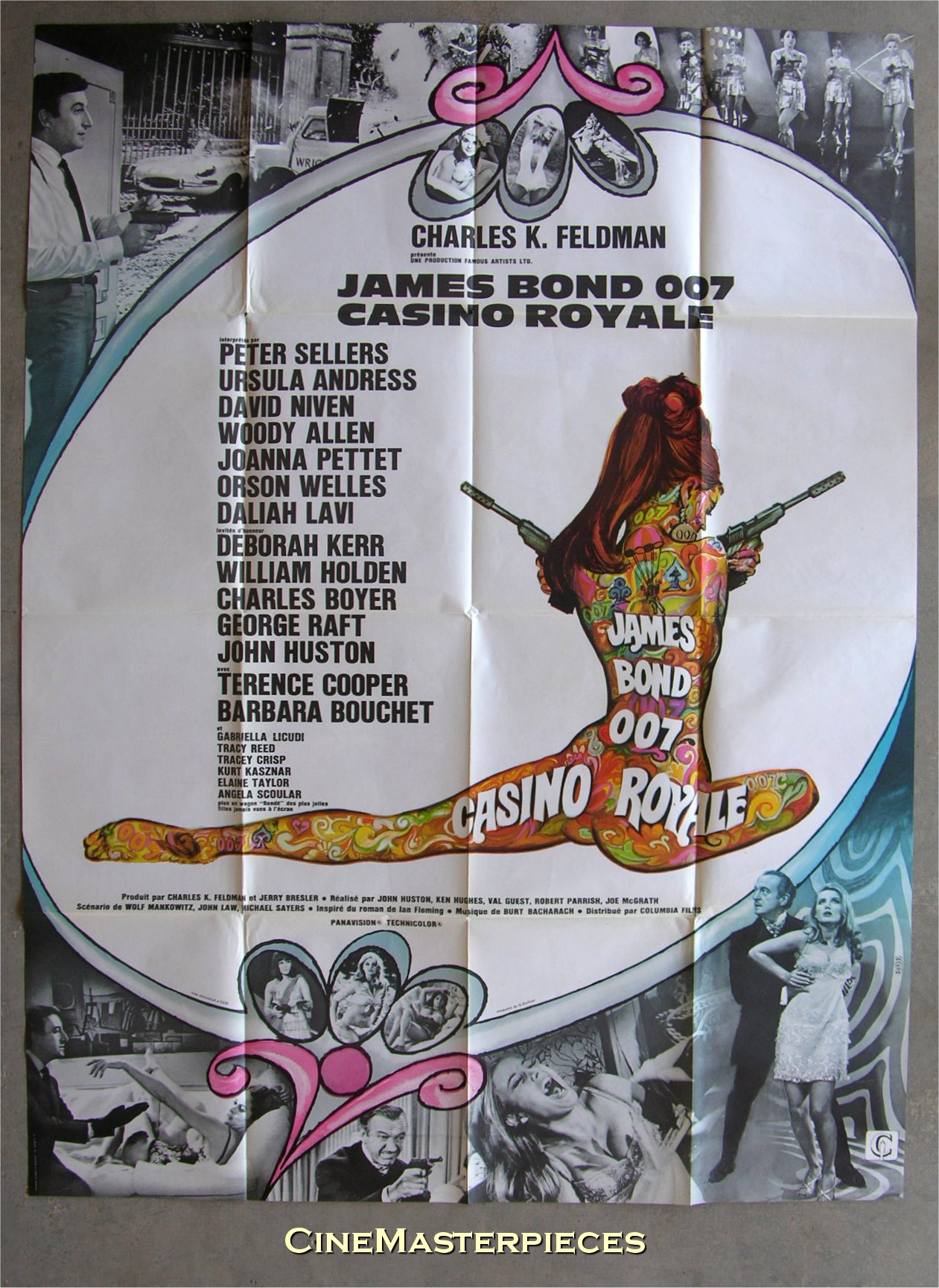
Ian Fleming’s Bond novels are the latest to receive a makeover with some fabulous art from illustrator Michael Gillette. 2008 is Fleming’s centenary so the books have been republished as demi-format hardbacks with these new designs adorning the jackets. Each cover features a different girl matched to the theme of the book (yes, I know they’re women but in Bond’s world women are always girls unless they’re Miss Moneypenny); each cover also features groovy period type which alludes to the hand-drawn elaborations of the Sixties and Seventies. The effect is reminiscent of the poster art for the 1967 film of Casino Royale (below) which used a naked girl as the focal point; all Bond posters before and after this place oo7 himself centre stage. Penguin even dare to push the level of pastiche by making On Her Majesty’s Secret Service look rather like an old romance novel, not such a surprising decision since this is the book where Bond gets married.

casino.jpg

My favourite Bond covers remain the old Pan paperbacks from 1963 but that’s just me; these look great. There’s been a persistent moan recently from authors and publishers worrying about file sharing as they foresee the publishing world going the same way as the music business. The solution is obvious: you can’t stop texts being copied and distributed but you can make the books themselves desirable objects so make them worth buying and owning. Penguin has numbered the spines of the new Bond books as they did with their recent Sherlock Holmes reprints, a smart appeal to book collectors as well as a tip to read them in the order they were written. “Smart” is the key word here; Picador take note.

Update: The Pan covers mentioned above were designed by Raymond Hawkey. Bond site MI6.co.uk has some details about the designer.

Elsewhere on { feuilleton }
The book covers archive

Previously on { feuilleton }
Repackaging Cormac
The World’s Greatest Detective
James Bond postage stamps
Boys Own Books

The World’s Greatest Detective

sh1.jpg

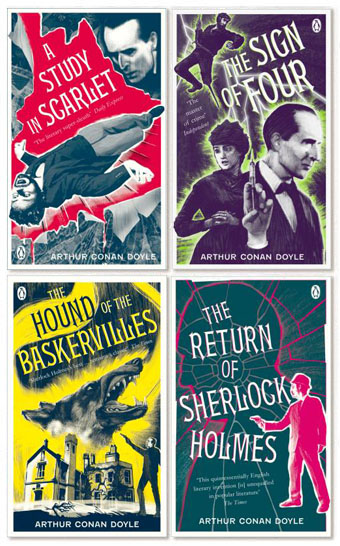
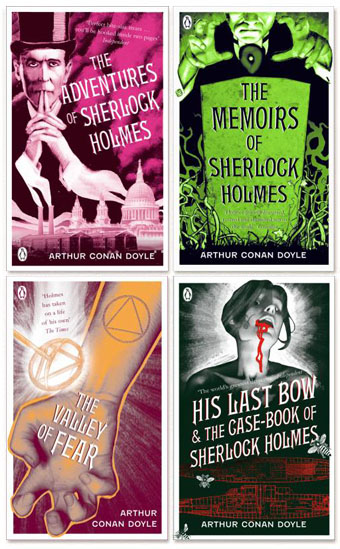
Coralie at Penguin Books sent through these cover designs today, a splendid “collect the set” republication of the Sherlock Holmes stories which should be on the shelves early next month. This follows last year’s collection of similarly repackaged Edwardian thrillers which included Conan Doyle’s dinosaur tale, The Lost World. Having recently watched the Granada TV adaptations of the Holmes stories now would be a good time to go back to the books, especially since I only recall ever having read The Sign of Four and a couple of the stories.

sh2.jpg

And on the technical side, I’ll note that my typeface mania identifies the font used for the titles of these books as Gable Antique Condensed, a contemporary design by Jim Spiece based on a Bauer typeface from around 1900. Unless it’s one of the variants mentioned by Identifont….

Elsewhere on { feuilleton }
The book covers archive

Previously on { feuilleton }
“The game is afoot!”
Boys Own Books

“The game is afoot!”

holmes.jpg

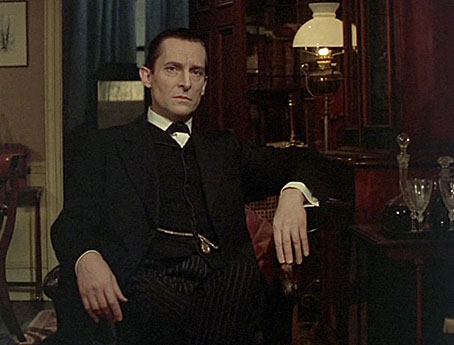
Jeremy Brett in The Adventure of the Blue Carbuncle.

A few words of praise for Jeremy Brett is his role as the world’s greatest detective, for my money the definitive screen Sherlock Holmes. I’ve spent the past few weeks working my way through the complete run of TV adaptations that Granada Television produced from 1984 to 1993, being bowled over again by Brett’s mastery of the role. It took me a while to notice these when they were first screened, British television was churning out a lot of costume drama at the time and the sight of more Hansom cabs and gas lamps paled beside the audacity and excitement of contemporary thrillers such as the BBC’s Edge of Darkness. I think I caught on during the second season that Brett’s performance was something special, and that these adaptations were treating the Holmes stories with a veracity rarely seen before.

Continue reading ““The game is afoot!””