Anémic Cinéma

anemic.jpg

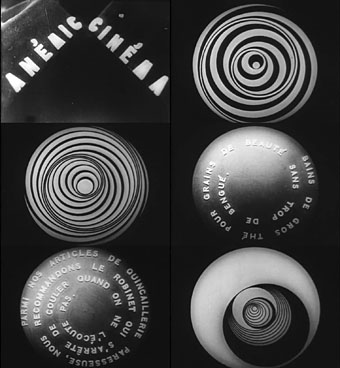
It’s no doubt up to the viewer to decide what constitutes anaemia in Marcel Duchamp’s 7-minute film. Anémic Cinéma was made the same year as Emak-Bakia with the assistance of Man Ray and Marc Allégret. Duchamp’s Rotoreliefs spin hypnotically alternating with punning epithets in French. The spinning artworks later appeared as Duchamp’s contribution to Hans Richter’s Dreams That Money Can Buy (1947).

Previously on { feuilleton }
Emak-Bakia
Un Chien Andalou
Ballet Mécanique
Dreams That Money Can Buy
La femme 100 têtes by Eric Duvivier
Entr’acte by René Clair

Dreams That Money Can Buy

dreams1.jpg

Max Ernst.

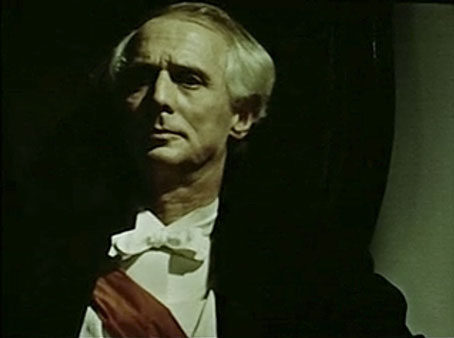
The posts this week have all followed a Surrealist theme so I feel compelled to draw attention to the DVD-quality copy of Hans Richter’s Dreams That Money Can Buy (1947) at the Internet Archive. As mentioned before, Richter’s film is one of the key works of Surrealist cinema, made at the time when the art movement had been overwhelmed by the war in Europe but was finding a brief resurgence of interest in the United States. Hitchcock had drafted Salvador Dalí to design the dream sequences in Spellbound two years earlier which may have helped Richter to raise the funds for a colour feature film. The budget was low but the production values are a lot higher than other experimental films of the time, and Richter was able to find in New York a roster of world-class collaborators including Max Ernst, Paul Bowles, Fernand Léger, Man Ray, Marcel Duchamp, John Cage and Alexander Calder.

dreams2.jpg

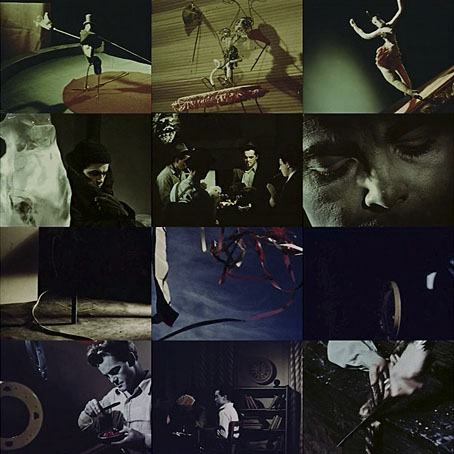
The seven artists provide (and in Ernst’s case, perform in) the dreams that lead character Joe is selling to cover his rent. Fernand Léger’s contribution is a song sequence, The Girl with the Prefabricated Heart, about love among the showroom dummies, while Marcel Duchamp’s spinning discs are given another outing accompanied by music from John Cage. Dreams That Money Can Buy is a fascinating film that’s essential viewing for anyone interested in the art of this period. It’s also a film to which Kenneth Anger owes a small debt: the sleeping woman in Ernst’s Desire sequence is seen at one point swallowing a golden ball that hovers above her mouth, a trick that Anger later borrowed for Inauguration of the Pleasure Dome.

dreams3.jpg

Also at the Internet Archive are three further Richter films: two short works, Rhythmus 21 (1921) and Filmstudie (1925), and also Ghosts Before Breakfast (1927), an inventive experimental piece using cut-up imagery, simple animation and trick photography.

Previously on { feuilleton }
La femme 100 têtes by Eric Duvivier
Entr’acte by René Clair

Weekend links 80

holberg.jpg

Niels Klim’s descent to the planet Nazar from the 1845 edition of Nicolai Klimii Iter Subterraneum (Niels Klim’s Underground Travels) (1741) by Ludvig Holberg.

BibliOdyssey posts illustrations from different editions of Ludvig Holberg’s satirical fantasy, appends the usual informative links and draws our attention Stories of a Hollow Earth at The Public Domain Review. I’d not come across the latter site before but it’s now bookmarked.

• While the economy of Europe continues to circle the toilet bowl it’s good to know that our Prime Minister is focusing on the important issues such as…limiting access to internet pornography. “Look at the implementation, and no matter where you stand on porn, I think you’ll see this plan is going to cause a lot of problems on its way to the eventual fail bin,” says Violet Blue. I was wondering how the four targeted ISPs would feel about a filtering plan that would drive many new customers elsewhere. The Register reports their response which comes down to offering guidelines rather than attempting the difficult and contentious task of filtering millions of websites.

• Related: Won’t you fuck off, Reg Bailey, in which the report by the small Christian pressure group that started all the fuss is eviscerated. | Elsewhere: Porn is good for society says Anna Arrowsmith, while Tristan Taormino asserts that “writing and publishing erotica, especially for minorities, is a political act.” Then there’s Pornsaints, “an artistic approach to porn, a pornographic approach to art, a pornartistic approach to religion.”

• In the music world: Richard H Kirk and Peter Care discuss Cabaret Voltaire and Johnny YesNo, Roy Harper talks to Alexis Petridis, and soundtrack composer Cliff Martinez is interviewed (and pictured playing a Cristal).

Witch’s Cradle at Strange Flowers (Maya Deren, Marcel Duchamp and Peggy Guggenheim), The Ghosts of Senate House, London, and Aleister Crowley’s Abbey of Thelema as it is today.

• RIP Frank Kameny, co-founder of the Mattachine Society, and a tireless gay rights advocate from the early 1960s on.

Bruce Weber photographs some of the dancers from Matthew Bourne’s Dance Company.

Terry Gilliam says “I used to think I could will things into existence. Not any more.”

• Charts at Business Insider: What the Wall Street protesters are so angry about.

Five From…: assorted wit and wisdom in the Tumblr labyrinth.

• Glass art by Jasmine Targett.

Ballard Geocoded.

Porno Base (1982) by 23 Skidoo | Kylie Minogue (2003) by Satanicpornocultshop | Tantric Porno (live) (2009) by Bardo Pond.

Richard Hamilton, 1922–2011

whitealbum.jpg

The Beatles aka The White Album (1968) by The Beatles. Design by Richard Hamilton.

Hamilton admires Hunger but he has little time for the other Young British Artists. He can’t imagine a conversation with Tracey Emin lasting more than five minutes – too tedious! – and though he was quite interested in Hirst’s sharks, his paintings bore him half to death. He believes that this generation is “ignorant… they have no understanding of art history. [Their work] is a waste of time. So much of what they’re doing has already been done, and not only by Duchamp, even. You think: you’re 50 years too late, mate.” Don’t even get him started on Sarah Lucas and her antics with cigarettes.

Richard Hamilton: A masterclass from the father of pop art

A few words to note the passing of British artist Richard Hamilton whose death was announced this week. I’ve retained an affection for Hamilton’s work over the years for a couple of reasons. As the creator of the 1956 collage Just What is it that Makes Today’s Homes So Different, So Appealing? he inadvertently gave a name to the emerging Pop Art movement with which he was to be indelibly connected, and I’ve written a few times here about my teenage enthusiasm for Pop Art and Surrealism. Hamilton’s work was more familiar to me at the age of 13 than that of many other artists. I responded to the immediacy of Pop Art even though it was over by the 1970s, just as I responded to the inherent weirdness of Surrealism which at that time was back in fashion. On my first visit to London in the mid-70s I rushed to the Tate Gallery (as Tate Britain was then known) to see some of the paintings and sculptures I’d been reading about in art books, and it was one of Hamilton’s works that stood out on that first visit, Swingeing London 67 (f), his painting of Mick Jagger’s drug arrest which I knew from photos although I hadn’t seen it in colour before. Most surprising—and something which reproductions still don’t quite convey—was seeing the pieces of metal stuck onto the canvas to form the handcuffs on the wrists of Jagger and Robert Fraser. It was already a shock that day being in one of the world’s major art galleries; it was even more of a shock to see this painting whose metal elements gave it a vivid presence beyond the pictorial surface as though it was caught halfway between painting and sculpture. It’s a presence which brings to the fore the “aura” which Walter Benjamin discusses in The Work of Art in the Age of Mechanical Reproduction (1936), an atmosphere possessed by an original work which will always be absent from a reproduction.

Another work I was fascinated by that day was the 1966 version of Marcel Duchamp’s The Bride Stripped Bare by Her Bachelors, Even (aka The Large Glass) which Hamilton had meticulously copied from the original at the Philadelphia Museum of Art. Hamilton made copies of a number of Duchamp’s works with the artist’s permission, and while his painting of Mick Jagger may have its own substantial aura, his Duchamp copy also has an aura of its own despite being a reproduction. What would Walter have made of that, I wonder? Duchamp is the first conceptual artist, and some trace of his inspiration can be found in Hamilton’s design two years later for The White Album, the 1968 release by The Beatles whose blank sleeve with its embossed name and unique serial number made it the first conceptual album cover. Hamilton has never received the same credit for this as Peter Blake receives for his Sgt. Pepper sleeve. On the packaging for the recent White Album CD acknowledgement was given to the designers who put the reissue together but the only mention of Hamilton was in the tiny list of thanks from the original printing. It’s a small detail from a long career but we can at least remember his contribution to music history today.

Guardian obituary | Richard Hamilton in pictures | Richard Hamilton’s altered images

The Thackery T. Lambshead Cabinet of Curiosities

lambshead-cover.jpg

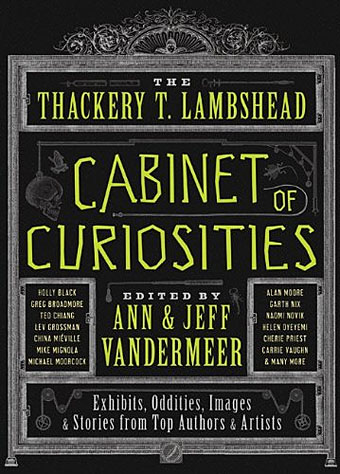
Cover design by James Iacobelli.

The sequel to The Thackery T. Lambshead Pocket Guide to Eccentric & Discredited Diseases is published next week in the US but we have permission to write about it before the official release. The Thackery T. Lambshead Cabinet of Curiosities is a chunky hardback of 320 pages with a host of contributors including Holly Black, Greg Broadmore, Ted Chiang, Rikki Ducornet, Amal El-Mohtar, Minister Faust, Jeffrey Ford, Lev Grossman, N.K. Jemisin, Caitlín R. Kiernan, China Miéville, Mike Mignola, Michael Moorcock, Alan Moore, Garth Nix, Naomi Novik, James A. Owen, Helen Oyeyemi, J.K. Potter, Cherie Priest, Ekaterina Sedia, Jan Švankmajer, Rachel Swirsky, Carrie Vaughn, Jake von Slatt, Tad Williams, Charles Yu and others. I provided title pages for the various sections of the book, as well as a variety of found and bespoke illustrations. And seeing as how I seldom miss an opportunity to take a dig at Rupert Murdoch (especially this week), it would be remiss of me if I didn’t mention that it’s published by an imprint of HarperCollins which means I’m currently feeling somewhat tainted by the Evil Empire. Mea culpa. When you sup with the devil, use a long spoon.

lambshead-title.jpg

My title spread.

That aside, this is a treat for anyone who enjoys the more experimental, eccentric and surreal end of the fantasy spectrum:

After the death of Dr. Thackery T. Lambshead at his house in Wimpering-on-the-Brook, England, a remarkable discovery was unearthed: the remains of an astonishing cabinet of curiosities. Many of these artifacts, curios, and wonders related to anecdotes and stories in the doctor’s personal journals. Others, when shown to the doctor’s friends, elicited further tales from a life like no other. Thus, in keeping with the bold spirit exemplified by Dr. Lambs­head and his exploits, we now proudly present highlights from the doctor’s cabinet, reconstructed not only through visual representations but also through exciting stories of intrigue and adventure. A carefully selected group of popular artists and acclaimed, bestselling authors has been assembled to bring this cabinet of curiosities to life.

From what I’ve read so far the general tone is a lot less overtly wacky than the first book, and if set beside some of the more clichéd and pedestrian fantasy works being jobbed out at the moment will probably seem downright avant garde. Editors Ann and Jeff VanderMeer have been at pains to emphasise that this isn’t another steampunk collection although seeing as how many people now equate steampunk with any kind of antique graphics that’s the way some may take it. Alan Moore aficionados should know that Alan’s piece, Objects Discovered in a Novel Under Construction, is a riff on some of the contents of his forthcoming novel Jerusalem. My illustration for that entry is below.

Jeff had some blog posts this week related to the book, one looking back at the Disease Guide, the other with details of the US tour he and Ann will shortly be undertaking. A couple of my other contributions follow.

Continue reading “The Thackery T. Lambshead Cabinet of Curiosities”