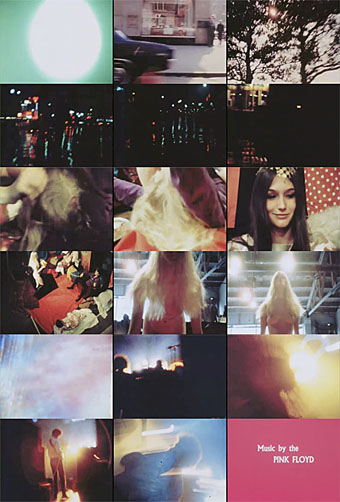
San Francisco by Anthony Stern

sf.jpg

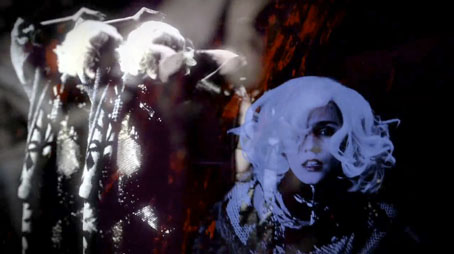
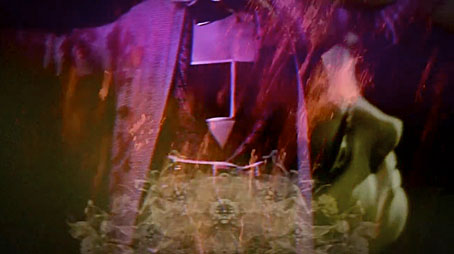
The flip-side of the kitsch London of Smashing Time can be found in this frenetic short made a year later which presents a fragmented view of that other locus of the Paisley Era, San Francisco. Director Anthony Stern avoids the usual longueurs of silent documentary by chopping his footage to bits to create a tour through the city streets that’s as frenzied as the films of Jeff Keen. The bonus is a score by The Pink Floyd (from the days when they still used the definite article) playing an exclusive version of Interstellar Overdrive. That alone makes one wonder why this film hasn’t received more attention over the years.

Stern’s film reminds me of Kenneth Anger’s Invocation of My Demon Brother (1969), another short work which is frequently as frenzied and also features scenes filmed in San Francisco. In addition, both films feature some ritual business: Stern shows a group of freaks in a psychedelic house with the inevitable naked woman cavorting for the benefit of clothed men; Anger is rather more serious with shots of a full-blown Crowlean ceremony. Anthony Stern today has established himself as a very accomplished glass artist; you can see his glass work here and watch San Francisco here.

Previously on { feuilleton }
Smashing Time
Berlin Horse and Marvo Movie
Kenneth Anger on DVD again

Symbolist cinema

dracula1.jpg

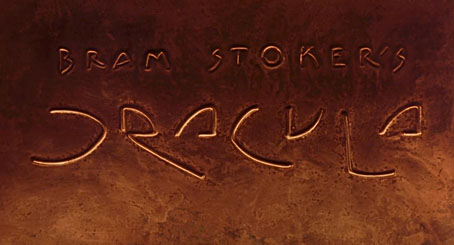
Symbolist? Arguably. Decadent? Certainly. Watching Francis Ford Coppola’s Dracula (1992) again this weekend I thought it worth making note of some of these resonances. The real age of Symbolist cinema was the Silent Era from around 1910 onwards, something I discussed in more detail here. That being so, several films made since can be taken as Symbolist (more usually Decadent) productions even if this was never their original intention. Kenneth Anger‘s Magic Lantern Cycle comes immediately to mind, so too Sergei Parajanov’s The Colour of Pomegranates.

dracula3.jpg

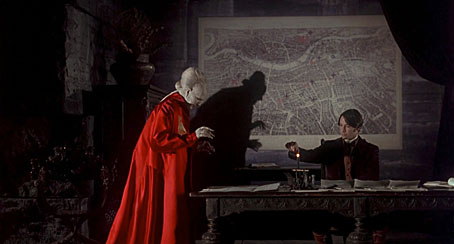
Bram Stoker’s novel was published in 1897 at the ebbing of the fin de siècle but vampires and vampirism were already recurrent Symbolist themes. Aesthetic magus Walter Pater wrote of the Mona Lisa in 1893, “She is older than the rocks among which she sits; like the vampire, she has been dead many times, and learned the secrets of the grave…” Dracula almost demands a Symbolist interpretation, and for now Coppola’s production is the closest we get. I’ve found this makes the film more satisfying in a way: you can ignore the shoddy performances by secondary characters and concentrate on the decor and details (and the tremendous score by Wojciech Kilar). Some of the following screen grabs argue my point.

dracula2.jpg

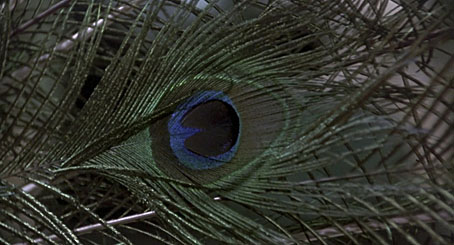
Oh look, peacock feathers. I loved the artificiality of this film, the excessive palette, the obvious models and miniatures, the layering of images. The dissolve from a peacock feather to Jonathan Harker’s infernal train journey is a great moment.

Continue reading “Symbolist cinema”

The art of Alia Penner

penner1.jpg

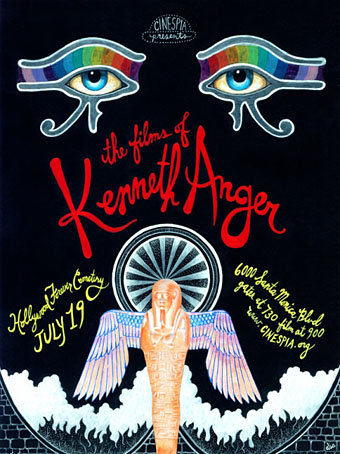
Kenneth Anger poster (2009).

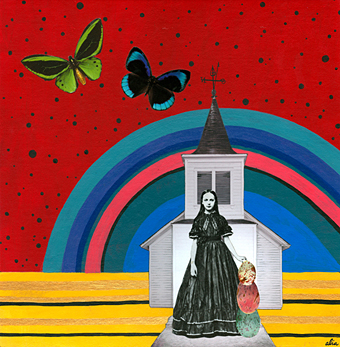
Alia Penner, like Arik Roper, is another talented member of the omniversal Arthur posse as well as being an illustrator, designer and photographer in her own right. Her title designs opened the Missoni promotional film which Kenneth Anger directed earlier this year, and her work on paper follows a distinctly psychedelic path. The new piece below reminds me a little of Wilfried Sätty’s colour collages with its spots and eggs and butterflies. There’s more gorgeous work to be seen here.

penner2.jpg

Somewhere (2010).

Previously on { feuilleton }
Arik Roper relaunched
Wilfried Sätty: Artist of the occult
Missoni by Kenneth Anger

Missoni by Kenneth Anger

missoni1.jpg

I did have another Ludwig post planned for today but that’s been set aside for a different kind of fabulosity following the news that Kenneth Anger has made a new film. Italian fashion house Missoni commissioned Anger to make a short promo for their Fall/Winter collection and you can see the delirious results in high-resolution here. The film features Missoni family members peering out from among the layered moons and stars, with titles by Arthur magazine’s Psychedelic Healing Visions Correspondent, Alia Penner.

missoni2.jpg

“I’m fascinated by Kenneth Anger’s use of colour and his ability to transform a film into a three-dimensional texture, a fabric of images in movement,” explained Angela Missoni.  This is how she introduced her decision to entrust the Missoni F/W 2011 campaign to one of America’s most famous authors and directors of avant-garde cinema.

Anger—a hyperactive octogenarian who loves working in the wee hours of the night and at dawn using sophisticated instruments such as the RED digital camera that has the characteristics of a classic 35 mm camera—flew in from Los Angeles to film the campaign in Sumirago that involved all the members of the great Missoni family. They are the stars of this campaign that was conceived as a series of superimposed and overlapping portraits. (More.)

Via Arthur!

Previously on { feuilleton }
Anger in London
Arabesque for Kenneth Anger by Marie Menken
Edmund Teske
Kenneth Anger on DVD again
Mouse Heaven by Kenneth Anger
The Man We Want to Hang by Kenneth Anger
Relighting the Magick Lantern
Kenneth Anger on DVD…finally

House of Harrington

harrington1.jpg

Curtis Harrington.

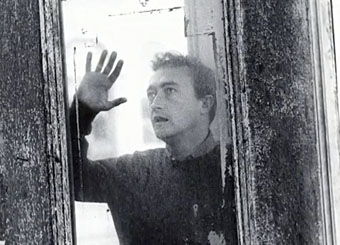
House of Harrington is a short documentary from 2008 about the late filmmaker Curtis Harrington which has just been posted to YouTube by its makers, and by a curious coincidence this appearance occurs in the week of Dennis Hopper’s death. Harrington gave Hopper the lead in his debut feature Night Tide (1961) at a time when the actor was ostracised in Hollywood after a falling out with director Henry Hathaway. Hopper’s diligent performance in Harrington’s film, a low budget horror, is a long way from the histrionics one usually finds in works of this sort and is a good reason to seek it out.

harrington2.jpg

Marjorie Cameron in The Wormwood Star.

Also in Night Tide in a wordless role is the enigmatic occult artist Marjorie Cameron who drifts around looking spooky and mysterious. Cameron had earlier appeared with Harrington in Kenneth Anger’s Inauguration of the Pleasure Dome (1954), he as Cesaré the Somnambulist from Caligari, she as Aleister Crowley’s Scarlet Woman. That encounter led to Harrington making her the subject of one of his experimental shorts, The Wormwood Star in 1956. I’ve wanted to see this film for years, if only to sate a persistent curiosity, and House of Harrington contains a few tantalising glimpses. With luck it may turn up on YouTube (or even DVD) in the future.

Lastly, Automat Pictures, the makers of House of Harrington, also have a lengthy filmed lecture in their channel, Queer for Fear, which “explores gay and lesbian subtext in the horror film, and examines the intertwining of queer history and monster movies.”

• House of Harrington: Part 1 | Part 2 | Part 3 | Part 4

Previously on { feuilleton }
Curtis Harrington, 1926–2007
The art of Cameron, 1922–1995
Kenneth Anger on DVD…finally