Weekend links 816

rossignol.jpg

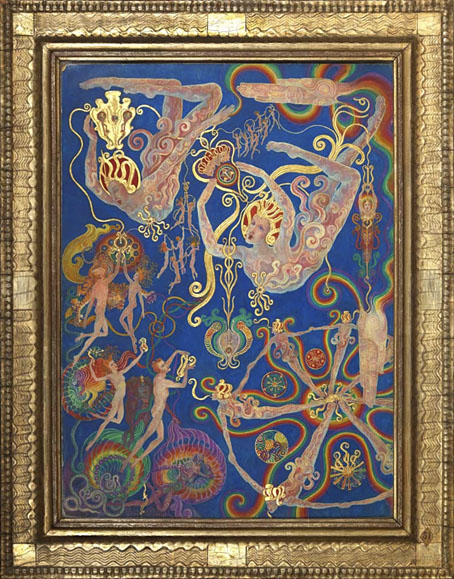
The Creative Power of the Spirit, No. 31 of A Goodly Company series, 1920–1933 by Ethel le Rossignol.

• “One moment it was a little blip. The next, our friends are dying”: the gay porn soundtrack composers lost to the Aids crisis. More gay porn: Pink Narcissus, James Bidgood’s micro-budget homoerotic fantasy, will receive a UK blu-ray release later this year.

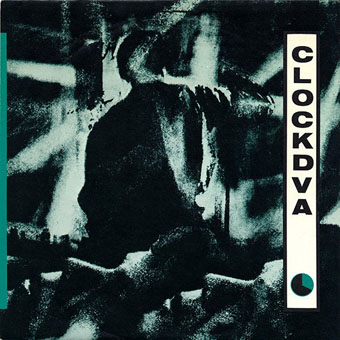
• Old music: Thirst by Clock DVA gets a very welcome reissue later this year, having been unavailable in any form since 1992. I’m not so happy about the changes to Neville Brody’s original cover design but the album itself is a major post-punk statement.

• “Graphic design was thought to be a man’s discipline,” she says. “So I think it was quite a surprise for people to find me there.” A profile of Margaret Calvert, designer of (among other things) Britain’s road signs.

• At Colossal: A major survey in Paris chronicles Leonora Carrington’s esoteric Surrealism.

• At Public Domain Review: Sara Weiss’ Journeys to the Planet Mars (1903).

• At the BFI: The mystery music video for The Beatles’ Penny Lane.

Winners and entrants for Close-up Photographer of the Year 7.

• “Cats to blame for octopus deity enshrinement delay.”

• Steven Heller’s font of the month is Cattivo.

• At Dennis Cooper’s it’s Jack Arnold’s Day.

Pink Noir (1996) by David Toop | Pink Dust (2013) by Sqürl | The Pink Room 2 (2024) by Seigen Ono

Weekend links 793

junichiro.jpg

Shinagawa, Tokyo Tower (Tokaido Station 1) (1967) by Sekino Jun’ichiro.

• “The historical figures who interested [Cormac] McCarthy the most, judging by the number of books he owned about them, were Albert Einstein (114 books), Winston Churchill (88) and James Joyce (78). Architecture is the dominant subject in the collection, with 855 books. The human being whom McCarthy most admired, Dennis confirms, was Ludwig Wittgenstein. The team catalogued a staggering 142 books by or about the philosopher, with a high proportion annotated.” Richard Grant for Smithsonian Magazine reports on the cataloguing of Cormac McCarthy’s personal library.

• The Real City of the Future: a long read by Charles T. Rubin taking in William Gibson’s urban fictions and Paolo Soleri’s towering Arcologies.

• At Colossal: “Atmospheric oil paintings by Martin Wittfooth illuminate nature’s timeless cycles.”

• Old music: White Souls In Black Suits by Clock DVA, receiving its first reissue since 1990.

• At the BFI: Carmen Gray on where to begin with Sergei Parajanov.

• At Ultrawolvesunderthefullmoon: The art of Sekino Jun’ichiro.

• At Dennis Cooper’s: Unica Zürn Day (restored and expanded).

• New music: Imploded Versions by The Bug vs. Ghost Dubs.

• The Strange World of…Van Morrison.

Dev Hynes’ favourite albums.

Carnival Of Souls (1989) by David Van Tieghem | All Souls (1989) by Opal | The Cult Of Souls (2011) by The Wounded Kings

4 Hours by Clock DVA

clockdva1.jpg

Sleeve by Neville Brody.

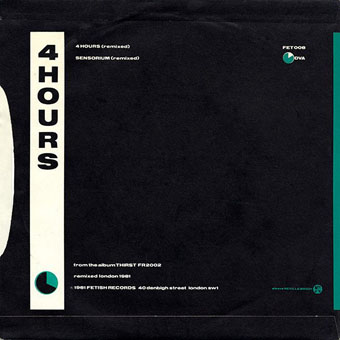
After mentioning Clock DVA’s Thirst (1981) a couple of days ago I’ve been playing the album together with Pow-Wow ever since. 4 Hours was Thirst‘s accompanying 7-inch single, a marvellous slice of rumbling post-punk angst. The B-side, Sensorium, includes the words “Uptown apocalypse” among its lyrics, a phrase that’s also the title of the second track on the equally marvellous Music For Stowaways (1981), an instrumental album by the post-Human League, pre-Heaven 17 offshoot British Electric Foundation. This isn’t a coincidence; the latter number was co-written by Clock DVA’s Adi Newton, and features him playing guitar and synth, Newton having been in The Future with BEF’s Marsh & Ware prior to the formation of Clock DVA and The Human League. And to further complicate this tangle of Sheffield connections, 4 Hours was reissued in 1985 in 12-inch format on Cabaret Voltaire’s Doublevision label. I bought almost all the Doublevision releases but this was one I missed. (Was the title of Cabaret Voltaire’s Sensoria derived from Sensorium? Maybe…)

clockdva2.jpg

Previously on { feuilleton }
Pow-Wow by Stephen Mallinder
Old music and old technology
Neville Brody and Fetish Records

Pow-Wow by Stephen Mallinder

pow-wow1.jpg

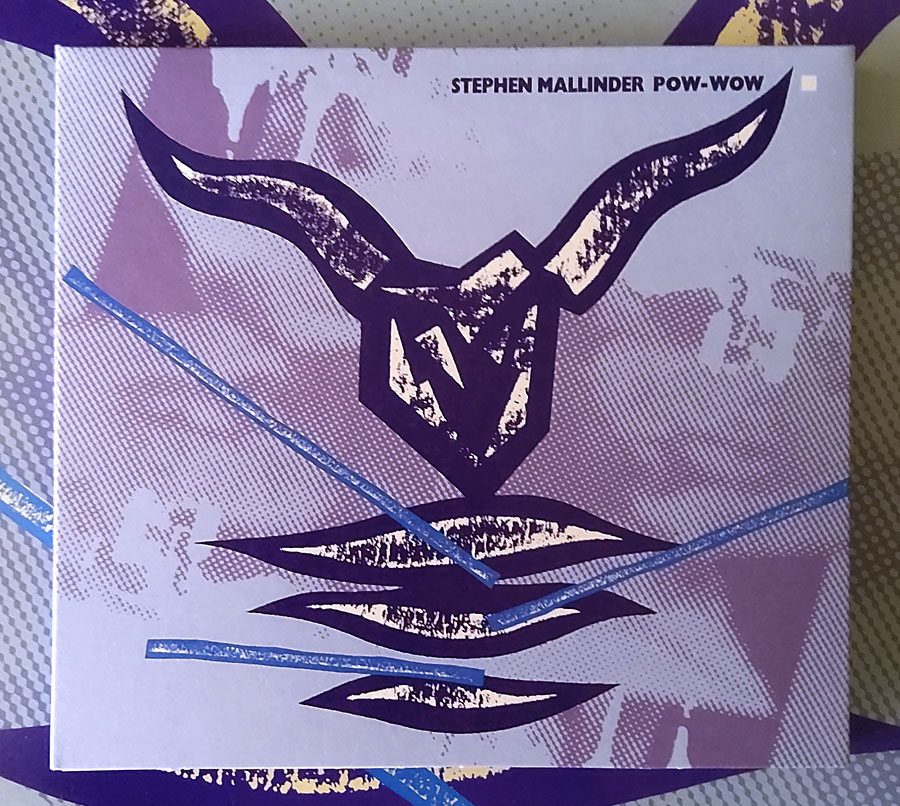
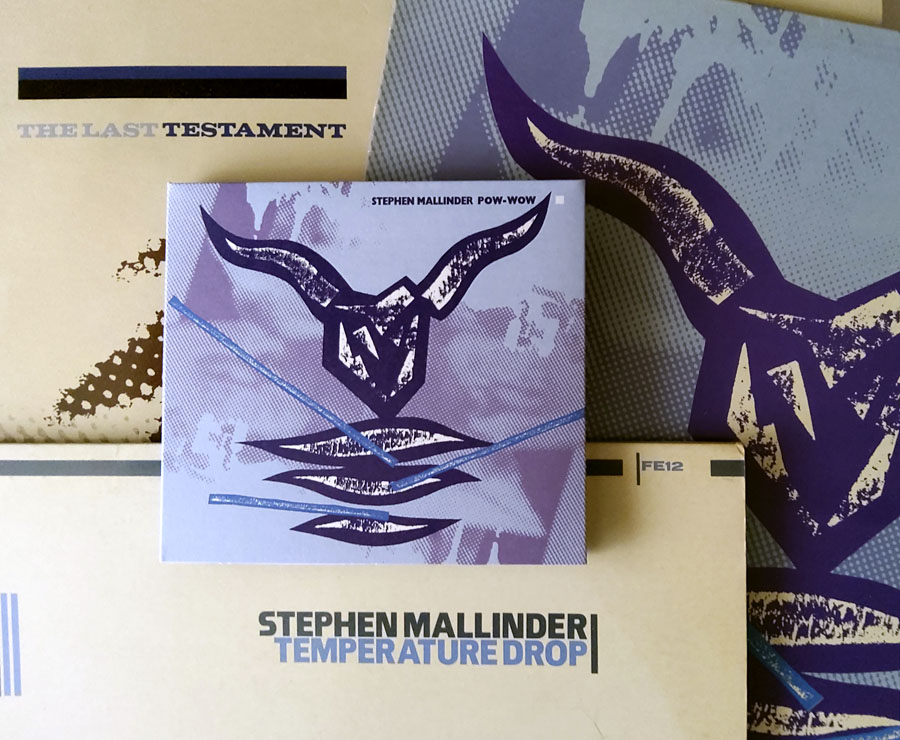
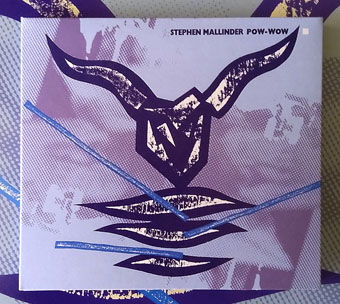
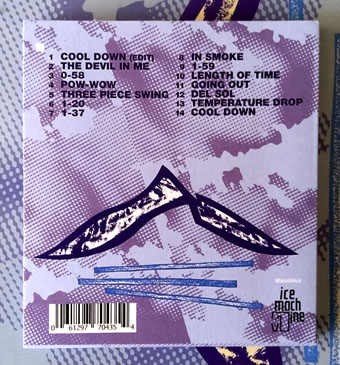
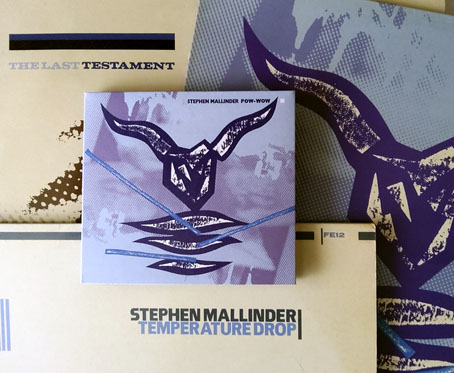
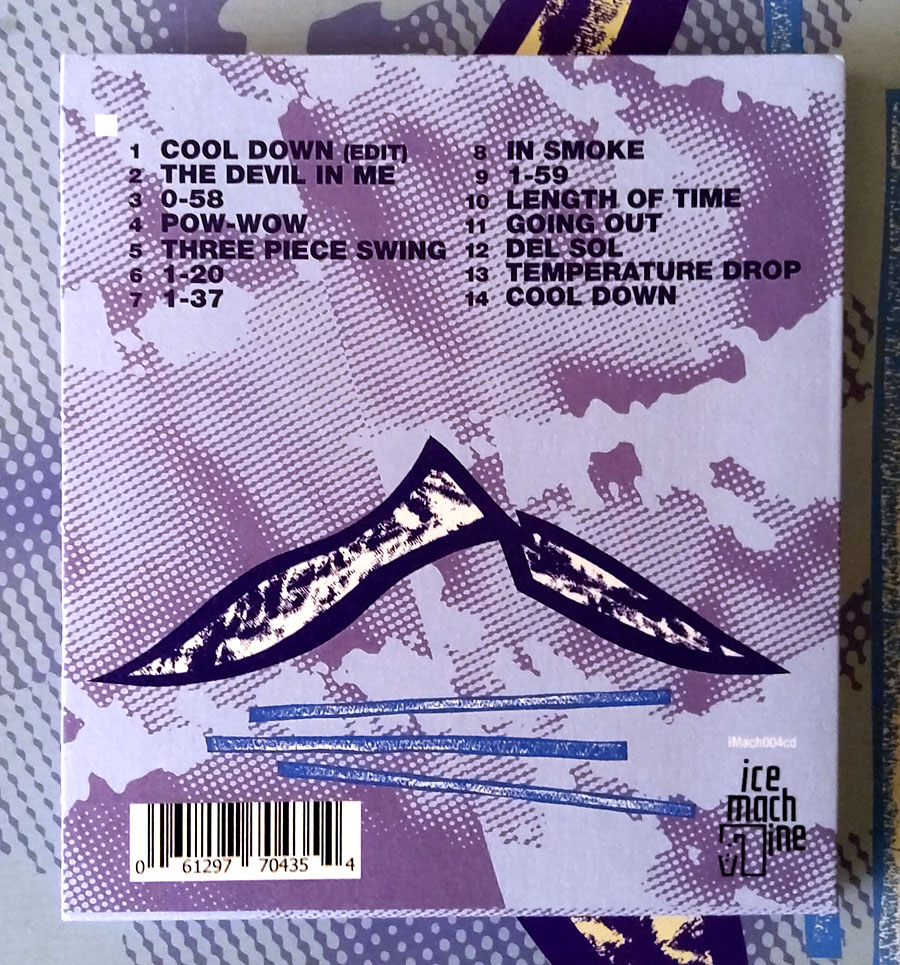
The debut solo album by Stephen Mallinder of Cabaret Voltaire received an overdue reissue on the Ice Machine label a few weeks ago; my CD turned up yesterday. Pow-Wow was one of the last albums released by Fetish Records in 1982, and it’s always been one I preferred to the solo recordings by Mallinder’s much more prolific colleague, Richard H. Kirk. Away from Cabaret Voltaire, Kirk and Mallinder’s music is mostly instrumental but the latter had a very different sound, dubbier and much more rhythmic than Kirk’s abrasive distortions. The longer pieces on Pow-Wow work variations on the energetic industrial funk developed by the Cabs and 23 Skidoo, benefiting a great deal from Mallinder’s dominant bass and insistent rhythms for which he was aided by Cabaret Voltaire’s regular percussionist, Alan Fish. Last Few Days, the most mysterious of Britain’s early Industrial groups, receive a credit for “chance element”. Mallinder sings on a couple of the tracks (if his whispered growl can be described as singing) while taped voices fill out the spaces elsewhere: a ménage à trois on Three Piece Swing, a voice from an assassination drama (Executive Action?) identifying the speaker as “Lee Harvey Oswald”, and so on. A handful of shorter pieces that run for less than two minutes are little more than looped sketches, but the unidentifiable analogue sources still sound unusual and original today, unlike synth-heavy albums from the same period.
pow-wow2.jpg

Mallinder’s other solo recordings from this time were just as good: a 12-inch single, Temperature Drop/Cool Down, and Del Sol, his uptempo contribution to the Fetish compilation/memorial album, The Last Testament. Cabs-affiliated groups like Hula and Chakk aimed for a similar blend of industrial menace and danceable grooves but the results were seldom as successful. Mallinder’s greater experience shows on these recordings, the best of which are the equal of anything that Cabaret Voltaire was doing at the time.
pow-wow4.jpg

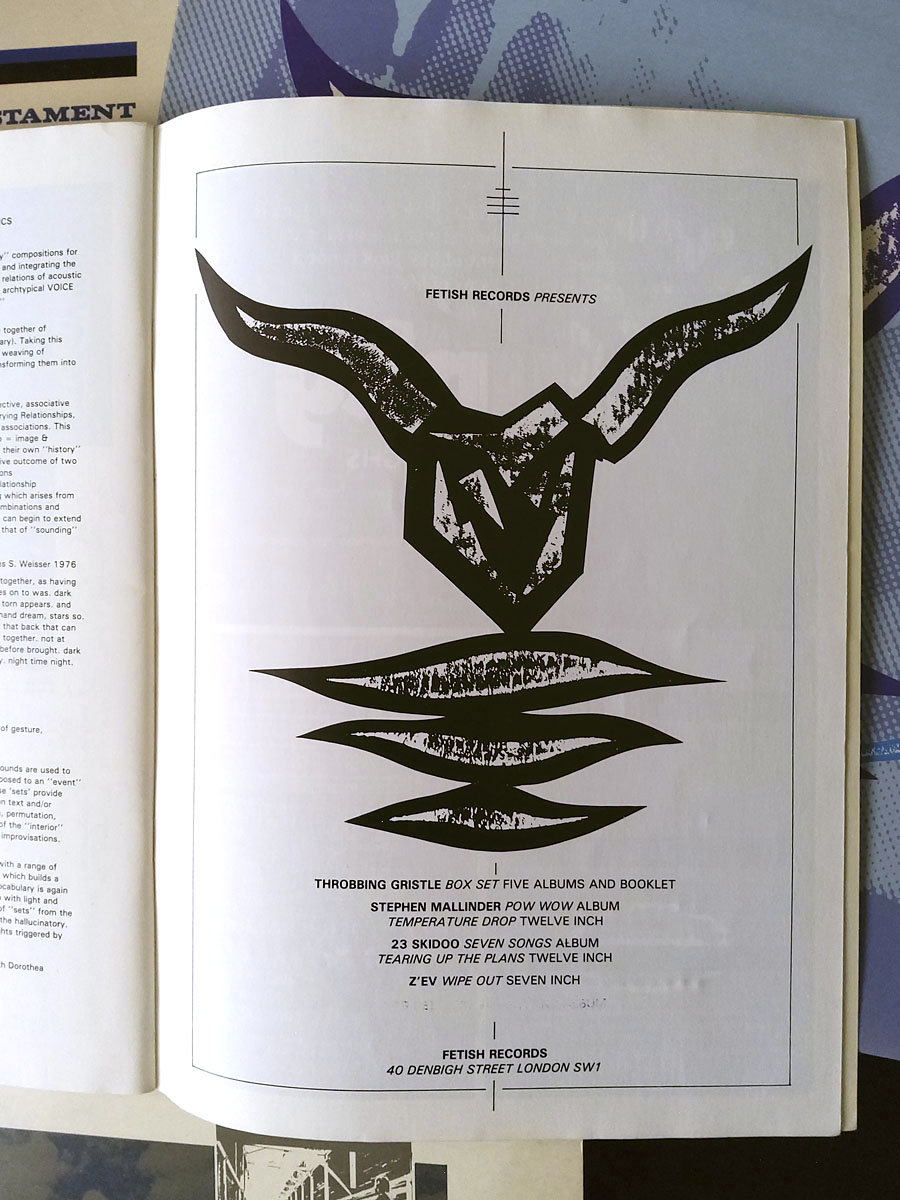
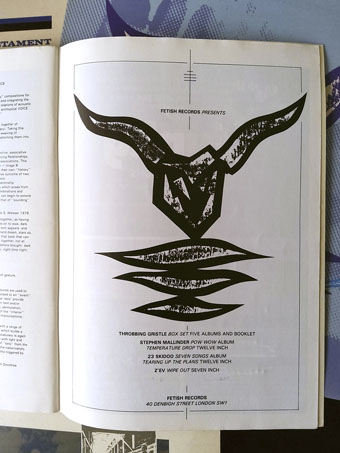
A Fetish ad from the Neville Brody-designed event booklet for The Final Academy, 1982.

The sleeve design by Neville Brody is another plus, vying with his cover art for Thirst by Clock DVA for being the most cryptic design among the many covers he produced for Fetish Records. The designer revealed his rationale in The Graphic Language of Neville Brody (1988):

This sleeve was about human ritual and human slaughter. In the media world of newscasters and advertisers everybody becomes a viewer; conditioned to regard other people’s sufferings as no more than a form of entertainment. The bullring is a metaphor for this.

A good example, then, of a cover that means more to the designer than to the record owner.
pow-wow3.jpg

All design by Neville Brody.

The new edition of Pow-Wow improves on the original and the scarce reissues by bundling the album with Del Sol, both tracks from the 12-inch single and an edit of Cool Down from a Japanese release. It also includes one of the shorter tracks which for some reason was missing from previous reissues (this and the long version of Cool Down are from vinyl sources). I’ve had all of this material for many years so didn’t really need the CD, but my records are a little worn through over-use, and besides which, these are cult works.

Previously on { feuilleton }
TV Wipeout revisited
Doublevision Presents Cabaret Voltaire
Just the ticket: Cabaret Voltaire
European Rendezvous by CTI
TV Wipeout
Seven Songs by 23 Skidoo
Elemental 7 by CTI
The Crackdown by Cabaret Voltaire
Neville Brody and Fetish Records
El Lissitzky record covers

genx.jpg

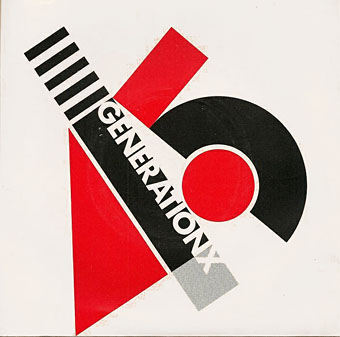
Your Generation (1977) by Generation X. Design by Barney Bubbles.

Continuing an occasional series about the work of particular artists or designers being used on record sleeves. El Lissitzky (1890–1941) is an interesting candidate in this area since his pioneering abstractions have greatly influenced subsequent generations of graphic designers. As a result of this you’re just as likely to find his Suprematist style being pastiched on an album cover as find one of his paintings decorating the sleeve. Pastiches are difficult to locate unless you already know they exist—or unless the album credits acknowledge the style they’re imitating—so this list will no doubt be incomplete.

Barney Bubbles’ design for the debut single by Generation X is the earliest example I’m aware of that makes use of the El Lissitzky style. It was also one of Bubbles’ first sleeves for a punk band, and a significant break with his often florid hippy designs.

kraftwerk1.jpg

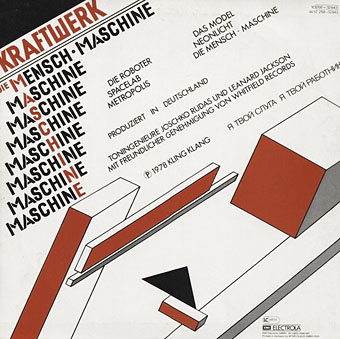
Die Mensch Maschine (1978) by Kraftwerk. Design by Karl Klefisch, “inspired by El Lissitzky”.

Kraftwerk’s seventh album uses Lissitzkian typography and graphics on its front and back covers. A very popular album with the post-punk crowd that would have been the first introduction for many people to El Lissitzky’s name. Kraftwerk still use that vibrant arrangement of black, red and white in their stage shows.

kraftwerk2.jpg

sakamoto1.jpg

B-2 Unit (1980) by Riuichi Sakamoto. Design by Tsuguya Inoue.

More pastiche, this time borrowing from El Lissitzky’s Suprematist book for children: About Two Squares: In 6 Constructions: A Suprematist Tale (1922). The book’s two characters of a red square and a black square appear on the vinyl labels. This is a great album, incidentally, still my favourite by Sakamoto.

sakamoto2.jpg

Continue reading “El Lissitzky record covers”