A Picture, a film by Lejf Marcussen

picture.jpg

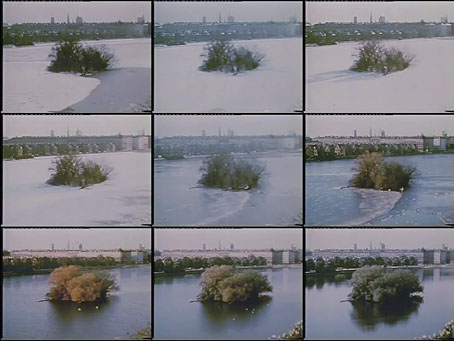
Something wintry for those of us in the northern hemisphere. Danish filmmaker Lejf Marcussen is recognised internationally for his Surrealist animation The Public Voice (1988) but his other films are less well-known. A Picture (1977) is one of the earliest, a 3-minute time-lapse shot of an island in a lake which progresses gradually from winter to summer. Not as resolutely minimal as Fog Line but another example (albeit stretching the definition) of what Andrei Tarkovsky called “sculpting with time”.

Previously on { feuilleton }
Fog Line, a film by Larry Gottheim
Wavelength
The Public Voice by Lejf Marcussen

The edge of coherence: On the Silver Globe

otsg1.jpg

Science-fiction cinema has always suffered in comparison to its written counterparts; sets and special effects have to work hard to create believable worlds or futures, while the need to recoup enormous costs has often meant that film scenarios aren’t much better than those being written in the early days of the pulp magazines. Simplistic adventure stories yield bigger audiences and greater revenues. Computer technology has helped the effects problem but production expenses ensure that inventive or unusual SF films are scarce and invariably low-budget works. Anything too ambitious or challenging is unlikely to be funded.

otsg2.jpg

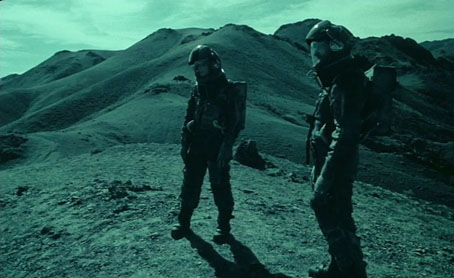
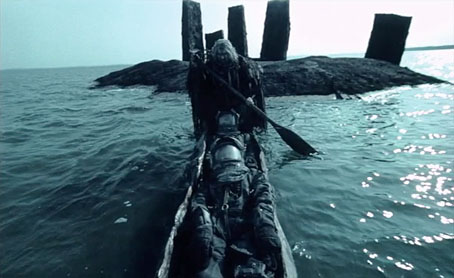
On the Silver Globe is an unfinished science-fiction film by Andrzej Żuławski that even in its incomplete state is that very rare thing: a film with a fantastic premise that doesn’t appear to have been staged for an audience at all. The film is long—over two-and-a-half hours—and much of it so disregards the conventions of commercial cinema that the immediate reaction is amazement that it exists in any form. Żuławski has a cult reputation outside his native Poland for Possession (1981), a unique horror film made when he was living in exile in Paris. On the Silver Globe was one of the reasons for his leaving the country; after two years of work in several countries, and with the film almost finished, the production was shut down in 1977 by a new vice-minister of cultural affairs who perceived a metaphoric subtext directed against the Polish authorities. The existing footage was supposed to have been destroyed but Żuławski and his production team hid the film and costumes hoping one day to shoot the missing scenes. After ten years of waiting it was decided to present the film as it was with the missing scenes filled by shots of Polish streets and countryside. A voiceover by the director describes the missing content.

otsg3.jpg

Continue reading “The edge of coherence: On the Silver Globe”

Weekend links 220

waliszewska.jpg

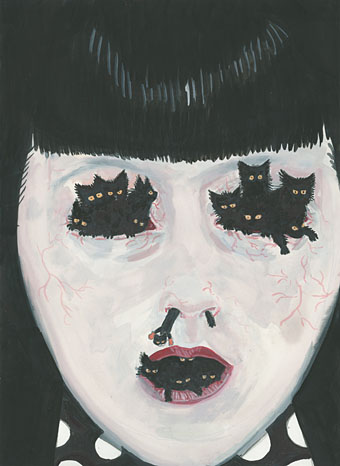
Untitled painting by Aleksandra Waliszewska.

• Ben Wheatley’s forthcoming film of High-Rise by JG Ballard now has its own Tumblr. This will no doubt be spoilerific so I won’t keep on visiting but it’s there if you require it. More Ballardianism: “Worshipping the Crash” at BLDGBLOG.

• “Aickman wandered through the sixties fantasy landscape like some curmudgeonly fetch, returning from the fin de siècle heyday of the ghost story.” Boyd Tonkin profiles Robert Aickman, writer of peerless “strange stories”.

• At Dangerous Minds: “Raise a glass to Cthulhu at the Lovecraft Bar”. Looks more like a Captain Nemo bar to me (not that there’s anything wrong with that) but I appreciate the gesture.

But to demand that a work be “relatable” expresses a different expectation: that the work itself be somehow accommodating to, or reflective of, the experience of the reader or viewer. The reader or viewer remains passive in the face of the book or movie or play: she expects the work to be done for her.

Rebecca Mead on The Scourge of Relatability

• “Space as a paranoid, static rumble featuring: 20jfg, Ben Frost & Daníel Bjarnason, Coil & Eduard Artemiev”. 20 Jazz Funk Greats on the pleasures of the Solaris soundtrack.

• What do Hawkwind, Harry Nilsson, Stereolab and The Supremes have in common? David Stubbs examines the legacy of Neu! and Klaus Dinger’s “Dingerbeat”.

• A reminder that A Year in the Country features a host of worthwhile links and associations for the Hauntologically persuaded.

Rouge Louboutin, an ad by David Lynch. Related: An improptu biscuit ad by the Eccentronic Research Council.

• Mix of the week (a year old but no matter): JG Ballard Zoom Lens Mix by Bernholz.

• At 50 Watts: More illustrated sheet music covers by Einar Nerman.

Five book cover designers and the books that inspire them.

Tove Jansson would have been 100 this week.

Pangaea with modern borders

Solaris: Dream (1990) by Edward Artemyev [sic] | Solaris (2000) by Photek | Simulacra I (2011) by Ben Frost & Daníel Bjarnason

Weekend links 191

strongowski.jpg

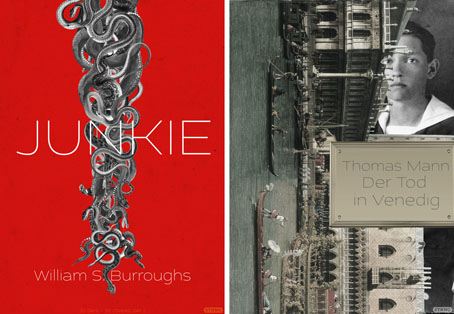
Two cover designs from Eliash Strongowski’s 30 Days—30 Covers project.

My thanks once again to Dennis Cooper for placing this blog on his end-of-year lists. Meanwhile. one of the albums I designed earlier this year, Cold Mission by Logos, made the 30 Best Album Covers of 2013 list at FACT.

• “Many of their more outlandish ideas never saw fruition: an organ powered by an entire factory, an electro-acoustic orchestra mounted on a fleet of airplanes.” Colin McSwiggen reviews Sound in Z: Experiments in Sound and Electronic Music in Early 20th Century Russia by Andrey Smirnov.

Queer Pagan Punk, a major film retrospective of the work of Derek Jarman, will take place in February and March 2014 at the BFI Southbank, London.

• “For over forty years, Iain Sinclair’s work has combined obsessive myth-making with urban despair. But what do we know about him?” asks Fatema Ahmed.

• “Rather than trying to intercept alien communications, perhaps we should go looking for alien artefacts.”

• Mix of the week: Radio Belbury Programme 12, and Winter Hours, the Cafe Kaput 2013 winter mix.

BEEP BEEP. BLOOP BLEEP: Road Runner cartoons soundtracked by a Eurorack synthesizer.

Historia Discordia: Documenting the Origins, History & Chaos of the Discordian Society.

gebbie.jpg

Pink Boy by Melinda Gebbie.

Suffered From The Night: Queering Stoker’s Dracula edited by Steve Berman.

• At Dangerous Minds: An interview with soundtrack composer Cliff Martinez.

Sarah Schoenfeld puts recreational drugs under the microscope.

• Powerplant Art-déco, a set of photos by Romain Veillon.

Adrian Curry chooses the best film posters of 2013.

Portent’s Content Idea Generator

Tarkovsky at Pinterest

The Sea Named Solaris (1977) by Tomita | Is That What Everybody Wants? (2002) by Cliff Martinez | Reyja (2011) by Ben Frost & Daníel Bjarnason
Ikarie XB 1

ikarie1.jpg

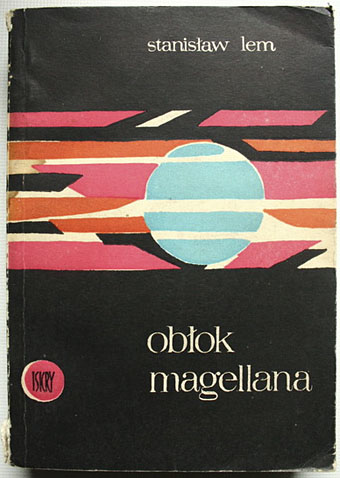
A science fiction novel by Stanisław Lem (The Magellanic Cloud, 1955).

ikarie2.jpg

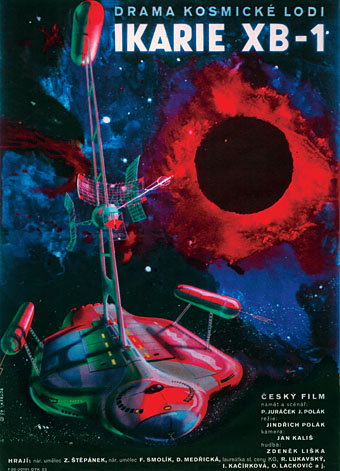
Illustration by Teodor Rotrekl.

A film by Jindřich Polák, adapted from Lem’s novel by Polák and Pavel Jurácek. (1963).

ikarie3.jpg

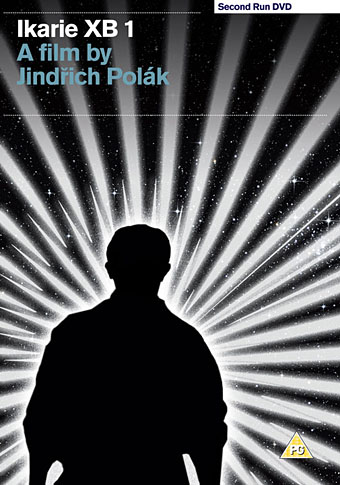
A Second Run DVD (2013).

With the exceptions of Tarkovsky’s Solaris and Stalker (both in a league of their own), I’ve never been very enthused about Eastern Bloc science-fiction cinema. If I hadn’t been watching some Czech films recently, and listening to the soundtrack music of Zdeněk Liška, I might not have bothered with this one despite its being promoted as a visual influence on 2001: A Space Odyssey. Ikarie XB 1 won the Grand Prize at the Trieste International Science Fiction Film Festival in 1963, a tie with Chris Marker’s La Jetée. (Umberto Eco was one of the judges.) Fifty years on, Marker’s film has hardly dated at all while Ikarie XB 1 seems very much of its time. But Polák’s film still has some things going for it, surprisingly so considering the director was more used to making comedies.

Ikarie XB 1 is a spaceship travelling to Alpha Centauri in the year 2163. The DVD subtitles don’t translate the name Ikarie so unless you already know it means “Icarus” there’s no foreshadowing of any possible threat, at least until the opening shots of a deranged crewman stumbling through empty corridors. Many of the scenes which follow seem over-familiar but only because the scenario of space-crew as interstellar family has become such a standard feature of filmed space opera from Star Trek on. The production design is dated, of course, but the film makes great use of black and white in the lighting patterns, on-screen visuals, clothing designs, etc. It’s easy to see why Kubrick thought it was a cut above other SF films of the period, especially with its widescreen compositions. The DVD booklet (and Kim Newman’s interview on the disc) mention Kubrick’s stylistic borrowings; judge for yourself with these screen-grabs. I was hoping the Liška soundtrack might be more electronic than it is. It’s very much a Liška score—at times you can’t help but imagine a Švankmajer puppet lurking round a corner—but with added reverb and spectral organ chords. The latter assist a sequence where two of the crew members explore an apparently derelict space station.

This page reviews the film in some detail (complete with plot spoilers). For the curious, the entire film is a free download at the Internet Archive.

Previously on { feuilleton }
Fiser and Liska
Two sides of Liska
Liska’s Golem
The Cremator by Juraj Herz