The Strange World of Willie Seabrook by Marjorie Worthington

worthington.jpg

This is a curious book. Marjorie Worthington (1900–1976) was the second wife of William Seabrook, an obscure figure today, known—if at all—as much for the lurid details of his life as for his books. In the 1920s and 1930s Seabrook was a well-regarded and very popular writer, delivering to the American public reports of his travels in the dangerous and exotic parts of the globe. Worthington was a writer herself, the author of novels, short stories and biographies, in addition to this memoir, her final major work. By the time The Strange World of Willie Seabrook appeared in 1966 Worthington’s subject was largely forgotten, his exploits eclipsed by wilder figures, while the “unexplored” areas of the world whose exotic lure had fuelled much of his writing were no longer so distant or so strange in a world of continental travel. Seabrook wasn’t completely forgotten at this time; I knew his name, if little else, from a paperback of Voodoo Island that my parents owned. This was a retitled reprint of The Magic Island (1929), a best-selling study of Haiti and its voodoo culture which, among other things, popularised the concept of the zombie.

Seabrook’s name is hard to avoid if you’re reading about witchcraft or the occult in the first half of the 20th century. Aleister Crowley knew him and mentions him in his autobiography, while Crowley is discussed in Seabrook’s Witchcraft: Its Power in the World Today (1940). Crowley’s attitude towards Seabrook seems to have soured in later years, possibly because of some perceived slight or betrayal. The two men have a lot in common: both were the same generation (Crowley was born in 1875; Seabrook in 1884), both were addicts (Seabrook’s demon was alcohol), and both were fascinated by the outer limits of human experience. In Seabrook’s case this famously extended to eating human flesh, an experience he recounted in the follow-up to The Magic Island, Jungle Ways (1930). Marjorie Worthington gives a detailed account of this episode which was much more mundane than Seabrook’s printed version. When the African feast failed to materialise Seabrook decided to keep the incident in the book even if it meant staging a cannibal meal in Paris. One of the fascinating things about Worthington’s memoir is the frequent lurches of tone when Seabrook disrupts their generally placid domesticity with a hare-brained inspiration. If this makes him sound like an Jazz Age Hunter S. Thompson he wasn’t quite as mercurial, but the cannibal episode has a trace of the gonzo as the pair race around Paris one evening, looking for a convenient stove where Seabrook can cook the “rare goat meat” a friend has procured from a Paris hospital.

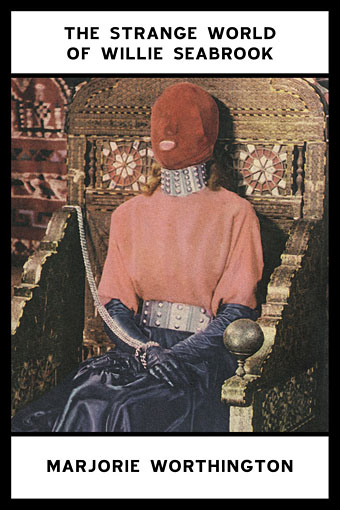
Worthington logs these and similar exploits with dismay, and one of the many curious aspects of her memoir is the unexamined nature of the attraction between herself and “Willie” as she calls him. Their relationship was an unusual one from the outset. Seabrook and Worthington were both married to other partners before they met; Worthington fell in love almost immediately but rather than go through the usual adulterous games the four people simply swapped partners and went on their way, all still married but now living with their opposite numbers. Worthington remained in love with Seabrook even though they were sexually incompatible, Seabrook having an obsession with bondage games whose outlet was provided by compliant women hired for the purpose. Worthington tried to be understanding but Seabrook’s fetishes and recurrent alcoholism strained their relationship, despite their mutual dependence. One of the ironies of the book is that Worthington recounts her abhorrence each time Seabrook retires to the barn for an endurance session with one of his new women but offers little detail as to what took place. This has the effect of stoking the reader’s curiosity which could hardly have been her intention. Seabrook told her he was interested in the mental effects caused by his bondage experiments—we see a photograph of one session on the cover of the new edition from Spurl—but the sexual dimension remains undiscussed.

The Strange World of Willie Seabrook isn’t an account of continual torment, however. Seabrook had many successful years, and the pair were friends with Jean Cocteau, Man Ray, Aldous Huxley, the Astors and others. One of the best parts of the book concerns a journey by plane from Paris to Timbuktu at a time when international air travel was still a difficult and dangerous business. Worthington’s account of a noisy flight across the Sahara in a cramped aircraft that could only fly during the day makes contemporary moans about air travel seem like the whining of spoiled children. Her narrative comes alive when it assumes the character of travel writing, and she writes evocatively about her experience of the Sahara Desert. I’d have preferred more along these lines but for this it may be necessary to turn to Seabrook’s own works of the period, Air Adventure (1933) and The White Monk of Timbuctoo (1934).

The Strange World of Willie Seabrook is published by Spurl Editions on 25th October.
The Big Fix!

fix1.jpg

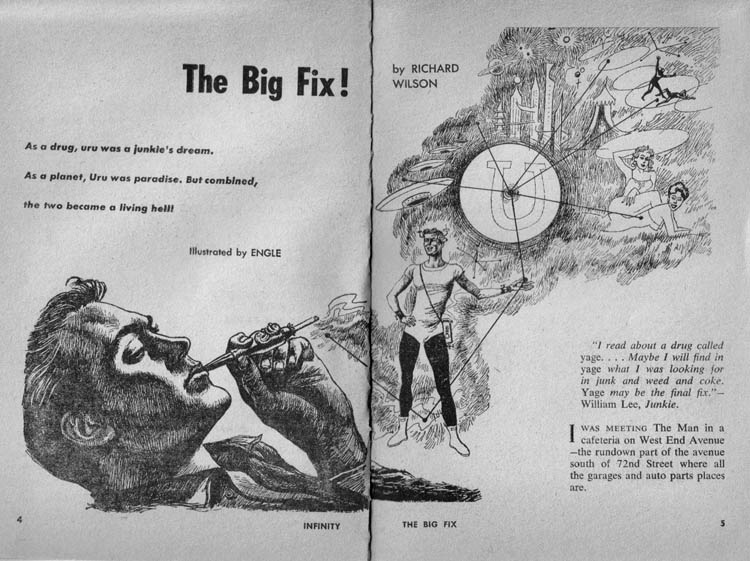
One of the stories that was new to me in recent book purchase, Strange Ecstasies (1973), was The Big Fix by Richard Wilson, a science-fiction piece about a junkie in New York City looking for something newer and better than the heroin habit he’s trying to quit. The story first appeared in Infinity Science Fiction for August 1956 but the first half of the narrative seemed so unlike the usual SF fare of the time that I kept flicking back to the copyright page to check the date. The Big Fix of the title (or The Big Fix! as it was in the magazine) is a substance named uru given to the narrator by Jones, an alien in disguise; smoking the drug induces a telepathic conversation with Jones followed by a journey through space to his home planet. In the second half of the story we discover why Jones (or Joro as he’s known at home) is transporting low-lifes from New York and offering them a chance to live on his world. The explanation is as pedestrian in SF terms as an episode of Star Trek, a factor which makes the first half of the story seem all the more striking, replete as it is with junk-life details, contemporary slang and discussion of the (for the time) very obscure South American drug known as yage, aka ayahuasca. Was this written from Wilson’s personal experience or had the details been lifted from a contemporary authority?

fix2.jpg

A few minutes of searching turned up the solution in an illustrated spread from the magazine: the original printing opened with a paragraph from Junkie (1953) by William Burroughs (credited as William Lee) which not only explains the accuracy of the drug and slang details but also why Wilson was mentioning yage. Burroughs’ connections with (and influence upon) the SF world are well-documented but this is a surprising example—maybe the first—of his influencing a story before he was known as William Burroughs. I wonder now if he ever knew about this instance himself, or if the excising of the Junkie paragraph from subsequent reprints marooned the detail in the magazine. At the end of the story there’s more contemporary relevance when the narrator has managed to return to Earth and is helping some researchers with their mescaline experiments, a process whose higher status he attributes to “the Huxley effect”.

Elsewhere on { feuilleton }
The William Burroughs archive

Previously on { feuilleton }
More trip texts

Art that transcends

ca56.jpg

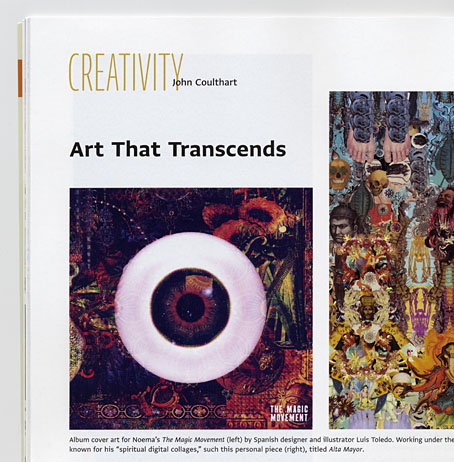
Late last year, US design magazine Communication Arts asked me to write a piece about psychedelic art, past and present. The resulting feature has been out for a couple of weeks in the May/June issue (no. 56) but I hadn’t seen it in print until a copy turned up today. Attempting to wrangle discussion of a very wide-ranging and amorphous field into 1500 words isn’t an easy task but I managed to sketch a history of psychedelic art beginning with Aldous Huxley and Humphrey Osmond’s mescaline experiments in the 1950s. Art that can be considered psychedelic goes back into prehistory but Huxley’s The Doors of Perception (1954) is the first book that considered art in general from a psychedelic viewpoint. That book, and the later Heaven and Hell (1956), are still valuable for their aesthetic meditations however much Huxley’s optimism may have been tainted by the ferment of the 1960s.

earth.jpg

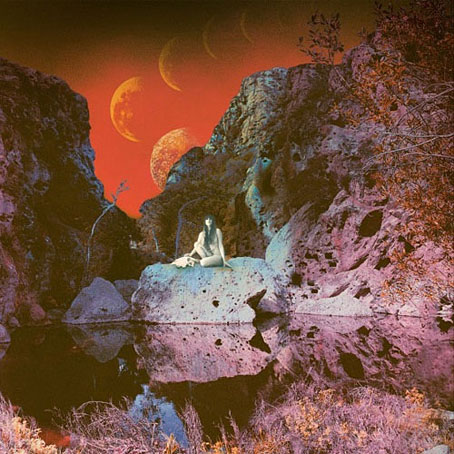
Primitive And Deadly (2014) by Earth. Art by Samantha Muljat.

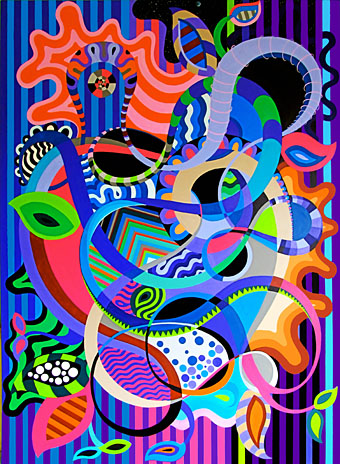
The psychedelic art of the 60s isn’t exactly overlooked so I paid more attention to tracing the influence of the psychedelic style, and also mentioning painters such as Ernst Fuchs, Alex Grey, Martina Hoffmann and Mati Klarwein. Among the more recent artists, I was pleased that Samantha Muljat‘s album cover for Earth was featured. I’ve been listening to this album a great deal over the past few months, and loved that cover as soon as I saw it. One of the other contemporary names, Brazilian artist Duda Lanna, works in a very different style: bold, vivid, and often abstract. There seems to be a lot of this kind of work around at the moment, so much so that I kept spotting new examples after the article had been delivered. It’s difficult to say whether this is a developing trend or simply a case of there being more of everything around these days. I’ll play safe and suggest it’s probably a bit of both although, as I say at the end of the article, if the movement to legalise drugs gains momentum we can expect to see a lot more psychedelic art.

lanna.jpg

Garden of Psychedelic Delights by Duda Lanna.

NY, NY, a film by Francis Thompson

nyny1.jpg

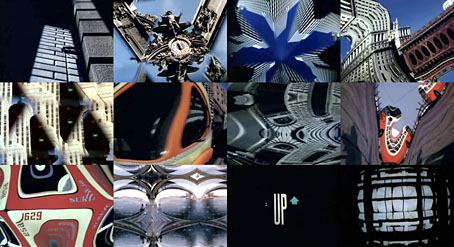
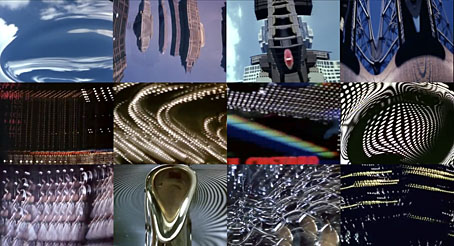
In Heaven and Hell (1956) Aldous Huxley considers various forms of art that might be said to imitate or resemble the intense visuals generated by psychedelic agents. In past centuries this would include firework displays and the vivid hues of stained glass windows; when discussing the present, mention is made of NY, NY, a short film by Francis Thompson that Huxley had recently seen.

Thompson’s film presents a day in the life of New York City with every shot being subject to some form of distortion or fragmentation via prismatic lenses or reflected surfaces. Nearly sixty years later this seems less psychedelic than it would have done to Huxley, although some of the reflections give the same effects as Ira Cohen’s later Mylar Chamber photographs. Watch NY, NY here, and if you do I’d recommend muting the Mickey Mouse score.

nyny2.jpg

Previously on { feuilleton }
Fog Line, a film by Larry Gottheim
Wavelength
La Région Centrale

Two covers

patel1.jpg

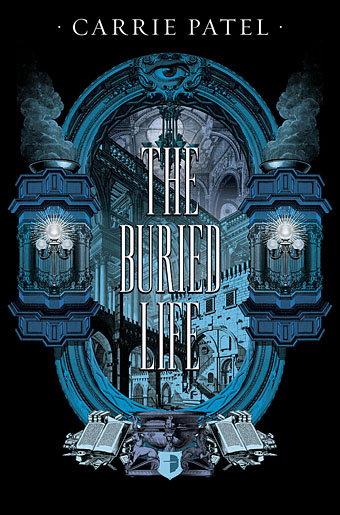
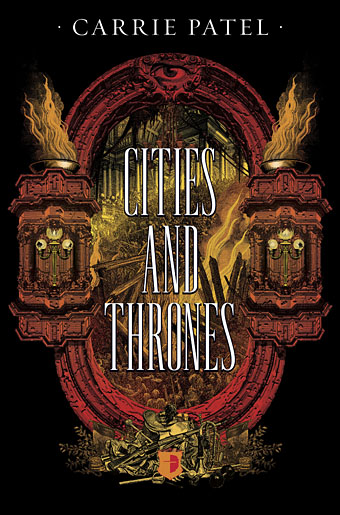
More new work of mine has been unveiled in the past few days so I can show these here. The Buried Life and Cities and Thrones are a pair of fantasy novels by new author Carrie Patel being published by Angry Robot. I was asked to provide something in an engraved style set against a black background, with imagery that reflected themes of vast, underground architecture and armed conflict.

patel2.jpg

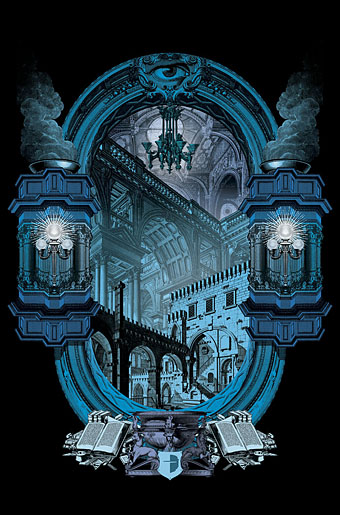
Vast architecture of any description is something I’ve always enjoyed, the main challenge with each book came in trying to imply the architecture and events without the pictorial content becoming incoherent. Marc at Angry Robot asked for something Piranesian where the architecture was concerned. Looking over Piranesi’s non-Carceri designs didn’t turn up anything with a suitably dramatic perspective, however, so most of what you see in the first cover comes from Giuseppe Galli Bibiena’s Architetture e Prospettive (1740). The Bibienas were a family of architects and theatrical engineers who specialised in dizzying perspective views for their stage designs; Bibiena’s book was produced to preserve some of his more celebrated designs, the originals of which are now lost. I’ve had a book of these drawings for years but this is the first opportunity I’ve had to make use of them in any kind of collage.

patel3.jpg

This style of Baroque architecture doesn’t suit steampunk imagery which tends towards 19th-century urban/industrial; the plates are also rather staid scenes without the graphic flare that Piranesi gave to everything he rendered, real or imagined. But I do like those plunging perspectives, and pieces from two of the plates turned out to share both the same perspective and the same lighting direction. It’s easy to collage things into a flat view but creating a realistic sense of depth from bits and pieces can be tricky.

patel4.jpg

The frame for the second cover has more of a Piranesian quality being chipped and eroded. The typography for the titles went through several changes, the versions here show a late suggestion of mine with lettering that’s probably too thin to read well at a distance (or a small size on a web page). SF Signal has a post showing the Angry Robot versions which will probably be the final ones, together with a preview of the first book.

Previously on { feuilleton }
Aldous Huxley on Piranesi’s Prisons