Charles Robinson’s Alice’s Adventures in Wonderland

robinson1.jpg

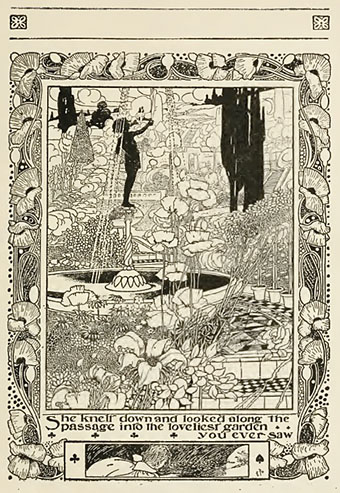
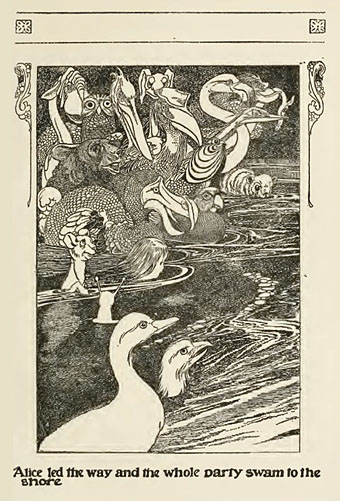
As you might expect, the Internet Archive has a lot of Alice in Wonderland adaptations, including a silent film version whose poor picture quality makes any attempt to watch it a chore. Among the many books in their collection one of the best is this illustrated edition from 1907 by Charles Robinson, brother of the equally talented William Heath. The full-page illustrations are especially good for their swirling embellishments, and I like the way he establishes the playing card motifs very early on. But the PDF version of the book also shows his inventive page layouts with narrow vignettes cutting through the text and the margins featuring tiny figures running about. The colour plates aren’t so impressive but his black-and-white work makes up for that.
robinson2.jpg

Elsewhere on { feuilleton }
The illustrators archive

Previously on { feuilleton }
Humpty Dumpty variations
Alice in Wonderland by Jonathan Miller
The art of Charles Robinson, 1870–1937
The Illustrators of Alice

Coming Out Day

gay1.jpg

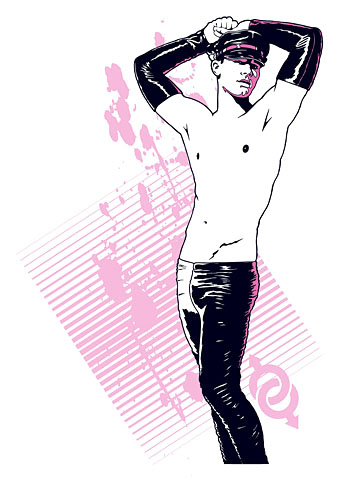
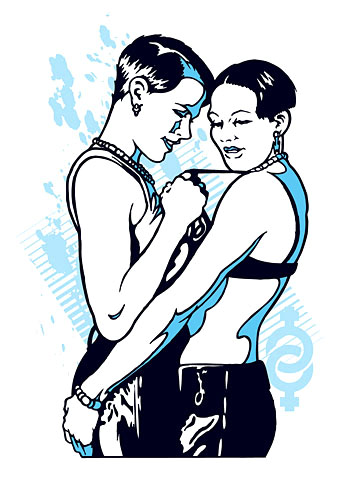
National Coming Out Day is a gay awareness day which has been observed in America since 1988, and is now something of an international event if “the world” can mean the USA and a handful of European countries. With typical contrariness, the UK’s Coming Out Day is a day later on October 12th. The Outer Alliance suggested its members make a post for today so here’s a couple of art pieces I’ve been working on for some poster and flyer designs. Regular readers may notice that the sexy creature above is swiped from this photo. In mitigation, I did actually spend some time drawing the figure; my laziness has a limit. I’ll post these on my artwork pages when the layouts are finished.

gay2.jpg

Previously on { feuilleton }
Outer Alliance Pride Day

Humpty Dumpty variations

thurstan.jpg

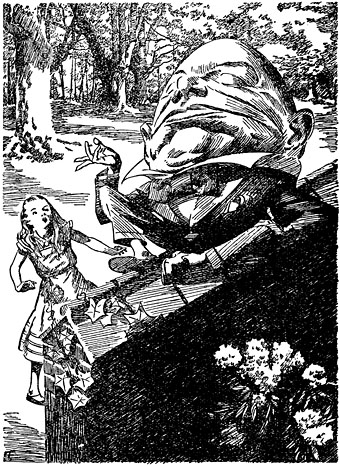
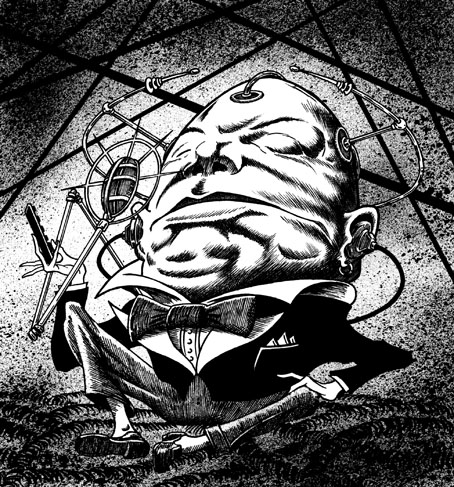
Humpty Dumpty by EB Thurstan (1930).

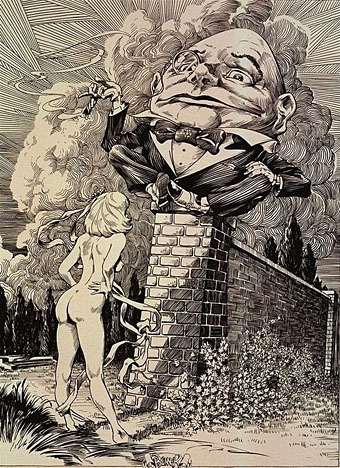
A preoccupation of the past couple of weeks has been Lewis Carroll’s Alice books as I’ve been working on an Alice in Wonderland project which I’ll unveil shortly. Looking around at some of the numerous visual interpretations of the stories I came across two portfolios I hadn’t seen before by comic artist Frank Brunner. These are from the late Seventies, and typically for that decade they work an erotic twist on the books by adding ten years to Alice’s age whilst depriving her of clothes. Nudity aside, Brunner’s drawings don’t depart from tradition very much—or add much, for that matter—but I did notice that he’d based his Humpty Dumpty figure on an earlier version by illustrator EB Thurstan.

brunner.jpg

Humpty Dumpty by Frank Brunner (1978?).

The reason Thurstan’s Humpty is so familiar is that I’d borrowed it myself for one of the many appearances by the character in the Lord Horror comic series, Reverbstorm. Humpty’s presence there would involve too much explanation so you’ll have to be satisfied with the character who explains Jabberwocky remaining inexplicable. As for Brunner’s drawings, you can see coloured versions on his website.

reverbstorm.jpg

Humpty Dumpty from Reverbstorm #3 (1994).

Previously on { feuilleton }
Alice in Wonderland by Jonathan Miller
The Illustrators of Alice

Technology, then and now

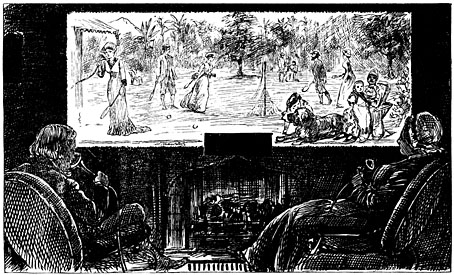
A recent book purchase was A Century of Punch (1956), a weighty collection of drawings from the humour magazine edited by RE Williams. While much of the comedy is now very dated, many of the illustrations and cartoons yield other pleasures, not least by being a fascinating snapshot of the times and their attitudes. Some of those attitudes remain with us, and the handful of drawings below struck me for their resonance with current discussions about the impact of new technology. But first, here’s a far-sighted prediction from 1878 (note: Ceylon is now Sri Lanka):

punch1.jpg

EDISON’S TELEPHONOSCOPE (Artist unknown)
Paterfamilias (in Wilton Place): “Beatrice, come closer, I want to whisper.”
Beatrice (from Ceylon): “Yes, Papa Dear.”
Paterfamilias: “Who is that charming young lady playing on Charlie’s side?”
Beatrice: “She’s just come over from England, Papa. I’ll introduce you to her as soon as the game’s over.”

Continue reading “Technology, then and now”