Salome’s Last Dance

salome1.jpg

More Wildeana. It’s taken me over two decades to watch this film, and while I can’t really say it was worth the wait it was more entertaining than I expected. Salome’s Last Dance was directed in 1988 by Ken Russell and is his own typically mannered adaptation of the Wilde play. It appeared around the same time as his adaptation of another Victorian work, Bram Stoker’s The Lair of the White Worm, and it was the latter film which caused me to lose my patience with Russell’s excesses and so ignore this one. In Salome’s Last Dance we have Oscar Wilde and Lord Alfred Douglas visiting Alfred Taylor’s London brothel one night in 1892 where Taylor and company stage a performance of Wilde’s banned play.

salome2.jpg

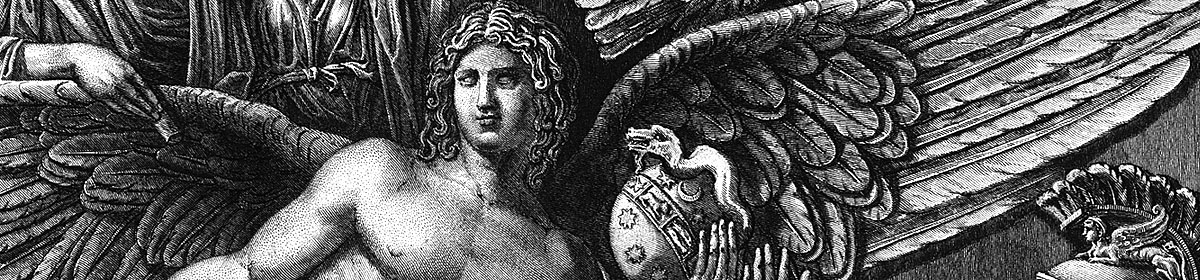
Aubrey Beardsley’s illustrations appear in the title sequence.

If you’re a Wilde enthusiast there are at least two ways you may take this; you can be appalled by Russell’s “translation” of Wilde’s words (Salomé was written in French then translated for English publication in 1894; there’s no reason to re-translate a version the author approved), a translation which is really more of an adaptation, with much of the poetic monologue removed and the tone lowered for a general audience—Wilde’s “Iokannen” is vulgarised to “John the Baptist” throughout. Or you can try and enjoy what is at least a complete performance of the play, even though it more often resembles Carry On Salomé than anything one might have expected Sarah Bernhardt to perform. Injecting a Symbolist drama with slapstick and grotesquery is probably inevitable given the director (Russell is also co-writer and he plays—badly—the role of the Cappadocian). I found it impossible to decide whether Russell was sending up the play because he found it too pompous or whether he felt that an audience wouldn’t sit still for it otherwise. Whatever his intention, the premise is intriguing enough to inspire speculation as to how it might have been treated by other hands.

Continue reading “Salome’s Last Dance”

The Oscar Wilde Galop

wilde_galop.jpg

When Oscar Wilde arrived in America to begin his lecture tour in 1882 the excursion provoked considerable comment on both sides of the Atlantic. Wilde was there in his capacity as an ambassador for Aestheticism, a position which had already made him a figure of fun in the pages of Punch magazine while the Aesthetes generally and Wilde in particular had been caricatured the year before by Gilbert & Sullivan in their opera, Patience. The Oscar Wilde Galop was one of a number of topical dance pieces which capitalised on Wilde’s arrival in America, the full score of which can be seen in the Levy Sheet Music Collection at Johns Hopkins University. No one seems to give the name of the composer of these works for some reason, but this piece and others like it can be found on a CD, To Oscar: A Collection of Aesthetic Melodies.

I suspect Oscar would have been flattered by his portrayal on the sheet music, it’s milder than the Punch cartoons and gives him a wasp waist he never possessed even in his youth. Wilde enjoyed his lecture tour, and was always happy to be the centre of attention, of course, but America (and others) paid the price for the ribbing later on, as in this exchange from The Picture of Dorian Gray:

“I am told, on excellent authority, that her father keeps an American dry-goods store,” said Sir Thomas Burdon, looking supercilious.

“My uncle has already suggested pork-packing Sir Thomas.”

“Dry-goods! What are American dry-goods?” asked the duchess, raising her large hands in wonder and accentuating the verb.

“American novels,” answered Lord Henry, helping himself to some quail.

The duchess looked puzzled.

“Don’t mind him, my dear,” whispered Lady Agatha. “He never means anything that he says.”

“When America was discovered,” said the Radical member—and he began to give some wearisome facts. Like all people who try to exhaust a subject, he exhausted his listeners. The duchess sighed and exercised her privilege of interruption. “I wish to goodness it never had been discovered at all!” she exclaimed. “Really, our girls have no chance nowadays. It is most unfair.”

“Perhaps, after all, America never has been discovered,” said Mr. Erskine; “I myself would say that it had merely been detected.”

“Oh! but I have seen specimens of the inhabitants,” answered the duchess vaguely. “I must confess that most of them are extremely pretty. And they dress well, too. They get all their dresses in Paris. I wish I could afford to do the same.”

“They say that when good Americans die they go to Paris,” chuckled Sir Thomas, who had a large wardrobe of Humour’s cast-off clothes.

“Really! And where do bad Americans go to when they die?” inquired the duchess.

“They go to America,” murmured Lord Henry.

Elsewhere on { feuilleton }
The Oscar Wilde archive

Weekend links 9

arthur7.jpg

Own a copy of Arthur #7 (October 2003) with my swirling cover pic featuring cosmic jazz maestro Sun Ra. Lots of good stuff inside, details here.

Spinetingler Magazine announced their nominees the 2010 Spinetingler Award this week. Jeff VanderMeer’s Finch is one of the titles in the Best Novel category while my cover for Jeff’s book is in the Best Cover category.

• A Journey Round My Skull posted the results of the Raymond Roussel illustration contest. Entrants were asked to read Roussel’s story Bertha, The Child-Flower then create a picture based on that.

Has Dottie got legs? The New Criterion on the poetry of Dorothy Parker.

• The gays: Fuck Yeah Hot Weird Guys, more from the Tumblr hall of mirrors; Simon Callow reviews Gay Icons Through the Ages by Tom Ambrose; Wessel + O’Connor Fine Art is open again with a new exhibition at a new location in Lambertville, NJ; some things never change: “Secret tape reveals Tory backing for ban on gays.”

• “Make the inaccessible exciting.” Colin Marshall interviews Chris Bohn, editor of music magazine The Wire.

• More music: Jon Savage’s brief history of Krautrock. The new Soul Jazz compilation, Deutsche Elektronische Musik, is released next week.

Sage of the Apocalypse; Samuel R Delany’s Dhalgren comes to the stage in New York.

• Further Penguin fetishism: “Penguin Decades bring you the novels that helped shape modern Britain.”

• Yes, they’re out there, the Clients From Hell. For a palliative there’s Herbert W Kapitzki’s elegant poster designs from the 1960s.

• Song of the week: House of Glass (1967) by The Glass Family.

Leather boy

soto1.jpg

Visual Tales is another of those web magazines which presents us with fashion items few people would buy, garnished with or draped upon delectable examples of male pulchritude. I am not complaining. The tattooed object of desire is Dan Felton and the photos are by Bell Soto. Dan’s etiolated physique may not pass muster with many bondage enthusiasts but he gets my vote. Via VGL.

soto2.jpg

Previously on { feuilleton }
Corset boy
The tights have it
Bondage Machine
Bad boy
Boy wonder

Fabulas Panicas by Jodorowsky

jodo1.jpg

August 13th, 1967.

More psychedelia of a sort although it’s arguable whether Alejandro Jodorowsky’s cosmic surrealism can ever be pigeon-holed so easily. Fabulas Panicas (Panic Fables) is a comic strip that Jodorowsky was writing and drawing for a Mexican newspaper in the late Sixties. The text is all in Spanish, of course, but going by the visuals in the examples gathered on this site the concerns seem to be the usual Jodorowsky fare. Jay Babcock who provided the tip (thanks Jay!) interviewed Jodorowsky in 2003 and the conversation touched on this as well as his other comic works.

jodo2.jpg

June 9th, 1968.

Previously on { feuilleton }
Alejandro Jodorowsky’s Dune
Jodorowsky on DVD