Jon Finch, 1941–2012

finch1.jpg

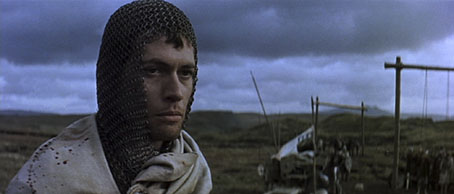
Macbeth (1971).

There are few actors I’ve ever felt sufficiently cultish about who could make me watch films or TV dramas I wouldn’t otherwise be interested in. Orson Welles would be one (up to a point, he was in a lot of crap in later years), Patrick McGoohan another and Jon Finch most definitely a third. Having watched Finch just over a week ago in Roman Polanski’s superb adaptation of Macbeth it’s been a shock to discover that he’d died shortly after Christmas, the news of his funeral only being announced this week.
finch4.jpg

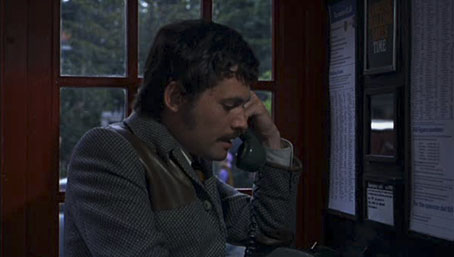
Frenzy (1972).

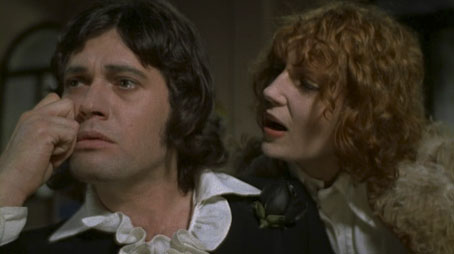
The cult status stems from the remarkable run of lead roles he was offered in the early 1970s: playing Macbeth for Polanski, the “wrong man” role in Hitchcock’s last great film, Frenzy, and a perfect Jerry Cornelius in Robert Fuest’s adaptation of Michael Moorcock’s The Final Programme. There were plenty of other roles, of course, but those three are standouts which also show something of his range: suitably brooding, weak and malevolent in Macbeth, in Frenzy a hounded man who seems disreputable enough for his friends to suspect he may be a murderer, in The Final Programme as smart and insouciant as Moorcock’s Cornelius ought to be.
finch2.jpg

The Final Programme (1973): Finch with Jenny Runacre (Miss Brunner).

I’m happier that Finch played Cornelius instead of James Bond, a role he was offered after Sean Connery quit. Jerry Cornelius, “the English Assassin”, in the first novel in Moorcock’s Cornelius quartet is a kind of anti-Bond, and there were few actors around in 1973 who would have possessed the necessary charisma and intelligence for the part. Mike Moorcock was friends with Finch around the time the film was being made so when I was visiting the Moorcocks in Paris a few years ago I asked him why Finch hadn’t done more with his career after such an impressive start. Mike says he was one of those actors who often preferred to be doing something else with his time.
finch3.jpg

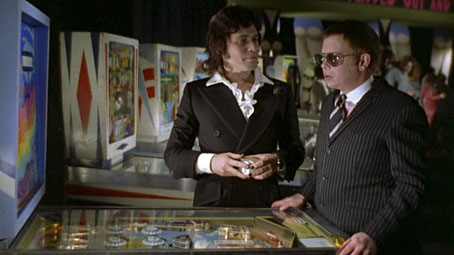
Finch and Ronald Lacey (Shades) in The Final Programme.
finch5.jpg

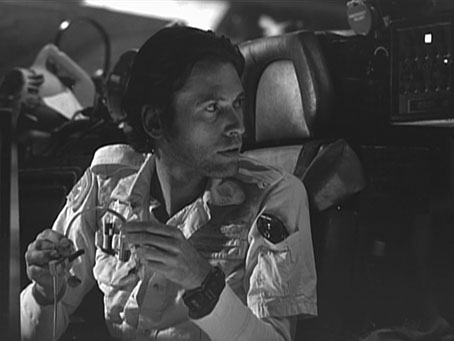
On the set of Alien (1978).

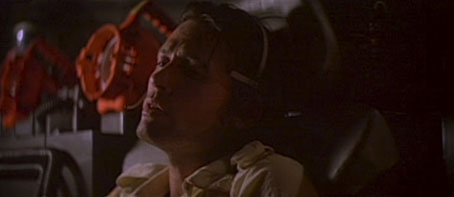
Obituaries will no doubt regard Finch’s rejection of the Bond role as a missed opportunity but I wish we could have seen him as intended in Ridley Scott’s Alien where he’d been cast as Kane but had to drop out after contracting a severe case of bronchitis once shooting was underway. The photo and screen grab below are seldom-seen images from the Alien DVD extras. I’ve nothing against John Hurt in the role but with Finch playing the part it would have made a cult film a little more special. He did get to act for Ridley Scott eventually with a small role in Kingdom of Heaven in 2005.
finch6.jpg

An outtake from Alien.

finch7.jpg

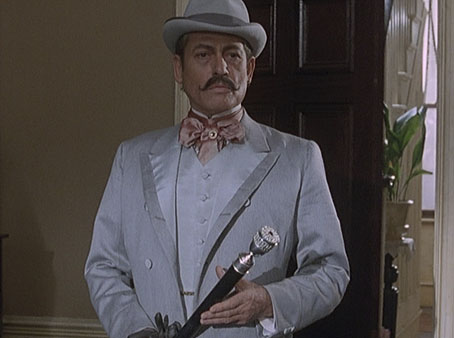
As Count Sylvius in The Memoirs of Sherlock Holmes (1994).
finch8.jpg

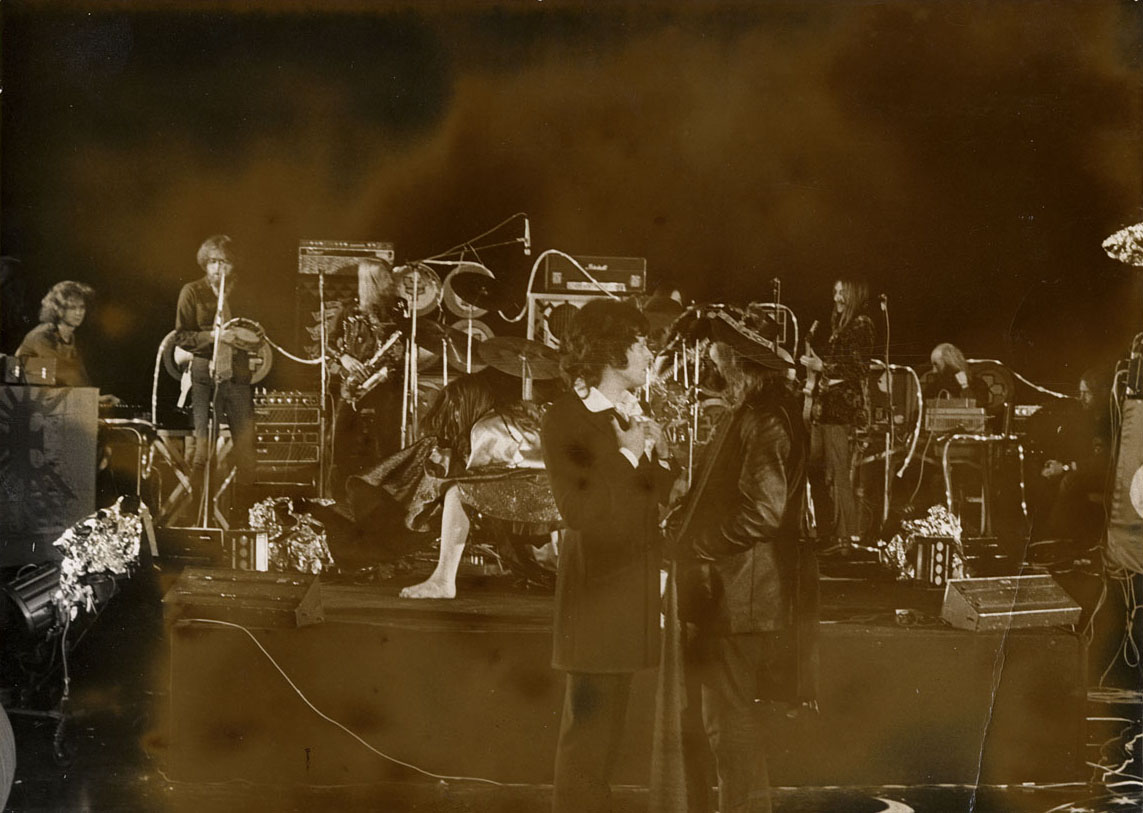
Update: Found on an archive disc, this rare photo from the set of The Final Programme showing Finch as Jerry Cornelius facing off with his creator, Michael Moorcock. (Click for a larger copy.) That’s the Space Ritual line-up of Hawkwind in the background. Band and author appear for a fraction of a second in a shot during the film’s arcade scene. Considering how common it was to have rock bands in feature films during this time it still surprises me that Fuest and co. went to all this trouble then left them on the cutting-room floor. The photo was Moorcock’s own, as I recall, something we ran in one of the Savoy books.

Guardian obituary
Independent obituary
Telegraph obituary
Macbeth trailer
Frenzy trailer
The Final Programme trailer

Previously on { feuilleton }
Dan O’Bannon, 1946–2009
Patrick McGoohan and The Prisoner
Repulsion locations

r01.jpg

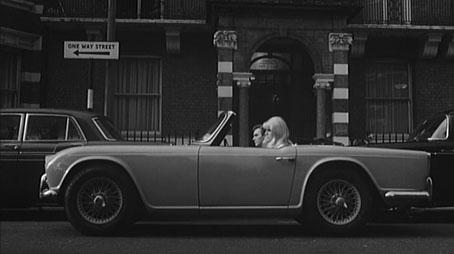
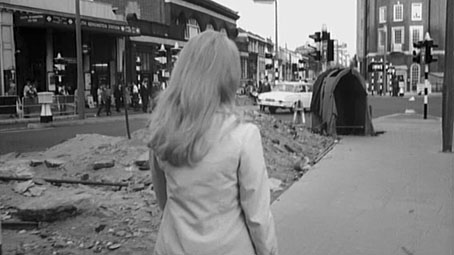
More Polanskiana. This film location site made the tracking down of locations in Repulsion (1965) an easy business. I was hoping they might have an entry for The Tenant, much of which is filmed around the Porte Saint-Denis in Paris but the only other Polanski entries are for Chinatown and Rosemary’s Baby. No matter, one thing I like about the outdoor scenes in Repulsion is the views of South Kensington which Polanski fixed a year or so before Donovan was celebrating the area in a rather more positive manner. I have fond memories of South Kensington in the 1970s since it was the area we stayed in every February during an annual school trip. Barring a slight change of street furniture, the busy traffic island outside the Tube station looked just the same when we were there.

r02.jpg

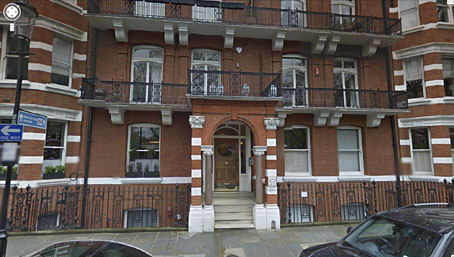
The exterior of Kensington Mansions in Trebovir Road, the location for Carol’s apartment. I’d always thought this was in a street near the Tube station but it’s actually some distance away in Earl’s Court.

r03.jpg

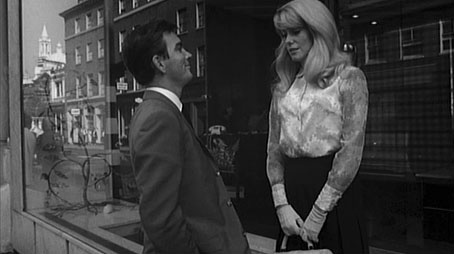
Colin (John Fraser) and Carol (Catherine Deneuve).

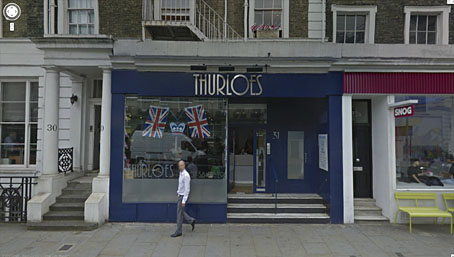
The hair salon where Carol works is Thurloe’s in Thurloe Place, and the shop in question is still a hair salon. Google’s Street Views were taken in May 2012 so the flags are out for the Queen’s Jubilee.

r04.jpg

r05.jpg

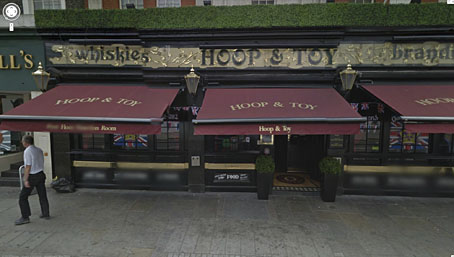
Just down the road from Thurloe’s is the Hoop & Toy, the pub where Carol’s would-be boyfriend, Colin, goes drinking with his misogynist friends.

r06.jpg

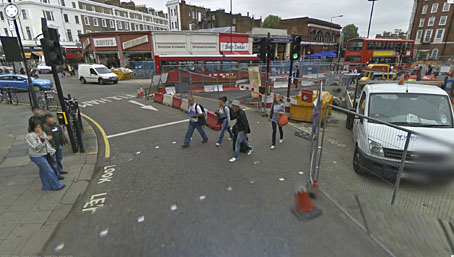
The traffic island outside the Tube station which in the latest Street View was still looking like a building site. The most surprising thing about the row of shops around the Tube station is that Dino’s, a restaurant visible in some of the film shots, is still there almost fifty years later.

r07.jpg

Previously on { feuilleton }
Polanski details
Repulsion posters
Through the Wonderwall

Claudio Bravo’s packages

bravo01.jpg

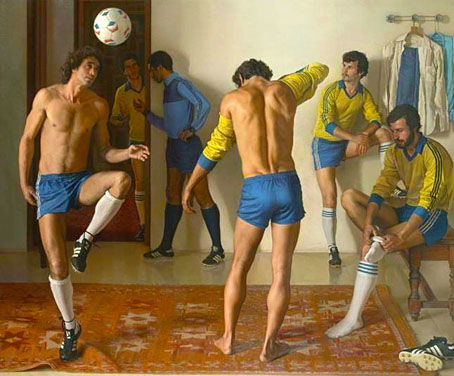
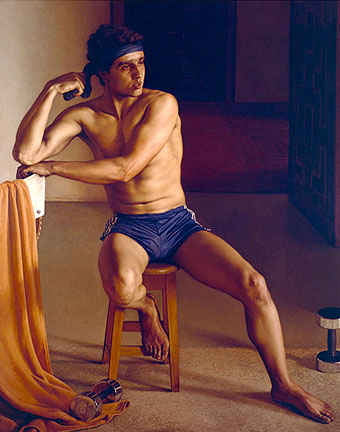
Before the Game.

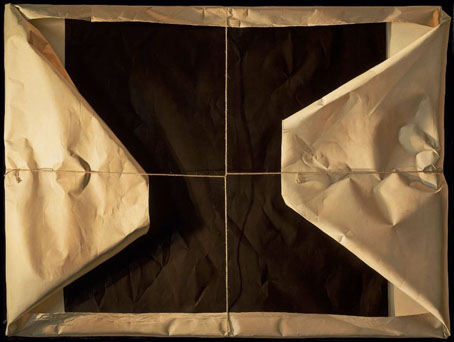
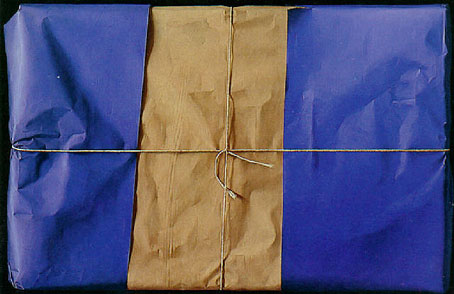
(Sorry, but that pun was unavoidable.) Claudio Bravo was a Chilean hyperrealist painter who died last year. I don’t recall having come across him before but it’s a hazard of a photographic style that your work may superficially be taken for the output of other artists. Looked at more closely his painting went through distinct phases with an increasing interest in the study of wrapped-paper packages. These trompe l’oeil paintings allow the meticulous detail to remain while giving an impression at a distance of colour field abstraction. I’m rather taken with the later pictures but then I’ve always been partial to hyperreal techniques.

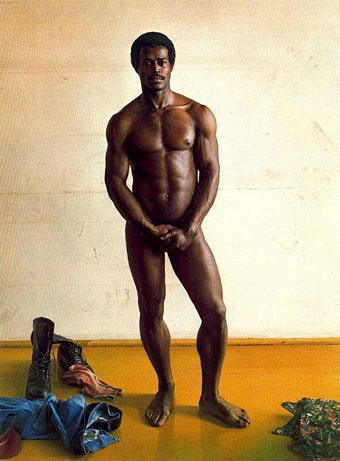
Another recurrent theme is the male body in various states of dress or undress, and rendered with as much presence as the paintings and drawings of British artist Michael Leonard. One of the drawings below could almost be one of Leonard’s. Bravo painted woman as well so we can’t read too much into this, but he did live in Morocco for many years, and one of his paintings from the 1970s depicts a swimming pool at Fire Island. Make of that what you will. (Thanks to Paul for the tip!)

bravo08.jpg

Homage to St Theresa.

bravo02.jpg

Noureddine.

bravo09.jpg

Blue and Beige Package.

bravo07.jpg

Nude (Portrait of Mr Couchez).

Continue reading “Claudio Bravo’s packages”

Rhinoceros by Jan Lenica

lenica1.jpg

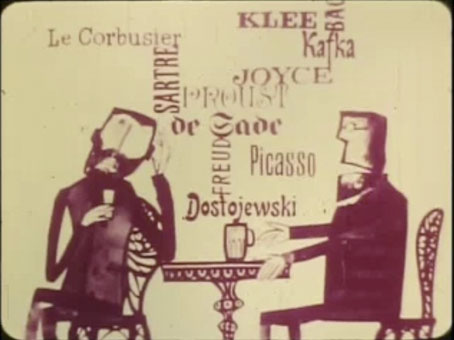
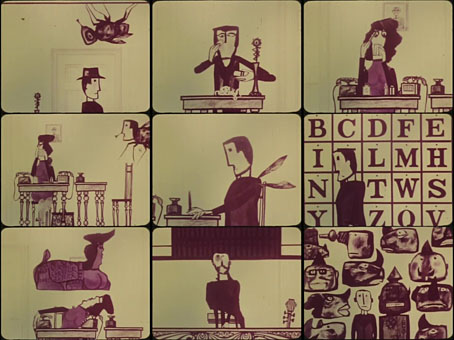
As noted here last year, Polish artist Jan Lenica (1928–2001) was also an animator as well as a celebrated poster designer. Die Nashörner (1964) is an 11-minute condensation of Eugène Ionesco’s Rhinoceros that no doubt works best if you’re familiar with the play but which nevertheless contains some funny moments, especially when “Rhinocerosism” starts to spread. The film is free to download at the Internet Archive.

lenica2.jpg

Previously on { feuilleton }
Repulsion posters
Dom by Walerian Borowczyk and Jan Lenica
Labirynt by Jan Lenica

Reverbstorm on sale

reverbstorm1.jpg

At long last, the news that many people have been waiting for: the Reverbstorm book is now on sale at Savoy. From the hyperbolic press release:

“Surfin’ bird Bbbbbbbbbbrbrbrbrbrb…awawawawawawawaaaaaah! A-pa-pa-pa-pa-pa-pa-pa-pa-pa-pa-pa-pa-pa-pa-pa-pa-pa-pa-pa-pa-pa-pa-pa-pa-pa-pa-pa-pa-pa-pa-ooma-mow-mow Papa-oom-mow-mow!” The Trashmen, Surfin’ Bird

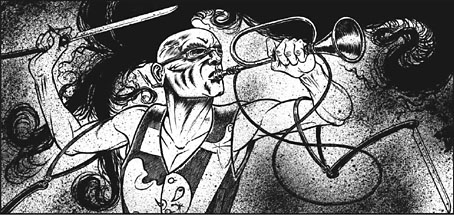
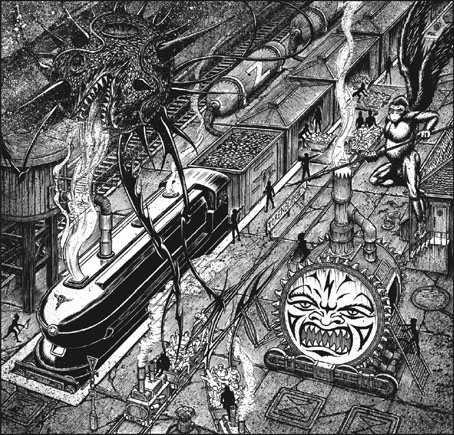
Welcome to the nightmare metropolis of Torenbürgen, where New York’s Art Deco architecture has fused with the termination machinery of Auschwitz. In this urban inferno Jessie Matthews is singing Sondheim, James Joyce is at work on a new novel and Lord Horror, ex-Nazi propaganda broadcaster and Torenbürgen’s model citizen, is stalking the streets in search of fresh victims for his razors. Murderous apes infest the alleyways, Ononoes feast on the living and the dead, while above the rooftops the Soul of the Virgin Mary drifts like a swollen Lovecraftian dirigible, picking at bodies destined for the charnel furnaces.

Lord Horror: Reverbstorm is a unique graphic collaboration between writer David Britton, the author of four Lord Horror novels, and artist John Coulthart, whose book of Lovecraft-derived comic strips and illustrations, The Haunter of the Dark, featured a collaboration with Alan Moore. Reverbstorm was originally published in serial form and is now being presented in a single volume for the very first time. Britton’s debut novel, Lord Horror (1990), was the last work of fiction to be banned in the UK; an earlier Lord Horror comic series, Hard Core Horror, was also banned by a British court in 1995. Coulthart’s death-camp artwork from the final issue in that series appears in Reverbstorm as a prelude to the main narrative.

There’s never been a comic like this surreal collision between Modernist art and pulp aesthetics, a world where Finnegans Wake is drenched in Alligator Wine and Picasso’s Guernica is invaded by Tarzan’s simian hordes. Ambitious, transgressive and meticulously rendered, Reverbstorm is one answer to the eternal question posed by those cultural philosophers, The Cramps: “How far can too far go?”

“Bababadalgharaghtakamminarronnkonnbronntonnerronn-
tuonnthunntrovarrhounawnskawntoohoohoordenenthurnuk!”
James Joyce, Finnegans Wake

reverbstorm2.jpg

rev2.jpg

Previously on { feuilleton }
Reverbstorm in print
Reverbstorm update
James Joyce in Reverbstorm
A Reverbstorm jukebox
Reverbstorm: Bauhaus Horror
Reverbstorm: an introduction and preview