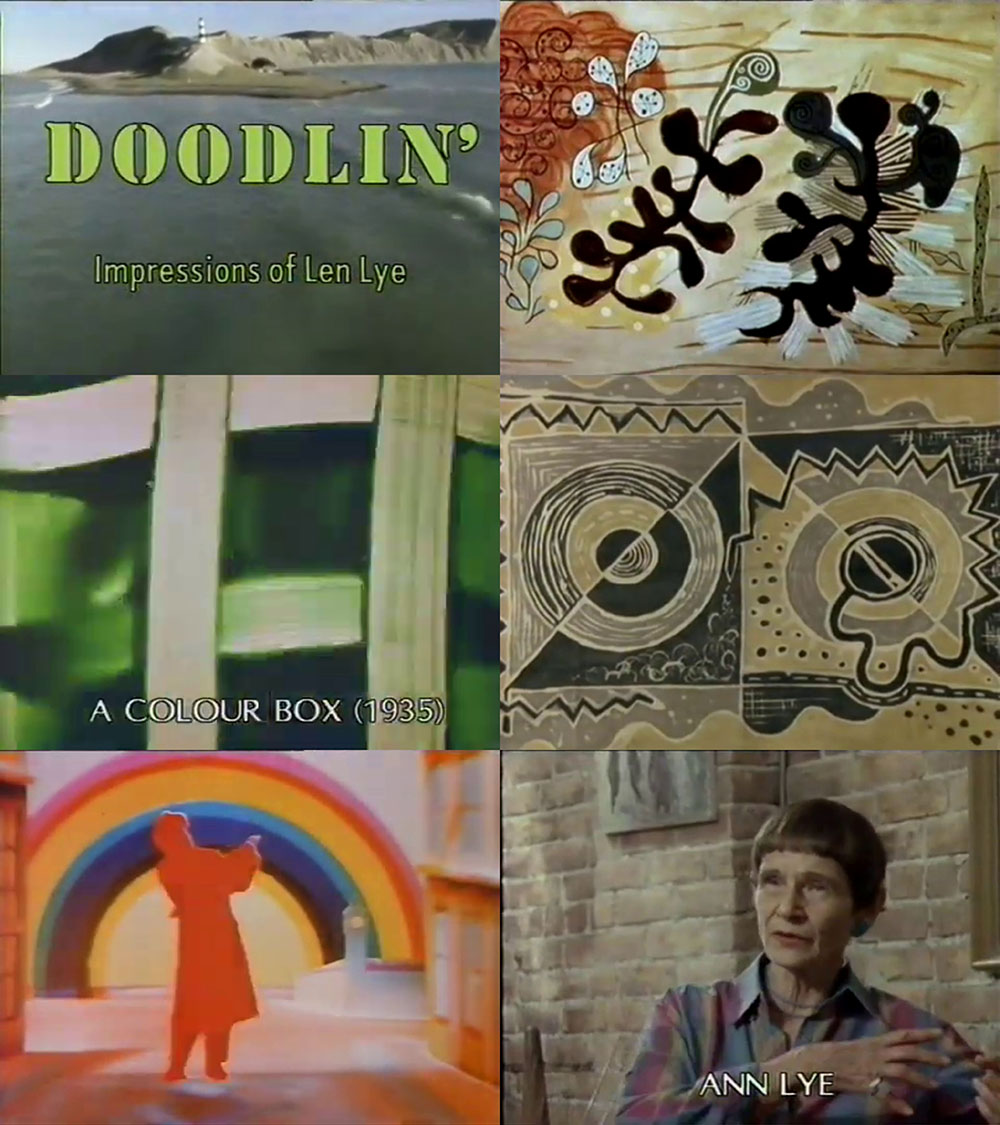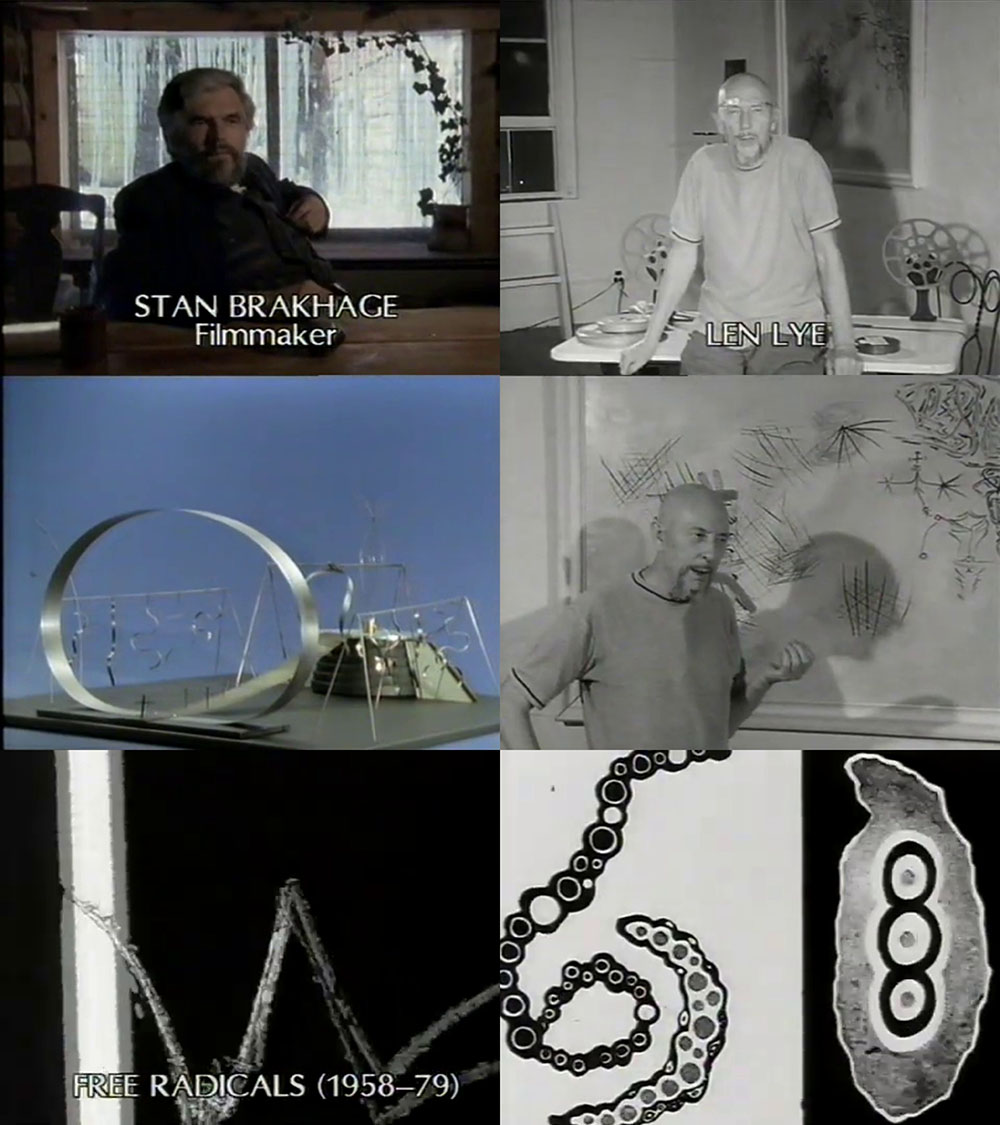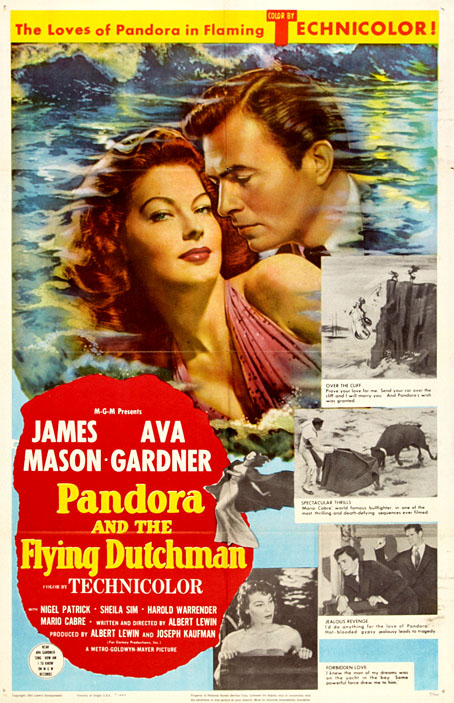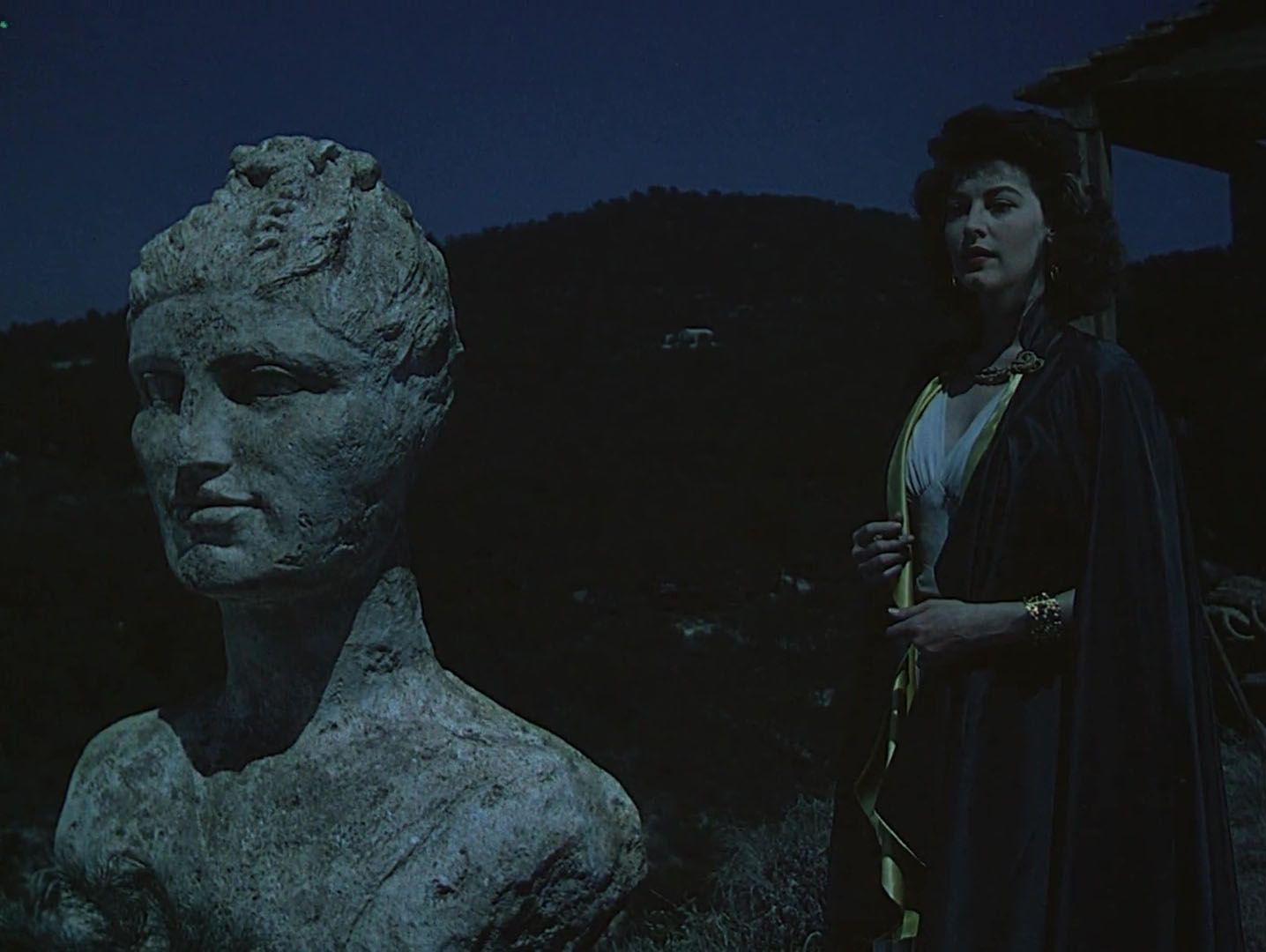
Weekend links 817

paolozzi.jpg

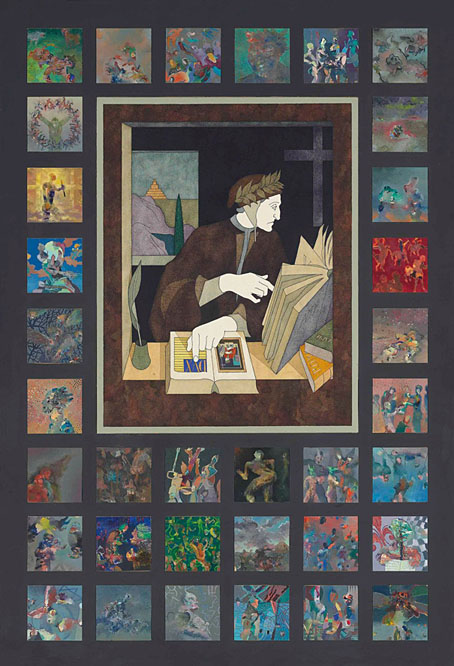
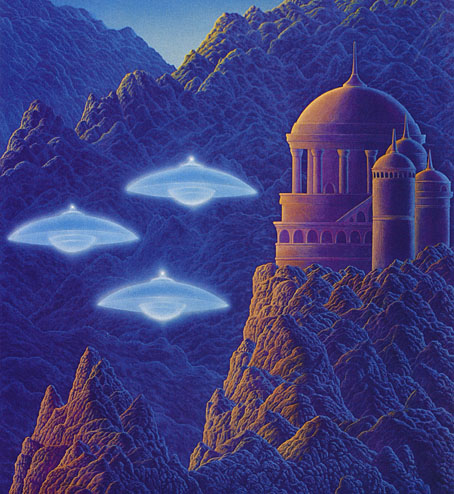
The Silken World of Michelangelo (1967) by Eduardo Paolozzi.

• “By the late 19th century, representing time as a line was not just widespread—it was natural. Like today, it would have been hard to imagine how else we could represent time. And this affected how people understood the world.” Emily Thomas on the evolution of our thinking about the nature of time.

• At Green Arrow Radio: Bill Laswell and the Cosmic Trip, in which the indefatigable performer/producer talks about his career and Cosmic Trip, a new album by saxophonist Sam Morrison.

• At Public Domain Review: Snail Homes, Bog Bodies, and Mechanical Flies: Robert Testard’s Illustrations for Les secretz de l’histoire naturelle (ca. 1485).

• Among the new titles at Standard Ebooks, the home of free, high-quality, public-domain texts: Continental Op Stories by Dashiell Hammett.

• The winter catalogue of lots for the After Dark: Gay Art and Culture online auction. Homoerotic art, photos, historic porn, etc.

• New music: The Third Mind. A Sonic Tribute to the Dreamachine by Various Artists.

• Mix of the week: DreamScenes – February 2026 at Ambientblog.

A Conversation with Tarotplane by AJ Kaufmann.

• RIP Bud Cort.

Timewhys (1971) by Tonto’s Expanding Head Band | Time Be Time (1990) by Ginger Baker | Time Scale (2009) by Belbury Poly

Twenty

devries.jpg

Numeral designs from 1904 by Reinier Willem Petrus de Vries.

Monsieur Chat, the tutelary deity of the place with the lower-case French name in affected curly brackets, makes a rare appearance with the news that { feuilleton } is 20 years old today. The blog (a term I’ve always used with reluctance) was launched on the 13th of February, 2006, self-described as “A journal…cataloguing interests, obsessions and passing enthusiasms.” The launch date was a random one, being the day that my new website went live, while the decision to start a blog was made not so much on a whim but out of a vague impulse that it might be something worth playing with for a while. Little did I realise… Since these anniversary posts usually involve some degree of stock-taking it’s worth noting how much the media landscape has changed over the past two decades.

monsieurchat.jpg

Monsieur Chat, for it is he. Graffiti by Thoma Vuille.

In February 2006 MySpace was the biggest social media site, with Facebook climbing fast behind it. YouTube was little more than a year old (and yet to be bought by Google), while the iPhone and the ensuing smartphone era was still a year away. A month after I pressed “Publish” on my first post a new social-media service named Twittr [sic] was launched to little fanfare; no need to recount how that turned out. All of these things contributed in some way to the eventual collapse of blogging as a widespread pursuit, social media in particular, which is another way of saying that I probably chose the wrong moment to embark on such a venture myself. Not that this has ever worried me. I’m cautious about anything that’s liable to eat into time that might be spent doing other things, and it took me a while to see that non-diaristic blogging was a worthwhile endeavour. It’s been a curious thing planting a flag on a hill then remaining there while the rest of the world chases after the latest outlet for their opinions and their pet photos. The micro-blogging format of social media killed the blogs because it co-opted the diaristic impulse behind many of the writing sites of the early 2000s. Social media also provided something that long-form blogs can’t give you: instant gratification, endlessly repeated.

blog.jpg

The oldest page at the Internet Archive is from May, 2006, although the header I was using at the time hasn’t been preserved. The Piranesi header has been pasted in from a later page.

The complaints about social media are all very familiar today (it’s a drug, it’s a form of mental poison, etc), and all true to some degree. Recent suggestions that we can improve the internet by a return to blogging strike me as unrealistic. This is an unusual form of activity, one best suited to writers (or to those who enjoy writing), to creative types rather than mere diarists, and to people who don’t suffer inordinately when they throw something into a public arena then receive little or no feedback as a result. Starting something like this today without being part of a connected community like Substack would require resilience to cope with the isolation. And yet… The blogging format still provides opportunities that can’t easily be satisfied elsewhere. Chief among these is long-form writing, so too the static nature of the blog post which resists the relentless churn of today’s internet. I still enjoy being able to set down a few thoughts on a niche subject then have those thoughts (or links or pictures or whatever) easily available online. And the thoughts don’t always have to be delivered in words; one of the attractions of the format was being able to post a list or group a collection of disparate items under a single heading with only a minimum of explanation. The weekend links do this while also serving as a searchable archive of bookmarks. And if you’re running the place the way I do then previous posts are still relatively easy to find, even if the post is a very old one.

linotype.jpg

The closest you’ll get to a portrait of the author.

In the end, I do all this because I enjoy it, not because it’s another form of work or (perish the thought) “productivity”. Things I’ve enjoyed over the past 20 years would include making and reporting on new discoveries; the feedback from my consistently smart and informative readers; honing my writing skills, then being asked to write paid-for articles as a result. The latter was something I never expected at all. Most of all I value having a small space of my own on the internet, a not-so-temporary autonomous zone. I may be sceptical about a mass return to blogging but I prefer the options to remain open for people sick of the billionaires who regard them as another resource to be manipulated and exploited. Places like this may be regarded as anomalies or hangovers from an older era but the internet remains a malleable environment. The tools to create your own alternative to corporate control are still out there and freely available, all that’s required is the determination to use them.

My thanks, as always, to my readers, especially those who dropped some money in the Ko-fi jar. This site will always be paywall-free but every little helps. And so, as the bouncing cat might say, “En avant et vers le haut!”

John x

Turris Babel, a film by Jan Mimra

babel1.jpg

Another short animation, a collage film from 1989 which concerns everyone’s favourite Biblical megastructure, the Tower of Babel. Jan Mimra’s film doesn’t recount the creation of the building but uses the tower as a symbol for the human world, its history and its culture. The building itself is a hybrid structure made of architectural elements from the whole of human history, with a pyramid at the base and a platform at the summit supporting a collection of modern tower blocks.

babel2.jpg

The narrative purpose of Mimra’s tower is never very clear; to judge by the soundtrack the fragmentation of a universal language has already occurred, even though the Biblical story has this taking place only after the tower has been destroyed. There’s further confusion in a flood which threatens the tower and its inhabitants, something which may be another Biblical reference but could equally be a metaphor for modern warfare (the sinister planes suggest as much) or even climate change. Mimra’s film was made at the Jiří Trnka Studio in Prague, and includes a reference to another Czech collage animator, Karel Zeman, in a brief glimpse of Jules Verne piloting the paddling submarine from Zeman’s The Invention for Destruction.

Previously on { feuilleton }
Babel details
Athanasius Kircher’s Tower of Babel
La Tour by Schuiten & Peeters

Maurice Leloir’s Three Musketeers

leloir03.jpg

Just after Christmas I watched the recent French film adaptation of The Count of Monte Cristo, after which I resolved to finally read The Three Musketeers, something I’d been intending to do since reading The Count of Monte Cristo four years ago. I’m currently two thirds of the way through The Three Musketeers and enjoying it very much despite the familiarity of the story. (I’ve watched Richard Lester’s two-part film adaptation many times.) For the most part, the novel avoids the flaws which make Monte Cristo a laborious read (Umberto Eco described the latter as “one of the most exciting novels ever written and on the other hand…one of the most badly written novels of all time and in any literature”), but The Three Musketeers isn’t without flaws of its own. I don’t think too many people would regard the lack of descriptive detail as a flaw per se—this is an adventure story, after all—but I enjoy a well-crafted description, and Dumas’s sketching of costume and place ranges from the scant to the non-existent. We’re told, for example, that d’Artagnan is a member of the King’s Guard, and that the Guards and the Musketeers are identifiable by the differences of their uniforms. But I don’t recall any instance when we’re told how these differences are manifest, or even how any of the principle characters dress from day to day. The same applies to the settings; much of the novel is set in the Paris of the 1620s but Dumas ignores any scenic description in what would have been a darker, muddier and altogether less salubrious city than his own Paris of the 1840s.

leloir01.jpg

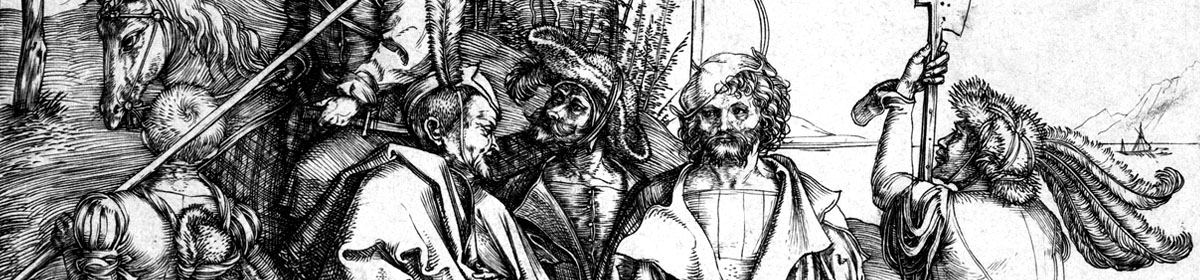
All of which brings us to Monsieur Maurice Leloir (1853–1940) and his illustrations for the novel which were published in a two-volume edition in 1894 (Tome 1 | Tome 2). Leloir was a painter and illustrator with a considerable knowledge of French historical dress; in 1907 he became the founding president of the Société de l’histoire du costume. His illustrations of The Three Musketeers, therefore, may be taken as authoritative when it comes to the costuming of the characters. Leloir was very good with everything else, as it happens; his characterisation is better than those of an earlier edition which makes d’Artagnan and friends barely distinguishable from each other, something not helped by the barbering habits of the day which had every gentleman sporting the same elaborate moustaches.

leloir02.jpg

Most of Leloir’s illustrations are placed vignette-style inside the page but a few of the larger ones run across two pages, especially those involving fights or other action scenes. And there are many illustrations, what you see here is a very small sample. A couple of them so closely match scenes in the Richard Lester films that I’m sure the books must have been referred to for details of costuming. Douglas Fairbanks certainly saw them; after playing d’Artagnan in his own film production of The Three Musketeers he invited Maurice Leloir to advise with the costuming of another Dumas adaptation, The Iron Mask, in 1929.

leloir05.jpg

leloir06.jpg

Continue reading “Maurice Leloir’s Three Musketeers”

Weekend links 816

rossignol.jpg

The Creative Power of the Spirit, No. 31 of A Goodly Company series, 1920–1933 by Ethel le Rossignol.

• “One moment it was a little blip. The next, our friends are dying”: the gay porn soundtrack composers lost to the Aids crisis. More gay porn: Pink Narcissus, James Bidgood’s micro-budget homoerotic fantasy, will receive a UK blu-ray release later this year.

• Old music: Thirst by Clock DVA gets a very welcome reissue later this year, having been unavailable in any form since 1992. I’m not so happy about the changes to Neville Brody’s original cover design but the album itself is a major post-punk statement.

• “Graphic design was thought to be a man’s discipline,” she says. “So I think it was quite a surprise for people to find me there.” A profile of Margaret Calvert, designer of (among other things) Britain’s road signs.

• At Colossal: A major survey in Paris chronicles Leonora Carrington’s esoteric Surrealism.

• At Public Domain Review: Sara Weiss’ Journeys to the Planet Mars (1903).

• At the BFI: The mystery music video for The Beatles’ Penny Lane.

Winners and entrants for Close-up Photographer of the Year 7.

• “Cats to blame for octopus deity enshrinement delay.”

• Steven Heller’s font of the month is Cattivo.

• At Dennis Cooper’s it’s Jack Arnold’s Day.

Pink Noir (1996) by David Toop | Pink Dust (2013) by Sqürl | The Pink Room 2 (2024) by Seigen Ono