Tony George-Roux’s Fleurs du Mal

tgr1.jpg

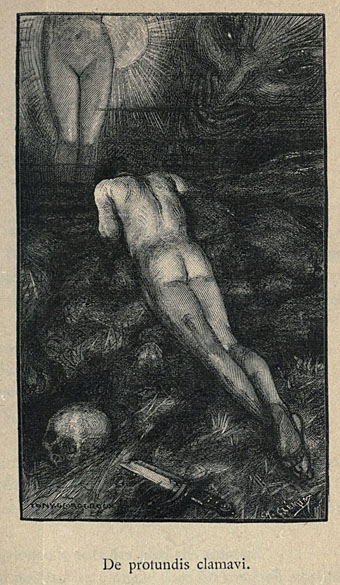
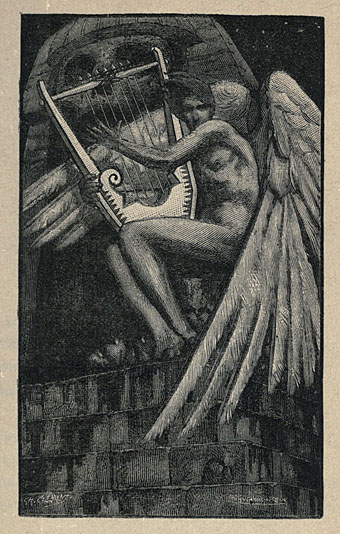
More illustrated Baudelaire. This edition of Les Fleurs du Mal dates from 1917 but the illustrations by Tony George-Roux have a distinctly Symbolist quality even though Symbolism as an art movement was pretty much over by this point. Baudelaire died twenty years before the first Symbolist manifesto was published but that manifesto named him as one of the leading poets of the movement so the connection is a fitting one. There’s a touch of Félicien Rops in some of these plates.

Tony George-Roux (1894–1928) was French, and if he produced more work along these lines I’ve yet to find it. The illustrations, engraved for this edition by Charles Clement, aren’t the best reproductions so I’ve added an additional plate at the end found on another site.

tgr2.jpg

Continue reading “Tony George-Roux’s Fleurs du Mal”

Percy Walter Wolff’s Die Vorhölle

wolff1.jpg

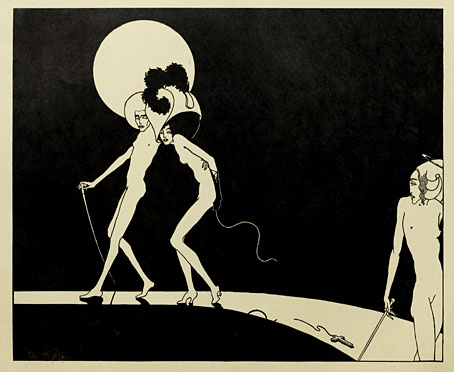
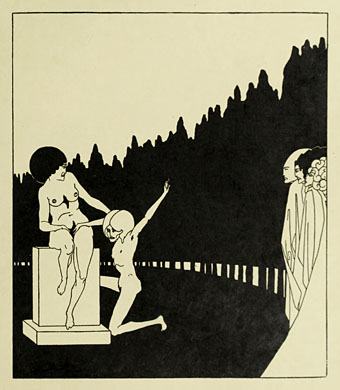
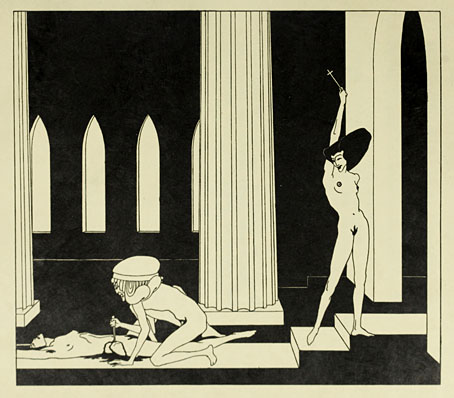
Another name to add to the long list of Beardsley followers, Percy Walter Wolff is so obscure as to be almost completely absent from web records. This suggests that Die Vorhölle: Eine Lyrische Nachlese (1911), a Baudelaire collection, may be the only book he illustrated. The drawings make me wonder what Beardsley himself—who put a copy of Les Fleurs du Mal on a shelf in Salomé—might have done with the same subject.

wolff2.jpg

wolff3.jpg

Continue reading “Percy Walter Wolff’s Die Vorhölle”

Weekend links 223

paez.jpg

Step Up (2014) by Angelica Paez.

• Lots of attention this week for Kevin Martin whose latest album as The Bug, Angels And Devils, is out now on Ninja Tune. The previous Bug release, London Zoo (2008), was a fierce collection that stood apart from the Grime pack not only for its guest vocalists but also for being informed by Martin’s broad range of influences: industrial and extreme electronics, heavyweight dub, metal and avant-garde jazz. Martin was interviewed by The Quietus and FACT who also asked other musicians to choose their favourite Martin recordings. Elsewhere, The Wire has Swarm, a track not included on the album.

Related: Martin’s four superb compilation albums for Virgin Records have been deleted for years but are worth seeking out: Ambient 4: Isolationism, Macro Dub Infection Volume One & Volume Two, and Jazz Satellites Volume 1: Electrification (Virgin cancelled volume 2). From the NME, 1995: Kevin Martin’s Ten Commandments For All Time.

• “…it never becomes quite clear why two grown men would want to write to each other in the guise of a horse and a cat.” Henry Giardina reviews The Animals: Love Letters Between Christopher Isherwood and Don Bachardy, edited by Katherine Bucknell.

Shufflepoems: A Deck of Poetry by Lydia Swartz. “100 cards, four suits, one stanza per card. Shuffle for a new adventure every time.” The project needs a last-minute push to gain Kickstarter funding so if this sounds interesting go, go, go!

The Haxan Cloak’s favourite heavy metal albums. Metallica’s Master Of Puppets still gets my vote. More from The Quietus: David Stubbs on the Werner Herzog soundtracks of Popol Vuh.

• At Strange Flowers: Waking the witch, a remembrance of occult artist Rosaleen Norton and other characters from Sydney’s Kings Cross area, with news of a planned Norton documentary.

• A nine-note motif has for decades signalled “Asian” in popular music. Kat Chow looks at the history of a musical stereotype.

Joseph Conrad’s Heart of Darkness is the subject for entrants in the Folio Society’s latest illustration competition.

• Irradiating the Object: Rhys Williams talks to writer M. John Harrison.

Does the Sea Serpent Really Look Like an Art Nouveau Oar-fish?

Schrödinger’s cat caught on quantum film.

70s sci-fi art: a Tumblr.

Demodex Invasion (1995) by Techno Animal | Piranha feat. Toastie Taylor (2001) by Techno Animal | Poison Dart feat. Warrior Queen (2008) by The Bug
Chinnamasta

chinnamasta1.jpg

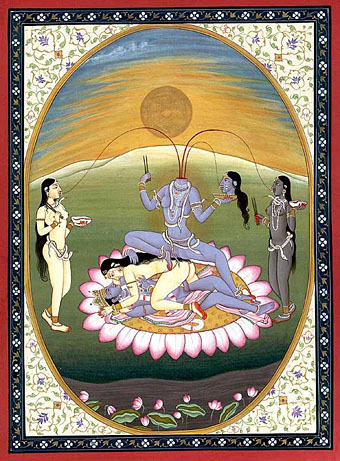
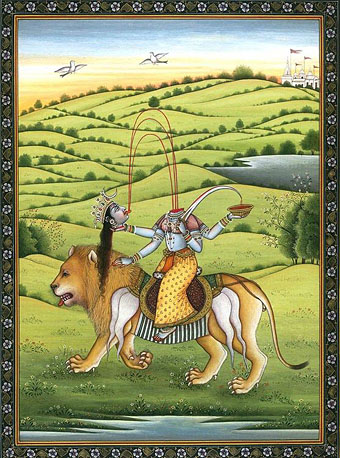
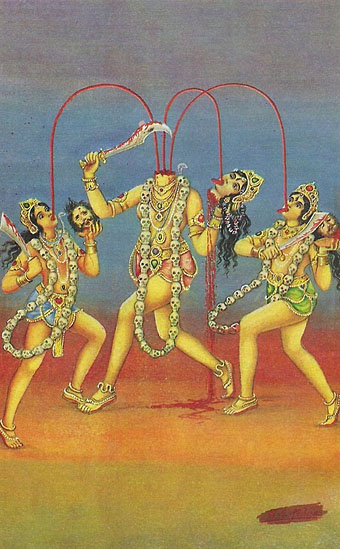
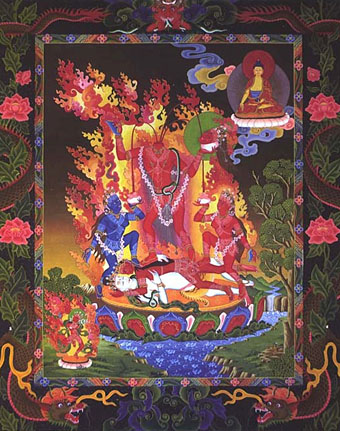
The saintly cephalophores may be reconciled to their martyrdoms but none of them decapitated themselves, unlike Chinnamasta, the self-decapitating Tantric goddess. The most common representations show her sitting or standing on a copulating couple while blood from her neck spouts into the mouth of her severed head and the mouths of her attendants, Dakini and Varnini. In other depictions she should probably be classed among the cephalophores when she goes for a walk or a ride on a lion. The fourth picture here is of Chinnamunda, a related, wrathful form of Vajrayogini from Tibetan Buddhism.

chinnamasta2.jpg

chinnamasta3.jpg

chinnamasta4.jpg

Previously on { feuilleton }
Cephalophores
Decapitations

Cephalophores

denis1.jpg

Martyrdom of Saint Denis, Saint Eleutherius and Saint Rusticus by Pierre II Mignard.

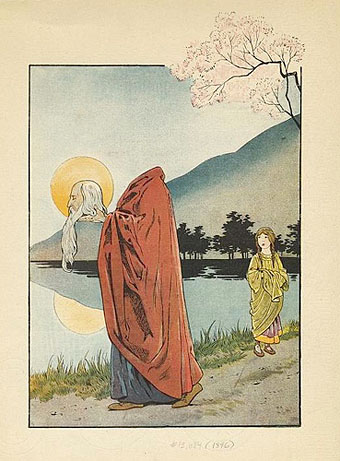
Consider this an addendum to an earlier post about decapitations in art history. What I didn’t know then was that decapitated saints have their own “cephalophore” category if they’ve been recorded as going for a post-decapitation stroll; a case of “take up thy head and walk”. Saint Denis of Paris receives more attention than most on account of his being a patron saint of France. This also explains why his martyrdom is depicted in gory detail on the wall of the Pantheon in Paris.

denis2.jpg

St. Denis bearing his head and halo (1896).

Nine-year-old Saint Justus of Beauvais differs from the strolling cephalophores—who manage to walk some distance before finally expiring—in having picked up his head severed head and carried on speaking. Rubens is one of the few artists to depict this event, although his habitual all-shall-have-muscles technique makes the boy look a lot older. Wikimedia Commons has a few more examples of Saint Denis, with and without head.

justus.jpg

The Miracle of Saint Justus (c. 1635) by Peter Paul Rubens.

Previously on { feuilleton }
Decapitations