Weekend links 251

quintana.jpg

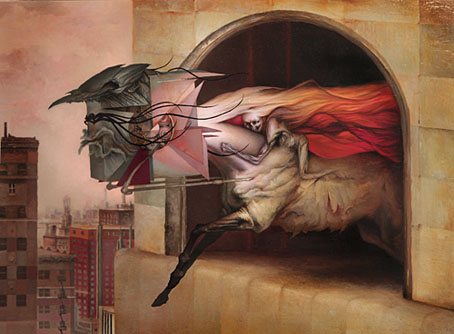
Beliel (2013) by Dan Quintana.

Guida essenziale all’Italian Occult Psychedelia. Out next month: Nostra Signora Delle Tenebre, a tribute to “movies that…retained a decidedly Italian flavour, a bizarre mix of nasty violence, lurid sexuality and feverish Catholic mysticism, all filtered through a manic obsession with death, blood and the sins of the flesh.” In the meantime, try the Italic Environments mix by Lay Llamas.

• “His work matters more than ever now because it stands in contrast to all the sequels, the comic-book adaptations, that Hollywood makes to sell lunchboxes.” Ryan Gilbey looks at a new documentary about the great Robert Altman.

• Psychedelic Culture at the Crossroads: Erik Davis on the ongoing reappraisal of the value of psychedelic drugs. Related: Dude, You Can Draw Magic Mushrooms With an Oscilloscope.

Like [Ellen Sofie] Lauritzen, what I appreciate about music, writing, and films that vary from dated to downright misogynist is the rawness I see expressed, a sheer energy that can’t toe the line of perfect political obeisance. I join her in hoping that we back down from using “problematic” as a censorious bludgeon against creative achievements, no matter how problematic they are.

Sarah Seltzer on whether feminists can enjoy misogynist art

• Mixes of the week: Roger Eagle’s jukebox selection for Eric’s club, Liverpool; Switched On! Vol. 4 by AnchSounds; T-P-F Mix 3: Bucolic Intrigue Romance by The Pattern Forms.

• At Dangerous Minds: Paul Gallagher on the whimsical anarchism of the White Bicycle revolution.

• Opening the Ghost Box: Dave Thompson on a record label that’s mentioned here more than most.

Abominations Of Yondo (2007), a free album inspired by the weird fiction of Clark Ashton Smith.

• Placards of earthly delight: Isabel Stevens on Vera Chytilová’s film posters.

• I’m an artist to watch according to Nakid Magazine.

Tomb of Insomnia

Death Surf (2012) by Heroin In Tahiti | Voices Call (2015) by Lay Llamas | Averno (2015) by OVO
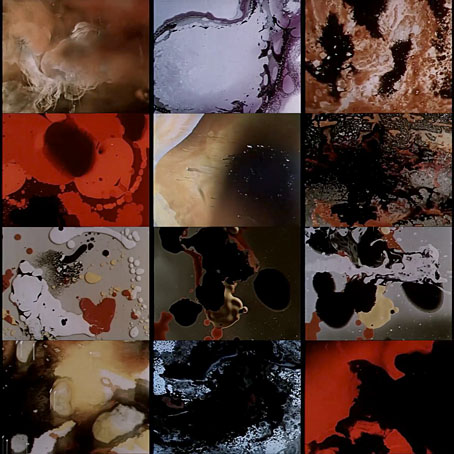
Somnambulists, a film by Mieczyslaw Waskowski

waskowski.jpg

This 9-minute film by Polish actor and director Mieczyslaw Waskowski was made in 1958. At that time Waskowski’s swirling blobs of paint in oil or water would have seemed merely abstract; a decade on and they would have unavoidable psychedelic or even cosmic connotations. Stanley Kubrick used similar effects for some of the shots in the Star Gate sequence of 2001: A Space Odyssey only at much higher resolution and camera speed.

Elsewhere on { feuilleton }
The abstract cinema archive

Summerisle revisited

summerisle3.jpg

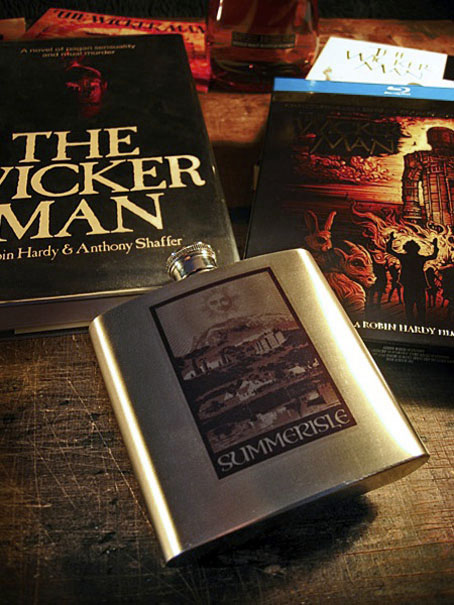
I don’t buy many of my own things from CafePress but I had some credit in the account from recent sales so I had to get one of these. (I’m also not in the habit of carrying whisky around but it’s good to have the option.) When I have a spare moment I may add this design to more of the burgeoning range of products. For the moment, these are the available options. Happy Equinox and slàinte mhath!

Previously on { feuilleton }
Summerisle souvenirs
Wicker mania
Milbury souvenirs
Children of the Stones

The Singular & Extraordinary Tale of Mirror & Goliath

mirror.jpg

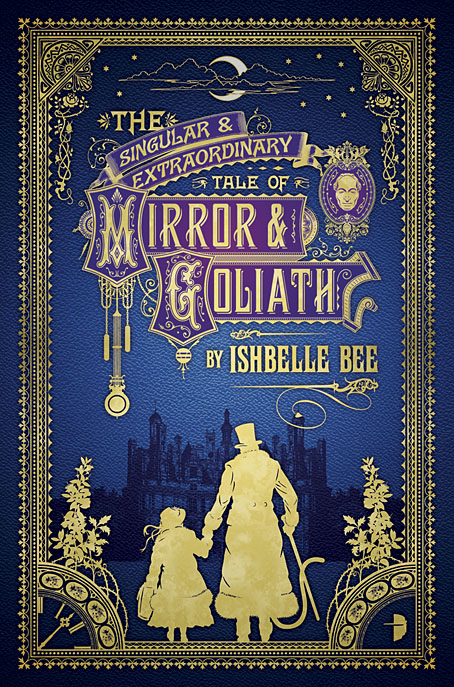
In yesterday’s post I mentioned having recently finished a cover design featuring silhouettes, not expecting the design in question to be revealed on the Barnes & Noble SF & Fantasy blog a few hours later. So here it is. The Singular & Extraordinary Tale of Mirror & Goliath is the first of two novels by Ishbelle Bee from publisher Angry Robot. Rather than attempt a précis it’s easier to swipe one from the B&N post:

1888. A little girl called Mirror and her extraordinary shape-shifting guardian Goliath Honeyflower are washed up on the shores of Victorian England. Something has been wrong with Mirror since the day her grandfather locked her inside a mysterious clock that was painted all over with ladybirds. Mirror does not know what she is, but she knows she is no longer human.

John Loveheart, meanwhile, was not born wicked. But after the sinister death of his parents, he was taken by Mr Fingers, the demon lord of the underworld. Some say he is mad. John would be inclined to agree.

Now Mr Fingers is determined to find the little girl called Mirror, whose flesh he intends to eat, and whose soul is the key to his eternal reign. And John Loveheart has been called by his otherworldly father to help him track Mirror down…

An extraordinary dark fairytale for adults, for fans of Catherynne M. Valente and Neil Gaiman.

Having spent the past few years scrutinising Victorian graphic design this was a very enjoyable assignment that didn’t feel like work at all. The title design took some time to put together, the challenge with these things being to pour on the decoration while maintaining legibility. You also need to choose the typefaces carefully. The capitals in “Mirror” and “Goliath” were drawings based on period cover designs, while the author typeface isn’t a font but is letterforms scanned from a Symbolist art book from the 1970s. Revival fonts continue to proliferate but I’ve yet to see one in that exact style. The Singular & Extraordinary Tale of Mirror & Goliath is out in June with a sequel, The Contrary Tale of the Butterfly Girl, following in August.

Les Theatres d’Ombres Chinoises

ombres01.jpg

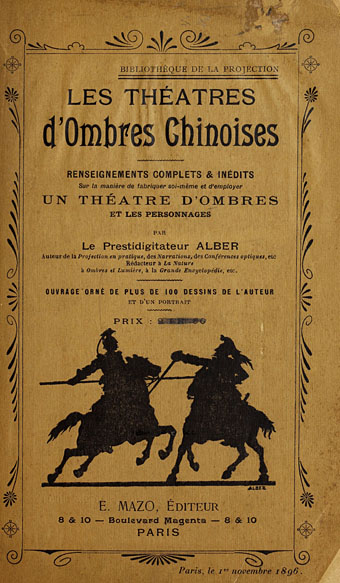
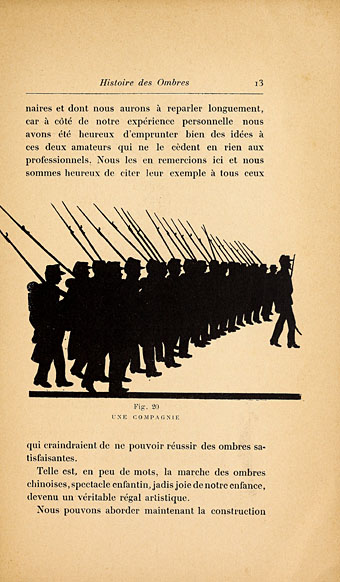
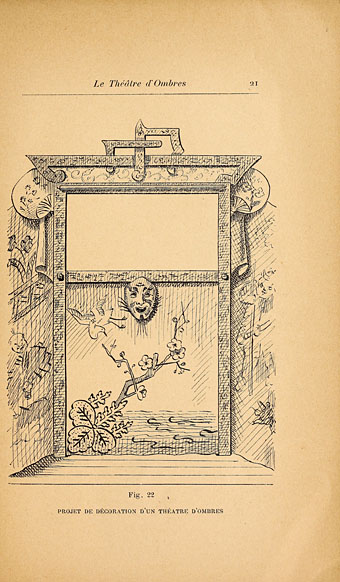
Ombres Chinoises—”Chinese shadows”—were the specialty of Alber, prestidigitateur, according to this French volume from 1896. The diagrams show examples of Alber’s tableaux, and also the technical aspects of his articulated figures, some of which seem caught midway between Javanese shadow puppets and Lotte Reiniger’s animated silhouettes. One of the commissions I’ve been working recently features silhouette figures; more about that later.

ombres02.jpg

ombres03.jpg

Continue reading “Les Theatres d’Ombres Chinoises”