Foutaises

foutaises.jpg

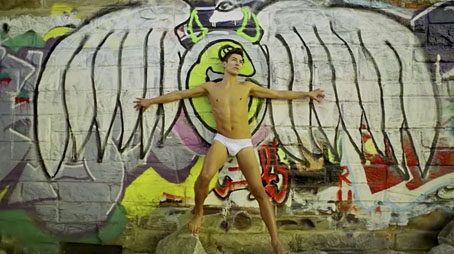
Foutaises (1989) is the French title of this 9-minute film by Jean-Pierre Jeunet whose English translation, Things I Like, Things I Don’t Like, is a clumsy, if accurate, summation of the content. It’s mostly a string of sight gags with Jeunet regular Dominique Pinon running through a list of his likes and dislikes, some of which are very funny. I first saw this on a VHS release of Delicatessen, a good pairing since the films were made almost back-to-back, and share actors. Foutaises shows both the strengths and weaknesses of Jeunet’s style: many isolated moments of visual humour work well in a short dose but stretched over 90 minutes the same technique can easily become tiresome or annoying.

On YouTube there’s a choice of a low-res copy with English subtitles or a better quality copy in French only. Take your pick. According to the discussion at IMDB the film can currently be found as an extra on the French DVD of Amélie.

Previously on { feuilleton }
The Bunker of the Last Gunshots

The Bunker of the Last Gunshots

bunker1.jpg

Jean-Pierre Jeunet is known these days as a director in his own right but he started out working in collaboration with Marc Caro, a writing and directing partnership that lasted up to The City of Lost Children in 1995. Given how much I enjoyed that film, and their earlier Delicatessen (1991), I suspect it’s Caro’s sensibility I respond to. I loathed Jeunet’s Alien Resurrection so much I refuse to watch it again (for me the Alien series ends with Ripley’s swan dive at the end of the third film), and I’ve shunned Amelie and everything he’s done since.

bunker2.jpg

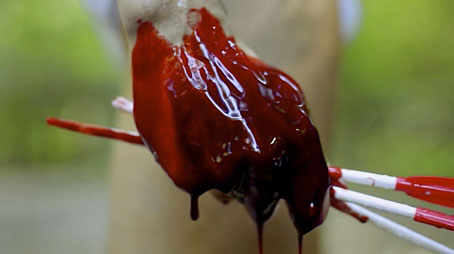
The Bunker of the Last Gunshots (1981) is an early Caro/Jeunet work set in the same retro environment as Delicatessen and The City of Lost Children, with equally eccentric or unpleasant characters and the same antiquated technology. There’s no dialogue, and the narrative is conveyed obliquely at best. Even more than their feature films this is a vehicle for conveying a mood, the concern here being less with story and more with monochrome visuals, chiaroscuro lighting and bits of grotesquery among the all-male inhabitants of a bunker from some unspecified war. For a low-budget piece it’s very assured, and if you’d seen this in 1981 you’d be expecting the pair to go on to bigger and better things. The Bunker of the Last Gunshots runs for 25 minutes; there’s a rough copy on YouTube or a better one at Vimeo.

Qualia

qualia2.jpg

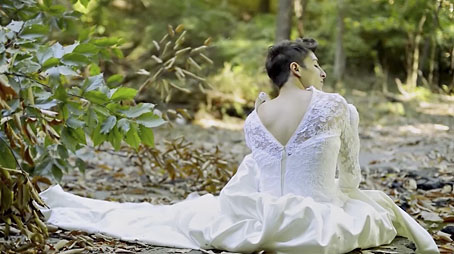
Qualia is a 10-minute film by Vincent Ciciliato subtitled “A remake of Salò“, a reference to Pasolini’s notorious Sadeian indictment of Italian Fascism, Salò, or the 120 Days of Sodom (1975). Calling this a remake is something of a stretch, it’s more accurate to describe it as a mash-up of vague gestures in the direction of Pasolini’s grim tableaux via Zbigniew Rybczynski’s celebrated short film, Tango (1980). The latter is represented by the single room in which the action develops, and the jerking movements of the actors although their movements don’t attempt to match the clever dispersal of Rybczynski’s characters. We’re not exactly starved of unusual juxtapositions these days but a Salò/Tango mash-up is something I wouldn’t have expected to see. Watch it here.

qualia.jpg

Previously on { feuilleton }
Tango

Weekend links 176

dlouhy.jpg

This week PingMag was looking at Czech film posters. This one by Bedrich Dlouhy is for the belated 1970 release of Kurosawa’s Rashomon.

• In October Alison Goldfrapp curates an exhibition for The Lowry, Salford, featuring her favourite art. Examples will include work by Leonora Carrington, Lotte Reiniger and Henry Darger so I’ll definitely be seeing this one. The new Goldfrapp album, Tales of Us, is released this week. Alison Goldfrapp & Lisa Gunning’s film for Annabel is here.

Michael Glover profiles artist Tom Phillips who has a new show of his paintings at the Flowers Gallery, London. The indefatigable Phillips also talked to Tracy McVeigh about his design for the new 50 pence coin which celebrates the centenary of Benjamin Britten.

Get Carter director Mike Hodges remembers re-teaming with Michael Caine for the island-set crime thriller Pulp, and shares a letter that JG Ballard wrote to him in admiration of the film.

Dismantling the surveillance state won’t be easy. Has any country that engaged in mass surveillance of its own citizens voluntarily given up that capability? Has any mass surveillance country avoided becoming totalitarian? Whatever happens, we’re going to be breaking new ground.

Bruce Schneier on how to deal with the total surveillance state.

• Babel/Salvage presents The Midnight Channel, the newest montage of poetry by Evan J. Peterson, inspired by cinema of the horrific, fantastic and bizarre.

• Mixes of the week are from composer Amanda Feery at The Outer Church, and Pinkcourtesyphone (Richard Chartier) at Secret Thirteen.

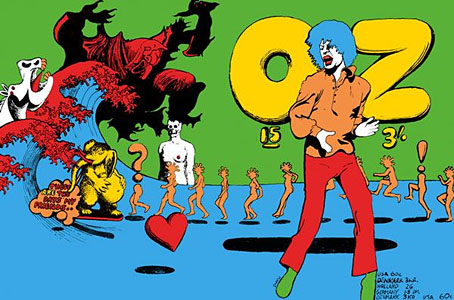
• At Dangerous Minds: Kimberly J. Bright on the psychedelic poster art of Hapshash and the Coloured Coat. Related: LSD may not be bad for you, says study.

Queer Zines: a 400-page study edited by AA Bronson & Philip Aarons.

• Justin Abraham Linds on The Walt Whitman of gay porn.

• Designs for theatre and print by Oskar Schlemmer.

Beautiful Mars: a Tumblr.

Catleidoscope!

• Goldfrapp: Lovely Head (2000) | Strict Machine (2003) | Caravan Girl (2008)

Fišer and Liška

morgiana.jpg

Having enthused recently about Czech soundtrack composer Zdenek Liška, and about Juraj Herz’s The Cremator (1969), I can’t avoid mentioning the release this month of Liška’s soundtrack for Herz’s film which comes twinned on CD with Luboš Fišer’s equally distinctive soundtrack for Herz’s Morgiana (1972). Both films are available on DVD from Second Run. Having only discovered these works in the past month the soundtrack collection arrives at just the right moment, another excellent reissue from the UK’s Finders Keepers label who specialise in resurrecting neglected soundtracks, electronica and other obscure music. (Highlights from the electronic catalogue have included the reissue of Suzanne Ciani’s synth music from the 1970s and 80s.)

With Morgiana and The Cremator sharing a director it makes sense to present the soundtracks as a pair, but the films also share a macabre atmosphere that verges on outright weirdness. Where the character of the Cremator is obsessed with reducing human beings to ash, in Morgiana we have a sister plotting the slow death by poison of her twin in order to gain an inheritance. Fišer’s organ-inflected score is suitably dramatic, even melodramatic for the scenes where the poisoned sister is hallucinating, or we’re seeing everything from the point-of-view of the family cat. Finders Keepers’ albums are designed by Andy Votel who for this release has had the CD booklet printed with the Cremator pages running from the back to the centre so that—in the booklet at least—neither title is favoured.

Anyone curious about the Finders Keepers’ sound world can receive a taste via this mix by Andy Votel for Self-Titled Mag. It’s intended to tie-in with Cassette Store Day (that’s today) but really functions as a good sample of the record label’s obsessions. There’s some Suzanne Ciani in there, as well as a rare piece of Cristal Baschet playing from Lasry-Baschet.

Previously on { feuilleton }
Two sides of Liška
Liška’s Golem
The Cremator by Juraj Herz