Five thousand

rockwood.jpg

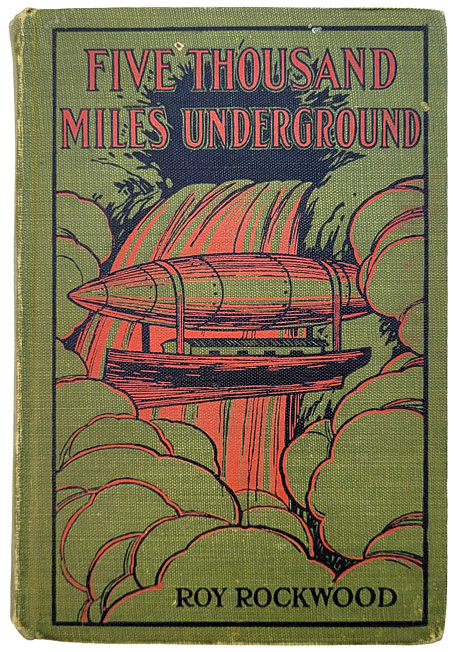
It’s that Hollow Earth again.

Post no. 5000 breaks the format of earlier stock-taking posts by doing without a Roman numeral for its title. MMMMM isn’t technically wrong but the Romans used a V with a horizontal line over it to signify 5000, a symbol that I imagine the temperamental coding of this site would refuse. No matter.

Post no. 4000 (January 8, 2016) arrived almost a year after I’d stopped writing every day, and had consequently seen visits decline as a result. (You can’t really talk about “readership” here when most visits will be from people looking for pictures of some sort.) The WordPress stats show that visitor numbers had been falling even before I stopped the daily posting routine, no doubt as a result of the uptake in social media. What’s interesting about the present moment is that the visitor numbers have been rising again at a time when disenchantment with social media is growing. I don’t think these two things are connected—I’m bound to see more visitors if I’m writing more often, as I have been since mid-2020—but it’s a curious thing sticking with an endeavour like this while vast internet edifices rise and fall around you. Since stepping away from social media myself I value the autonomy of this place all the more. Another development since 2016 is the rise of Substack, and a return (although it never really went away) to long-form writing. Most Substack contributors that I’ve seen are producing essays but a few have been creating collections of miscellaneous items that away from the site would be regarded as old-fashioned blog posts.

One thing that hasn’t changed here is the popularity of the Gay Artists Archive, still the most popular destination by a wide margin. The other very popular page is the Illustrators Archive; both pages serve a function which isn’t supplied elsewhere in quite the same way. People seem to value having someone filter a specific cultural area for them even if (as in my case) they’re only following their own tastes.
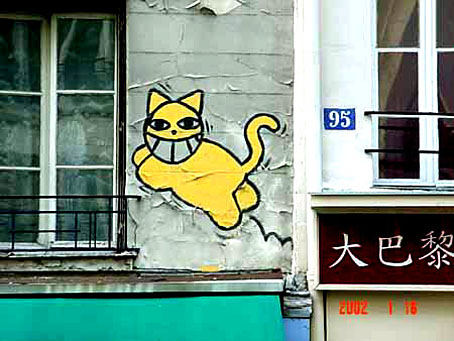
monsieurchat.jpg

Graffiti by Thoma Vuille.

Okay, stock has been taken. Thanks, as always, for reading. Monsieur Chat, the tutelary deity of this place, says “En avant et vers le haut!”
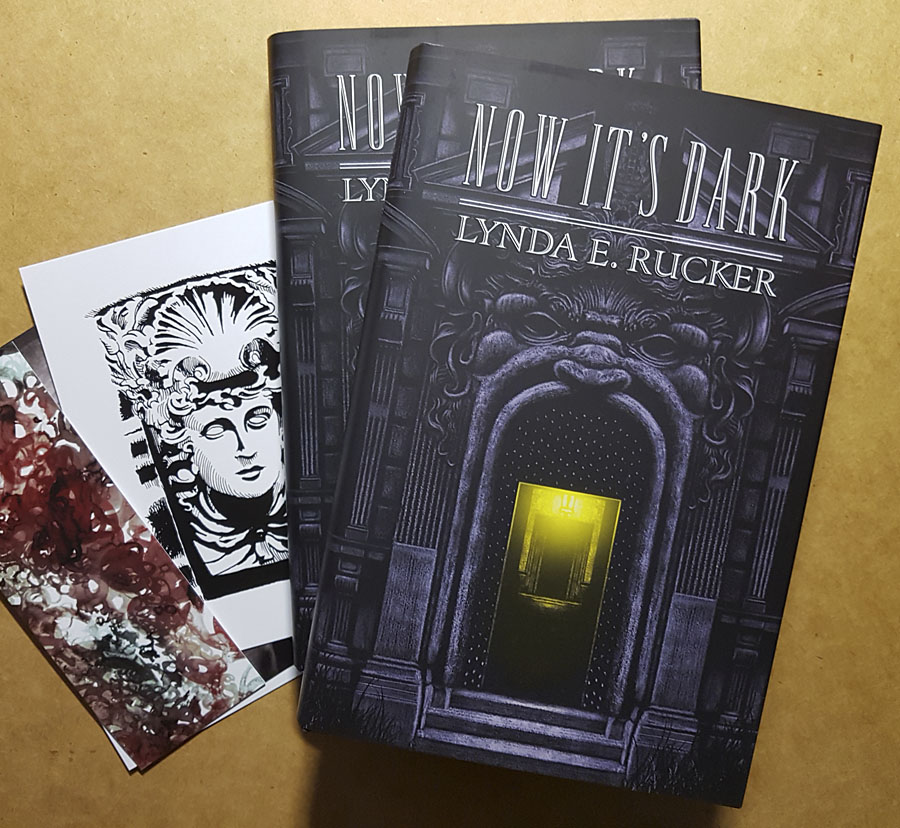
Now it’s here

rucker1.jpg

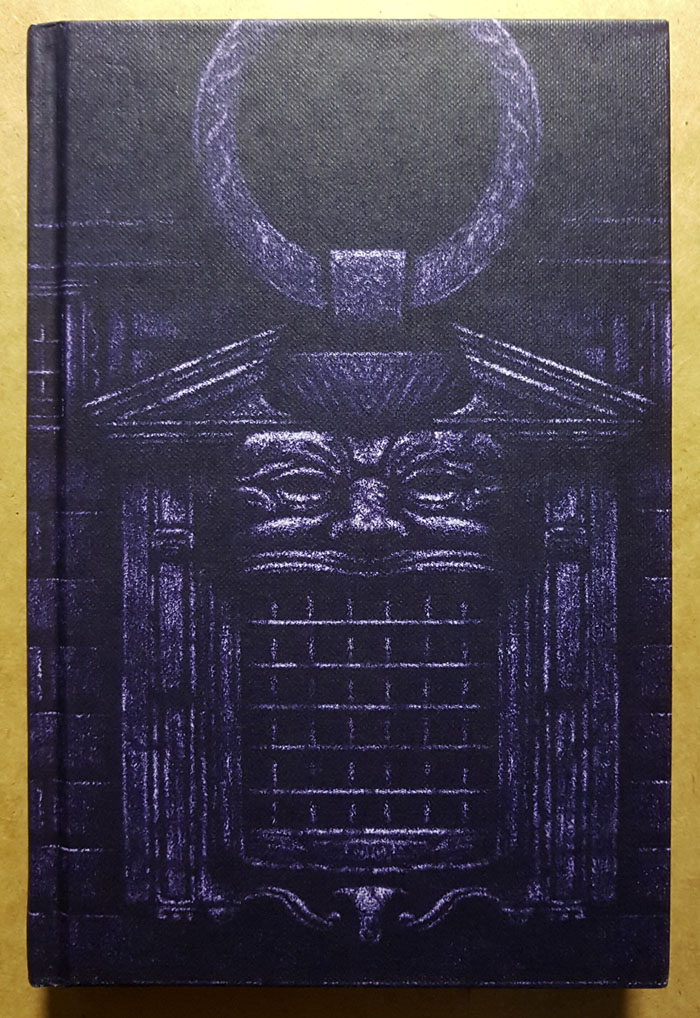
Arriving in the post this week, the Lynda E. Rucker story collection with my art on the dustjacket and the printed boards. This is a typically high-quality production from Swan River Press which comes with the usual complement of postcards and bookmark. I’ve already written something about the art but now the book is in print you can see the texture of the stock that covers the boards. I like the way this works with the texture of the drawing.

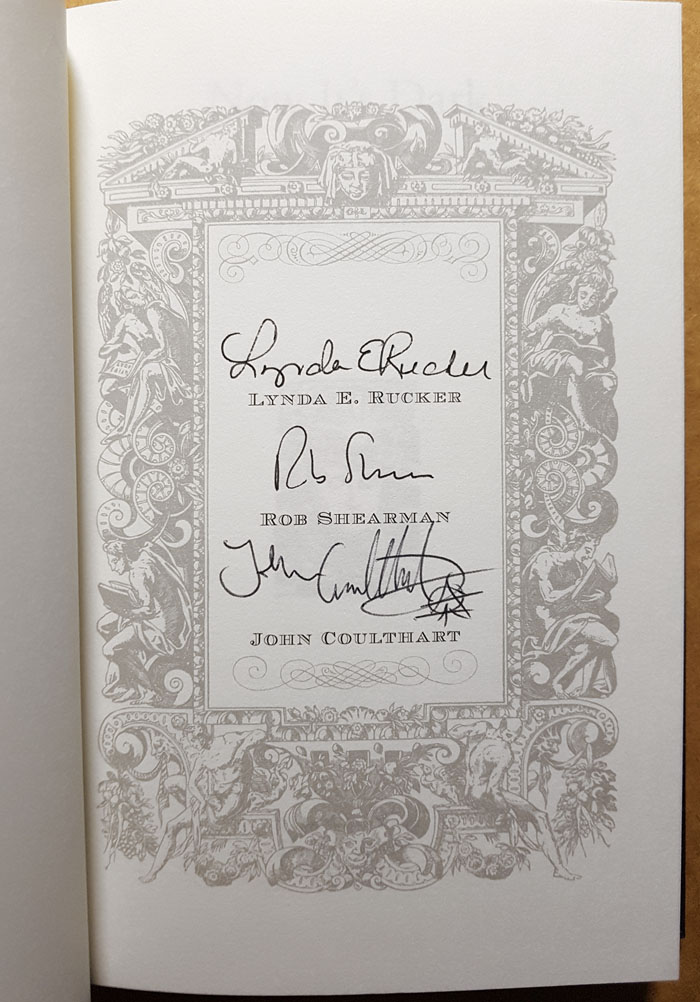
The book is available now. All copies are signed by the author, by Rob Shearman (who wrote the introduction), and by myself.

rucker2.jpg

rucker3.jpg

Slothrop’s half-century

pynchon.jpg

There is nothing in contemporary literature to compare with it, certainly not in English. All the lesser pretenders—John Barth, Richard Powers, David Foster Wallace, Jonathan Franzen, even Don DeLillo—seem small and trivial in the glow of its mad quasar-pulses of brilliance. The risks taken here, in 1973, are so astonishing in retrospect largely because of everybody else’s incapacity to match them.

The burning question will always be: for whom was Pynchon writing? There was no ready readership for a book composed of such disparate, off-putting materials and crazy shifts of tone.

Yet Gravity’s Rainbow created one from scratch, the way Einstein created a new image of the universe and the universe rearranged itself accordingly.

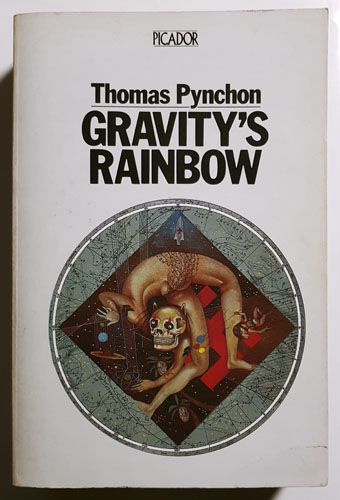
Julian Murphet on Thomas Pynchon’s magnum opus which was published 50 years ago today. Happy birthday, Rocket book. I finally tackled the thing a couple of years ago, and wrote about the experience here.

Previously on { feuilleton }
The Late Show: Thomas Pynchon
Esoterica 49
Pynchonian cinema
Going beyond the zero
Pynchon and Varo
Thomas Pynchon – A Journey into the Mind of [P.]

Parapsychology by Moebius

moebius04.jpg

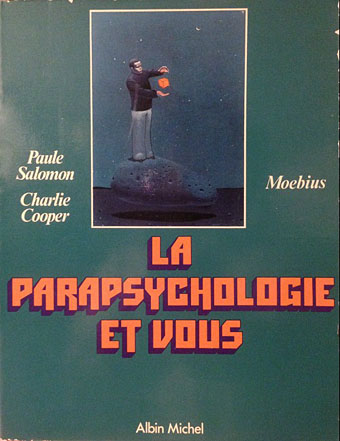
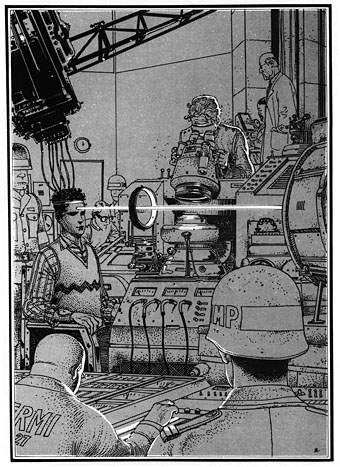
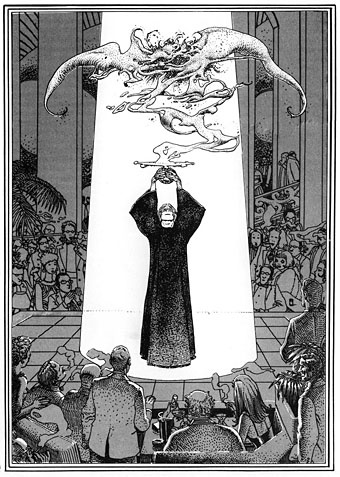
I always enjoy seeing illustrations by Moebius but they haven’t always been easy to find, even today when his international popularity has grown but his comics still overshadow his work in other areas. La Parapsychologie et Vous, a book by Paule Salomon and Charlie Cooper, was published in 1980 and illustrated throughout by Moebius. According to a note by Jean-Marc Lofficier, Moebius had been introduced to Salomon by Jean-Paul Appel-Guéry, a French New-Age figure who I think may be the “guru” whose influence over Moebius in the 1980s is referred to rather scathingly by Jodorowsky in the Moebius Redux documentary.

moebius01.jpg

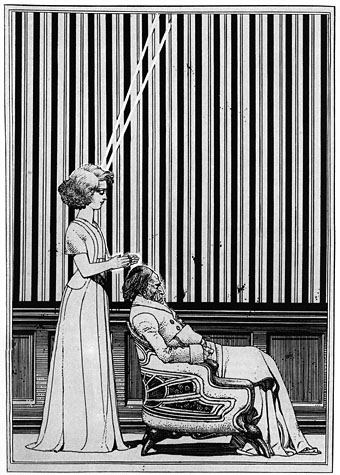
Whatever the circumstances that led to the commission, I love these illustrations which manage to honour the theme of the book while being typical products of their creator’s imagination. It’s also good to see further examples of Moebius adding screentone (aka Letratone or Zip-A-Tone) to his drawings. Moebius and Jodorowsky’s The Eyes of the Cat (1978) was created using the same technique, but elsewhere his black-and-white art is usually shaded by hand, if it’s shaded at all.

moebius09.jpg

All these illustrations are taken from Chaos (1991), a collection of Moebius illustrations and other one-off pieces which may be seen in full here. I’ve not seen a copy of La Parapsychologie et Vous so I can’t say whether this is a complete set of drawings; there’s at least one other picture, showing someone floating in a chair, that seems to be from the same series. In addition to book reprints, the drawings were also reprinted a few years ago as a portfolio set for collectors.

moebius07.jpg

Continue reading “Parapsychology by Moebius”

Weekend links 662

mika.jpg

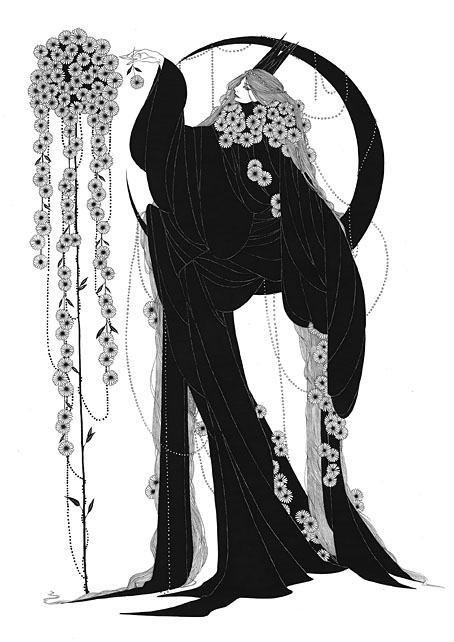
Pierrot le Fleur by Marina Mika.

• I’ve been saying for years that Andrzej Żuławski’s On the Silver Globe should be given a proper blu-ray release, and that’s what Region B viewers will receive soon courtesy of Eureka. Andrzej Żuławski: Three Films will be released in May, a set that comprises the director’s unfinished SF film, his debut feature, The Third Part of the Night (1971)—which I still haven’t seen—and also The Devil (1972), which I have seen but only as a poor copy that’s been circulating via illicit channels for many years.

• “The album’s 18-minute, multi-section standout Jenny Ondioline acquired a crucial role. It became the first track I’d play whenever I boarded a train, slipped on my headphones, and settled in beside an anonymous rail rider.” Hayden Merrick on travelling across the USA to the sounds of Transient Random-Noise Bursts With Announcements by Stereolab.

• At Aquarium Drunkard: E. Hehr explores musical exotica via Technicolor Paradise: Rhum Rhapsodies & Other Exotic Delights, “…a compilation that touches upon the noir side of exotica, far more gritty and raw compared to the lavish production on the esteemed exotica albums from Capitol and Liberty.” I own this collection. It’s a good one.

“My own experience,” Leda muses “tells me that more love goes into the thought of homosexuality than the practice.” Other gays are neither radical heroes nor the pathetic, self-hating fairies of, say, Mart Crowley’s Boys in the Band. This frankness makes Love, Leda a singular work; a contemporary portrait of working-class gay London in the years running up to decriminalisation that neither flatters nor sensationalises. In doing so, Hyatt transforms gay sex and love from an abject taboo to a deeply human intimacy.

Huw Lemmey on Love, Leda by Mark Hyatt, a candid tale of gay life in the Britain of the 1960s

• “It became something like a ritual, an exhumation of long-unheard music reanimated as glacial drones and ghostly symphonic movements—the sound of the cathedral transmuted into an enveloping shadow of pulsation, echo and glitch.” Orgelwerk by Ted Reichman.

Max Richter answers 50 questions. Sleep, Richter’s 8-hour ambient epic, is still my favourite among his compositions that I’ve heard to date: 8 CDs and a blu-ray disc from Deutsche Grammophon.

• RIP Alastair Brotchie, publisher of books at Atlas Press, and biographer of Alfred Jarry. Also a commenter here on one occasion when he corrected an erroneous photograph caption.

• A trailer for Suzume, a new feature film by Makoto Shinkai. Related: A Gathering of Cats.

• The story behind Jack Pierson’s homoerotic new photo book.

• The Strange World of…Phew.

Why Do I Still Sleep (1983) by Popol Vuh | Sleep I (1995) by Paul Schütze | The Dreamer Is Still Asleep (1999) by Coil