PlacePrints by David Rudkin

pp1.jpg

Hidden voices and haunted landscapes are conjured up in ten unique stories from the imagination of visionary writer David Rudkin. Join a stellar cast including Juliet Stevenson, Toby Jones, Josie Lawrence, Michael Pennington and Stephen Rea, among many others on an enlightening journey across the British Isles with this dramatic audio cycle that will transform your sense of the landscape around you.

PlacePrints is the umbrella title for ten new audio plays by David Rudkin, a series directed by Jack McNamara for the New Perspectives theatre company. The series has been freely available online for over a year but only came to my attention last month. One of the pleasures of recent years has been seeing David Rudkin’s dramas being reappraised after many years of neglect, although interviews suggest the writer has ambivalent feelings about the concentration on the gaudier, generic elements of his surviving TV plays. In The Edge Is Where The Centre Is, a book by Texte und Töne about Penda’s Fen, Rudkin is determined to frame the film as a political work when most of the reaction to it over the past decade has been to label it “folk horror”. I can’t complain too much when I’ve been partly responsible for giving it the horror label in the first place, having written (at the request of one of the editors) a short review of the film for Horror: the Definitive Guide to the Cinema of Fear (2006), and later contributed a lengthy piece about Rudkin’s stage and TV dramas to Folk Horror Revival: Field Studies (2015). In my defence, the latter was intended to draw attention to Rudkin’s work as a whole, and you have to start somewhere. In 2006 Penda’s Fen and Artemis 81 were mysteries to most people, not horror enough for the MR James obsessives, or, in the case of Artemis 81, too weird for the science-fiction crowd; both of them were also unavailable in any form. Grant Morrison was the only person I’d met who not only knew who Rudkin was but had read the available playscripts. Some of Rudkin’s works may touch on generic horror or science fiction but even his adaptation for the BBC of The Ash-Tree by MR James can be grouped with his own dramas via its themes of religious conflict and the presence of history in the landscape. He also changes Mothersole’s warning from James’s “There will be guests at the hall!” to the pithier “Mine shall inherit!”, a threat delivered with a playwright’s economy, and a declaration whose reference to inheritance connects the film to a persistent Rudkin theme, the legacies of people, place and history.

pp2.jpg

All of which makes the existence of the PlacePrints dramas very welcome indeed. For the most part, these are closer to Rudkin’s theatrical works than his TV films, being a collection of lone voices engaging repeatedly with the legacies of people, place and history: a British Celt watching the invading Roman army build one of their roads across the Warwickshire fields (River, Of Course); a close description of a walk along an ancient pathway in Cornwall (Nemeton); the scathing voice of an earthwork following the clumsy searches of an aged academic (Grim’s Ditch); a young student slipping in and out of visions of life in Suffolk 30,000 years ago (Cave Girl/The Stone Age). The series features an impressive range of acting talent, especially Juliet Stevenson in Grim’s Ditch, and Frances Tomelty as an elemental spirit haunting the waters of Lough Fea in To the Waters and the Wild. Sympathetic sound design and music by Adam McCready adds a hint of location atmosphere and dramatic texture without ever being obtrusive. Each piece is preceded by an authorial introduction, one of which suggests that Rudkin may not be too displeased about being tagged with the horror label when he describes Grim’s Ditch as being a contemporary equivalent of an MR James warning to unwary academics. The episode has its share of uncanny moments, with Toby Jones as the professor receiving a lesson from the landscape that he won’t forget. The final recording is an interview with David Rudkin by Gareth Evans, one of the interviewers and contributors to The Edge Is Where The Centre Is.

There’s a further parallel in some of these pieces with chapters from Voice of the Fire by Alan Moore, a novel that also deals with (among other things) ancient Britain, the Roman invasion and the patterns of history. Fitting, then, that New Perspectives have produced the audio version of Voice of the Fire with the same director and sound designer, and with Toby Jones returning as one of the characters. I generally prefer to read books rather than to hear them read but I’m looking forward to listening to this one as well. (Thanks to Jay for the tip!)

Previously on { feuilleton }
Voice of the Fire
Penda Reborn
Folk Horror Revival: Field Studies
The Edge Is Where The Centre Is
Afore Night Come by David Rudkin
White Lady by David Rudkin
Penda’s Fen by David Rudkin
David Rudkin on Carl Dreyer’s Vampyr
More Invisible Cities (and an invisible author)

calvino.jpg

Marco Polo describes a bridge, stone by stone.

“But which is the stone that supports the bridge?” Kublai Khan asks.

“The bridge is not supported by one stone or another,” Marco answers, “but by the line of the arch that they form.”

Kublai Khan remains silent, reflecting. Then he adds: “Why do you speak of the stones? It is only the arch that matters to me.”

Polo answers: “Without stones there is no arch.”

Italo Calvino

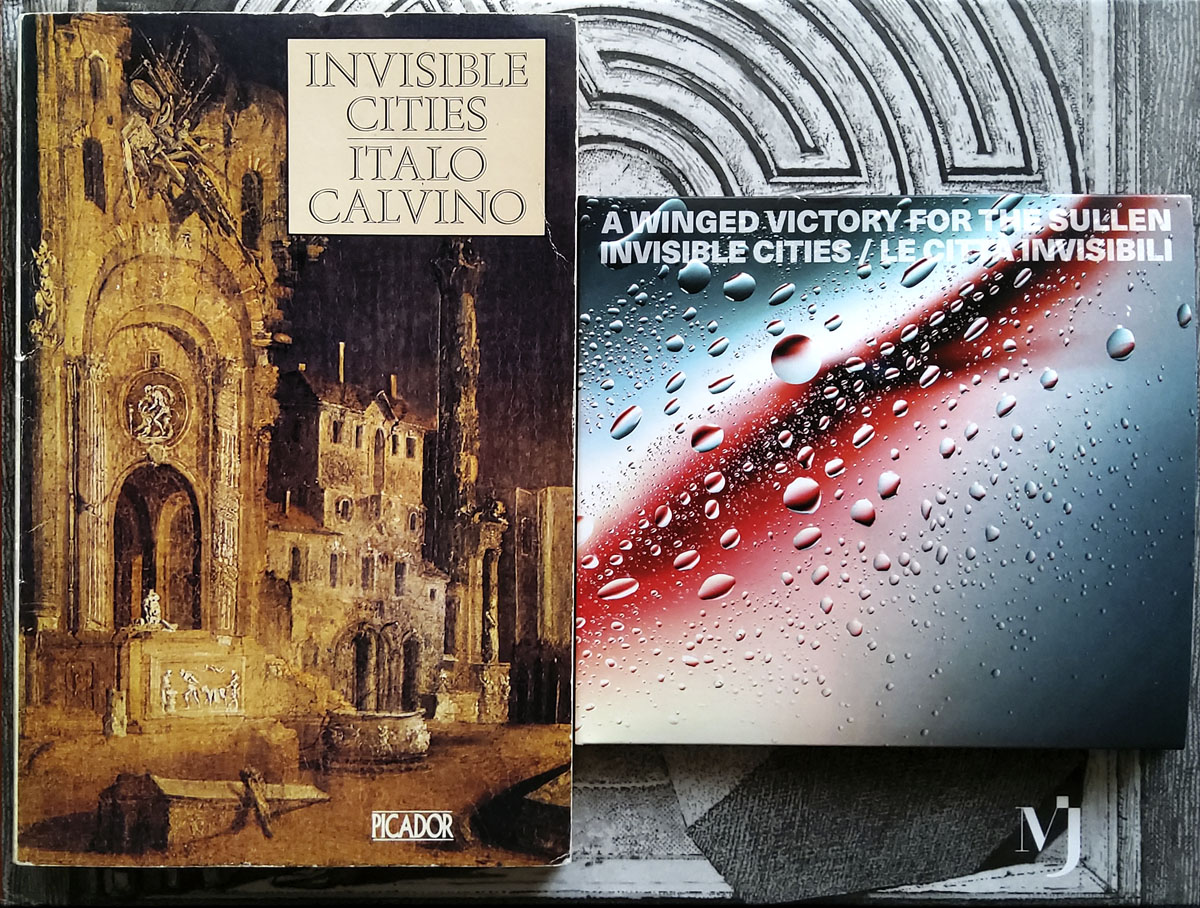
The new album by A Winged Victory For The Sullen (Adam Wiltzie & Dustin O’Halloran) is a beautiful thing. This was originally a score commissioned for a theatrical staging of Italo Calvino’s Invisible Cities, an adaptation produced by Leo Warner and given its first performance at the Manchester International Festival in 2019. I considered going to the premiere but was disgruntled by the way all the promotional materials for the event—posters, flyers, website—managed to avoid mentioning Calvino even though the work was obviously based on his novel. The author is similarly invisible among the album credits despite being acknowledged on the group’s Bandcamp page. I’m always surprised when people do this, especially professionals like the ones who staged the Manchester event, people you know would cause a fuss if they were denied credit for their own work in this manner. “Without stones there is no arch.”

Anyway, the music is very good, if a little solemn for something derived from a writer whose prose tended to the opposite. The late Jóhann Jóhannsson feels like the ghost at this particular feast. One of Jóhannsson’s final works, Last and First Men, had its premiere at the Manchester International Festival two years before Invisible Cities, and the latter’s choral harmonies, muted piano chords and grainy electronic textures situate the compositions very much in the Jóhannsson zone. As with Jóhannsson’s soundtrack albums, I wish some of the pieces were longer. Among the musicians are Robert Hampson—who I’d guess was generating some of those grainy textures—and Hildur Guðnadóttir whose cello-playing was a feature of many Jóhannsson recordings. Does the music work as a soundtrack for Calvino’s travelogue? A good reason to read the book again.

Previously on { feuilleton }
Invisible Cities: Miscellanea
Seeing Calvino: Invisible Cities
Gérard Trignac’s Invisible Cities
Colleen Corradi Brannigan’s Invisible Cities
Le Città In/visibili
Mikhail Viesel’s Invisible Cities
Bookmark: Italo Calvino
Crossed destinies revisted
Crossed destinies: when the Quays met Calvino
Tressants: the Calvino Hotel

Weekend links 552

keen.jpg

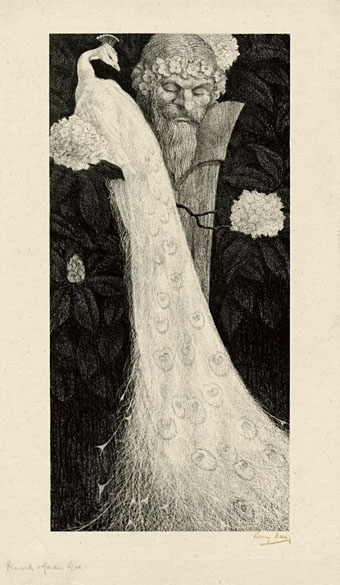
White Peacock and Garden God (c. 1922) by Henry Keen.

• “Though both writers confront some of the most unsavory and unjust dimensions of human life, Genet revels in moral ambiguity and coarse language, while Erpenbeck satisfies her audience’s desire for tidy ethical responses by using careful, equally tidy sentences. Genet’s world is dirty; Erpenbeck’s is clean.” Christy Wampole compares two newly-translated collections of non-fiction writing by Jean Genet and Jenny Erpenbeck.

• Gaspar Noé’s notorious, controversial (etc, etc) Irreversible receives the prestige blu-ray treatment from Indicator in April. Still no UK blu-ray of Enter the Void is there? I had to order a German release.

Stereolab release Electrically Possessed: Switched On Vol. 4 next month, the latest in their series of albums which collect singles, compilation tracks and other rarities.

• At Nautilus: Antonio Zadra and Robert Stickgold on how dreaming is like taking LSD.

• At Dennis Cooper’s: Bollo presents…Éliane Radigue (& The Lappetites).

• Playwriting & Pornography: Adam Baran remembers Jerry Douglas.

• At Spine: Vyki Hendy on the joy of monochrome book covers.

• Mix of the week: Subterraneans 2 by The Ephemeral Man.

John Boardley’s favourite typefaces of 2020.

• New music: Spirit Box by Blanc Sceol.

Life In Reverse (1981) by Marine | Reverse World (1995) by David Toop | Reverse Bubble (2014) by Air

Martinka & Co. catalogue, 1899

martinka01.jpg

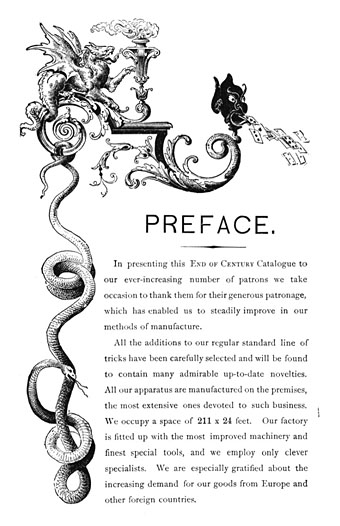
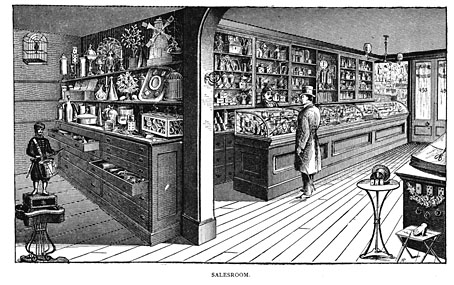
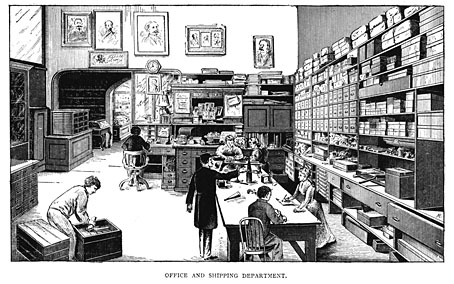
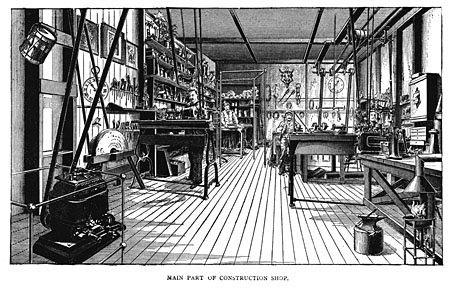
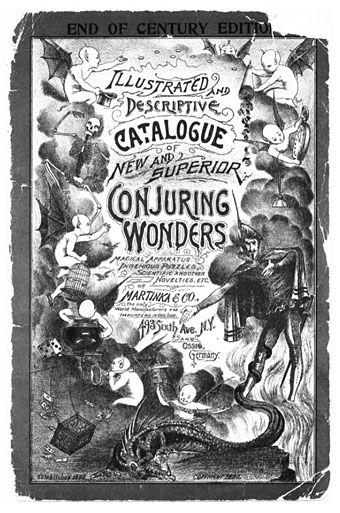
More conjuring. The Internet Archive has a number of catalogues published by suppliers to stage magicians but I’ve yet to see one as large or as heavily illustrated as this. Martinka and Co. was a magic supplier whose premises in New York distributed tricks and illusions manufactured in Germany. To judge by the size of their catalogue they must have been one of the largest (maybe the largest) distributors of conjuring props in the entire USA. If you’re interested in stage magic then reading these pages is like being shown the menu of a feast you never got to attend. I’d love to see some of their hand-made items, which range from pocket-size tricks to a life-size chess-playing automaton. The catalogue runs to over 200 pages, and is illustrated on almost every page with vignettes of just the type that Ricky Jay liked to use in his books. According to the uploader, the scans were originally intended for a crowd-funded reprint but the present owners of the Martinka name objected. Browse a world of magic here.

martinka02.jpg

martinka13.jpg

martinka14.jpg

martinka15.jpg

martinka03.jpg

Continue reading “Martinka & Co. catalogue, 1899”

Learned Pigs and other moveables of wonder

learned-pigs.jpg

All moveables of wonder, from all parts,
Are here—Albinos, painted Indians, Dwarfs,
The Horse of knowledge, and the learned Pig,
The Stone-eater, the man that swallows fire,
Giants, Ventriloquists, the Invisible Girl,
The Bust that speaks and moves its goggling eyes,
The Wax-work, Clock-work, all the marvellous craft
Of modern Merlins, Wild Beasts, Puppet-shows,
All out-o’-the-way, far-fetched, perverted things,
All freaks of nature, all Promethean thoughts
Of man, his dullness, madness, and their feats
All jumbled up together, to compose
A Parliament of Monsters.

William Wordsworth, The Prelude/Book VII

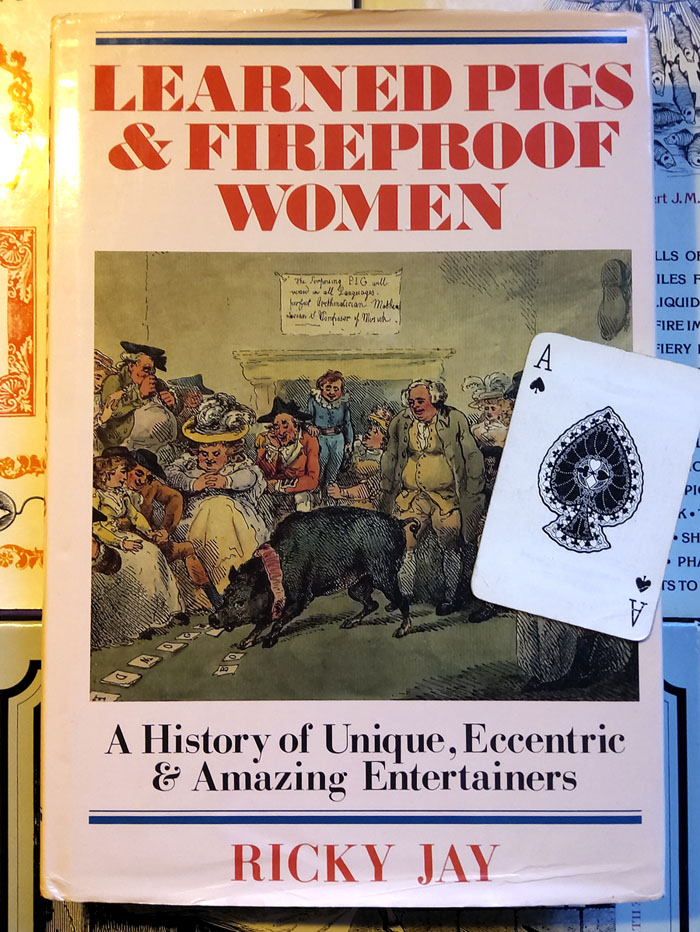
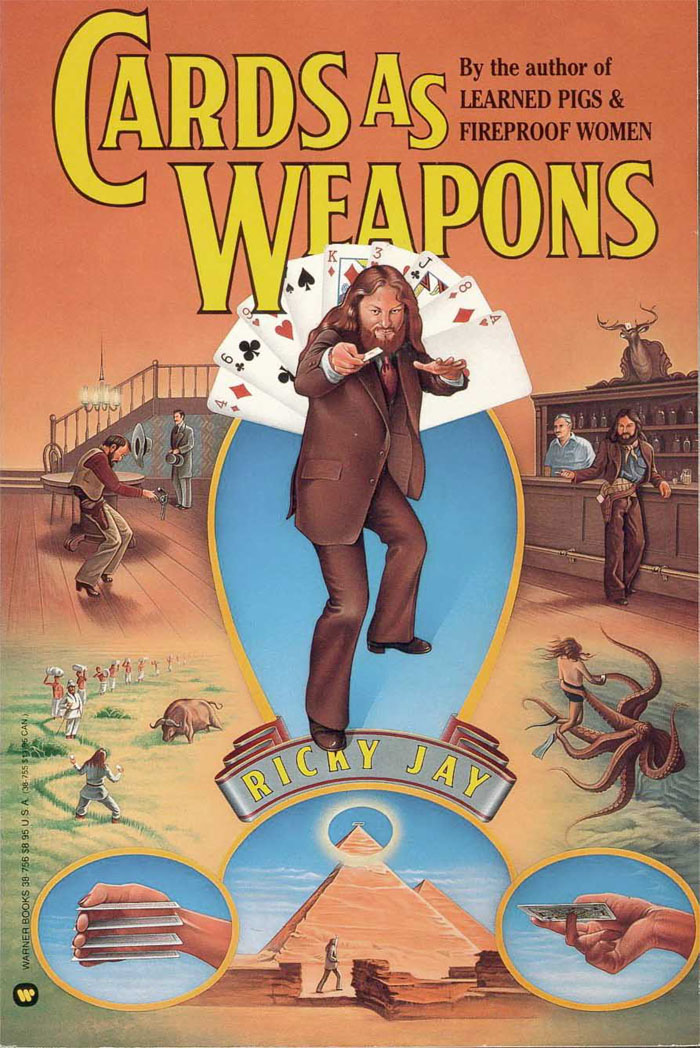
In the post this week, a book I’d missed buying in a charity shop a while ago which I spotted on eBay for a lot less than the usual asking price. Outside the USA the late Ricky Jay is probably known more for his occasional acting roles in film and TV than for his magic performances, although it was on British television that Jay established world records with his card-throwing act. Jay’s real business was stage magic, past and present, both performing it—sleight-of-hand and card tricks were his speciality—and operating as a historian of the art. His voluminous knowledge of conjuring and unusual stage acts was condensed into a self-published magazine, Jay’s Journal of Anomalies, and a number of books, not all of which concerned magic. Learned Pigs and Fireproof Women was published in 1986, being an account of favourite Jay anomalies from the theatres and circuses of the past. The US edition of the book was popular enough to inspire a related CBS TV film. I’d not seen this before but it reminded me about another TV film directed by Rex Bloomstein for the BBC’s Tx strand in 1996, Hustlers, Hoaxsters, Pranksters, Jokesters and Ricky Jay. As the title suggests, Jay himself is the subject of the latter documentary which includes contributions from friends Steve Martin (who also appears in Learned Pigs) and David Mamet. Bloomstein’s film contains two sequences that show Jay’s exceptional skill with a pack of playing cards. I have a vague idea how the trick in the second sequence might be performed but I’ve no idea at all how the wordless opening sequence is possible, where Jay unwraps a fresh pack of cards then proceeds to cut and shuffle them continually, after which all the cards are somehow still in perfect order.

toby.jpg

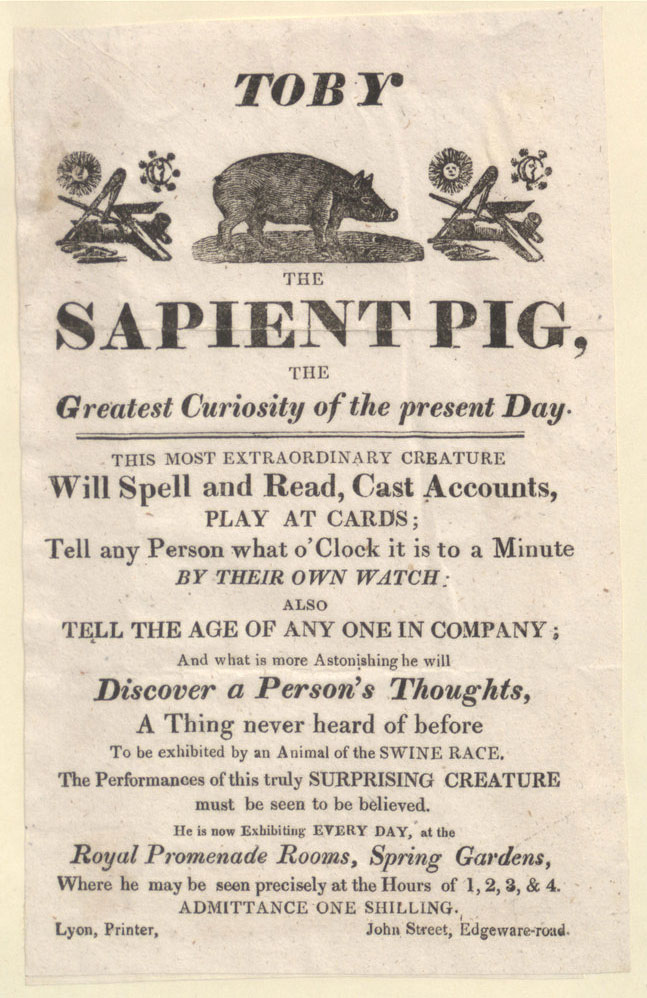
Ricky Jay is the kind of character I would have idolised when I was a magic-obsessed 13-year-old, not only for his skill as a performer but for his interest in the offbeat, the eccentric and the esoteric. We also share a taste for antique illustrations, Jay’s books and journals are littered with old playbills and engraved vignettes. In Britain in the 1970s little attention was given to conjuring on television beyond the perennial David Nixon, a decent enough magician but with a genial persona that was very English and consequently rather dull. (In Nixon’s defence, he did help finance the development of the Mellotron. Strange but true.) Jay’s character had an edge of menace and a touch of the mountebank or con artist, a quality exploited in David Mamet’s excellent directorial debut, House of Games (1987), for which Jay also acted as consultant. Jay’s most popular book after Learned Pigs is probably Cards as Weapons (1977), a typically humorous guide to the art of throwing playing cards. As with magic tricks, it’s very easy to show someone how to do the thing, but doing it well requires skill and a great deal of practice. In the Hustlers film we see Jay break a pencil in half with a thrown card.

cards-as-weapons.jpg

Cover of the 1988 reprint.

The popularity of Learned Pigs and Fireproof Women, together with Ricky Jay’s prominence as a historian of magic, has given us The Learned Pig Project, a single-volume collection of 47 books about magic and related matters by some of the celebrated magicians of the 19th and 20th centuries. This is an unwieldy document of over 5000 pages but it’s a treat if you’re interested in the history of conjuring. Stage magic has a peculiar sibling relationship with ritual magic; both are dependent on texts for the recording and transmission of their workings, and both have traditionally required that those texts be kept secret, to guard against persecution on the one hand, and unwanted revelation on the other. So too with covens, cabals and, in the case of stage performers, “Magic Circles”. Serious stage magicians are often serious book collectors, mining the past for new ways to startle the present; Ricky Jay was an exemplar in this regard, as we see in the Hustlers film which shows him browsing his personal library. I don’t know what he would have made of so much knowledge being made so easily accessible via the The Learned Pig Project—the whole purpose of Magic Circles is to keep the secrets inside the profession—but there have always been books about magic tricks, and young magicians have to start somewhere. As with card throwing, anyone can be shown the secret of a magic trick but that doesn’t mean that those who learn the secret can master the performance. Talented magicians, like sapient pigs, are rare creatures.

Previously on { feuilleton }
Magicians
Hodgson versus Houdini
A London Street Scene