Normal service has been resumed. Thank you.
A journal by artist and designer John Coulthart.
Technology

Normal service has been resumed. Thank you.

Where we’re from the birds sing a pretty song, and there’s always music in the air.
My internet connection has been steadily degrading over the past few days to the extent that I’m now reduced to posting this via the antiquated miracle of dialup. Things will be quiet here for the next day or so while I attempt to get to the bottom of the problem. In the meantime, for anyone curious enough, I’ll activate the archive feature to summon random posts from the past.
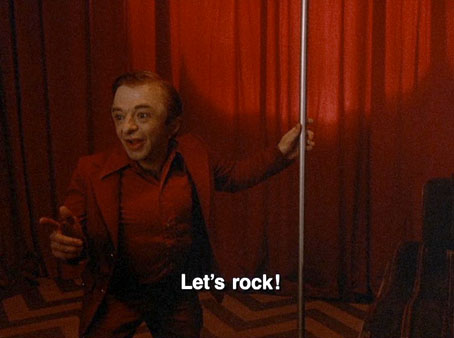
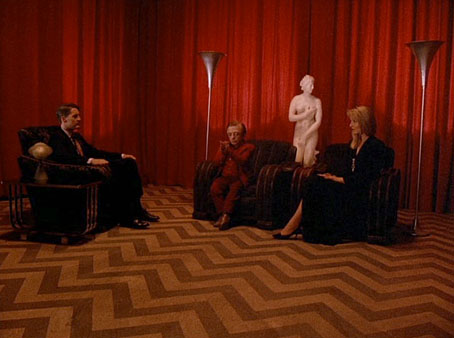
Picture from Twin Peaks since I’ve been re-watching the series over the weekend.

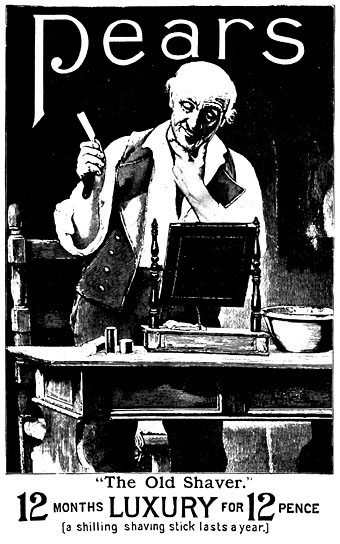
Pears Soap ad, Illustrated London News, March 16, 1895.
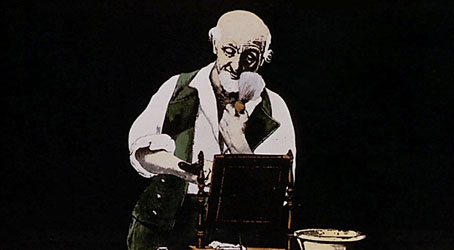
I’ve been working feverishly this week to complete page designs for The Thackery T. Lambshead Cabinet of Curiosities which will be published next year by HarperCollins. This is a sequel of sorts to 2003’s Thackery T. Lambshead Pocket Guide to Eccentric and Discredited Diseases to which I was also a contributor and designer. Ann and Jeff VanderMeer are editing the new collection, and Jeff has posted a couple of teaser introductions to the contents here and here. Gabriel in yesterday’s comments mentioned Terry Gilliam’s animations for the Monty Python TV series, something I was reminded of today while leafing through a 1968 collection of old advertising graphics looking for suitable pictures. Victorian Advertisements was compiled by Leonard de Vries and Ilonka van Amstel, and its Pears Soap ad (above) is obviously the source of Gilliam’s animation (below) showing a man lathering his face then beheading himself with a straight razor, a gag which features in both the TV series and the first Monty Python feature film And Now For Something Completely Different.
And Now For Something Completely Different (1971).
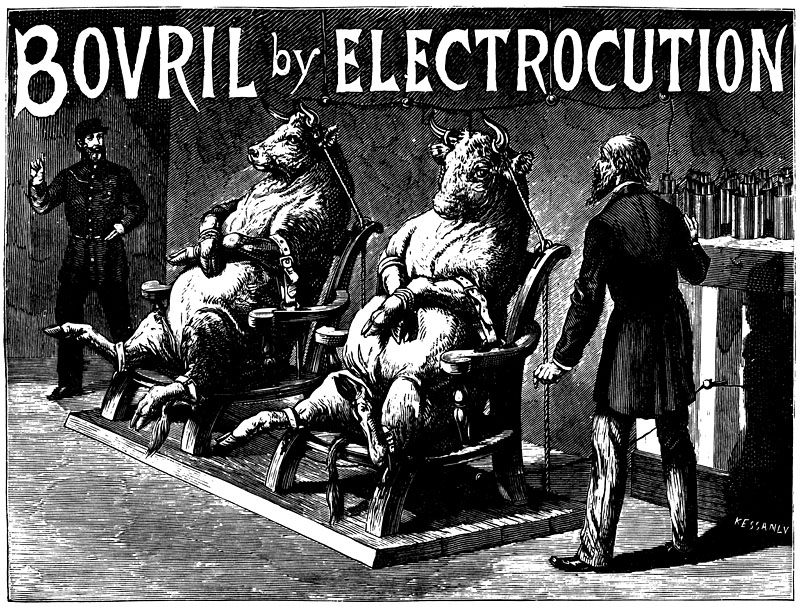
It’s easy to see what would have attracted Gilliam to the De Vries book when it’s filled with bizarre or grotesque ads like the Bovril one below; someone evidently decided that the meaty drink ought to be promoted via the novelty of electricity.
Bovril ad from The Graphic, Christmas number, 1891.
De Vries features many ads for electrical products, not all of them genuine or even likely:
Pseudo-science began to play the part it still plays in therapeutic advertising. Electric light was, by the end of the century, being installed in theatres and restaurants and in some private houses. To what other uses could the magnetic fluid be put? Electricity was the new magic and all kinds of quarters began to exploit its possibilities—and impossibilities. The Medical Battery Company Limited, of Oxford Street, assured the public that its Electropathic Belt had “restored thousands of sufferers to health and vigour”, and had “proved an inestimable blessing to the weak and languid”. It was particularly recommended for “weak men suffering from the effect of youthful errors”. Did the weak men in question wear the contraption in bed? Women also could benefit by it, and one is a little surprised to find this and other remedies for “female irregularities” so frankly discussed. An Electric Corset was the “Very Thing” for ladies. One can only wonder how the batteries if there were any operated. And what could possibly be meant by an “electric” towel, and how could failing sight be cured by an “eye battery”?
There’s also an Electric Hair Brush which gives “hope for the bald” without explaining how it differs from an ordinary brush. Several of the pieces in the new Lambshead volume will be exploring similarly eccentric territory. Watch this space for further details.
Previously on { feuilleton }
• Portuguese Diseases
• Pasticheur’s Addiction
• Short films by Walerian Borowczyk
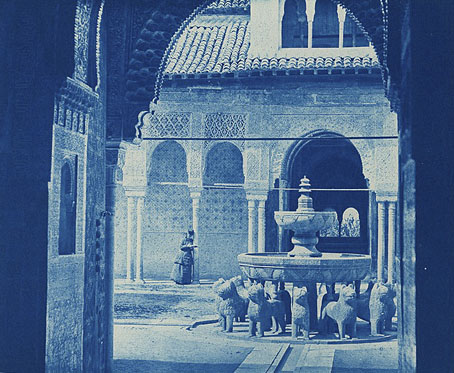
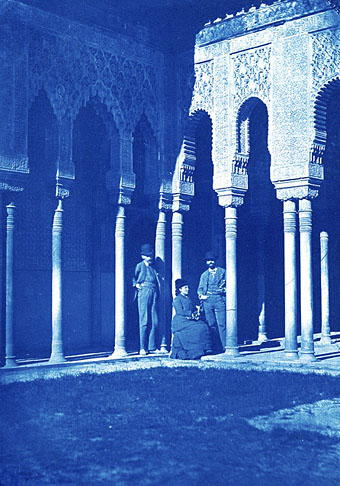
The cyanotype process is a very old photographic printing technique and also the source of the word “blueprint”, after the process became common among builders and engineers for the printing of plans. The technique also has its enthusiasts today, some examples of which can be seen here. These views of the Alhambra Palace in Granada, Spain, were taken by Carl Curman, a Swedish scientist and photographer, in 1878. The Swedish National Heritage Board at Flickr has two sets of Curman’s travel photography which include additional views of the Alhambra as well as other cyanotypes.
Previously on { feuilleton }
• Constantinople, 1900
• Edinburgh, 1929
• Old Bunker Hill
• Inondations 1910
• Berenice Abbott
• Eugene de Salignac
• Luther Gerlach’s Los Angeles
• The temples of Angkor
• The Bradbury Building: Looking Backward from the Future
• Edward Steichen
• Karel Plicka’s views of Prague
• Atget’s Paris
• Downtown LA by Ansel Adams
Annie Duels The Sun (2010) by Angie Wang.
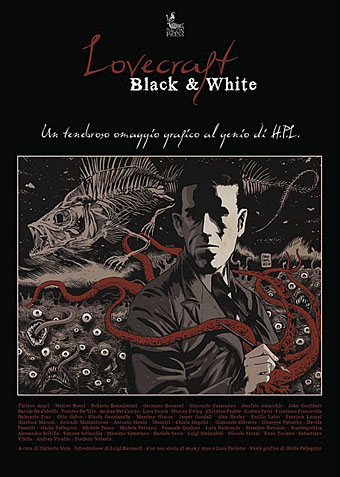
I’m interviewed again, this time by James at Cardboard Cutout Sundown. Covering familiar subjects for {feuilleton} readers: art history, design, Lovecraft, the genre/mainstream seesaw, etc. Related: Jeff VanderMeer previewed my design for the forthcoming Steampunk Reloaded.
• Battle over legacy of father of Art Nouveau. Prague authorities are demanding the paintings which comprise Alphonse Mucha’s Slav Epic be moved to the capital.
• The films that time forgot. David Thomson on ten neglected works including a cult favourite of mine, Jerzy Skolimowski’s Deep End (1970).
• The Viatorium Press: “Fine letterpress printing, digital typography, and hand painted illumination.” Among their recent productions is a poem by Clark Ashton Smith.
À la conquête du pôle (1912); Georges Méliès vs. Jules Verne.
• Taxandria, a feature-length collaboration between Raoul Servais, François Schuiten and, er, Alain Robbe-Grillet, is on YouTube. My earlier post about the film is here.
• Salvagepunk, or (maybe) Post-post-modernism: “How a music micro-trend heralds an emerging, internet-enabled, aesthetic movement.” See also the latest issue of The Wire.
• Drainspotting with Remo Camerota: documenting Japan’s creative manhole covers.
• Yo-ho-ho, and a bottle of squid: a book devoted to Kraken Black Spiced Rum.
• After Stanley Kubrick. Christiane Kubrick on life without Stanley K.
• Pills and penises and kissing boys: Tara Sinn’s Kaleidoscopes.
• Found Objects: a hauntological dumping ground.
• Sandow Birk’s American Qur’an.
• RIP Frank Kermode.
• Feuerland (1968) by Theo Schumann Combo; Feuerland (1977) by Michael Rother; Feuerland (2007) by Justus Köhnke.