Weekend links 577

preisler.jpg

Black Lake (1904) by Jan Preisler.

• Upcoming releases on the Ghost Box label will include a new album by {feuilleton} faves Pye Corner Audio, plus the surprising appearance of figures from Bruegel on a Ghost Box cover design.

Tilda Swinton and Olivier Saillard pay tribute to the films of Pier Paolo Pasolini. (Or to Pasolini’s costume designer, Danilo Donati.)

• New music: Spectral Corridor by The House In The Woods, and Re:Moving (Music for Choreographies by Yin Yue) by Machinefabriek.

• At Spoon & Tamago, Technopolis gets all the good things: “Giant kitty now greets commuters at Shinjuku Station.”

Anil Ananthaswamy on the ways in which psychedelics open a new window on the mechanisms of perception.

• Mixes of the week: Isolated Mix 112 by Suna, and GGHQ Mix #56, “An Unfortunate Kink”, by Abigail Ward.

• In this week’s impossible task, Alexis Petridis attempts to rank The Velvet Underground’s greatest songs.

• DJ Food unearths more flyers for London’s Middle Earth club, plus covers for the East Village Other.

• Global signals: Aki Onda on Holger Czukay and radio’s power to connect.

• At The Paris Review: Paintings and collages by Eileen Agar (1899–1991).

Will Sergeant’s favourite albums.

The Babel Tower Notice Board

Shaking Down The Tower Of Babel (1983) by Richard H. Kirk | Pärt: An Den Wassern Zu Babel (1991) by Estonian Philharmonic Chamber Choir conducted by Paul Hillier | The Black Meat (Deconstruction Of The Babel-Tower of Reason) (1994) by Automaton

Weekend links 576

haberfield.jpg

Cover art by Bob Haberfield, 1976.

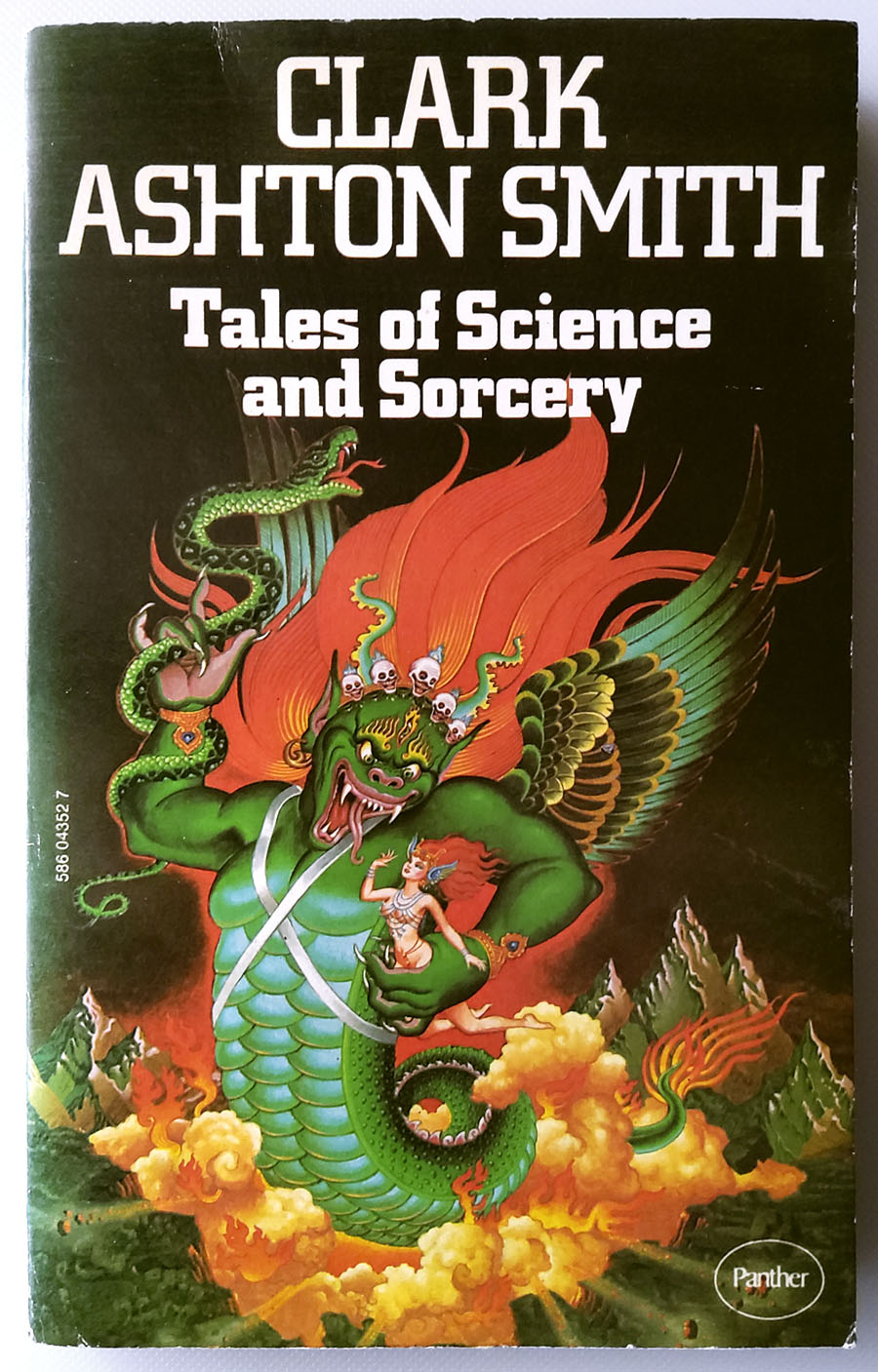
• I’ve been reliably informed that Australian artist Bob Haberfield died recently but I can’t point to an online confirmation of this so you’ll have to take my word for it. “Science” and “sorcery” might describe the two poles of Haberfield’s career while he was working as a cover artist. His paintings made a big impression on British readers of fantasy and science fiction in the 1970s, especially if you were interested in Michael Moorcock’s books when they appeared en masse as Mayflower paperbacks covered in Haberfield’s art. Haberfield also appeared alongside Bruce Pennington providing covers for Panther paperbacks by HP Lovecraft, Clark Ashton Smith and others, although his work there isn’t always credited. Dangerous Minds collected some of his covers for a feature in 2017. (The US cover for The Iron Dream isn’t a Haberfield, however.)

• “Like Alice, who can only reach the house in Through the Looking-Glass by turning her back to it, Gorey reversed the usual advice to ‘write what you know’ and wrote the apparent opposite of his own situation.” Rosemary Hill reviewing Born to Be Posthumous: The Eccentric Life and Mysterious Genius of Edward Gorey by Mark Dery.

• “Orvil…wanders the countryside, visits churches, rummages in antique shops, and encounters strange men to whom he is no doubt equally strange.” John Self reviewing a new edition of In Youth Is Pleasure by Denton Welch.

• At the Wyrd Daze blog: Q&A sessions with Stephen Buckley (aka Polypores), Gareth Hanrahan, and Kemper Norton.

• “Fellini liked to say that ‘I fall asleep, and the fête begins’.” Matt Hanson on Federico Fellini’s phenomenal films.

• A Beautiful Space: Ned Raggett talks to Mick Harris about the thirty-year history of Scorn.

• Deep in the dial: Lawrence English on the enduring appeal of shortwave radio.

Clive Hicks-Jenkins on making a picture for Annie Darwin (1841–1851).

DJ Food looks at pages from Grunt Free Press circa 1970.

• Mix of the week: Fact Mix 814 by Loraine James.

• New music: Clash (feat. Logan) by The Bug.

• At BLDGBLOG: Terrestrial Astronomy.

LoneLady‘s favourite albums.

• At Dennis Cooper’s: Porn 2.

Tilings Encyclopedia

Betrayal (Sorcerer Theme) (1977) by Tangerine Dream | Science Fiction (1981) by Andy Burnham | Sorceress (2018) by Beautify Junkyards

Gioconda of the Mausoleum

mona1.jpg

“MAGIC REALISM • Like the video technique of “keying in” where any background may be electronically inserted or deleted independently of foreground, the ability to bring the actual sound of musics of various epochs and geographical origins all together in the same compositional frame marks a unique point in history. • A trumpet, branched into a chorus of trumpets by computer, traces the motifs of the Indian raga DARBARI over Senegalese drumming recorded in Paris and a background mosaic of frozen moments from an exotic Hollywood orchestration of the 1950’s [a sonic texture like a “Mona Lisa” which, in close up, reveals itself to be made up of tiny reproductions of the Taj Mahal], while the ancient call of an AKA pygmy voice in the Central African Rainforest—transposed to move in sequences of chords unheard of until the 20th century—rises and falls among gamelan-like cascades, multiplications of a single “digital snapshot” of a traditional instrument played on the Indonesian island of JAVA, on the other side of the world.” — Jon Hassell

mona2.jpg

Jon Hassell’s text is part of the sleeve note for his Aka—Darbari—Java (Magic Realism) album which was released on Editions EG in 1983. The description of a picture of the Mona Lisa made from tiny reproductions of the Taj Mahal always intrigued me even though it’s only a shorthand metaphor for the sampling process, as well as being an encapsulation in miniature of one aspect of Hassell”s “Fourth World” concept: the blending of East and West, the sacred and the profane. Nevertheless, 20 years ago—17th May, 2001, according to the date on the file—after realising that Photoshop allowed the creation of just this kind of mosaic imagery, I decided to try and bring Hassell’s metaphor to digital life.

mona3.jpg

The end result in its full-size version looks at a distance like an ordinary halftone rendering of the painting but it really is made of tiny images of the Taj Mahal, albeit very rough ones since the process always resulted in a bitmap image. So much time has elapsed I’ve forgotten the procedural details although I do recall the involvement of one of those legacy features of Photoshop that most people ignore, possibly the Apply Image function. And I only did this at all because I’d found a tutorial somewhere that described how to create a mosaic image in this manner. The resulting picture wasn’t particularly satisfying but as a proof of concept it did at least work.

Continue reading “Gioconda of the Mausoleum”

Weekend links 575

barbier-gazette.jpg

La Belle Dame Sans Merci (1921) by George Barbier.

• “Organic Music Theatre goes beyond jazz into something else entirely—an ecstatic, openhearted melding of cultures. It is the first live recording of Don and Moki’s ‘organic music’ concept, a holistic blend of the arts and education. It is an album that everyone should own, an absolute marvel.” Geeta Dayal on Don and Moki Cherry’s Organic Music Theatre: Festival de jazz de Chateauvallon 1972.

DJ Food continues his dig into the history of London’s Middle Earth venue with an account of a Magical Mystery Tour that ended up being more mystery than magic.

The Lamp Magazine is running a Christmas Ghost Story contest with a first prize of publication in the Christmas issue of the magazine, plus $1000.

Dennis Cooper‘s favourite fiction, poetry, non-fiction, film, art, and internet of 2021 so far. Thanks again for the link here!

• From sport to sex: Louis Staples on how the jockstrap became part of gay culture.

• At Wormwoodiana: Mark Valentine on the weird fiction of AE Coppard.

• “How vinyl records are trying to go green.” Trying…

• Mix of the week: XLR8R Podcast 701 by 40 Winks.

• New music: Rushes Recede by Sarah Davachi.

Lisa Gerrard‘s favourite music.

• RIP Peter Zinovieff.

Organic (1982) by Philip Glass | Core (Organic) (1995) by Main | Organic Mango (1996) by HAT

The Gate to the Mind’s Eye

tgttme1.jpg

Turn a 6 on its head and you’ll see a number 9. Do the same with the psychedelic culture of the 1960s and you get the 1990s when psychedelia emerged again, after a fashion, in a profusion of new drugs (plus the same old ones), “ambient” music (a lot of which was never very ambient at all), and, of course, computer graphics. The resemblance of the overlit, weightless world of early computer graphics to the vivid inner landscapes of psychedelic hallucination prompted people like Timothy Leary to declare computers to be their new drug of choice, while also inspiring the resurrection of the kind of visual tripping aid that would have been considered dead and buried in the very un-psychedelic 1980s. (There were a few musical exceptions in that decade—the Paisley Underground, the Dukes of Stratosphear albums, Around The World In A Day by Prince & The Revolution—but all these were counter to the dominant trends of the time.)

tgttme2.jpg

CD-ROMS were the hippest vehicle for far-out visuals in the mid-90s. Brian Eno was vocal in his criticism of the limitations of the point-and-click CD-ROM format but he still provided music for a thing called Headcandy in 1994, one of a series of “video kaleidoscopes” with 3-D visuals created by Chris Juul and Doug Jipson. Not so overtly druggy was a series of VHS tapes and laserdiscs released throughout the 1990s by Odyssey Productions, all of which had the words “Mind’s Eye” in their titles: The Mind’s Eye: A Computer Animation Odyssey (1990), Beyond the Mind’s Eye (1992), The Gate to the Mind’s Eye (1994) and Odyssey Into The Mind’s Eye (1996). Where Headcandy and its relations created far-out visuals using original data encoded on a CD-ROM, the Mind’s Eye laserdiscs wowed the viewer by stitching together the latest examples of CGI from a variety of sources—showreels, TV ads, music videos and so on—giving you an hour of coloured balls bouncing across crystal mountains, pulsating blobs of mercury, shiny objects zooming through corridors and vortices, together with the clumsy figure animation that’s a consistent feature of early computer graphics. Each instalment was provided with a soundtrack by a different musician, so each release is really a long music video in itself, rather like The Orb’s Adventures Beyond The Ultraworld (Patterns & Textures) (1992), a 50-minute collage of rave footage, dolphins, spacewalking astronauts and cheap video effects soundtracked by live music from The Orb.

tgttme3.jpg

The Gate to the Mind’s Eye is highlighted here mainly for its having a soundtrack by Thomas Dolby that I hadn’t heard before. Other instalments feature original music by Jan Hammer (which may be okay), and Kerry Livgren from Kansas (which promises to be as unpalatable as Giorgio Moroder’s misconceived mauling of Fritz Lang’s Metropolis). The Gate to the Mind’s Eye doesn’t feature the best of Dolby’s music, it should be said, which may explain why the soundtrack CD has only been reissued once since 1994, while the visual material looks like a combination of music video and computer game. But there’s a lot of this stuff around today, especially at the Internet Archive which now has a laserdisc section containing several uploads from Odyssey Productions and its affiliate, Miramar Productions. Closer to the psychedelic ideal is a series of discs from Japan with the uninventive name of Video Drug. The Internet Archive has five discs from this series. I might have been happy to watch these in the 1990s when late-night TV in the UK was either dull or non-existent but today I’m more taken with outmoded things like Electric Light Voyage aka Ascent 1, a video release from 1979 which featured analogue video effects of a type you don’t find at all in the digital world.

Elsewhere on { feuilleton }
The abstract cinema archive

Previously on { feuilleton }
Kusama’s Self-Obliteration, a film by Jud Yalkut
Science Friction by Stan VanDerBeek