Weekend links 64

magritte.jpg

The Sixteenth of September (1956) by René Magritte.

To Magritte admirers, The Sixteenth of September is a deceptively realistic work painted in 1956, one of a series in which the artist plays tricks with light and time of day. It shows a crescent moon impossibly shining through the dark mass of a tree, against a dawn sky.

To [Marc] Bolan fans, the painting has an entirely different significance: 16 September 1977 was the date the singer was returning home in the small hours from a night out, in a Mini driven by his girlfriend Gloria Jones. […] Fans say the tree in the painting closely resembles the sycamore the car crashed into, and the moon was at the same phase on 16 September 1977. (more)

• New Yorkers finally got a successful vote for gay marriage making New York state the sixth and largest in the US giving full marriage rights to its gay citizens. One of America’s conservative journals, National Review, made the striking point that forty years ago New York was in the vanguard of gay liberation while Spain under Franco was a dictatorship with no gay rights at all. No one then would have bet on Spain beating New York to gay marriage rights as it did in 2005. Allow me to note that we still only have civil unions here in the UK.

• Related: Queer Beacon: LGBT spaces in New York City by Kian Goh, and at Scientific American: The Intelligent Homosexual’s Guide to Natural Selection and Evolution, with a Key to Many Complicating Factors by Jeremy Yoder.

• A pair of intrepid photographers breach the midnight security at St Paul’s Cathedral to bring back photos of the building rooftop. Related (and looking like a good location for a British equivalent of Stalker), photos of the disused Thorpe Marsh Power Station, Yorkshire.

• Mixtape of the month: the ATP I’ll Be Your Mirror collection by Portishead, a great blend of rock, rap and electronic odds-and-ends. Also a dash of Alan Moore & Stephen O’Malley.

Eddie Campbell is blogging again. Welcome back to the madhouse, Eddie. His smart and witty daughter, Hayley Campbell, continues to file regular bulletins from her London bunker.

• Your Tumblrs this week: Fuck Yeah Ken Russell and Fuck Yeah Powell & Pressburger.

Robot Flâneur: Exploring Google Street View.

Paris Visages by Marco Gervasio.

• “Push the button, Max!

Written On The Forehead (2011) by PJ Harvey.

The art of Aloys Zötl, 1803–1887

zotl.jpg

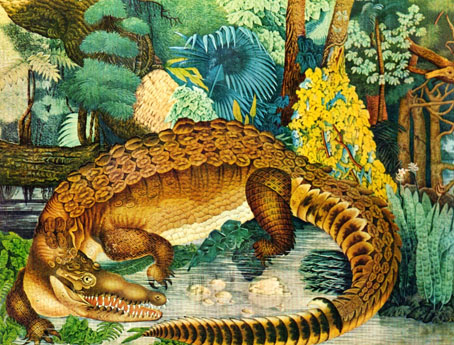
Le caïman (1849).

Two things that everyone seems able to tell you about Austrian artist Aloys Zötl is that his idiosyncratic bestiary was hailed by André Breton as a Surrealist precursor, and that Zötl’s paintings were published in a lavish edition by Ricci in 1977 with accompanying text by Julio Cortázar. Typically for a Ricci book, those editions now sell for excessive sums so we’re left to scour the web for his pictures. Considering their age and Surrealist connections its surprising that there isn’t a decent online collection anywhere. A number of prints can be found on those auction sites which blight the pictures they don’t own with watermarks. Better to look at the examples on this blog or this page at the André Breton site where the copies are small but include quotes from the Ricci volume.

Elsewhere on { feuilleton }
The fantastic art archive

Previously on { feuilleton }
Fantastic art from Pan Books

Weekend links 62

pavlishin.jpg

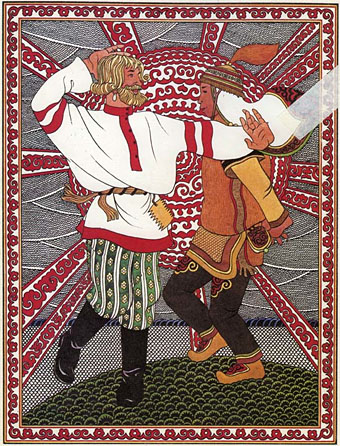
A plate from Tales of the Amur by Dmitry Nagishkin, a 1975 edition illustrated by Gennady Pavlishin.

• The week in Surrealism: Opera of the surreal gives Dalí an encore: Yo, Dalí, a previously unperformed work by Xavier Benguerel, receives its premier in Madrid. Meanwhile Tate Liverpool’s summer exhibition, René Magritte: The Pleasure Principle, is profiled here. “René Magritte has inspired more book covers than any other visual artist,” says James Hall.

If Rimbaud anticipated the Surrealists by decades, Ashbery is said to have gone beyond them and defied even their rules and logic. Yet though nearly 150 years have intervened since Rimbaud’s first declaration of independence, many readers in our own age, too, still prefer a coherence of imagery, a sameness of tone, a readable sequential message, even, ultimately, what amounts to a prose narrative broken into lines.

Lydia Davis on Rimbaud’s Wise Music.

Umberto Eco’s glimpse into the art of the novel | Return to Wonderland: an essay on Lewis Carroll’s world by Alberto Manguel | Heavy sentences by Joseph Epstein: On How to Write a Sentence and How to Read One, by Stanley Fish.

And then there’s the mystery of what happened to him for those four months in London when we have no trace of him. Rimbaud mentions Scarborough in “Promontory” and talks about “Hotels, the circular façades of the Royal and the Grand in Scarborough or Brooklyn.” Since there’s that missing period in England, people say he must have gone to Scarborough, and have even checked hotel registers for that period, but as far as I know nobody has ever found anything. Someone even checked railway and train schedules in order to pin him to this real place. I seem to remember a French writer admitting that Rimbaud was never in Brooklyn, but kind of wishfully thinking that he might have been. Which is very funny. “Rimbaud in Brooklyn”: there’s a project for someone.

A Refutation of Common Sense, John Ashberry on translating Rimbaud.

Robert Jeffrey posts a video of his nine-year-old self giving Madge a run for her money in 1991. As Boy Culture puts it: “Anyone who feebly clings to the belief that gay can be prayed away should take a look at this and give up already…” Amen.

• The mathematics of Yog-Sothoth: Richard Elwes on Exotic spheres, or why 4-dimensional space is a crazy place.

For I Will Consider My Cat Jeoffry by Christopher Smart (1722–1771).

Lesbian pulp fiction, 1935–1978 and Faber 20th century classics.

As The Crow Flies, a new album from The Advisory Circle.

New World Transparent Specimens by Iori Tomita.

79 versions of Gershon Kingley’s Popcorn.

Minor Man (1981) by The League of Gentlemen.

Dalí’s Salomé

dalisalome.jpg

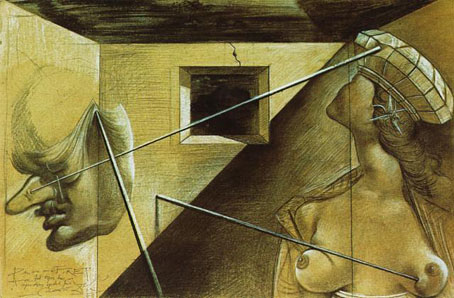
Queen Salomé (1937) by Salvador Dalí.

Of all the Surrealists, Salvador Dalí had his fingers in the most cultural pies—designing for film and theatre, writing books (including a novel, Hidden Faces), even performing occasionally, or at least making a public spectacle of himself—so it’s no surprise to find him adding to the stock of 20th-century Salomé interpretations, first in a drawing then for the stage. The stage work was something I hadn’t run across before (not since this current obsession began, anyway), a 1949 production of the Strauss opera at Covent Garden directed by Peter Brook. The now celebrated theatre director was at the outset of his career when he chose Dalí as his designer but the resultant furore shows that Brook’s ability to challenge an audience (or at least, a gaggle of theatre critics) had an early start. The critics savaged the production and the show closed after only six performances. Brook, who was sacked, had this to say:

The critics all decided that Dali and I were only out to annoy them. There, at least, I might claim that they underestimated us; if that have been our intention I think that between us we might have done much worse… (More)

Getty Images has some tantalising photos here, here and here, but I’ve not seen anything in the way of production sketches. The objections seem to have been the usual tiresomely English revulsion against anything too original, too strange or too imaginative (it’s no wonder Leonora Carrington abandoned Britain for Mexico). An article about the production from the BBC’s Music Magazine includes this detail:

In the last scene for Dali and Brooke, [Salomé] was slowly covered over by a sort of green ooze of bile that came from the head of John the Baptist, an effect of luxuriant disgust which we can imagine without too much difficulty, bearing in mind others of Dali’s images.

That piece also mentions a proposed restaging of the opera with Dalí’s designs but I’ve been unable to discover whether this took place. If anyone knows better, please leave a comment.

Elsewhere on { feuilleton }
The Salomé archive

Weekend links 60

fini1.jpg

Jean Genet (1950) by Leonor Fini.

• Bibliothèque Gay looks at a series of erotic engravings made by Leonor Fini for La Galère (1947) by Jean Genet. The author reciprocated with Mademoiselle: A Letter to Leonor Fini. At the hetero end of the erotic spectrum, Tate Liverpool will be showing a series of drawings by René Magritte produced for a proposed edition of Madame Eduarda by Georges Bataille. René Magritte: The Pleasure Principle opens next month.

George Clinton will be appearing with Nona Hendryx at the British Library on 18th June, to talk about “all things galactic”. In addition there’s a screening of John Akomfrah’s The Last Angel of History, a documentary about Afrofuturism and black science fiction. See an introduction to that here. Related: the Smithsonian’s National Museum of African American History and Culture has acquired the Parliament-Funkadelic Mothership for its collection.

• RIP Gil Scott-Heron. “Why does this colossus remain relatively unknown? Is he too political? Too uncompromising? Too angry? Too satirical? Too painful? Too playful? Too alive? Too black? Too human?” Jamie Byng in Gil Scott-Heron: poet, campaigner and America’s rough healer.

fini2.jpg

Le Fils du Maçon (1950) by Leonor Fini.

China Miéville examines alternative histories in Brian Aldiss’s The Malacia Tapestry, David Britton’s Lord Horror and Richard Curtis’s chilling dystopia, Notting Hill.

• What happened to Rolf-Ulrich Kaiser and Gille Lettmann when the Kosmische Musik dream collapsed? Find out here.

• Mlle Ghoul interviews Will Errickson of Too Much Horror Fiction about horror paperbacks, good and bad.

• Another Surrealist woman: Claude Cahun at Strange Flowers.

The Key of Hell: an eighteenth-century sorcery manual.

Partitura 001: realtime sound visualisation.

Scientific Illustration: a Tumblr.

Cosmic Slop (1973) by Funkadelic | Cosmic Slop (1991) by Material.