Weekend links 678

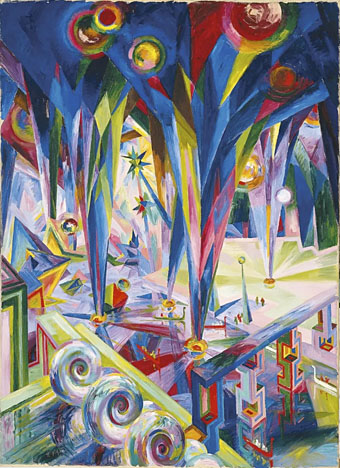
hablik.jpg

Interior of a Cathedral (1921) by Wenzel Hablik.

• The inevitable Cormac McCarthy features: “Cormac McCarthy took us beneath the surface,” says Kevin Berger at Nautilus magazine, publishers of McCarthy’s essay about the origins of language. At The Paris Review, three writers reminisce about reading McCarthy’s fiction.

• At Bajo el Signo de Libra: Bhupen Khakhar (1934–2003). “Su obra examina las implicaciones políticas y socioculturales de la homosexualidad en la India.”

Dennis Cooper’s favourite fiction, poetry, non-fiction, film, art, and internet of 2023 so far. Thanks again for the link here!

• New music: Telepathic Heights by Hawksmoor, and Golden Apples of the Sun by Suzanne Ciani & Jonathan Fitoussi.

• Mixes of the week: DreamScenes – June 2023, and isolatedmix 121: Oslated & Huinali Showcase mixed by S-Pill.

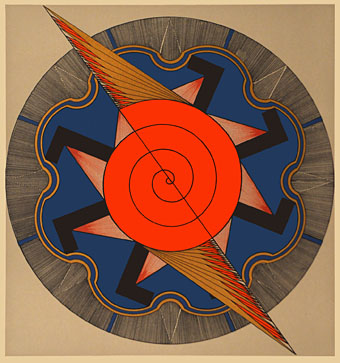
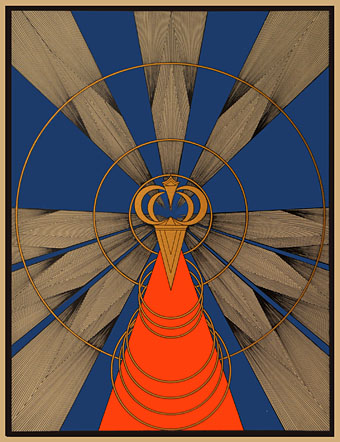
• At Unquiet Things: Crystal Castles and Harmonious Heavens: Wenzel Hablik’s Glittering Utopias.

• At Public Domain Review: Wonder and Pleasure in the Oude Doolhof of Amsterdam.

• At Spoon & Tamago: Exploring Tokyo’s Hidden Shrines.

• At Aquarium Drunkard: Bush Tetras interviewed.

Ben Chasny’s favourite albums.

• RIP Glenda Jackson.

Utopiat No. 1 (1973) by Utopia | Utopia (2000) by Goldfrapp | Utopia (2013) by Brown Reininger Bodson

Weekend links 653

clarke.jpg

The Snow Queen (1916) by Harry Clarke.

• “…blogging remains my favourite format precisely because the writing so rarely feels like labour. Liberated from the need to pitch an idea or wield credentials, blogging—for a professional writer—frees you up to address topics outside your perceived expertise. It feels like a leisure activity because it’s leisurely—a ramble across fields of culture and knowledge, during which you sneak short cuts and trespass into areas you are not meant to go. A post doesn’t have to have a destination, a point. You can bundle or concatenate several different topics, push into adjacency things that don’t obviously or naturally belong together—like oddments inside a Cornell box. You can start somewhere and end up somewhere completely different, without any obligation to tie things up neatly.” Simon Reynolds reflecting on 20 years of the blogging thing, and neatly summarising the attractions of the medium. For some of us, anyway…

• At Smithsonian Magazine: “Structural colour was first documented in the 17th century, in peacock feathers, but it is only since the invention of the electron microscope, in the 1930s, that we have known how it works.” Tomas Weber on Andrew Parker’s nanotechnology developments which are creating some of the brightest hues in the world.

• “Bring back the Cailleach, beloved Scottish goddess of winter, shaking out the snow on the land. Bring back Mother Holda, with her wild geese and her snowflakes landing on the tongue like a gift from the sky…” Yvonne Aburrow would like to see the festival of Yule returned to its anarchic origins.

Merry Christmas Mr Lawrence, an extract from a recent audience-less concert by Ryuichi Sakamoto which he says is liable to be his last.

• At Unquiet Things: S. Elizabeth posts some of the pictures that couldn’t be fitted into The Art of Darkness.

• Mix of the week: A Tribute to Manuel Göttsching by Low Light Mixes.

• It’s the end of December so it must be time for Alan Bennett’s diary.

• RIP Mike Hodges.

Vale Berfrois.

Snow (1985) by Takashi Toyoda | Snowfall (2000) by Haruomi Hosono | Snowfall (2005) by Robin Guthrie & Harold Budd

Weekend links 651

kleen.jpg

The Horror of Living (1907) by Tyra Kleen. Via

• “Voss suggests Af Klint was a pioneer of abstract painting, a label that fits in some ways – her work certainly isn’t representational in the normal sense – but jars in others. She saw her work as a spiritual calling, supercharged with meaning in ways most of her contemporaries struggled to grasp. Most, but not all. Af Klint socialised and collaborated with other visionary women. Some were artists, others were writers, but all were adherents of the new philosophies sweeping Europe in the late 19th century: spiritualism, Rosicrucianism, theosophy.” Madoc Cairns reviewing Hilma af Klint: A Biography by Julia Voss.

• “I want to insist on an amateur internet; a garage internet; a public library internet; a kitchen table internet. At last, in 2023, I want to tell the tech CEOs and venture capitalists: pipe down. Buzz off. Go fave each other’s tweets.” Robin Sloan looking for new avenues away from the corporate cul-de-sacs of social media.

• “Even when subjects take psychedelics in clinical environments devoid of nature…many of them still emerge with stronger relationships to the natural world.” Simran Sethi on the connections between psychedelic use and eco-activism.

• At A Year In The Country: A Shindig! Selection: From Celluloid Hinterlands to Children of the Stones via The Delaware Road and a Sidestep to the Parallel World of él Records.

• At Public Domain Review: Mighty Mikko: A Book of Finnish Fairy Tales and Folk Tales (1922) by Parker Hoysted Fillmore.

• “When coffee is all gone. It’s over.” Spoon & Tamago gets existential at Tokyo’s Museum of Wonky English.

The “S” Word: Spirtuality in Alternative Music is a book-length study by Matthew Ingram (aka Woebot).

• New music: Does Spring Hide Its Joy by Kali Malone (featuring Stephen O’Malley & Lucy Railton).

• Steven Heller’s font of the month is Geetype.

Spiritual Awakening (1973) by Eddie Henderson | Spiritual Blessing (1974) by Pharoah Sanders | Spiritual Eternal (1976) by Alice Coltrane

Weekend links 640

ewers-wunderwald.jpg

Aquarius (1910–1914) by Ilna Ewers-Wunderwald.

• “…they created a unique Afro-Caribbean soundscape—Battiste’s exceptional skills saw him use the studio as an instrument, voices flutter in and out, instruments shiver and shriek, over which Rebennack mutters and chants, a shaman of sorts.” Garth Cartwright on the life and works of Mac Rebennack, better known to the world as Dr John.

• Issue 3 of Man Is The Animal: A Coil Zine is now available for pre-order. I contributed to this one with a piece entitled “Singularities of Art and Nature”, an examination of the Coil discography via the Wunderkammer concept and the Musaeum Clausum of Thomas Browne.

• Among the recent arrivals at Standard Ebooks, the home of free, high-quality, public-domain texts, is Arthur Machen’s episodic and influential horror novel The Three Imposters (1895).

Media History Digital Library: “A free online resource, featuring millions of pages of books and magazines from the histories of film, broadcasting, and recorded sound.”

• At Dennis Cooper’s: Shall I, Jean Eugène Robert-Houdin, conjurer, introduce myself to you, viewer? And why not?

• At Public Domain Review: The Blood Collages of John Bingley Garland (ca. 1850–60).

• Mix of the week: Endymion, an autumnal ambient mix by The Ephemeral Man.

• “New Webb image captures clearest view of Neptune’s rings in decades.”

• New music: Of Endless Light by Cleared.

• RIP jazz giant Pharoah Sanders.

Conjuration (1977) by Tangerine Dream | Necronomicon—Conjurations (2004) by John Zorn | A Boy Called Conjuror (2020) by Teleplasmiste

Nineteen views of Zen gardens

zengarden11.jpg

Miniature Zen Garden (1895) by Unknown.

zengarden08.jpg

Ryoan-ji Temple (Mid-20th C.) by Inagaki Toshijiro.

zengarden12.jpg

Ryoan-ji Temple (Mid-20th C.) by Maeda Masao.

zengarden16.jpg

Stone Garden of Ryoan-ji Temple (c.1950s) by Ito Nisaburo.

zengarden07.jpg

Ryoan-ji Zen Garden (c.1950s) by Okuyama Gihachiro.

Continue reading “Nineteen views of Zen gardens”