Figures of Mortality: Lawrence versus Dalí

lawrence1.jpg

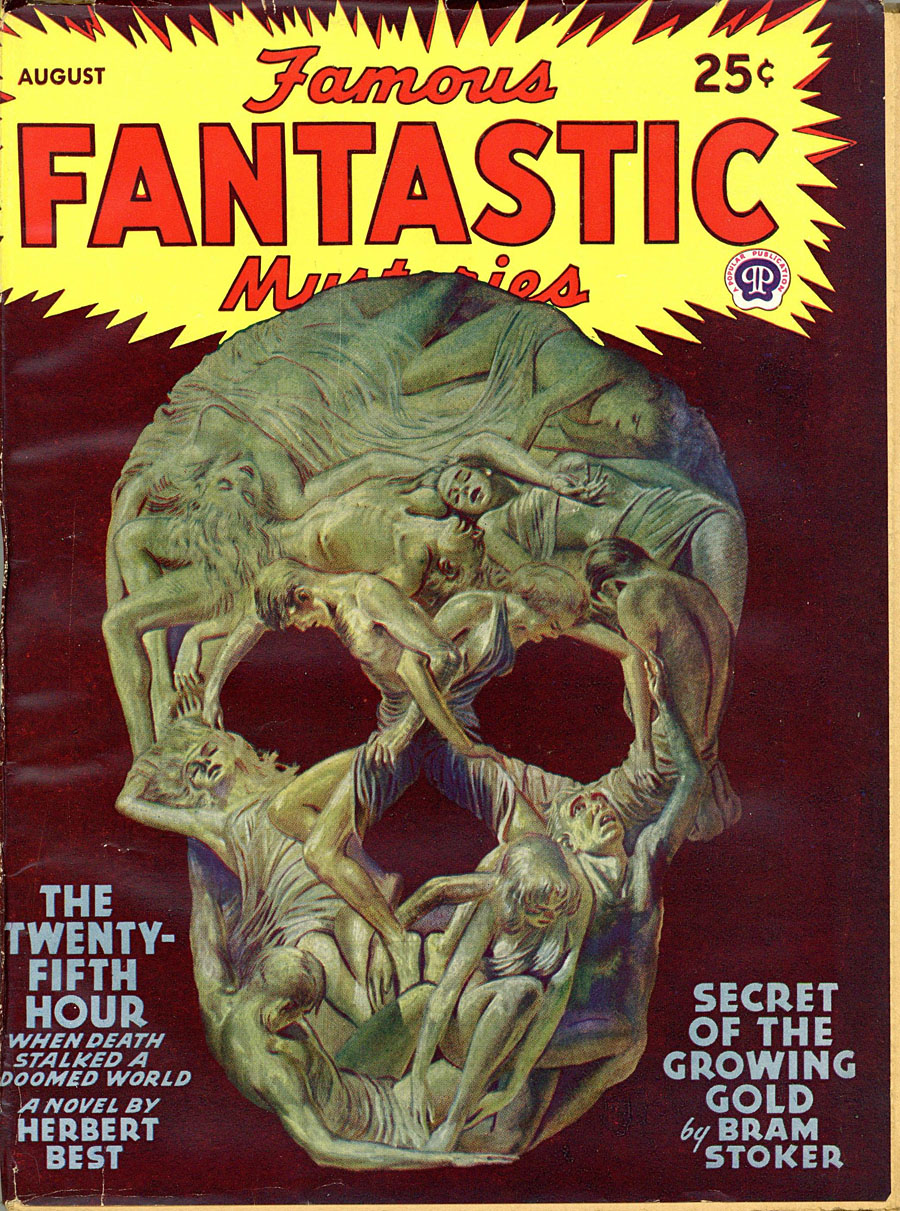
Famous Fantastic Mysteries (August, 1946).

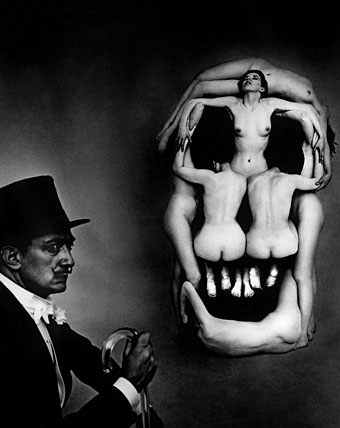
Salvador Dalí and Philippe Halsman popularised the image of a human skull created by an arrangement of bodies in Halsman’s 1951 photo-portrait of the artist, In Voluptas Mors. The assemblage, which was based on a sketch by Dalí, has been imitated by photographers and poster designers but I’ve yet to see any mention of this painted precursor by illustrator Lawrence Sterne Stevens (or “Lawrence” as he was always credited) for Famous Fantastic Mysteries in August, 1946. I’d assume the similarity is a coincidence. The subliminal skull in painting and drawing goes back at least as far as the 1890s (see this post), while Dalí was always very adept at finding and creating visual rhymes. Variations on the skull-from-figures motif appear in paintings throughout his career, one of the earliest being a minor work, Dancer – Skull, from the 1930s. Another painting, a commission for a wartime poster warning US soldiers about the hazards of venereal disease, features a pair of women, and predates Lawrence’s cover by four years.
skull_dali_halsman.jpg

In Voluptas Mors (1951).

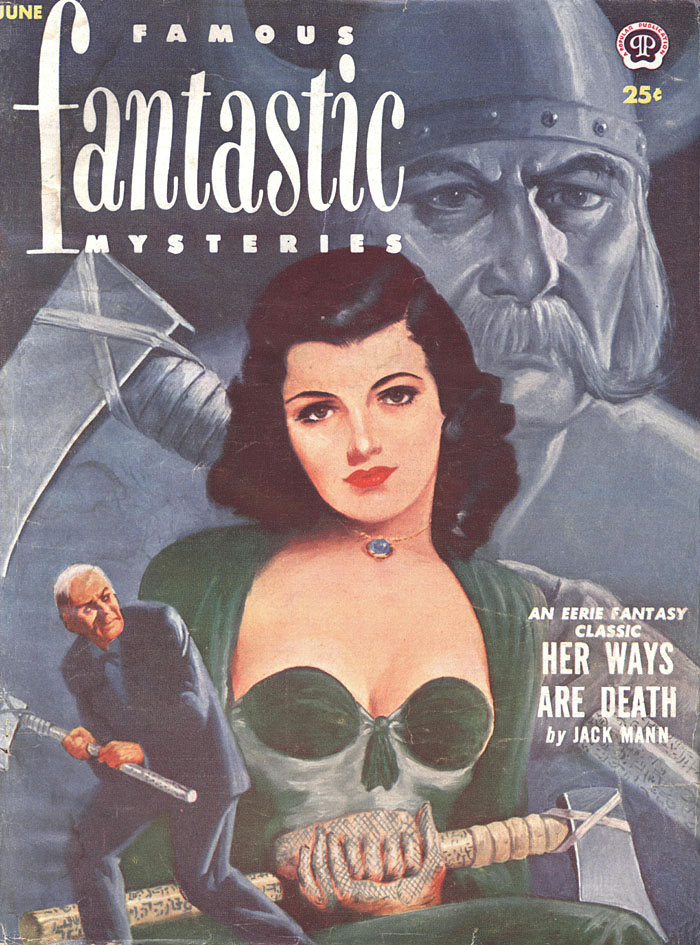
Lawrence deserves credit, however, for having created a more successful arrangement of bodies than Halsman and Dalí managed, although it’s easier to do this in a painting than it is to arrange a group of women in a studio. Some of the limbs of Lawrence’s figures are extended or foreshortened, while the contrast between light and shade has been reduced to aid the composition. Lawrence painted a further variation on the subliminal skull in a cover for Famous Fantastic Mysteries the year after the Dalí/Halsman portrait, while Dalí himself returned to the theme with Skull of Zurbarán in 1956.
lawrence2.jpg

Famous Fantastic Mysteries (June, 1952).

Previously on { feuilleton }
Être Dieu: Dalí versus Wakhévitch
Chance encounters on the dissecting table
Salvador Dalí’s Maze
Dalí in New York
Dalí’s discography
Soft Self-Portrait of Salvador Dalí
Mongolian impressions
Hello Dali!
Dirty Dalí
The skull beneath the skin
Impressions de la Haute Mongolie revisited
Weekend links 553

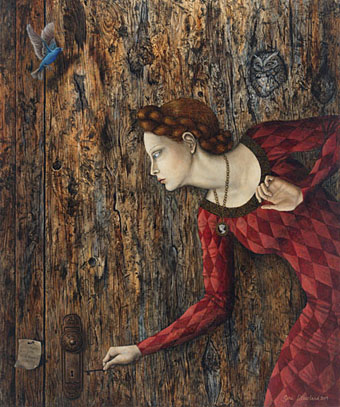
litherland.jpg

The Unknown Room by Gina Litherland.

• “He admired abstract painters like Mark Rothko, but also derived inspiration from the far less hip Pre-Raphaelite artists of the mid-1800s, especially the painter and poet Dante Gabriel Rossetti. Budd’s dreamy early breakthrough Madrigals of the Rose Angel, which featured a segment titled Rossetti Noise, was deliciously out of step with the hard-edged music of the 1970s.” Geeta Dayal on the late Harold Budd.

• “Here the experience is transformed into something more fabulist, and much more interesting than the memoir. In the novel, delusions of grandeur become real powers.” Elisa Gabbert on Leonora Carrington and The Hearing Trumpet.

• “The Japanese especially loved 3-inch CDs and there are many different examples throughout the 90s and 00s of them being used to great effect as promos.” DJ Food begins a series of posts devoted to one of my favourite music formats.

• New music: Viia, 24 minutes of live synthesis by Kikimore; Music For The Open Air, a free album of ambient music by K. Leimer (Soundcloud login required to download tracks).

• Sensory, Imaginative, and Psychic: S. Elizabeth interviews artist Gina Litherland.

• Puppets, Birds & Wycinanki: Clive Hicks-Jenkins talks to Anna Zaranko.

• Mix of the week: a 3-hour tribute to Monolake by Funky Jeff.

• At Wormwoodiana: The Flint Transmissions.

• At Dennis Cooper’s: Watery, Domestic.

• At Strange Flowers: 21 books for 2021.

Edge Of The Unknown (1973) by Nik Pascal | Unknown Passage (1999) by Robert Musso | The Unknown, Part 2 (2005) by Robin Guthrie & Harold Budd

Beksiński at Mnémos

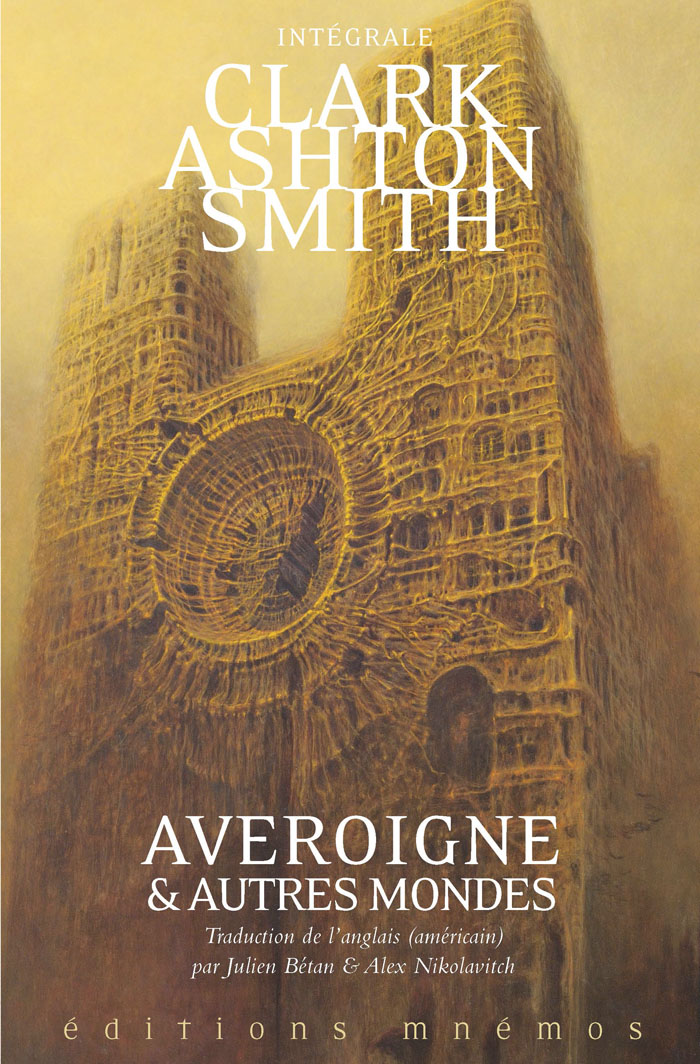
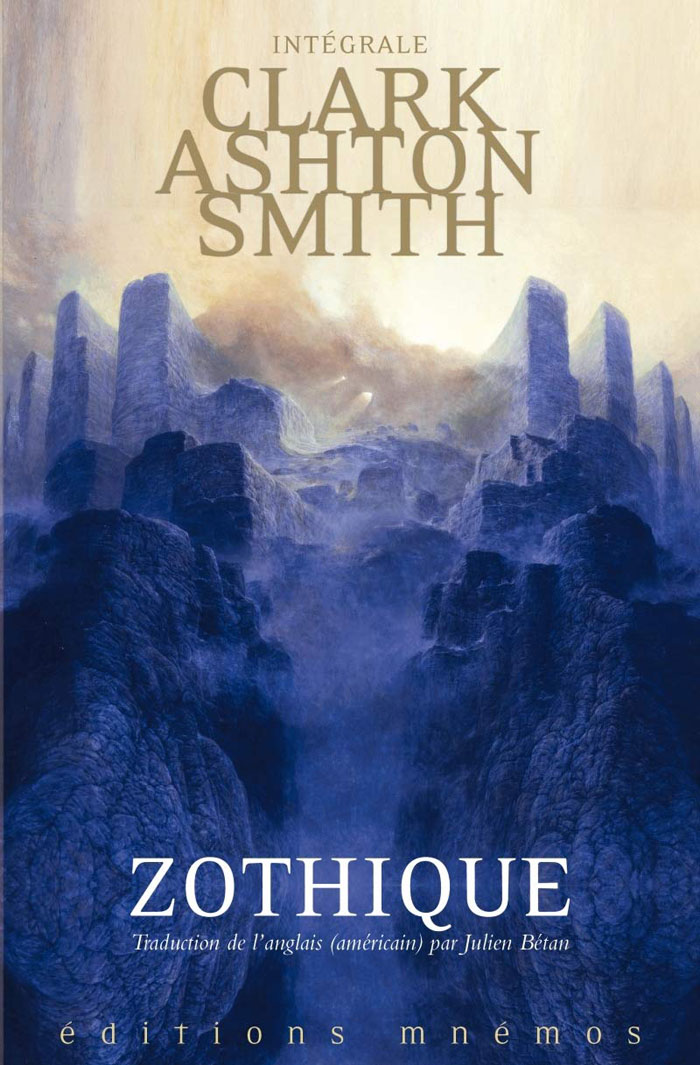
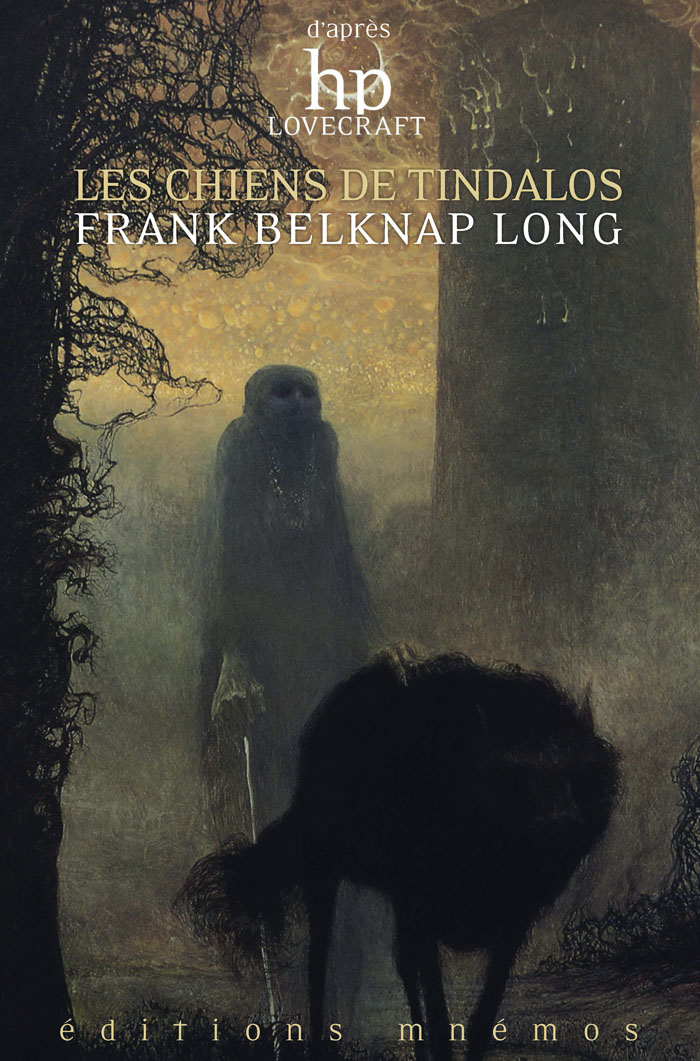
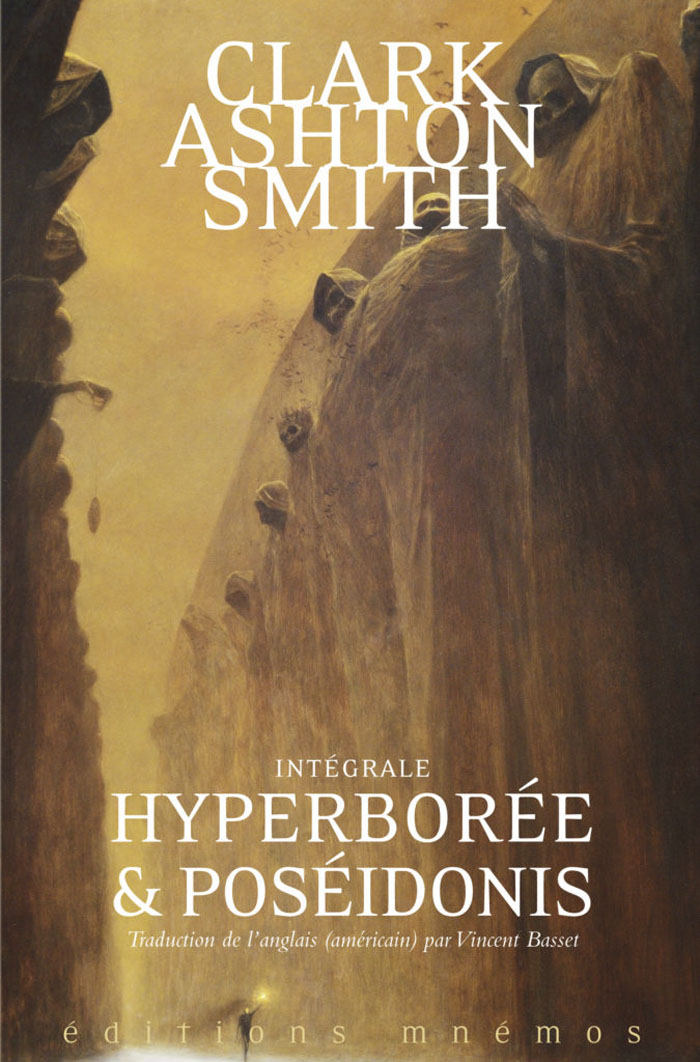
mnemos2.jpg

More book covers. Mnémos is a French publisher of horror, fantasy and science fiction some of whose recent titles have their covers filled with paintings by the great Polish artist Zdzisław Beksiński. The pairings of book and picture aren’t always ideal but I appreciate the impulse to choose art from other sources than genre artists. Omni magazine adopted a similar approach in its early issues, matching stories and science features with paintings by artists who are often grouped together as Fantastic Realists: Mati Klarwein, Ernst Fuchs, HR Giger, Bob Venosa, De Es Schwertberger and others. Beksiński’s work was less visible in the late 1970s than that of his contemporaries but one of his (always untitled) paintings did appear in a 1993 issue of the magazine.

mnemos1.jpg

Of the Mnémos covers the one for the collection of Averoigne stories by Clark Ashton Smith is the most immediately fitting, Averoigne being an invented region of France that suits a painting of a Gothic cathedral turned fibrous and fungal. The painting for Zothique, on the other hand, could easily be used for HP Lovecraft’s At the Mountains of Madness, while the dog-like creature on the cover of the Frank Belknap Long collection is nothing like the author’s trans-dimensional hounds. Mnémos have given Lovecraft his own Beksiński covers in a seven-volume collection of translated fiction, Lovecraft, l’intégrale prestige, but there doesn’t seem to be a page anywhere that shows the individual books.

mnemos4.jpg

What the artist would have made of all this attention may be gauged by comments like this one from The Fantastic Art of Beksiński (1998): “Meaning is meaningless to me. I do not care for symbolism, and I paint what I paint without meditating on a story.”

mnemos3.jpg

For more about the anti-symbolist, see The Cursed Paintings of Zdzisław Beksiński by Marek Kepa.

Elsewhere on { feuilleton }
The book covers archive
The fantastic art archive

Previously on { feuilleton }
Cosmic music and cosmic horror

02021

ernst.jpg

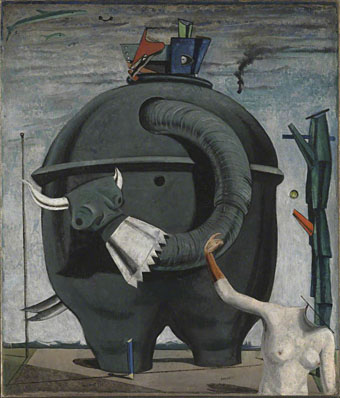
The Elephant Celebes (1921) by Max Ernst.

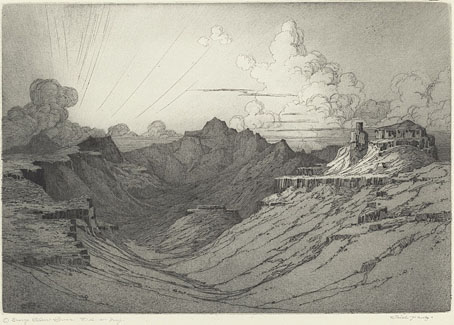
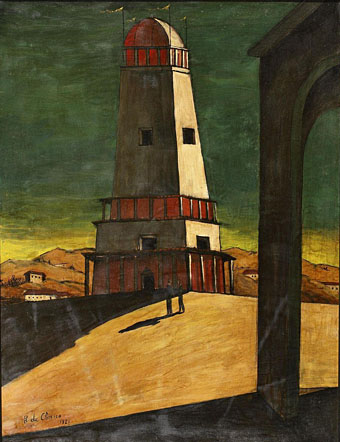
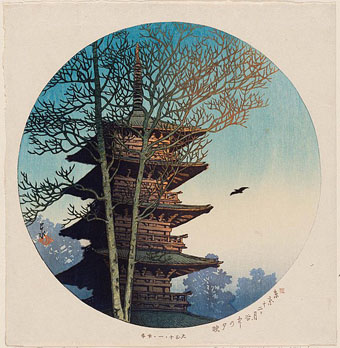
Happy new year. 02021? Read this.

burr.jpg

Desert Sunset (1921) by George Elbert Burr.

dechirico.jpg

The Great Tower (1921) by Giorgio de Chirico.

hasui.jpg

Evening Glow at Yanaka (1921) by Hasui Kawase.

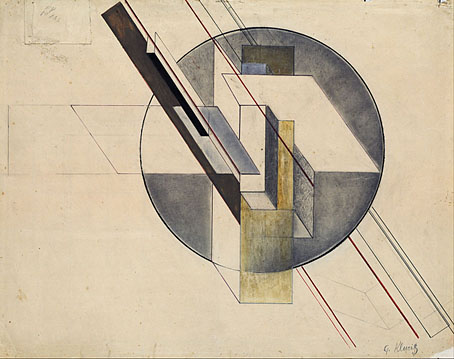
klucis.jpg

Construction (1921) by Gustavs Klucis.

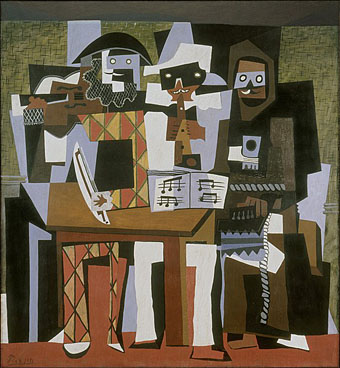
picasso.jpg

Three Musicians (1921) by Pablo Picasso.

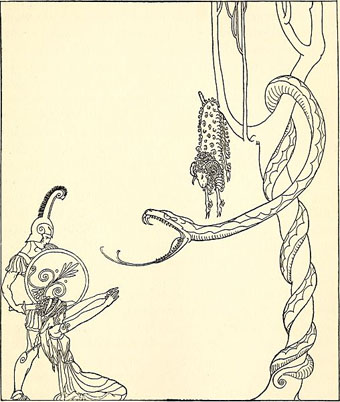
pogany.jpg

Illustration by Willy Pogány for The Golden Fleece and the Heroes Who Lived Before Achilles (1921) by Padraic Colum.

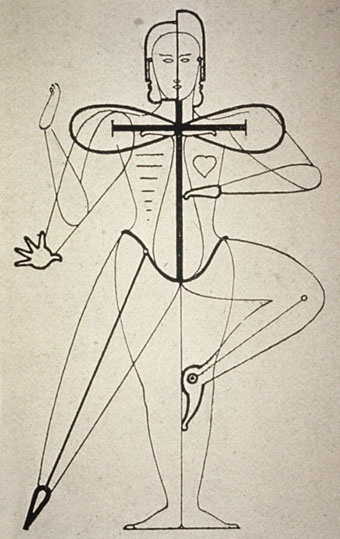
schlemmer.jpg

Sketch of Figural Movement for Dance (1921) by Oskar Schlemmer.

Weekend links 549

fuseli.jpg

The Shepherd’s Dream, from Paradise Lost (1793) by Henry Fuseli.

• “16 April. A card from Tom King with news of the tattoo of me that he had put on his arm: ‘The tattoo remains popular, though bizarrely one person thought it was of Henry Kissinger. It also makes for an amusing conversation during intercourse.’ This suggests the intercourse might be less than fervent, my name in itself something of a detumescent.” Alan Bennett‘s diary for the year is always a highlight of December.

• “I know that if I don’t write, say on holiday, I begin to feel unsettled and uneasy, as I gather people do who are not allowed to dream.” The Paris Review removed its paywall on their Art of Fiction interview with JG Ballard.

• “A biologist and composer have turned the aurora borealis into sound to create a magic melding of art and nature.”

If we let it, dreaming gradually erodes wake centrism—that waking consciousness to which Westerners in particular are inordinately attached. You might think of wake centrism as a pre-Copernican-like worldview that presumes waking to be the centre of the universe of consciousness, while relegating sleeping and dreaming to secondary, subservient positions. It is a matrix, a cultural simulation evolved to support adaptation, yet it inadvertently limits our awareness. Wake centrism is a subtle, consensual, sticky and addictive over-reliance on ordinary ways of perceiving that interfere with our direct personal experience of dreaming. To paraphrase the 16th-century British clergyman Robert Bolton, it is not merely an idea the mind possesses, but an idea that possesses the mind. Wake centrism is a flat-world consciousness. It warns us to stay away from the edges, to refrain from dialoguing with dreams and the unconscious.

Rubin Naiman on sleep and dreams

96th of October: an online fiction magazine dedicated to “tales of the extraordinary”.

• “Punk artist Barney Bubbles joins Manet among works given to UK public in 2020.”

• The results of the Nature Photographer of the Year contest for 2020.

• A list with a difference: Twenty Four Psychic Pop Relics by Woebot.

• Merve Emre on how Leonora Carrington feminized Surrealism.

• Mix of the week: XLR8R Podcast 675 by Teebs.

I Had Too Much To Dream (Last Night) (1966) by The Electric Prunes | The Room Of Ancillary Dreams (2000) by Harold Budd | Blue Dream (2001) by Sussan Deyhim & Richard Horowitz