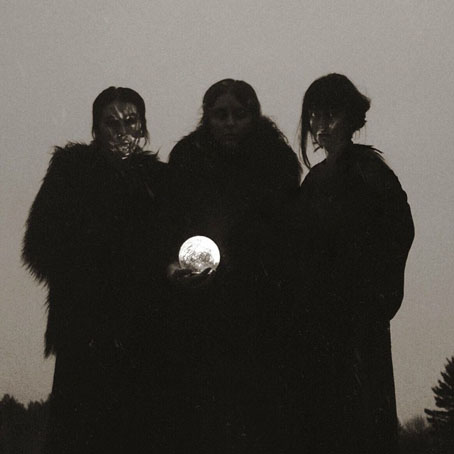
A mix for Halloween: Teatro Grottesco

Teatro Grottesco by Feuilleton on Mixcloud

Presenting the tenth Halloween playlist, and another mix of my own. This year the compilation honours the recent Penguin collection of stories by Thomas Ligotti, hence the title and dedication. Whether a Ligotti theme can be perceived in the arrangement depends on the familiarity of the listener with Ligotti’s brand of weird fiction, but even if the mix communicates little in this direction having something to aim for helped me narrow the focus. The presence of David Lynch-related pieces is justified by Ligotti’s inclusion in a collection of fiction inspired by Lynch’s films.

As to some of the other selections: French composer Igor Wakhévitch is a {feuilleton} favourite whose orchestral works are unique, bizarre and often disturbing; Jean-Claude Eloy is another French composer who (like Tod Dockstader) has used electronics to create doom-laden dronescapes; and the piece by Sinoia Caves is an extract from the nightmarish bad-trip sequence in Beyond the Black Rainbow, a film directed by Panos Cosmatos.

Recent changes at Mixcloud mean that listeners can no longer see a tracklist before playback so here’s the detail:

Alan R. Splet, David Lynch, Ann KroeberTextured Night Wind Gently Rises And Falls (2000)
Igor WakhévitchErgon (1970)
CoilCardinal Points (1988)
Tod DockstaderMyst (2005)
Julee CruiseInto The Night (1989)
Jean-Claude EloyFushike-e (1er Extrait) (1979)
Mica LeviLonely Void (2014)
Stars Of The LidTaphead (1996)
Belbury PolyA Thin Place (2005)
Einstürzende NeubautenArmenia (1983)
Igor WakhévitchAmenthi (Attente De La Seconde Mort) (1973)
Sinoia Caves1966 – Let The New Age Of Enlightenment Begin (2014)
Angelo BadalamentiDark Mood Woods/The Red Room (2007)
Bohren & Der Club Of GoreThe Art Of Coffins (2002)

Previously on { feuilleton }
A mix for Halloween: Unheimlich Manoeuvres
A mix for Halloween: Ectoplasm Forming
A playlist for Halloween: Hauntology
A playlist for Halloween: Orchestral and electro-acoustic
A playlist for Halloween: Drones and atmospheres
A playlist for Halloween: Voodoo!
Dead on the Dancefloor
Another playlist for Halloween
A playlist for Halloween

The Monstrous

monstrous01.jpg

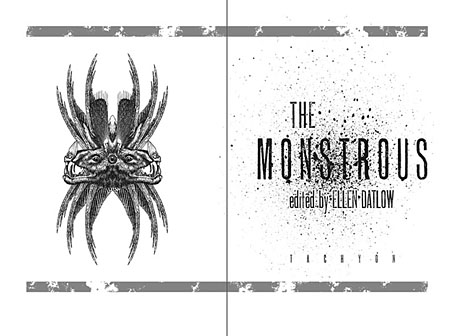
One of the books I was working on over the summer is officially published this week. The Monstrous is a horror anthology edited by Ellen Datlow, and the third Datlow collection that I’ve designed for Tachyon Publications after Lovecraft’s Monsters (2014) and Darkness: Two Decades of Modern Horror (2010).

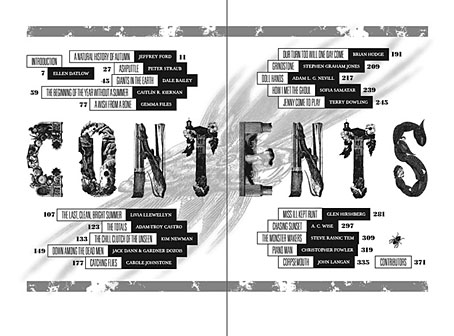
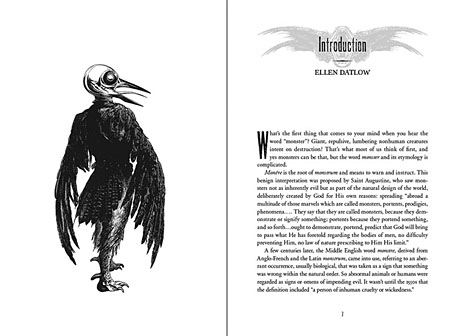
My work on this new collection isn’t as full-on as for the Lovecraft volume: I designed the interior, and also illustrated each story but this time many of the illustrations are details or vignettes rather than full-page pictures. There are still 20 stories and over 20 illustrations, however, illustrating pieces by Jeffrey Ford, Peter Straub, Dale Bailey, Caitlín R. Kiernan, Gemma Files, Livia, Adam-Troy Castro, Kim Newman, Jack Dann & Gardner Dozois, Carole Johnstone, Brian Hodge, Stephen Graham Jones, Adam L. G. Nevill, Sofia Samatar, Terry Dowling, Glen Hirshberg, A. C. Wise, Steve Rasnic Tem, Christopher Fowler, and John Langan. Not everything here is a monster in the common sense of that word, the collection explores monstrousness in many different forms, from Sumerian demons and Japanese ghosts to Peter Straub’s disturbing portrait of a psychotic school teacher.

monstrous02.jpg

Missing from this selection of pages is additional pictorial material from Fortunio Liceti’s De Monstris (1665). The capitals on the contents pages are the collaged letterforms by Roman Cieślewicz taken from Dover’s book of bizarre and ornamental alphabets.

monstrous03.jpg

Continue reading “The Monstrous”

Metzengerstein

satty.jpg

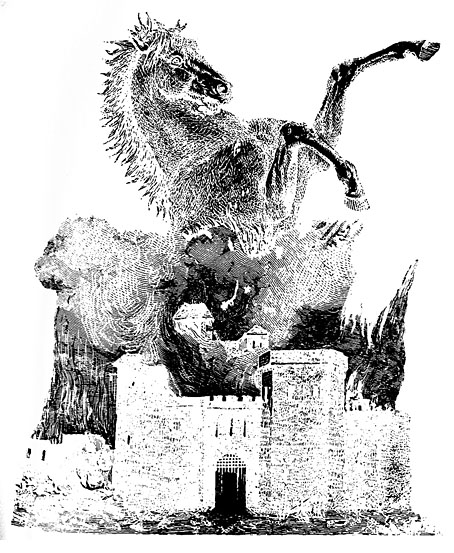
Metzengerstein by Wilfried Sätty.

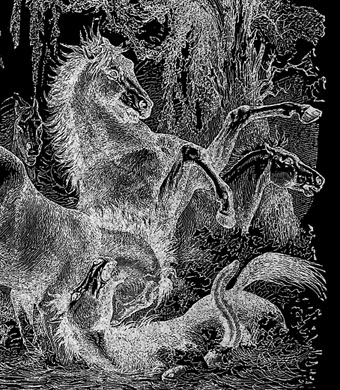
One of the horses in yesterday’s post seemed familiar until I realised it had been used by Wilfried Sätty for his final Metzengerstein illustration in The Illustrated Edgar Allan Poe (1976). This has been happening a lot since I started delving into the book scans at the Internet Archive, Sätty’s collage sources leaping abruptly from old engravings. The horse is a good example of Sätty’s evolved approach to collage which often reversed the printing of assembled artwork, or used a printing press (or PMT process) to duplicate and mirror his collage elements.

Not all Poe illustrators bother with this Gothic pastiche, and those that do don’t always provide an effective rendering of the climax when the clouds of smoke above a smouldering castle assume the form of a colossal horse. Byam Shaw’s illustration is typical, with the horse standing inertly above the flames. Sätty’s picture only occupies half a page but is much more successful, as are many of the other illustrations in a volume that remains one of the very best Poe collections, and the finest of Sätty’s books.

horses3.jpg

Previously on { feuilleton }
The original Gandharva
The Occult Explosion
Wilfried Sätty album covers
Nature Boy: Jesper Ryom and Wilfried Sätty
Wilfried Sätty: Artist of the occult
Illustrating Poe #4: Wilfried Sätty
Gandharva by Beaver & Krause

Weekend links 280

crisafi.jpg

Keepers of the Moon by Bill Crisafi.

• More Thomas Ligotti for obvious reasons: Weird Fiction Review now has two Ligotti interviews, one from 2011, and a new one prompted by the Penguin edition of his stories. Also at Weird Fiction Review, two Ligotti narratives: The Night School, and The Red Tower. The latter demonstrates how weird fiction can dispense with character and story and still have a powerful effect.

• Related to the above: Terrors supernatural and psychological: Laird Barron on Ray Russell’s The Case Against Satan; Russell’s novel is also being reprinted by Penguin this month. And at Dangerous Minds: a collection of vintage dolls and ventriloquist dummies.

• “Time and again his books—even as they tell of remote planets and their inhabitants—foresee something perplexingly close to our present-day society, from visionary constructions to machines of destruction.” Strange Flowers on Paul Scheerbart.

Coil’s out-of-print discography gets a career-spanning reissue through Threshold Archives. Related: Russell Cuzner interviews Thighpaulsandra.

• Mixes of the week: The Ivy-Strangled Path Vol. XI by David Colohan, and Sounds From Beyond (October 2015) by Glossop Record Club.

Bill Crisafi: Artist, Dreamer, Feral Mystic. An interview with the artist by S. Elizabeth for Dirge magazine.

• Also being given the revenant treatment, out-of-print short stories by Aleister Crowley.

Alex Mar on the powerful appeal of modern witchcraft—even for a skeptic.

A Rest Before The Walk is a new album by Keith Seatman.

The Wounded Kings set out their stall at Bandcamp.

The Witch Queen Of New Orleans (1971) by Redbone | Witch (1977) by Goblin | Ditch Witch (2009) by Pink Mountain

MC Escher book covers

escher08.jpg

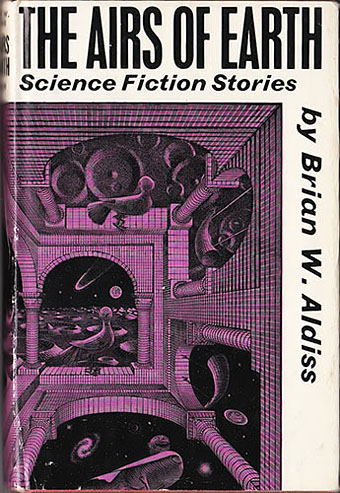
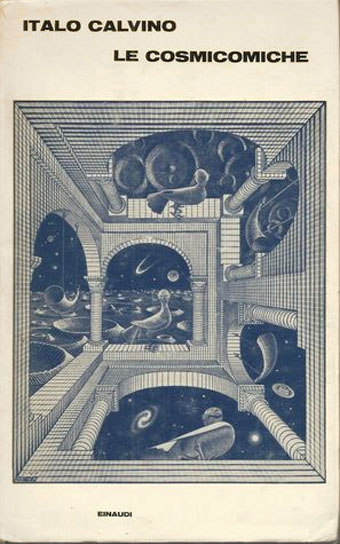
1963. Art: Other World (1947).

MC Escher’s prints have been touring the UK this year: a few months ago they were in Scotland, this month they can be seen at the Dulwich Picture Gallery in London. The renewed attention prompted the BBC to produce a documentary, The Art of the Impossible: MC Escher and Me, in collaboration with Professor Roger Penrose. One of the programme researchers saw my earlier post about the use of Escher’s work on album covers, and asked if I wanted to appear on camera talking about this, something I politely refused to do. I’m happy to hold forth from a keyboard, however, so here’s a post about some of the books that have used Esher’s work to decorate their covers. Most of these are fiction but there must be many more non-fiction titles—especially in the fields of science and mathematics—that borrow Escher’s prints.

escher09.jpg

The first edition of Calvino’s comic stories from 1965.

escher10.jpg

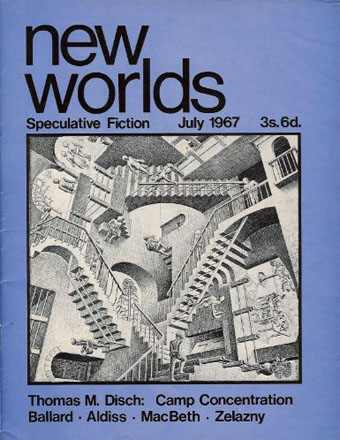
Art: Relativity (1953).

Not a book but editor Michael Moorcock has claimed that this was the first UK magazine to print any of Escher’s work.

Continue reading “MC Escher book covers”