Progressive American Architecture

progressive5.jpg

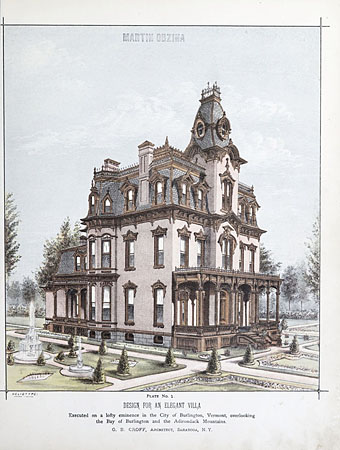
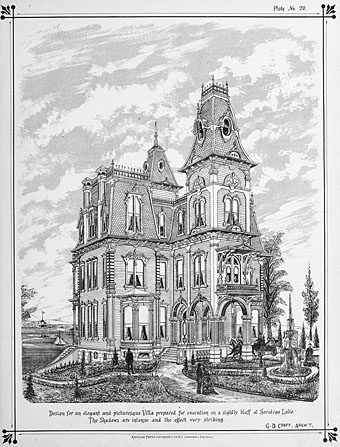
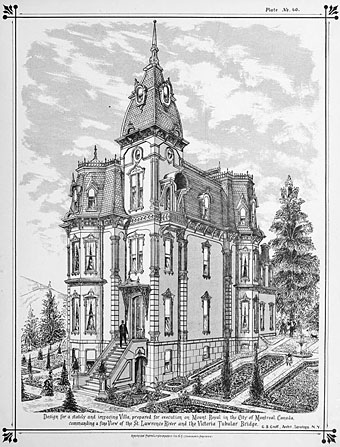
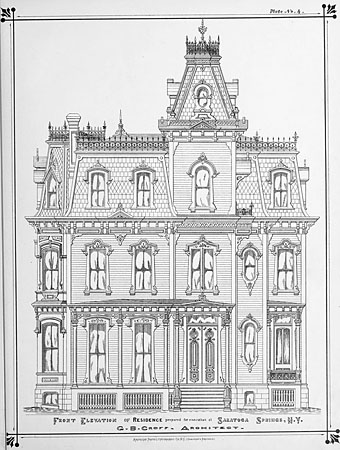
The architecture in Gilbert Bostwick Croff’s book of building designs may have been considered “progressive” in 1875 but seen today most of these buildings scream “haunted house”, or at least, that peculiar American variety of the same as popularised by Psycho, The Addams Family and countless other films and cartoons. Whether old or new, to European eyes these houses have always looked strange, being an exaggerated 19th-century variation of certain forms of Continental architecture that you wouldn’t find anywhere in Europe. Croff’s examples are more exaggerated than usual with their elongated verticals and barbed ornamentation. Seventy years later, with the ravages of time and neglect afflicting their splendour, those that remained standing would look distinctly sinister amid the neat suburbs that grew around them, hence their transmutation into the archetype of the haunted house. Croff even predicts the future status of the style in a note on one of his designs: “The Shadows are intense and the effect very striking.” His book contains almost 100 different plans and architectural details. Browse or download it here.

progressive1.jpg

progressive2.jpg

progressive3.jpg

progressive4.jpg

Weekend links 486

magma.jpg

Magma concert poster, 2017. Art by Jofre Conjota.

The Dream Foundry is a new venture with a mission “to bolster and sustain the nascent careers of professionals working in the field of speculative literature.” This includes artists as well as writers, and to this end I was asked to answer a few questions about my work as a creator of book covers. I also offer some advice about visibility as an artist which I tried not to hedge with too many caveats. Related: my cover for The Resurrectionist of Caligo by Wendy Trimboli & Alicia Zaloga was one of the covers of the month at Muddy Colors.

• “…for a band that were so compositionally advanced, they were adept at producing primordially insistent and hypnotic rhythms.” John Doran on Magma (again), appraising the band’s music and history before presenting Christian and Stella Vander with questions from appreciative musicians.

• Mixes of the week: FACT mix 731 by Meemo Comma, mr.K’s Soundstripe vol 2 by radioShirley, The Ivy-Strangled Path Vol. XIX by David Colohan, and The Pumpkin Tide by Haunted Air.

• At Dangerous Minds: Roddy McDowall reads HP Lovecraft’s The Outsider and The Hound. Related: David McCallum reads HP Lovecraft’s The Dunwich Horror and The Haunter of the Dark.

• “Mathematics is not unique in drawing out charlatans and kooks, of course…” David S. Richeson on cranks, past and present.

• “I plan to take psychedelics again…” Helen Joyce, the finance editor of The Economist, takes a trip.

• The City of Light and its shadows: Brassaï’s Paris.

• At Dennis Cooper’s: Dennis Hopper Day.

Paris (1958) by Perez Prado And His Orchestra | Paris 1919 (1973) by John Cale | Paris 1971 (1971) by Suzanne Ciani

Something from Below

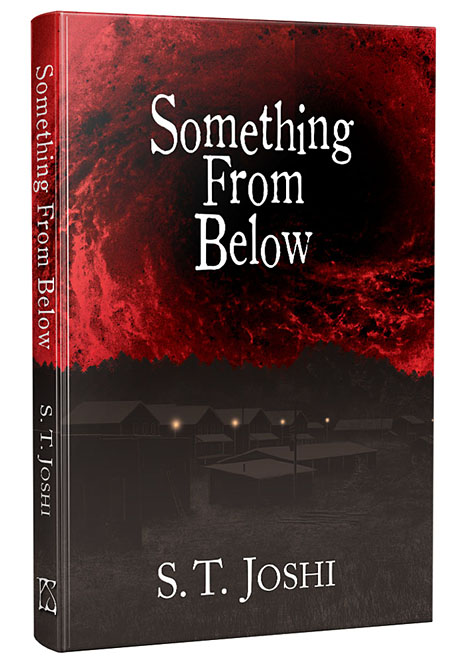
My first encounter with author, editor and Lovecraft biographer ST Joshi was in the form of an artwork request that arrived out of the blue in the late 1980s. My comic-strip adaptation of The Haunter of the Dark had just been published in a large-format edition by Caermaen Press, a small imprint run by Roger Dobson and Mark Valentine, and this prompted a flurry of interest among weird-fiction enthusiasts in Britain and the USA. Joshi was editing Lovecraft Studies for Necronomicon Press at the time, and asked if I’d be willing to contribute illustrations, something I ended up not doing for a variety of reasons. I always felt bad about this, and admitted as much when we eventually met at the Providence NecronomiCon in 2015, so my cover art for his new cosmic-horror novella may be regarded as a kind of recompense.

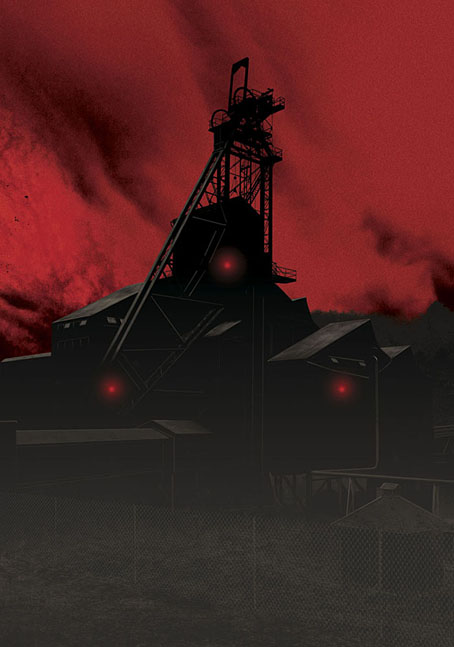
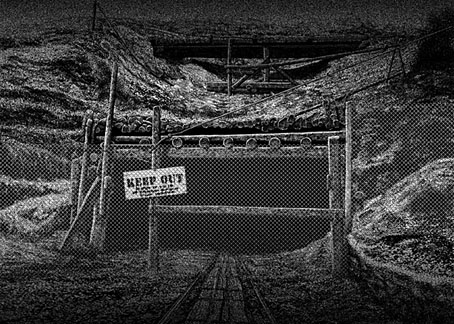
Something from Below is horror with an industrial setting and a Lovecraftian slant, hence the sinister coal mine dominating the artwork:

When 22-year-old Alison Mannering returns to her home in northeastern Pennsylvania after college, she finds a troubling situation. Her father, Guy Mannering, a longtime coal miner, has died recently under suspicious circumstances, and her mother refuses to provide any details of his passing. Alison feels she has no option but to investigate the matter herself, enlisting her high school sweetheart, Randy Kroeber, as well as Randy’s twin sister, Andrea called Andy, to assist her… (more)

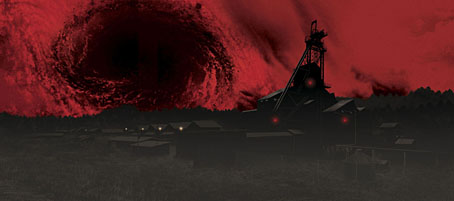
The brief for this one was to create a wraparound cover without showing anything overtly monstrous, something I was happy to do since I dislike horror covers that reveal too much. In addition to the wrap I also produced a black-and-white piece for the inner boards. As is evident from the pictures above, the artwork was flipped around in the design but that’s okay, it works both ways. The coal mine is the central location, however.

Something from Below is published this month by PS Publishing in signed and unsigned hardcovers.

Elsewhere on { feuilleton }
The Lovecraft archive

Weekend links 484

qadiri.jpg

Alien Technology (2014) by Monira Al Qadiri.

• “William S. Burroughs wrote, in a long, zigzag ode: ‘You can hear metal think in the electromagnetic fields of Takis sculpture.'” Geeta Dayal on the sound sculptures of the late Panayiotis Vassilakis (1925–2019), better known as Takis.

• “Everything about this song is mysterious, from the creation to the lyrics to where it played on the radio…” David Browne on The Unsolved Case of the Most Mysterious Song on the Internet.

Moebius made many illustrations of Jimi Hendrix. Related: Giraud-Moebius pour le disque: 33 tours et plus dans les étoiles.

• London arts venue the Horse Hospital (where some of my work was exhibited a couple of years ago) is fundraising again.

• Sam Gafford: Number One—The Larch: John Linwood Grant remembers the late author, editor and friend.

• Mixes of the week: Cosmique Français by Tarotplane, and Secret Thirteen Mix 297 by Rosa Damask.

• More Magma: the group in live performance in 2009 playing the end of De Futura.

• At Dennis Cooper’s: The Horror Films of Terence Fisher Day.

Pye Corner Audio performs at the state51 Factory.

• A demo of Colour Me In by Broadcast.

• RIP Malcolm Whitehead.

• Alien Activity From The 45th Parallel (1978) by Cellutron & The Invisible | Alien (1981) by Ende Shneafliet | Alien Loop (2014) by Mica Levi

The Gourmet by Kazuo Ishiguro

gourmet1.jpg

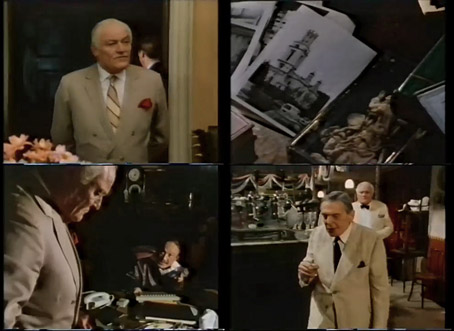
The Gourmet (1986), an original television drama written by Kazuo Ishiguro and directed by Michael Whyte, has long been in the top ten of TV films I was hoping would turn up on YouTube, and here it is at last. With a running time of under 50 minutes this is shorter than one-off dramas tend to be but its plus points are considerable, the first of which is its being an early yet neglected work by the Nobel Prize-winning author. The gourmet of the title is Manley Kingston, played by the inimitable Charles Gray in one of his few leading roles. Gray inhabits the part of the preoccupied and obsessed Kingston so well the character might have been created with him in mind; he’s even more imperious and commanding here than he was as Mycroft Holmes in the Granada TV Sherlock Holmes adaptations being made around the same time.
gourmet2.jpg

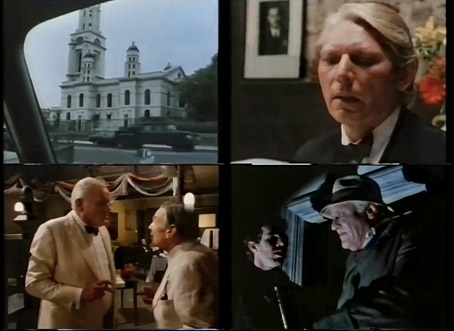
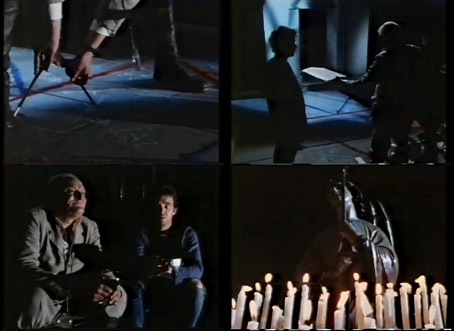
Ishiguro’s script presents us with a world of competitive international gourmets whose palettes are so jaded that their search for new tastes propels them to increasingly outré extremes, up to and including the consumption of human flesh. In a lesser drama this might be the shocking end revelation but the long-pig scene is a brief and wordless reminiscence on the way to Kingston’s ultimate gustatory experience, the devouring of a ghost. The film is almost worth watching solely for the moment when Gray enunciates the words “Not of this Earth?!” after being informed of the spectral meal by one of his gourmet associates. Another associate, played by David Rappaport (in an upper-class role for once, albeit with a dubbed voice), provides Kingston with the directions to a church where a suitable phantom may be found. The building isn’t identified but Hawksmoor aficionados will recognise it as St. George in the East, an apt location not only for the sinister quality the Hawksmoor churches acquired in the wake of Peter Ackroyd’s celebrated novel, but also for the building’s smaller towers which are always described as resembling pepper pots. I used to think the Hawksmoor church was a coincidental choice of location but Ackroyd’s novel had been discussed and partly dramatised on The South Bank Show the year before The Gourmet was made; the actor who played the architect’s hapless assistant in the dramatisation was Mick Ford, the same actor who appears in The Gourmet as a homeless man enjoined by Kingston to assist him in his ghost-catching ritual.
gourmet3.jpg

Despite its grotesque elements, The Gourmet isn’t an overt work of horror, which no doubt explains why the film is never mentioned in lists of neglected TV dramas. Watching it again I was less interested in the genre elements than the interplay between Kingston’s abstracted fervour and the human beings he ignores while pursuing his quarry. The latter encompasses the fellow gourmets who regard him as a world authority, his wife (who he doesn’t kiss when he leaves the house), his chauffeur (whose name he never remembers), and the derelicts who are also led to the church by hunger, queuing for a bowl of soup and a bunk in the crypt. Seen today, the gulf of inequality, and the self-indulgence of Kingston’s pursuit for the rarest of foods while people around him are starving, may be taken as a critique of Thatcherism as well as a foretaste of the future. The scenes outside the church show the East End of London as it was before its ongoing and unending redevelopment, when a new breed of rapacious appetites would arrive to sweep the homeless from those desirable riverside properties. The real ghost-eaters, the devourers of London’s history, have been consuming the capital ever since. (Thanks to Amelia for alerting me to this!)

Previously on { feuilleton }
Terror and Magnificence