Pierrot in Turquoise, or The Looking Glass Murders

pierrot.jpg

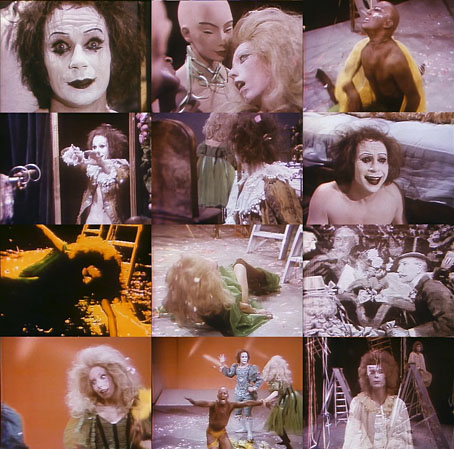
A final Bowie post included here as much for its connections to Derek Jarman. Pierrot in Turquoise was a pantomime by Lindsay Kemp based on the characters of the Commedia dell’arte, and broadcast by Scottish Television in 1970. David Bowie is “Cloud”, a non-commedia character who provides songs while perched atop a step-ladder. The smaller independent TV stations like Scottish often used to fill out their end-of-day programming with oddities such as this, the kind of thing that would have been screened once to a bewildered audience then forgotten.

Kemp’s production reverses some of the commedia traditions by having his Pierrot challenge Jack Birkett’s Harlequin, the exchange of roles taking place after a Cocteau-like journey through a mirror. Pierrot lacks a hat but otherwise his costume resembles the one that Bowie wore in the Ashes to Ashes video. Two years and a gulf of reinvention separate this little pantomime from Kemp and Bowie’s next encounter in Mick Rock’s video for John, I’m Only Dancing, a film the BBC found too weird and/or queer, and refused to show.

Previously on { feuilleton }
Flowers: A Pantomime for Jean Genet
Lindsay Kemp’s Salomé again

MMMM

batty.jpg

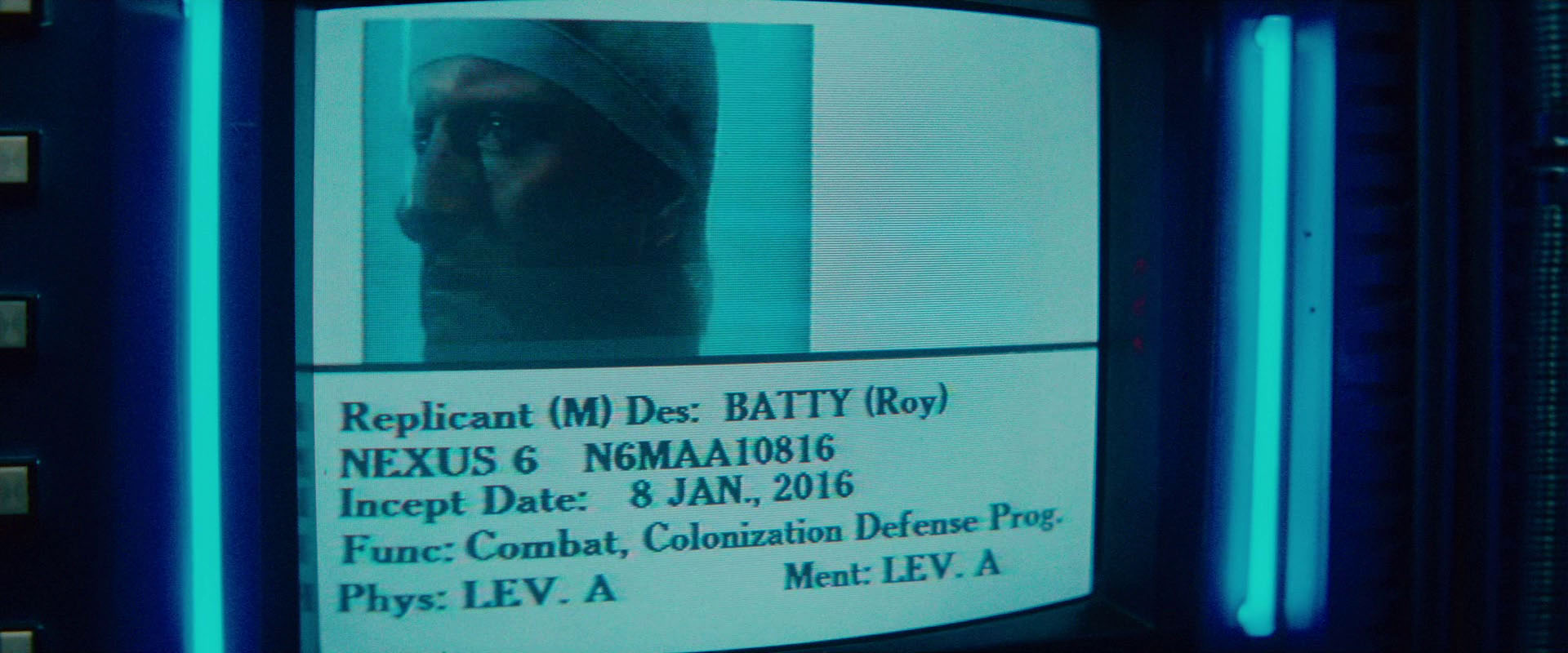
Post number four thousand coincides with Roy Batty’s birthday, so happy birthday, Roy. Best not wish him many happy returns… It’s also David Bowie’s birthday and album release day but he’s receiving enough attention for that already.

WordPress always sends a statistics summary at the end of each year. The stats for 2015 looked like this:

The Louvre Museum has 8.5 million visitors per year. This blog was viewed about 900,000 times in 2015. If it were an exhibit at the Louvre Museum, it would take about 39 days for that many people to see it.

The busiest day of the year was January 18th with 3,460 views. The most popular post that day was The gay artists archive.

No surprise about the most popular section of the site which frequently gets double the traffic of any single post. Input to that section of the blog has fallen off over the past year but I do have a couple more posts lined up when I get a spare moment.

These are the posts that got the most views in 2015.

1 The art of NoBeast June 2007
2 The art of Takato Yamamoto June 2007
3 Phallic casts 2011
4 Compass roses August 2011
5 The art of Thomas Eakins, 1844–1916 March 2006

The phallic casts post had a huge spike of traffic on New Year’s Day for some reason. Some of the attention for these posts will be from Facebook but since I don’t have an account there—and Facebook also hides their referral details—you can’t be certain. As always, my thanks to everyone who takes the time to read and to comment.

Vintage Mishima

vintagemishima01.jpg

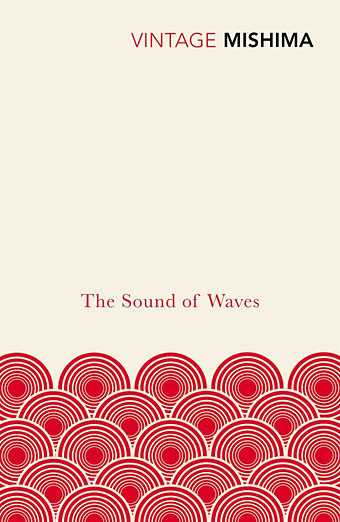
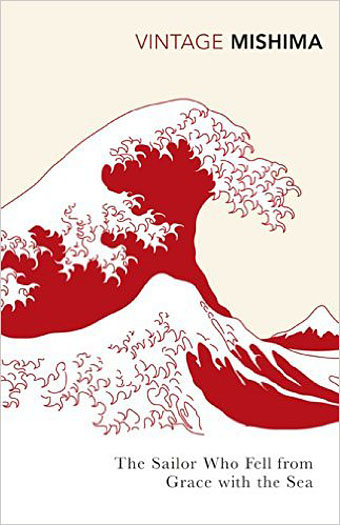
Penguin reprinted several volumes of Mishima in their Vintage line in 2010 with covers designed by Anna Crone. Seven of the covers are shown here although there are one or two more, not all of them available as large images. (Not for the first time I wonder why major publishers don’t make their new covers available at a decent size.) I’d have been wary of using Hokusai’s waves on a Mishima cover but colouring the water red makes it readable as a wave of blood.

vintagemishima02.jpg

vintagemishima03.jpg

Continue reading “Vintage Mishima”

The Strange Case of Yukio Mishima

mishima.jpg

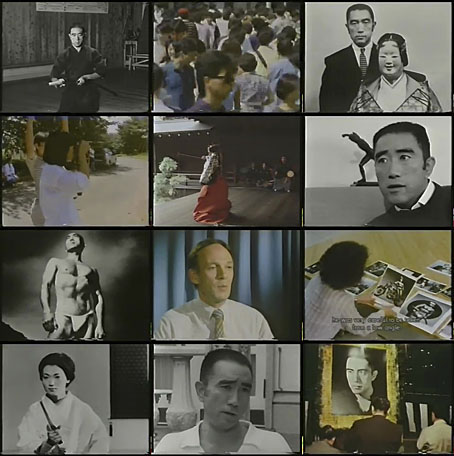
This is another of those excellent television documentaries that I have imprisoned on a video tape somewhere so it was good to find on YouTube. The Strange Case of Yukio Mishima (1985) was directed by Michael MacIntyre for the BBC’s Arena arts strand. This was the year that Paul Schrader’s Mishima: A Life in Four Chapters was released so the documentary had some topical value even though Schrader’s film isn’t mentioned at all (something that wouldn’t happen today). MacIntyre begins as Schrader does, however, with the events of the final day of Mishima’s life on November 25th, 1970, before rewinding to present a biographical portrait of the writer/actor/director. There’s more footage than I remembered of Mishima discussing his work (in English) while John Hurt reads from Mishima’s writings. Commentary is supplied by biographer Henry Scott Stokes, translator Donald Keene, photographer Eikoh Hosoe (creator of the famous Mishima beefcake poses), director Nagisa Oshima, and Mishima’s lover Akihiro Maruyama, an actor who the credits also describe as a “female impersonator”.

Previously on { feuilleton }
Tamotsu Yato’s men with katanas
Forbidden Colours
Mishima’s Rite of Love and Death

Weekend links 289

hermes.jpg

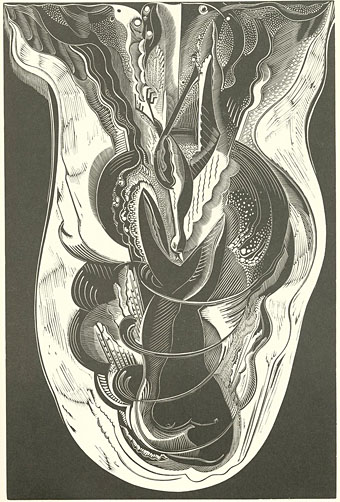
Fathomless Sounding (1932) by Gertrude Hermes.

• Over at Greydogtales (“weird fiction, weird art and even weirder lurchers”) I talk about art, design, the writing of this blog, and I also reveal more about my ongoing Axiom project. The latter currently stands at two novels, a couple of half-finished stories and a few pieces of artwork. I may be unveiling some of the art in the new year so watch this space.

• Howard Brookner’s Burroughs: The Movie (1983), a definitive film portrait of William Burroughs, is released at last on DVD/Blu-ray. US-only for the moment but further releases elsewhere are promised. The director’s nephew, Aaron Brookner, has a documentary about his uncle released next year.

• “…beautifully articulated bawdiness, perverse pleasures and a radical, though nondidactic, political view.” Melissa Anderson reviews Boyd McDonald’s Cruising the Movies: A Sexual Guide to Oldies.

The crisis, as Ellis and Silk tell it, is the wildly speculative nature of modern physics theories, which they say reflects a dangerous departure from the scientific method. Many of today’s theorists — chief among them the proponents of string theory and the multiverse hypothesis — appear convinced of their ideas on the grounds that they are beautiful or logically compelling, despite the impossibility of testing them. Ellis and Silk accused these theorists of “moving the goalposts” of science and blurring the line between physics and pseudoscience. “The imprimatur of science should be awarded only to a theory that is testable,” Ellis and Silk wrote, thereby disqualifying most of the leading theories of the past 40 years. “Only then can we defend science from attack.”

Natalie Wolchover on A Fight for the Soul of Science

• Mixes of the week: A mix by Front & Follow, and The Ivy-Strangled Path Vol. XIV by David Colohan.

• “Psychedelics can’t be tested using conventional clinical trials,” says Nicolas Langlitz.

• At Dangerous Minds: Ralph Steadman illustrates Ray Bradbury’s Fahrenheit 451.

• Why does Moby-Dick (sometimes) have a hyphen? Erin Blakemore investigates.

• My thanks again to Dennis Cooper for including this blog on his year-end list.

• Cian Traynor was given 20 minutes to ask Ennio Morricone some questions.

Lolita at 60: Ten writers reconsider Nabokov’s novel, page by page.

• At Ballardian: High-Rise: Wheatley vs Cronenberg.

Poison Ivy: The Queen of Psychobilly Punk

The Cinema of Hotels: a list

Solo intimacy DIY

Moby Dick (1970) by Led Zeppelin | William Burroughs Don’t Play Guitar (1996) by Islamic Diggers | Physical (2001) by Goldfrapp