Weekend links 97

conformist.jpg

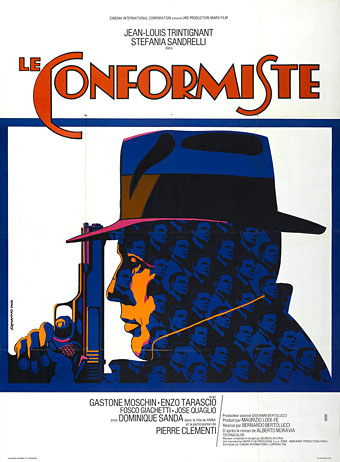
Illustration by Ermanno Iaia. Hard to believe that Bernardo Bertolucci’s The Conformist (1970) is only now appearing on DVD in the UK. Arrow Films release a dual-format edition at the end of this month.

• The week in perfume: Perfumes: The Guide by Luca Turin & Tania Sanchez is reviewed by Emily Gould (“this is a golden age of perfume criticism”) and prompts a meditation on the art and process of scent from Rishidev Chaudhuri.

Electrical Banana by Norman Hathaway & Dan Nadel is “the first definitive examination of the international language of psychedelia, focusing on the most important practitioners in their respective fields”.

Sacred Monsters is a forthcoming collection of essays and criticism by Edmund White. Related: Colm Tóibín from 1999 reviewing A History of Gay Literature: The Male Tradition by Gregory Woods.

Medium, a video by Clayton Welham and Sam Williams for Emptyset whose imminent release (also entitled Medium) I’ve designed. Related: Dave Maier on music versus noise.

• Couldn’t happen to a nicer guy: the face of US presidential contender Rick Santorum rendered as a collage of (mostly) gay porn. More provocation: All Dead Mormons Are Now Gay.

• Coilhouse discovered a rough copy of Bells of Atlantis (1952), an experimental film which features Anaïs Nin, input from Len Lye and an electronic score by Louis & Bebe Barron.

• “The idea that we should have but two options when it comes to our gender presentation, male or female, has always felt ludicrous to me,” says LaJohn Joseph.

Bely paints “a universe of strange manifestations” which drifts across Apollonovich’s consciousness every night before he falls asleep. We are even shown congeries of images that are shards of events which took place that day for the senator: “all the earlier inarticulacies, rustlings, crystallographic figures, the golden, chrysanthemum-like stars racing through the darkness on rays that resembled myriapods”

Malcom Forbes on Andrei Bely’s masterwork, Petersburg (1916).

RIP Barney Rosset, publisher of Grove Press books and the Evergreen Review.

The Brothers Quay will be at work in Leeds city centre this May. Lucky Leeds.

Warm Leatherette, a short film by Analogue Solutions.

Cormac McCarthy, Quantum Copy Editor.

The importance of being axonometric.

Always Crashing In The Same Car (1977) by David Bowie | Crash (1980) by Tuxedomoon | Crash Dance (1983) by Yello.
The art of Elmgreen and Dragset

eandd1.jpg

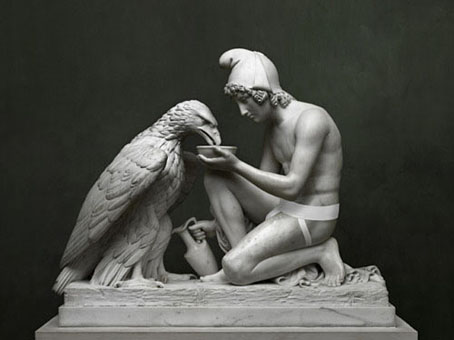
Ganymede (Jockstrap) (2009).

Artist partners Michael Elmgreen and Ingar Dragset—Danish and Norwegian respectively—became better known to the British public this week (well, Londoners anyway…) when their Powerless Structures, Fig 101 was unveiled by Joanna Lumley in Trafalgar Square. The pair’s bronze boy on a rocking horse is their contribution to the series of works that temporarily occupy the square’s Fourth Plinth, a site originally intended to display an equestrian statue of William IV. Elmgreen & Dragset admit that their new piece is slightly camp but also say:

“One thing that is absolutely forbidden in the public realm is to show emotions and be fragile,” Elmgreen says. “That is something we wanted to touch upon in the square, where it’s all about power. The sculpture is not about pop culture issues, or what is in trend at the moment. You step outside the whole thing and try to speak with another voice.”

“It’s beyond that,” says Dragset. “It’s like daring to expose sides of yourself you’re not supposed to show. Like vulnerability. It is often on our minds at the moment. Dare to be uncool!” (more)

eandd2.jpg

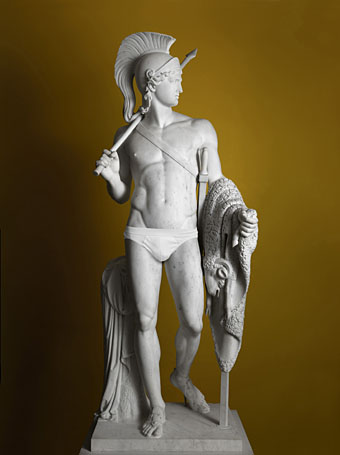
 Jason (Briefs) (2009).

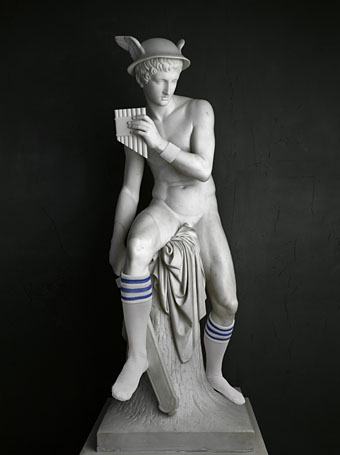
Rather more overtly camp are these photos of additions by the artists’ to statues by Danish sculptor Bertel Thorvaldsen (1770–1844), amendments which lend an erotic frisson to cold marble. The Thorvaldsens Museum in Copenhagen commendably hosted an exhibition of these photo prints last year, and have a page detailing Elmgreen & Dragset’s intentions.

Powerless Structures, Fig 101, will be on display in Trafalgar Square throughout the year.

eandd3.jpg

Mercury (Socks) (2009).

Elsewhere on { feuilleton }
The gay artists archive

Weekend links 96

nunez.jpg

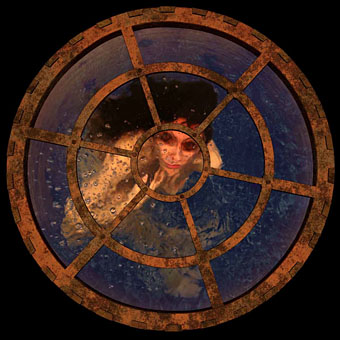
Sin título (monstruas) (2008) by Marina Núñez.   

• Salon asks Christopher Bram “Is gay literature over?” Bram’s new book, Eminent Outlaws: The Gay Writers Who Changed America, is reviewed here.

Robert Montgomery is profiled at the Independent as “The artist vandalising advertising with poetry.”

In addition to aesthetics, McCarthy noted a deeper link between great science and great writing. “Both involve curiosity, taking risks, thinking in an adventurous manner, and being willing to say something 9/10ths of people will say is wrong.” Profound insights in both domains also tend arise from a source beyond the limits of analytic reason. “Major insights in science come from the subconscious, from staring at your shoes. They’re not just analytical.”

Nick Romeo meets Cormac McCarthy at the Santa Fe Institute.

• For FACT mix 316 Julia Holter mixes radio broadcasts, street recordings and music.

• This week in the Tumblr labyrinth: fin de siècle art and graphics from Nocnitsa.

“There’s a widespread cultural barrenness across art and political culture. But there are some pockets of resistance on the extreme margins, like the techno-savvy protest movements, small press, the creator-owned comics, that seem to be getting some signs of hope for the future,” he says. “All of the genuinely interesting work is being done on the margins, with independent companies, self-producing, and alternative distribution networks.”

Alan Moore on Watchmen’s “toxic cloud” and creativity v. big business.

Stone Tape Shuffle, a 12” LP of readings by Iain Sinclair. Limited to 400 copies.

Monolake on how we cope with death: mythologies, rituals, drugs and Ghosts.

Kraftwerk perform at New York’s Museum of Modern Art in April.

Kathy Acker (in 1988?) interviewing William Burroughs.

pogany.jpg

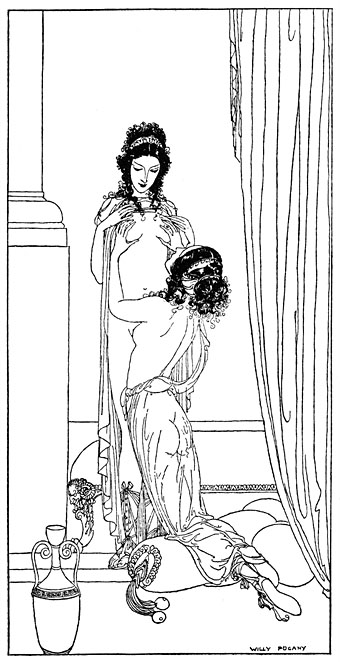
Willy Pogány’s erotica: illustrations for a 1926 edition of The Songs of Bilitis by Pierre Louÿs.

• Nicholas Lezard on David Lynch: director of dreams.

Did otherworldly music inspire Stonehenge?

Coilhouse has an Eyepatch Party.

Tanzmusik (1973) by Kraftwerk | The Model (1992) by the Balanescu Quartet | Trans Europe Express (2003) by the Wiener Sinfonie Orchestra & Arnold Schönberg Choir.

Fonthill Abbey

fonthill1.jpg

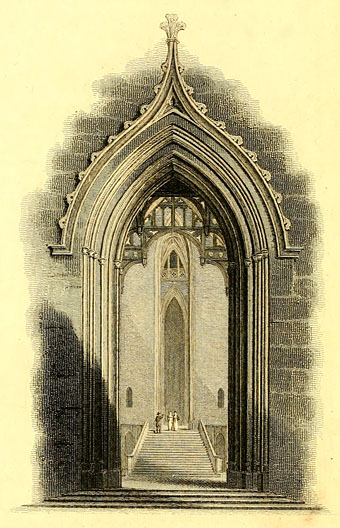
Views such as these are all we’ve ever have of Fonthill Abbey, a monstrous pile that would have been Britain’s most grandiose folly had it not collapsed in 1825. William Beckford (1760–1844) was the man responsible, among other things a very wealthy and bisexual writer whose Vathek (1786) is one of the better Gothic novels. The Gothic fad fuelled many such constructions, Horace Walpole having inaugurated the trend decades earlier at Strawberry Hill House. Fonthill always fascinates for that outrageously excessive octagonal tower which must have been visible for miles across Wiltshire. Plans and other views show that excess was also a factor elsewhere, especially in the vast hall. The pictures here are from Wikimedia Commons. There’s a book at the Internet Archive A Description of Fonthill Abbey, Wiltshire (1812) by James Storer, a contemporary account describing the building in detail, and also Delineations of Fonthill Abbey (1823) by John Rutter.

fonthill2.jpg

fonthill3.jpg

fonthill4.jpg

fonthill5.jpg

Elsewhere on { feuilleton }
The etching and engraving archive

Previously on { feuilleton }
Gothic details
Schloss Falkenstein
Pite’s West End folly
Viollet-le-Duc

Now we are six

prisoner3.jpg

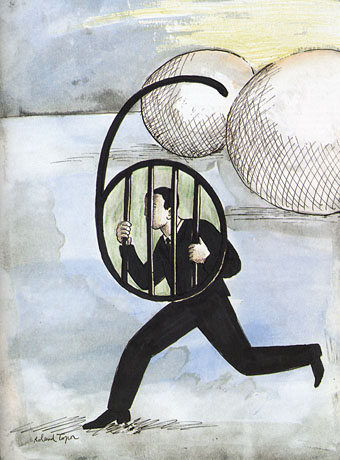
Number Six/The Prisoner (1990?) by Roland Topor.

Welcome to post number 2,618, and the sixth anniversary of this here weblog. Roland Topor’s drawing could be interpreted as a cry for help from your narrator—imprisoned by the daily necessity to file copy—but it’s there mainly because I couldn’t think of another picture featuring the requisite numeral.

WordPress’s Site Stats shows that these pages had over 2,000,000 visits in the past year, something I find very surprising. Many will be from either regular readers or one-off hits from the Google hordes searching for a particular picture but all the same…that’s a lot of people. A large percentage are no doubt visitors to the gay artists archive which continues to be the most popular page here, and one I feel compelled to keep adding to as a result. There’s always more to discover.

As always, thanks for reading and commenting!

John x