Moebius Redux

moebius1.jpg

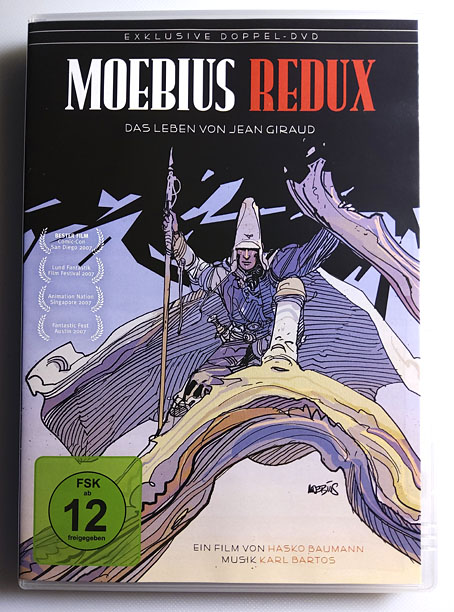
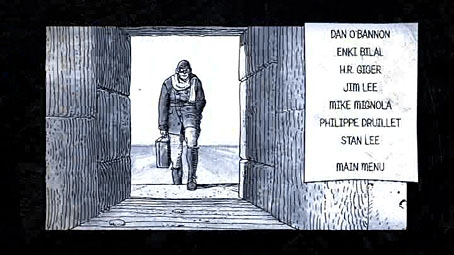
It’s Arzak (or Arzach, or Harzak, or Harzakc, etc) again, arriving in today’s post. Hasko Baumann’s Moebius Redux is one of my favourite arts documentaries of recent years but I only discovered recently that the version broadcast by the BBC in 2007 was shorter by 20 minutes than the original 70-minute running time, hence this purchase. It’s a German DVD but has subtitles in French and English plus an extra disc containing 125 minutes of extras, including extended interviews with Philippe Druillet, Enki Bilal and many others. That’s my weekend viewing sorted.

moebius2.jpg

moebius3.jpg

moebius4.jpg

Previously on { feuilleton }
Jean Giraud record covers
Arzak Rhapsody
The Captive, a film by René Laloux
The horror
Chute Libre science fiction
Heavy Metal, October 1979: The Lovecraft Special

Giger’s first alien: Swissmade: 2069

swissmade1.jpg

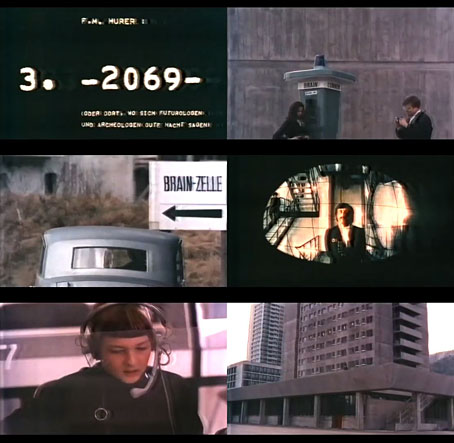
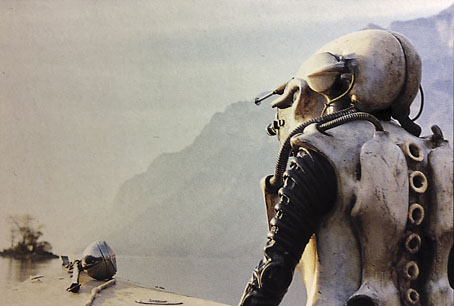
You wait decades for an obscure HR Giger-related film then two copies turn up at once. Swissmade: 2069 (1968) was the last of the short films from Giger’s pre-Alien career that I’d been waiting to see, and is of note for being a 40-minute work of science fiction rather than a documentary about the artist and his art. All the other Giger films have come and gone on YouTube over the past few years although none seem to have had any recent official release apart from Passagen, Fredi M. Murer’s Giger documentary from 1972 which is now available for rent with English subtitles. Swissmade: 2069 was directed by Murer prior to Passagen and is also available for rent at the same site. Alternatively, there’s a fuzzy VHS copy at YouTube with no subtitles. Murer’s film is more properly titled 2069, Swissmade being the umbrella title for a compilation feature that comprised three films by Swiss directors. 1980 (Der Neinsager) by Yves Yersin and Alarm by Fritz E. Maeder were the first two films; 2069 provided the conclusion:

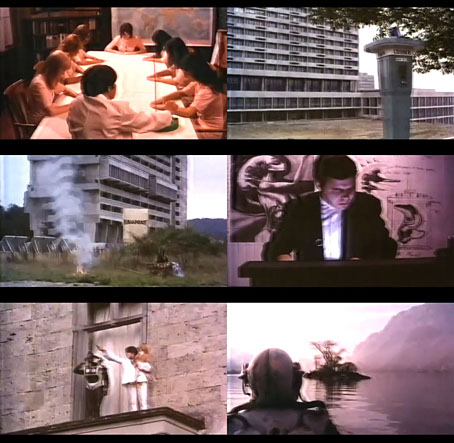
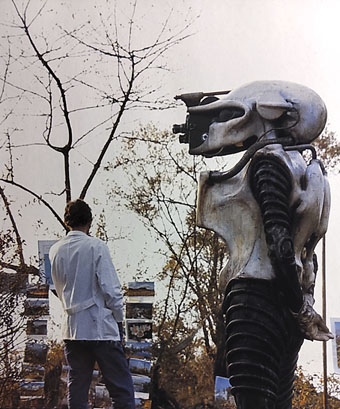
The theme of Fredi M. Murer’s contribution to the episode film Swissmade is “Switzerland after us”. Murer’s episode takes place in the year 2069. An “integrated citizen with a latent tendency to become an unintegrated citizen” is commissioned by the “Brain Center” to produce a film report about the unknown mission of a foreign being. The alien being is an extraterrestrial designed by HR Giger long before Alien with a built-in camera and tape, which travels across the earth in the year 2069 to explore current conditions. The film reporter is Murer himself. Without exception, the performers in real life were authentic 1968 activists, some of whom later made political or artistic careers.

swissmade2.jpg

As science fiction this is typical of the period, with the world of the future represented by the most “futuristic” features of 1968 which means Brutalist architecture, Space Age fashion and institutes filled with advanced technology. The most surprising thing about the direction is how casually Murer treats Giger’s alien visitor. The being (played by Tina Gwerder) has a camera in its head and a working tape recorder in its chest but we only see the tape reels turning when the film is halfway through. Another director would have made much more of this, and of the carapace that Giger made for a dog to wear which is only seen in a single shot at the very end. Giger himself has a wordless role, appearing with some of his drawings, as does his partner, Li Tobler. It’s unlikely that many people would be interested in 2069 today without the Giger connection but it’s a well-made curio that points the way to another extraterrestrial with an elongated cranium. (Thanks to Jason for the tip!)

swissmade3.jpg

Stills from HR Giger’s Film Design (1996).

swissmade4.jpg

swissmade5.jpg

Previously on { feuilleton }
HR Giger’s Passagen
Heimkiller and High
The Man Who Paints Monsters In The Night
Hans by Sibylle
Giger’s Tarot
HR Giger album covers
Giger’s Necronomicon
Dan O’Bannon, 1946–2009
Alejandro Jodorowsky’s Dune
The monstrous tome

Weekend links 551

katayama.jpg

Bystander #16 (2016) by Mari Katayama.

• “In her prickly, misanthropic stories, her obsession with obsession is on display, big feelings and bad habits redirected to gruesome ends.” Carmen Maria Machado on the brilliance, difficulty and eccentricities of Patricia Highsmith who was born on 19th January, 1921. This reminds me that I have an unread copy of Highsmith’s The Two Faces of January that I ought to move to the reading pile.

Saint Laurent—Summer of ’21: Gaspar Noé’s new promo for the fashion house features Charlotte Rampling and a group of models in a vaguely Argento-like scenario that’s all crimson light, sumptuous decor and a creditable cover of I Feel Love by SebastiAn.

• I’ve been listening to a lot of Magma recently so this is timely: all three of the live Retrospektïw albums from 1980 gathered together for the first time in a single package and with a bonus recording.

• At Spine: Vyki Hendy collects some recent book covers that use optical illusions (or negative space) to catch the attention. Tangentially related: William Hogarth’s Satire on False Perspective (1754).

• RIP David Larkin, art director at Granada and Pan who also edited one of my favourite series of art books.

• At Dennis Cooper’s: Crop Encircled Boy presents…Alejandro Jodorowsky Day.

• Mix of the week: Subterraneans 1, a Bowie mix by The Ephemeral Man.

• At Wormwoodiana: A Secret Book of Ghost Stories.

• “Reality is plasticine,” says Eloghosa Osunde.

Cats On Synthesizers In Space

Subterraneans (1993) by Philip Glass | The Subterranean (1994) by Soma | Subterranean Lakes (2018) by Pye Corner Audio

Weekend links 550

moebius

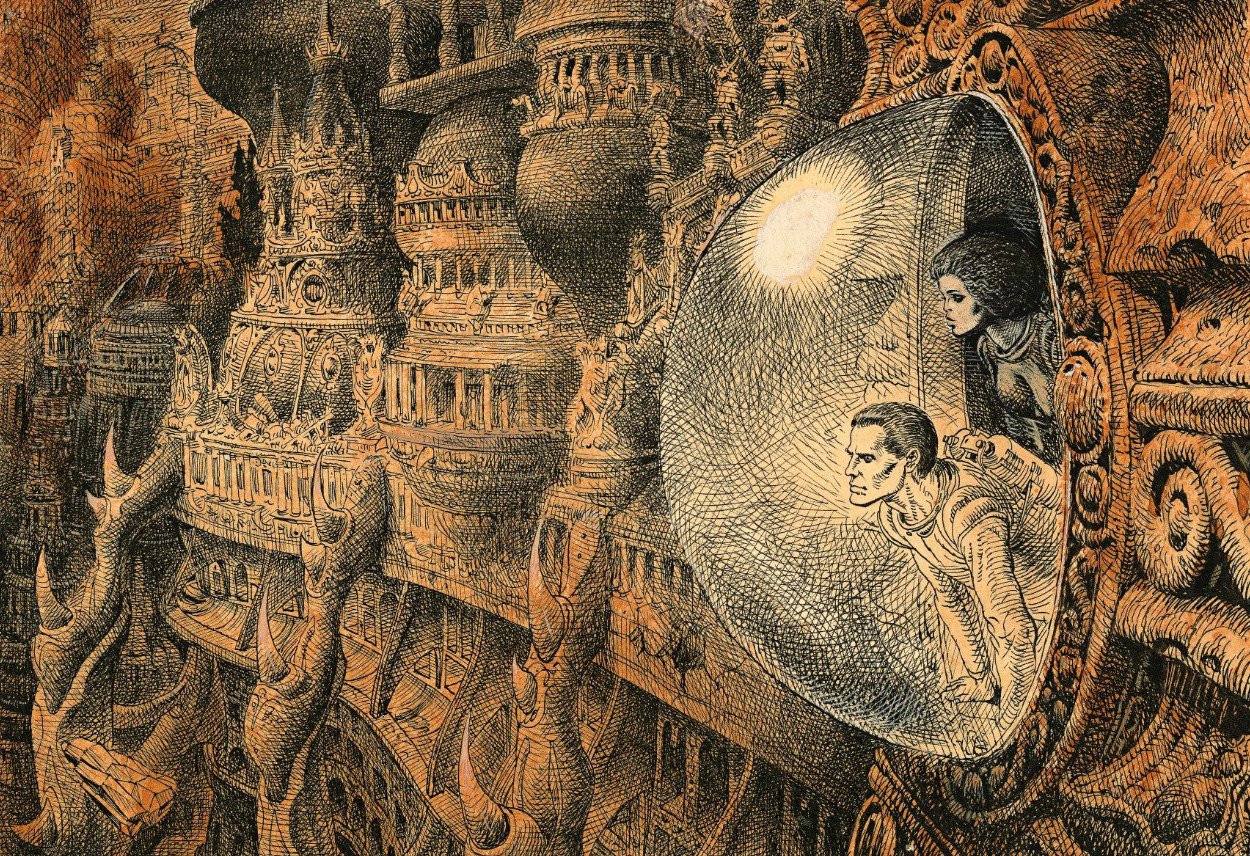
Illustration by Moebius for Les Robinsons du Cosmos (1970) by Francis Carsac.

Notre Dame des Fleurs is a collection of art based on or inspired by the Jean Genet novel. The book, which includes some new work of mine, will be published in February. Editor Jan van Rijn has a trailer for it here. It’s limited to 150 copies so anyone interested is advised to pre-order.

• Books that made me: William Gibson‘s influential reading. Good to see him mention Suttree by Cormac McCarthy, an outstanding novel that might be better known if it wasn’t for the gravitational pull of McCarthy’s other works.

• Zagava have announced a paperback reprint of The Art of Ilna Ewers-Wunderwald, a collection of neglected Art Nouveau drawings and designs compiled by Sven Brömsel.

• At Dennis Cooper’s: Black_Acrylic presents…He Stood In The Bath And He Stamped On The Floor: A Joe Meek Day.

• More yearly roundups: Our Haunted Year 2020 by Swan River Press, and The Year That Never Was by blissblog.

• New music: Spaceman Mystery Of The Terror Triangle by The Night Monitor.

Ralph Steadman’s guided tour through six decades of irrepressible art.

• At Greydogtales: Valentine Dyall: Mystery and Mesmerism.

• At Wormwoodiana: The Esoteric in Britain, 1921.

• At Strange Flowers: Marie Menken’s Lights.

I Want To See The Bright Lights Tonight (1974) by Richard and Linda Thompson | Neon Lights (1978) by Kraftwerk | Lights (1980) by Metabolist

Sredni Vashtar, 1981

sv1.jpg

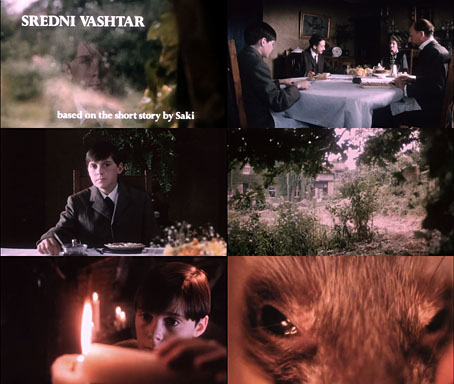
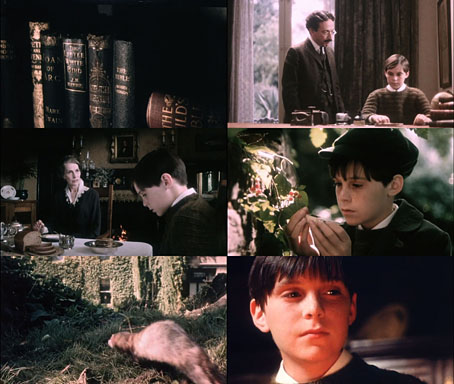
And speaking of Sredni Vashtar (see yesterday’s post)… Screenwriter and director Andrew Birkin has a YouTube channel where he recently posted his own adaptation of the Saki story, a 25-minute film I hadn’t seen before. Or at least I don’t remember seeing it before. Birkin’s note says that the film was made to accompany screenings of the third film in the Omen series, The Final Conflict, which he also wrote. I saw this at the cinema but don’t recall any short being shown with it (then again, I don’t recall much of The Final Conflict either). This must have been one of the last occasions when a short was commissioned to be shown with a first-run feature since the practice was discontinued soon after. Sredni Vashtar is a fitting companion for a horror film replete with sinister tragedies, but shorts and features weren’t always so well-matched. I saw Alien three times on its first run, and on each occasion had to sit through a documentary about the ongoing Mod revival. “Yes, yes, yes, you love your Parkas and Vespas but we’re here for the monsters and spaceships…”
sv2.jpg

Anyway, Birkin’s Sredni Vashtar is a superior adaptation of the story that’s all the more impressive when you read that it was shot in a mere five days. Saki’s tale is an unusual one for having a serious tone that sets it apart from the stories that surround it in the Chronicles of Clovis collection. The default Saki mode is one of cheerful flippancy whatever the subject may be, and it’s often the ironic distance between the events described and the offhand manner in which they’re related that makes his work so memorable. Sredni Vashtar‘s tale of an ailing boy’s revenge on an oppressive guardian seems to have been more heartfelt than many of his other entertainments. Alexander Puttnam, the son of film producer David Puttnam, plays the browbeaten Conradin, while Birkin’s mother, Judy Campbell, is the boy’s guardian aunt. Themes from Carl Orff’s Carmina Burana are put to good use, and would have helped tie the short to the Omen series, the first two of which were scored with Jerry Goldsmith’s thundering Latin chants. There’s also a fleeting reference to JM Barrie, whose life Birkin had dramatised for the BBC, while the film as a whole looks forward to the not-so-innocent childhood rituals that Birkin explored in his debut feature as director, The Cement Garden. Watch Sredni Vashtar here, and if you enjoy it do read the story as well.

Previously on { feuilleton }
Saki: The Improper Stories of HH Munro
The Chronicles of Clovis and other sarcastic delights