Produziert in der Schweiz

swissmade1.jpg

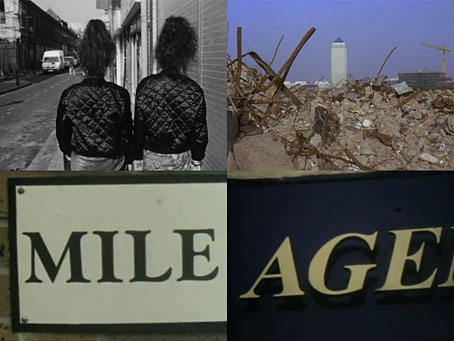
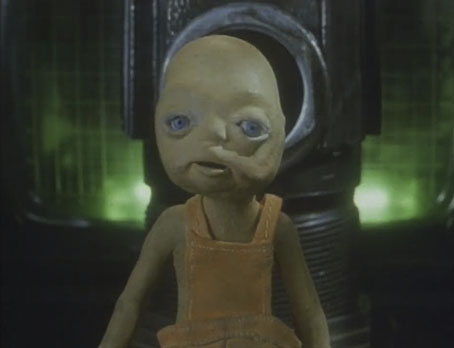
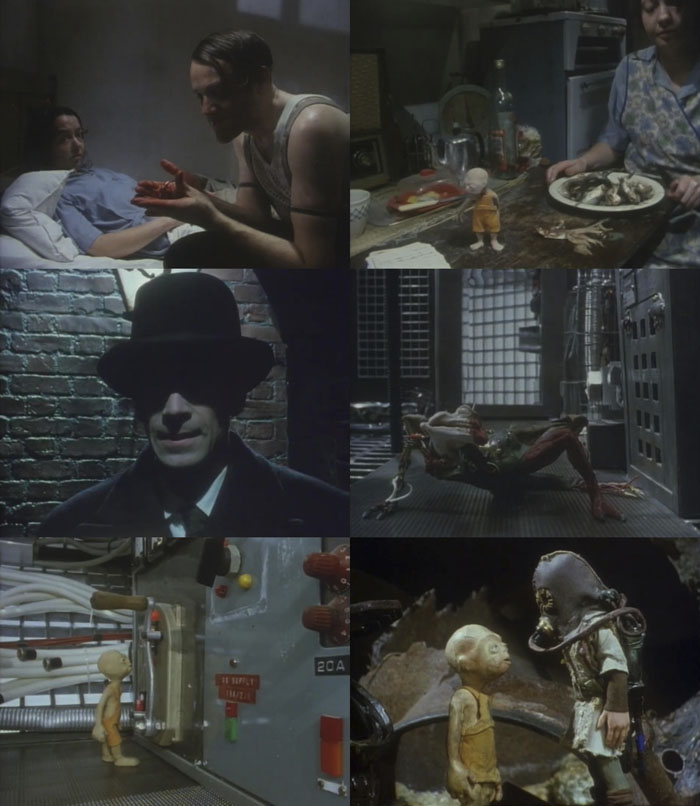
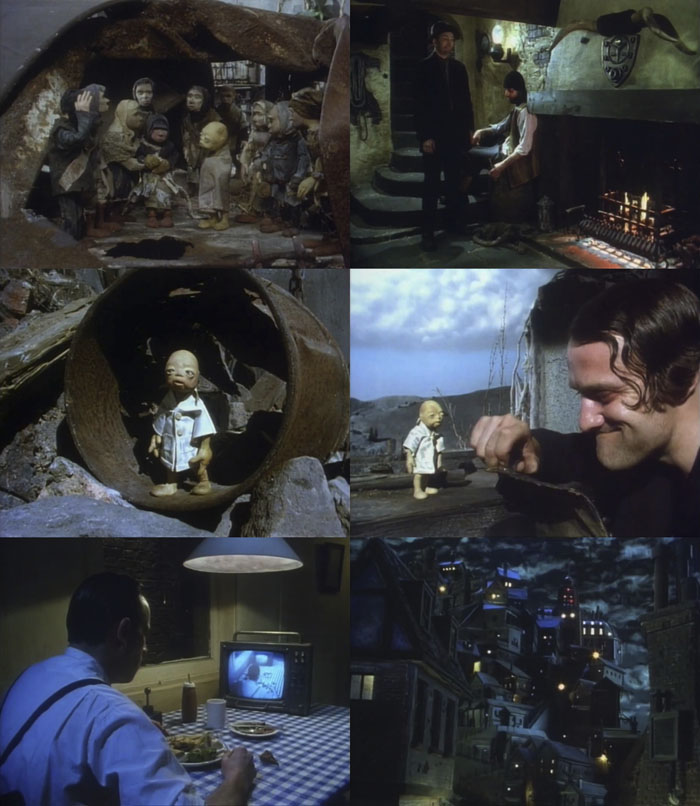
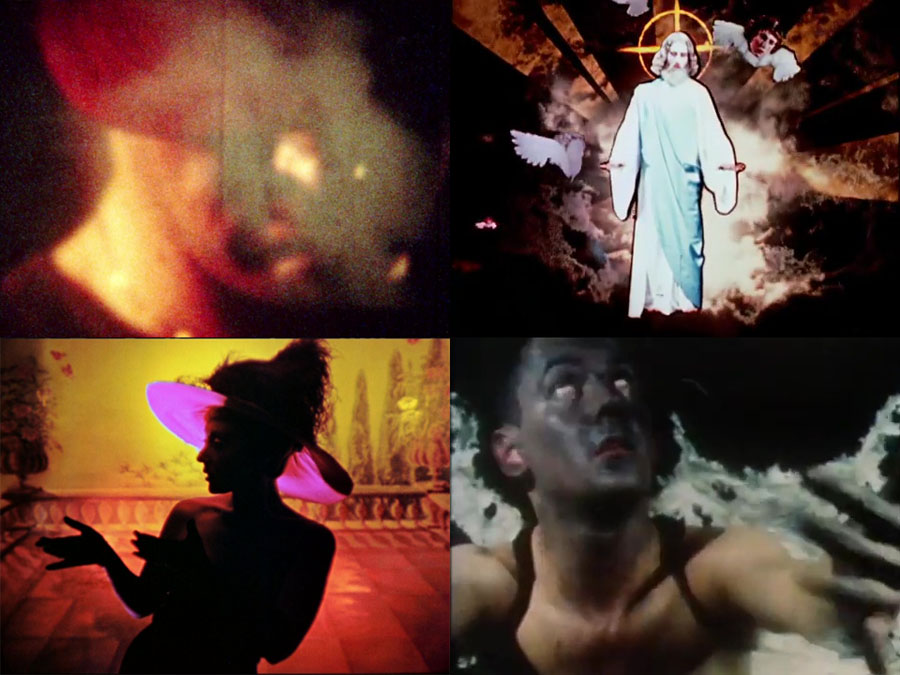
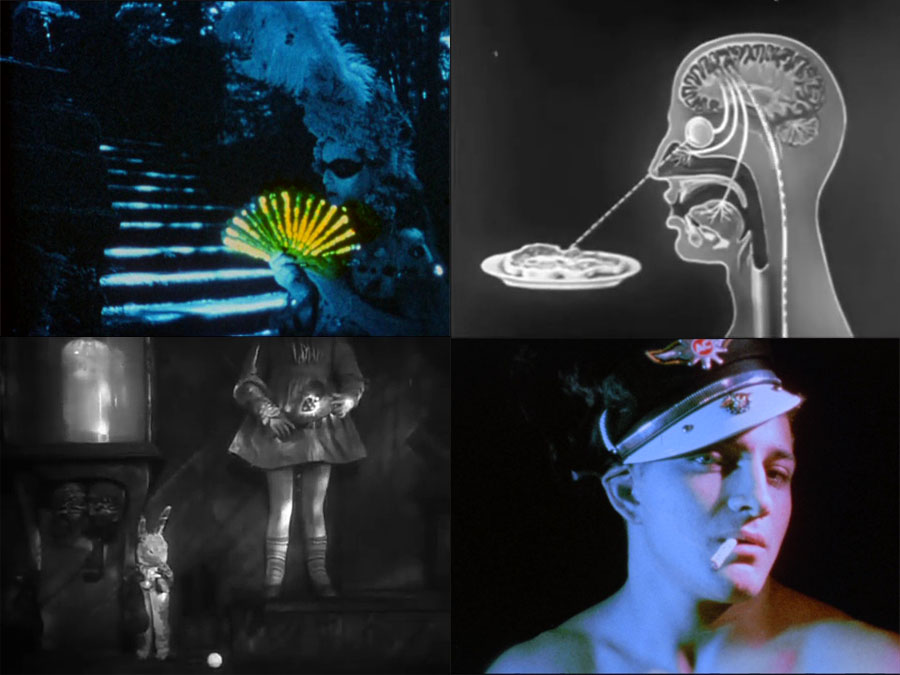
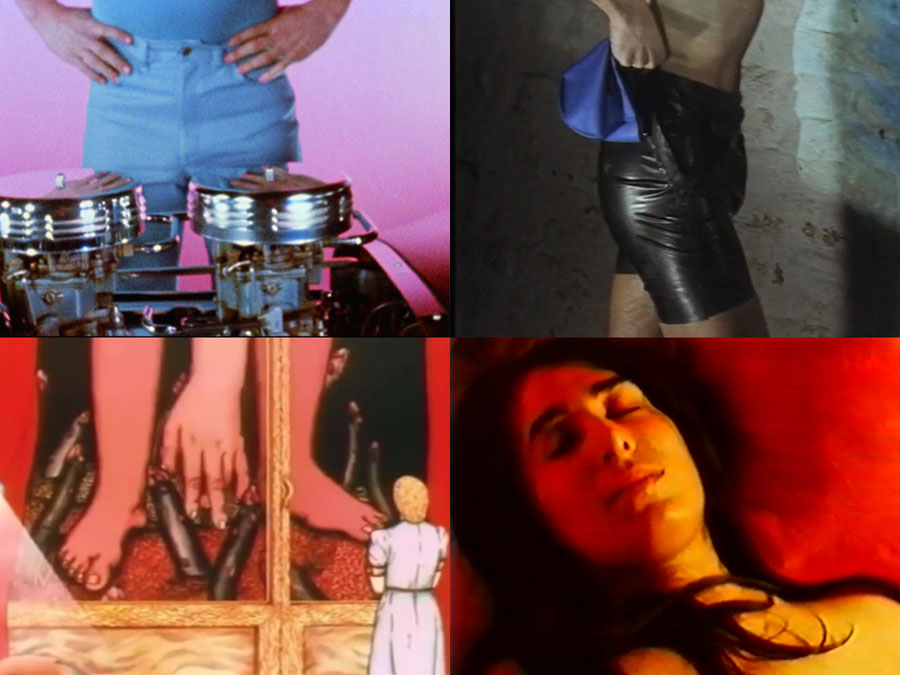
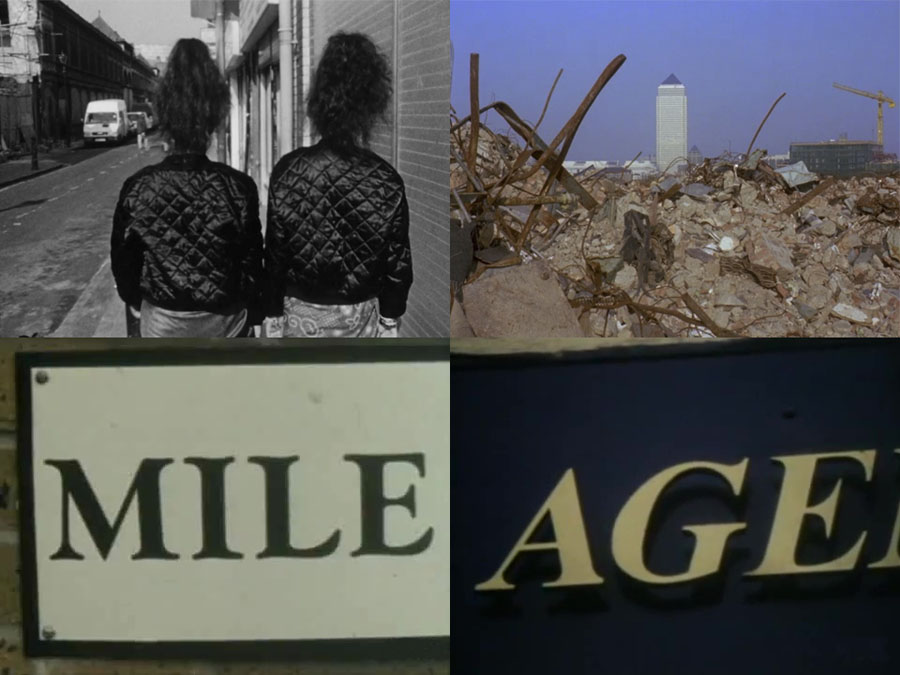
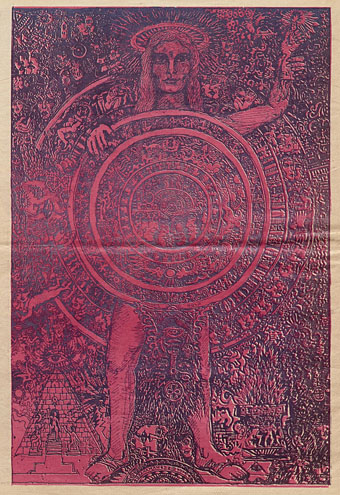
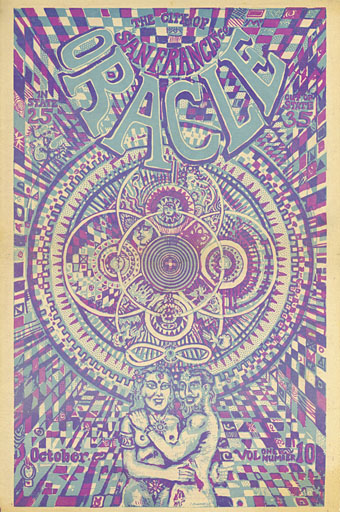
Back to the future, after a fashion. A couple of years ago I was pleased to discover that Swissmade: 2069 (1968) had finally surfaced in full-length form on the internet. Fredi M. Murer’s short feature was the first science-fiction film that HR Giger was involved with, made at a time when Alejandro Jodorowsky was still in Mexico and Ridley Scott was a little-known director of TV ads. Giger designed the mysterious “Humanoid” that wanders around Brutalist interiors interviewing the Swiss citizens of the future, and also appears in front of the camera with his drawings and paintings. There’s no need to repeat myself by writing about the film again, this is mainly an announcement that Rarefilmm has just posted a much better copy (including English subs) than was previously available on YouTube.

swissmade2.jpg

Watching this again I’m reminded of an intention I’ve had for a while of putting together a list of offbeat SF films, a collection of the unusual, the unpredictable, the seldom-seen or the downright weird that offers an alternative to the cultural imperialism of Hollywood. Swissmade: 2069 would be a candidate for such a list even though it only runs for 40 minutes and presents a rather stereotypical view of a future world. Just now I’m a little too preoccupied with design and illustration work to consider such an endeavour, and I’m sure similar lists exist already at Letterboxd or somewhere. But it’s an idea for the future. Our future. Watch this space.

Previously on { feuilleton }
Art on film: Providence
Giger’s first alien: Swissmade: 2069
HR Giger’s Passagen
Heimkiller and High
The Man Who Paints Monsters In The Night
Hans by Sibylle
Giger’s Tarot
HR Giger album covers
Giger’s Necronomicon
Dan O’Bannon, 1946–2009
Alejandro Jodorowsky’s Dune
The monstrous tome

Weekend links 653

clarke.jpg

The Snow Queen (1916) by Harry Clarke.

• “…blogging remains my favourite format precisely because the writing so rarely feels like labour. Liberated from the need to pitch an idea or wield credentials, blogging—for a professional writer—frees you up to address topics outside your perceived expertise. It feels like a leisure activity because it’s leisurely—a ramble across fields of culture and knowledge, during which you sneak short cuts and trespass into areas you are not meant to go. A post doesn’t have to have a destination, a point. You can bundle or concatenate several different topics, push into adjacency things that don’t obviously or naturally belong together—like oddments inside a Cornell box. You can start somewhere and end up somewhere completely different, without any obligation to tie things up neatly.” Simon Reynolds reflecting on 20 years of the blogging thing, and neatly summarising the attractions of the medium. For some of us, anyway…

• At Smithsonian Magazine: “Structural colour was first documented in the 17th century, in peacock feathers, but it is only since the invention of the electron microscope, in the 1930s, that we have known how it works.” Tomas Weber on Andrew Parker’s nanotechnology developments which are creating some of the brightest hues in the world.

• “Bring back the Cailleach, beloved Scottish goddess of winter, shaking out the snow on the land. Bring back Mother Holda, with her wild geese and her snowflakes landing on the tongue like a gift from the sky…” Yvonne Aburrow would like to see the festival of Yule returned to its anarchic origins.

Merry Christmas Mr Lawrence, an extract from a recent audience-less concert by Ryuichi Sakamoto which he says is liable to be his last.

• At Unquiet Things: S. Elizabeth posts some of the pictures that couldn’t be fitted into The Art of Darkness.

• Mix of the week: A Tribute to Manuel Göttsching by Low Light Mixes.

• It’s the end of December so it must be time for Alan Bennett’s diary.

• RIP Mike Hodges.

Vale Berfrois.

Snow (1985) by Takashi Toyoda | Snowfall (2000) by Haruomi Hosono | Snowfall (2005) by Robin Guthrie & Harold Budd

Pixillation, a film by Lillian Schwartz

pixillation.jpg

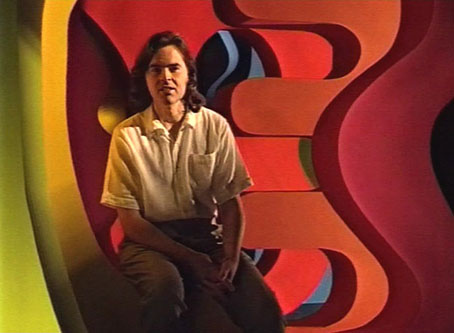
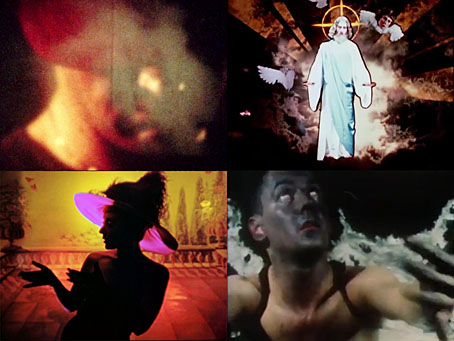
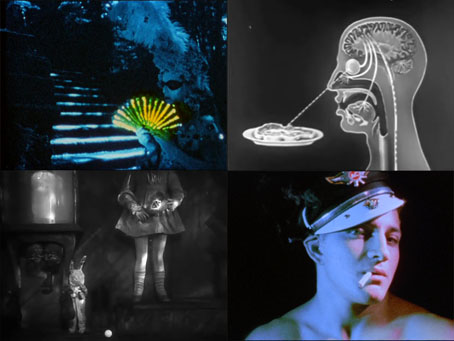
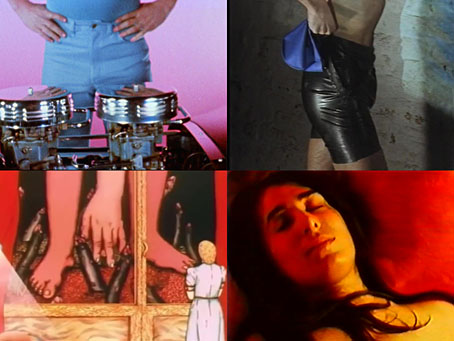
A new arrival at Rarefilmm, Pixillation (1970) is another example of short, abstract film-making which nevertheless may be unique in its combination of early computer graphics with organic effects created by illuminated oils and crystalline growths. This was Lillian Schwartz’s first film (made in collaboration with Ken Knowlton) after she become artist-in-residence at Bell Labs. Many more such films followed, continuing her exploration of computer graphics.

The electronic score for Pixillation is by Gershon Kingsley, a composer best known for the albums he recorded with Jean-Jacques Perrey, and for writing one of the first synthesized pop hits, Popcorn, although it was a cover of Kingsley’s tune that became an international success in 1972. Kingsley made a lot of electronic music but this is the first time I’ve encountered any of it as a film soundtrack. I think it’s also the first piece I’ve heard of his that isn’t a light-weight novelty.

Elsewhere on { feuilleton }
The abstract cinema archive

Previously on { feuilleton }
Switched-On… hits and misses

Weekend links 652

colquhoun.jpg

Landscape with Antiquities (1955) By Ithell Colquhoun.

• “The ontological horror at the core of these stories is that the stone–which represents the natural world and the uses we carve out for it–is unknowable. It’s been here, affecting the land, whether erected as a monument or laid as bricks, for longer than we can fathom, and its inaccessible past has some frightening bearing on the present.” Sean McGeady on 50 years of stone-tape theory, from Nigel Kneale to Ben Wheatley. Also a reminder that Christmas ghosts on TV could be more than another adaptation of MR James.

• “Midnight is the time when one can recall, with ribald delight, the names of all the Great Works which every gentleman ought to have read but which some of us have not. For there is almost as much clotted nonsense written about literature as there is about theology.” At Wormwoodiana: That Black-Edged Light: A Note on HM Tomlinson.

• “Anxious but stubborn herself, she was a lucid observer of social awkwardness, her subject matter in her books being primarily worry: at disasters real and imagined (comet-fall, floods, unplanned chaos), but also at small-scale domestic panics (such as how to mollify unwanted guests).” Mark Sinker reviewing Tove Jansson, a new biography by Paul Gravett.

Dennis Cooper’s favourite fiction, poetry, non-fiction, film, art, and internet of 2022. Thanks again for the link here!

• “A is for Alphabet and Architecture.” Public Domain Review now has an index. Rather slight but still useful.

Ju-on: The Curse and four other Y2K J-Horror movies you may have missed: a list by James Balmont.

• At Smithsonian Magazine: Listen to the sound of a dust devil swirling around on Mars.

• Unquiet Things offers the latest accumulation of Intermittent Eyeball Fodder.

Stone God (1957) by Martin Denny | Sanctuary Stone (1973) by Midwinter | Children Of Stone (2006) by Espers

20 Sites n Years: the documentary

auerbach.jpg

This isn’t the first time I’ve written about Tom Phillips’ indefinite art project but I thought I’d give Jake Auerbach’s documentary some belated promotion after watching it again. The usual form here would be to link to a viewable copy somewhere. There is a copy online, as it happens, but it’s not in any of the obvious places so rather than link to it I’d encourage the interested to invest in one of Auerbach’s DVDs or watch the streaming version.

20_sites.jpg

As before, the project details are as follows:

Every year on or around the same day (24th May–2nd June) at the same time of day and from the same position a photograph is taken at each of the twenty locations on this map (above) which is based on a circle of half a mile radius drawn around the place (Site 1: 102 Grove Park SE15) where the project was devised. It is hoped that this process will be carried on into the future and beyond the deviser’s death for as long as the possibility of continuing and the will to undertake the task persist.

The intention is that photographs (35 mm transparencies) be taken at twenty locations each year between May 24 and June 2. The locations are situated on what is (in 1973) the nearest walkable route to a perfect circle a half a mile in radius from the point in the home of Artist 1 (102 Grove Park, London SE5) where the project was devised and where these instructions were written. The circuit is divided into sixteen equal sections in each of which there is a site selected by Artist 1. Four other locations mark the route from the centre to the circumference: these are the former studio of Artist 1, his current home and studio, and the art school where he studied. The project book notes the times of the original photographs of 1973 and these should be adhered to as closely as possible (though all photos need not necessarily be taken on the same day) Artist 1 intends that the pictures should be taken by his family and their descendants, if they are willing, and that the work should thus go on indefinitely: the services of their friends may be enrolled or even from time to time that of professional photographers. Continuity is the most important factor.

auerbach2.jpg

One of the pages from the project manual showing the location of Site 2, the hour of day at which the photo should be taken, where to stand when taking it, and a diagram of the preferred framing.

Auerbach’s 45-minute film begins with a brief description of the piece, after which we follow Phillips in 2012 on his annual excursion around the streets of Camberwell and Peckham in South London. Auerbach juxtaposes the arrival of artist and camera crew at each prescribed location with Phillips’ own description of the changes he’s observed since first commencing the project in 1973. During the narration we get to see many of the photographs, more than the few examples shown in Works and Texts. The film also includes extracts from a couple of earlier documentaries about Phillips, including his appearance on the BBC’s Late Show in 1989 which featured a shorter 20 Sites project report.

auerbach4.jpg

A local street that isn’t part of the project but which does feature street lights and a mural designed by Tom Phillips.

Auerbach’s trailing of the artist shows us aspects of the project that you don’t get in the big Thames & Hudson book or on the Tom Phillips website (where you can see slide-shows of all the views to date), the most prominent being a sense of the space in which each photograph is taken. London south of the river is a vast suburban sprawl that lacks the layered history of the northern quarters of the city. This might seem unpromising material for an art project but Phillips’ photographs remind us that “promise” is a quality dependent on the artist’s point of view, literally in this case with the dogged and very specific attention given to these twenty sites. In place of grand history we have the incremental advance of those changes which often go unnoticed or unremarked in city life: a tree grows, cars (and people) update their styling, a building is repurposed or demolished, street furniture appears then disappears, shops change their appearance and operation, public areas are subject to seemingly arbitrary alterations at the hands of council workers.

auerbach3.jpg

Auerbach shows us further details that we wouldn’t otherwise see, such as the aerosol marks made on the pavement each year showing where the photographer has to stand in order to take a shot that matches the earlier ones. We also get to see Phillips choosing the best shots after they’ve been processed. One of the impromptu conventions of the project has required people to appear at some of the quieter sites, random strangers (or animals) at Site 2, while Site 3 incorporates friends or relatives of the artist. John L. Walters, the editor of Eye magazine, occupies the latter role on the day that Auerbach is present.

auerbach5.jpg

The project becomes self-aware. “Obart” was the name of a mysterious business or organisation that vanished soon after being chosen as Site 15. The name has since been an informal title for the project as a whole. The hashtag is in the window of one of the houses situated next to the original Obart sign.

Now that “Artist 1” is no longer with us, the project moves into a new phase with “Artist 2” (Phillips’ son, Leo) taking charge. Leo Phillips was already on board in 1989 so the annual excursion must be a familiar routine by now. Next year the project will have been running for 50 years which must make it the longest continually-running art project to date unless there’s a more extended one out there. Michael Heizer’s City recently attained completion after 50 years buts it’s debatable whether a work that was a construction site for most of those years should be considered as operating in the same sense as 20 Sites, a project which was functioning as intended from its first year. Meanwhile, I’ve yet to hear about the existence of an “Artist 3” ready to take up the camera after Leo Phillips, but whoever that individual might be they could conceivably take 20 Sites through to its centenary in 2073. Time will tell.

Previously on { feuilleton }
20 Sites n Years revisited
20 Sites n Years by Tom Phillips