Weekend links 73

sun2.jpg

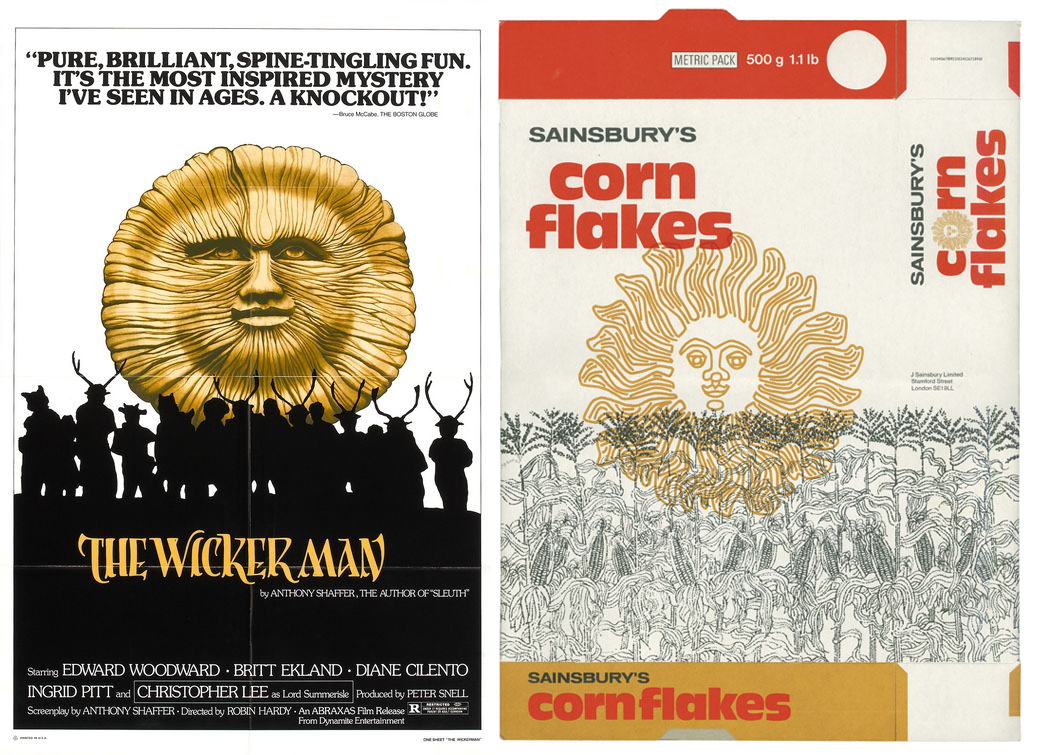
Johnny Trunk of Trunk Records reissued the soundtrack to The Wicker Man in 1997. Mr Trunk’s latest delve into the cultural past is Own Label: Sainsbury’s Design Studio, a book from Fuel examining the supermarket chain’s packaging design of the 1960s and 1970s. Creative Review shows some examples while I have to note the uncanny similarity between one of the posters for The Wicker Man and an old Sainsbury’s corn flakes box. Now we see that the Old Weird Britain wasn’t only hiding in the fields and the folk songs but was also lurking on the supermarket shelves.

Related: a new DVD set from the BFI, Here’s a Health to the Barley Mow: A Century of Folk Customs and Ancient Rural Games. And let’s not forget the ley lines of Milton Keynes, and a new edition of Ritual by David Pinner, said to be the novel which inspired The Wicker Man.

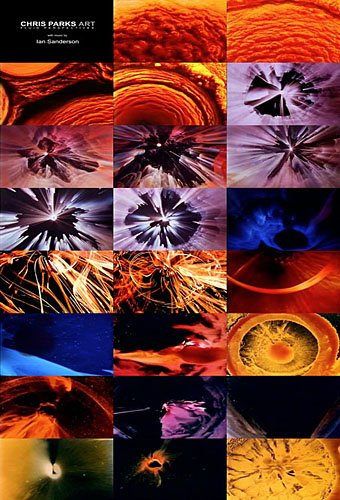
• “He wrote me…” Sans Soleil (1983), Chris Marker’s beguiling accumulation of memories, dreams and reflections, is recalled in a Quietus piece entitled Things that Quicken the Heart. Not the first time on DVD as it says there (Nouveaux Pictures released it with La Jetée in 2003) but it’s good to know it’s being reissued.

• Marker’s film references Tarkovsky’s Stalker a couple of times, most notably in the comment, “On that day there will be emus in the Zone.” Geoff Dyer has what he describes as “a very detailed study” of Stalker out next year.

I don’t like those commentators who keep on saying that London will never be the same again. London is always the same again. I remember those comments were made very loudly after the [July 2005] terrorist attacks – “London will never be the same again, London has lost its innocence” – it was all nonsense. London was exactly the same again the following day. Rioting has always been a London tradition. It has been since the early Middle Ages. There’s hardly a spate of years that goes by without violent rioting of one kind or another. They happen so frequently that they are almost part of London’s texture. The difference is that in the past the violence was more ferocious, and the penalties were more ferocious – in most cases, death.

Peter Ackroyd, reminding us that the Four Horsemen of the Apocalypse don’t wear hoodies and ride bikes.

Wolf Fifth: “rare vinyl records from the golden era of avant garde and experimental music”. And in FLAC as well, not crappy mp3; I want to hear all those scratches uncompressed, dammit!

Another great mix at FACT, this time compiled by snd who throw together Morton Feldman, Siberian shamen, Einstürzende Neubauten, Dome, Oval and many others.

• Colin Marshall asks “how weird is Australia?” in an appraisal of Nicolas Roeg’s Walkabout.

A Comprehensive Solution to the Tokyo Umbrella Problem.

• More poster art from Hapshash and the Coloured Coat.

Morbid Excess, a series of drawings by May Lim.

Conrad Schnitzler (1937–2011) by Geeta Dayal.

Neopolitan cephalopods.

Willow’s Song (1973) by Paul Giovanni & Magnet | The Willow Song (1989) by The Mock Turtles | Wicker Man Song (1994) by Nature and Organisation.
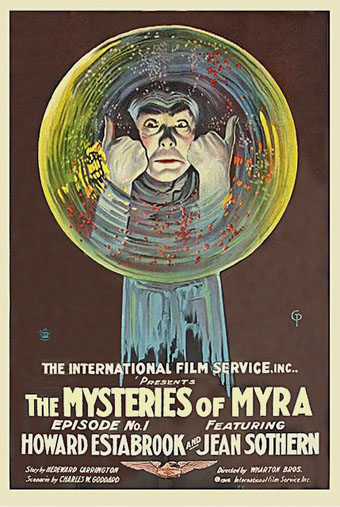
The Mysteries of Myra

crowley.jpg

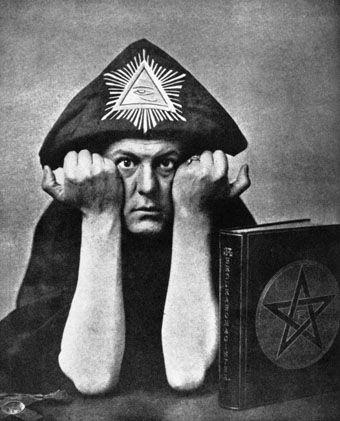
Aleister Crowley in 1912.

Back in 1999 I found myself making notes for a short essay on the subtle and often tenuous presence of Aleister Crowley in cinema. Despite Crowley’s reputation in the early years of the 20th century—famously labelled by tabloid hyperbole as “The Wickedest Man in the World”—he doesn’t seem to have ever been filmed. He does have a succession of cinematic avatars, however, in a variety of thrillers and horror films, usually manifesting in the guise of a fictional magus whose exploits will be based on the more lurid public perceptions of the Crowley persona.

myra1.jpg

After some research my short essay bloomed into a longer essay then began developing into a book-length project which I had the good sense to abandon. The idea still interests me but I didn’t have the time or resources to devote to all the detailed research such a project would require if it was going to be done thoroughly. It was also difficult at that time to see the some of the more obscure films, a crucial early example being Rex Ingram’s 1926 adaptation of The Magician, Somerset Maugham’s first novel whose central character, Oliver Haddo, is based on Crowley. The Magician has now been restored and reissued but at that time it was out of circulation entirely.

myra3.jpg

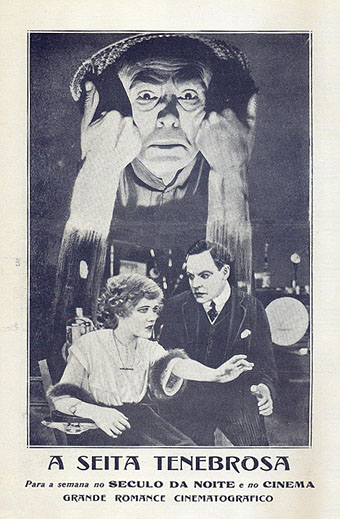
A Portuguese magazine ad.

It’s also the case that there always seems to be more to find on this subject, a prime example being The Mysteries of Myra, a lost serial directed by Leopold & Theodore Wharton which has only now come to my attention. If the title seems vaguely familiar it’s because the screenwriter was one Charles W Goddard whose earlier The Perils of Pauline survives as a touchstone for silent melodrama if nothing else. The Mysteries of Myra dates from 1916, and is distinguished by being one of a number of films which received effects advice (and publicity, of course) from Harry Houdini. The Pulp Reader has a précis which includes this toothsome blurb:

BEWARE THE BLACK ORDER! So comes the warning from the spirit of Myra Maynard’s father, who reaches out to her from beyond the grave to warn her of danger from the masters of the occult arts that lurk in the shadows and mark her for murder on her eighteenth birthday. Only the world’s first psychic detective, Dr. Payson Alden, and his friend Haji the Brahman mystic, can save clairvoyant Myra from the terrors of The Grand Master of the Order, who tries to claim not only her fortune but her life by means of suicide-inducing spells, invasion of her chamber by spirit assassins, and even reanimation of the dead by a fire elemental.

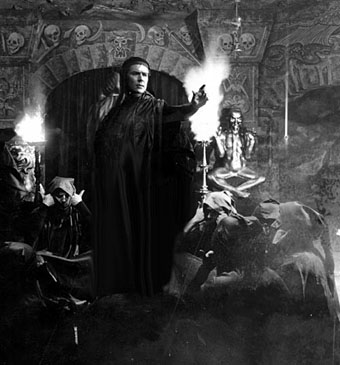
A list of the episode titles reads like a track list for a metal album or a collection of Algernon Blackwood stories: ‘The Dagger of Dreams’, ‘The Poisoned Flower’, ‘The Mystic Mirrors’, ‘The Wheel of Spirit’, ‘The Fumes of Fear’, ‘The Hypnotic Clue’, ‘The Mystery Mind’, ‘The Nether World’, ‘Invisible Destroyer’, ‘Levitation’, ‘The Fire-Elemental’, ‘Elixir of Youth’, ‘Witchcraft’, ‘Suspended Animation’, ‘The Thought Monster’. The Black Order menacing the imperilled Myra (there’s always an imperilled woman in these things) is almost certainly based on Crowley and his acolytes. John Symonds’ biography The Great Beast contains an account of Crowley’s rituals published for appalled American readers in The World Magazine in 1914. That article, and the famous 1912 photo of The Master Therion gesturing in his ceremonial robes, was all the filmmakers would have required to create their villainous cabal.

myra2.jpg

The Black Order at work.

The trouble with this kind of drama is that the description is often a lot more stimulating than the stodgy reality, so it may be for the best if Myra’s exploits have perished. Anyone eager to know more should avail themselves of the photonovel put together by the Serial Squadron using stills (some of which may be viewed here) and a novelisation of the serial story. The book is reviewed at Lovecraft is Missing. Unless anyone knows better, I’d say Aleister Crowley’s curious film career began with Myra’s mysteries.

Previously on { feuilleton }
The Mask of Fu Manchu
Aleister Crowley on vinyl

Weekend links 72

lesyeux.jpg

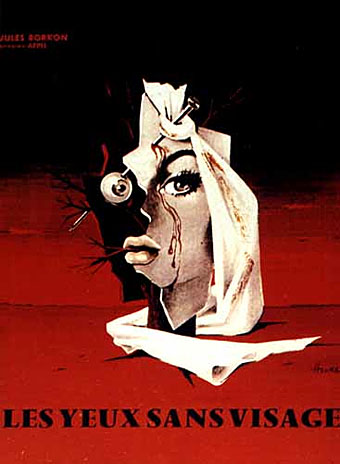
If Jean Cocteau had made a horror film it might have resembled George Franju’s dreamy and disturbing body-horror masterwork Les Yeux Sans Visage (1960). I’ve not been able to trace the artist for this poster but it’s a good example of the diluted Surrealism which was still prevalent in poster graphics at this time.

If I were asked what’s needed today, I’d say innovation, and greater timbral variety. If you truly want the audience to experience the clammy thrill of the grotesque, the uncanny and the fearful, you have to reach for the unfamilar, the perplexing, even the ugly; there’s an infinite Lovecraftian sound-world out there waiting to be explored. We need new combinations, new textures in film scoring. Horror has a licence to be weird – it’s supposed to mess with our heads. (more)

Stephen Thrower.

Stephen Thrower is an ex-member of Coil, a current member of Cyclobe, was the editor of a great magazine, Eyeball, devoted to horror cinema and what Kim Newman (casting about for a wider, non-generic label) calls “nightmare movies”, and is the author of Nightmare USA and Beyond Terror: The Films of Lucio Fulci. In other words, he’s more than qualified to write about horror film soundtracks. The reason is an event at the South Bank Centre, London, two weeks from now, Sound of Fear: The Musical Universe of Horror, one of the highlights of which will be a performance by John Carpenter’s soundtrack collaborator Alan Howarth. Related: my post about Italian horror soundtracks from 2008.

lovato.jpg

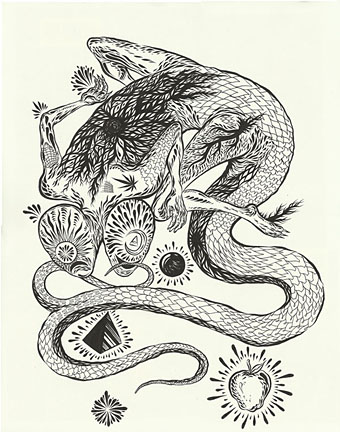
Art by Justin Lovato.

Mind Over Matter: Alan Fletcher’s The Art of Looking Sideways. “The Art of Looking Sideways captures the sensory overload of contemporary visual culture, while also acting as a primer in visual intelligence.” Related: Alan Fletcher profiled at the Design Museum.

• More music and more psychedelia: Past Present Future Space-Time “Wysing Arts Centre explores the legacy of psychedelia in this year’s annual music event”.

The Coilhouse International Silent Auction is GO and ends Sunday night if you want to bid for some rare and special things.

The Garden of Kama and Other Love Lyrics from India (1901), illustrated by John Byam Shaw.

• Chris Marker’s take on the recent London riots: Overnight.

• Bristol’s graffiti artists are redecorating the city’s streets.

• Women and knives: a Dario Argento poster gallery.

Inferno (1993) by Miranda Sex Garden, from their album Suspiria.

Wildeana 6

robinson1.jpg

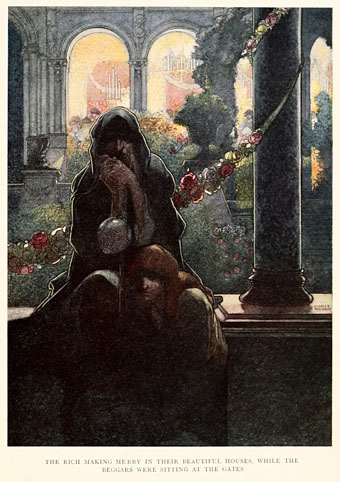
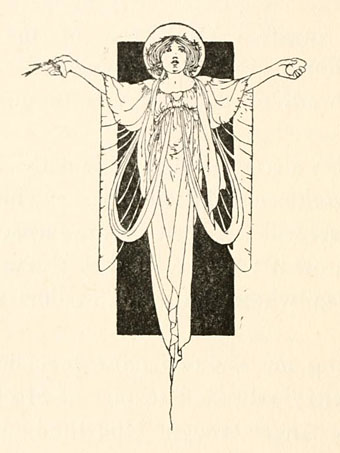
“The rich making merry in their beautiful houses, while the beggars were sitting at the gates.” Above and below: illustrations by Charles Robinson from The Happy Prince and Other Tales, an edition from 1920.

Continuing an occasional series. I’ve yet to see a copy of the recent annotated and unexpurgated edition of The Picture of Dorian Gray but Alex Ross wrote a marvellous essay for the New Yorker about the novel, its creation, its public reception, and Wilde’s decision to tone down the overt homoeroticism of its earlier drafts. This is one of the best pieces I’ve seen for a while about Wilde, replete with choice detail:

The gay strain in Wilde’s work is part of a larger war on convention. In the 1889 story “The Portrait of Mr. W. H.,” a pseudo-scholarly, metafictional investigation of Shakespeare’s sonnets to a boy, Wilde slyly suggests that the pillar of British literature was something other than an ordinary family man. In the 1891 play “Salomé,” Wilde expands a Biblical anecdote into a sumptuous panorama of decadence. Anarchists of the fin de siècle, especially in Germany, considered Wilde one of their own: Gustav Landauer hailed Wilde as the English Nietzsche. Thomas Mann expanded on the analogy, observing that various lines of Wilde might have come from Nietzsche (“There is no reality in things apart from their experiences”) and that various lines of Nietzsche might have come from Wilde (“We are basically inclined to maintain that the falsest judgments are the most indispensable to us”). Nietzsche and Wilde were, in Mann’s view, “rebels in the name of beauty.”

As for the novel, I’m feeling rather Dorian Grayed-out at the moment, having recently completed ten illustrations based on the story for a forthcoming anthology. More about that later.

Elsewhere, the William Andrews Clarke Memorial Library in Los Angeles has been running an exhibition, Oscar Wilde & the Visual Art(ists) of the Fin-de-Siecle, since July, and will continue to do so until the end of September. No word about what’s on display but this page on their website has details of their collection of Wilde materials which they say is the most comprehensive in the world.

Finally, the majority of visits to these pages in recent days have come from this post about Ivan Albright’s astonishing Dorian Gray painting in the Art Institute of Chicago. The post links to an earlier one of mine about the paintings used in Albert Lewin’s 1945 film of the book.

robinson2.jpg

Elsewhere on { feuilleton }
The Oscar Wilde archive