Rhinoceros by Jan Lenica

lenica1.jpg

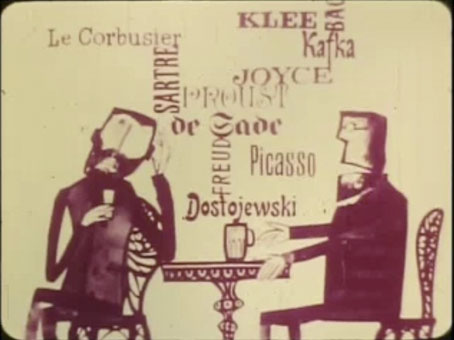
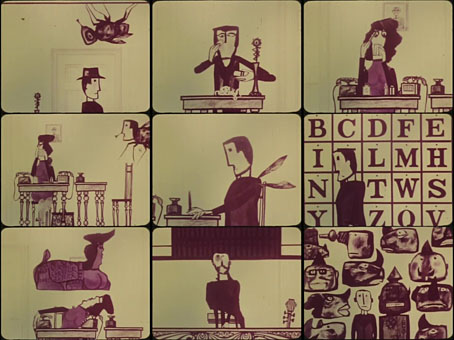
As noted here last year, Polish artist Jan Lenica (1928–2001) was also an animator as well as a celebrated poster designer. Die Nashörner (1964) is an 11-minute condensation of Eugène Ionesco’s Rhinoceros that no doubt works best if you’re familiar with the play but which nevertheless contains some funny moments, especially when “Rhinocerosism” starts to spread. The film is free to download at the Internet Archive.

lenica2.jpg

Previously on { feuilleton }
Repulsion posters
Dom by Walerian Borowczyk and Jan Lenica
Labirynt by Jan Lenica

Polanski details

polanski01.jpg

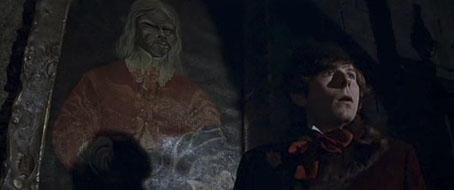
Roman Polanski as Alfred in Dance of the Vampires (1967).

I’ve always admired the attention to detail in Roman Polanski’s films, a quality evident not only in his careful adaptations but also in areas that lesser filmmakers might ignore. Dance of the Vampires (1967) is a good example (sorry, I refuse to call it by the title MGM used for its edited US release): the sets and decor are remarkable, and the editing and camera work so skilfully blends studio constructions with location shots that for years I was convinced the film was made in a genuine European castle. The atmosphere is so carefully sustained that I found the whole thing as terrifying on first viewing as any Hammer film, despite the broad humour. In the set-piece moments Polanski (and soundtrack composer Krzysztof Komeda) put many of the later Hammer vampire films to shame.


The Vampire Portraits
polanski02.jpg

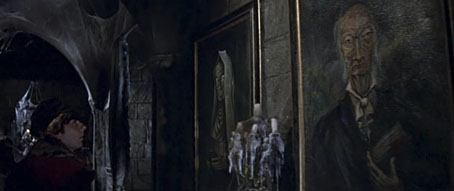
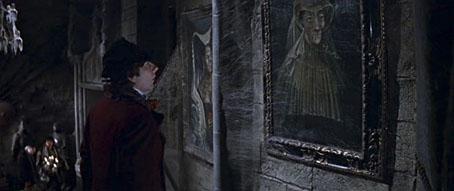
The production design and art direction for Dance of the Vampires was created by Wilfred Shingleton and Fred Carter, both of whom later worked on Polanski’s Macbeth, and who fill the rooms with mouldering furnishings and rotting decoration. One striking sequence concerns a walk through a gallery of vampire portraits that are the creepiest paintings seen on film since Ivan Albright’s portrait of a decrepit Dorian Gray. Film credits in the 1960s were sparse so there’s no indication of the artist responsible. However, one portrait glimpsed at the end of the gallery (below) is a copy of the “Ugly Duchess” painting by Quinten Matsys.
polanski03.jpg


Rosemary’s Book

polanski04.jpg

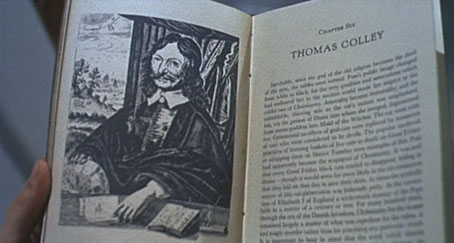
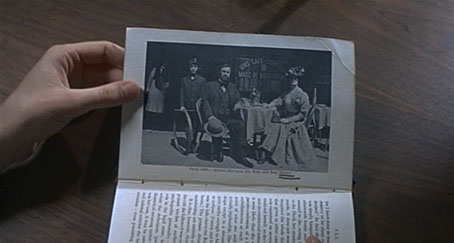
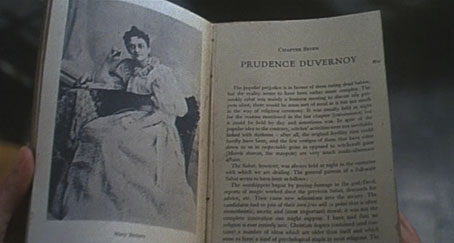
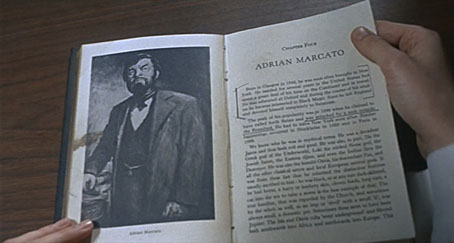
A sign that filmmakers care about detail is when they make their fictional books look like the genuine article. The history of witchcraft in Rosemary’s Baby (1968) could easily have been glimpsed very briefly but Polanski shows Rosemary leafing through its pages in a sequence of Hitchcock-like view-reaction-view shots that make it appear as convincing as possible. The shots also make the viewer examine the book through Rosemary’s eyes, something Polanski does throughout the film.
polanski05.jpg

polanski06.jpg

polanski07.jpg


Trelkovsky’s Paintings

polanski09.jpg

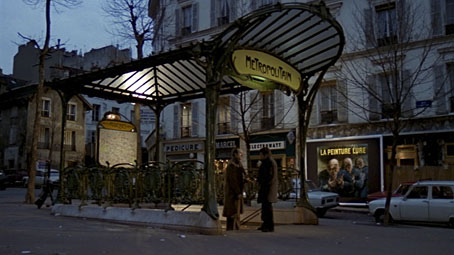
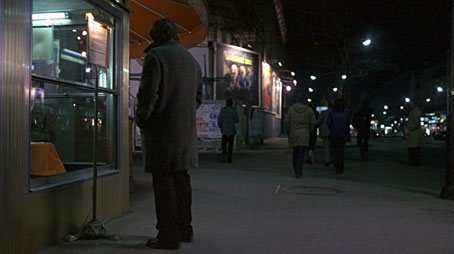
The Tenant (1976) is Polanski’s third study of apartment-dwelling paranoia, a superb adaptation of Roland Topor’s novel, Le Locataire chimérique (1964). The screenplay removes some of Topor’s ambiguity—and the film is spoiled by unsympathetic dubbing of the French actors—but in every other respect it’s as good as Repulsion for its portrait of an isolated individual (here portrayed by Polanski himself) surrendering to madness.
polanski10.jpg

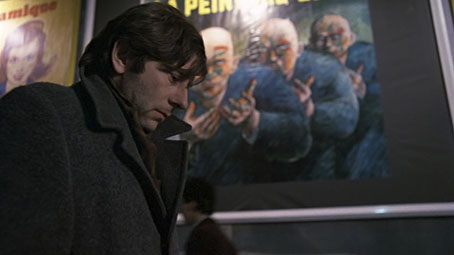
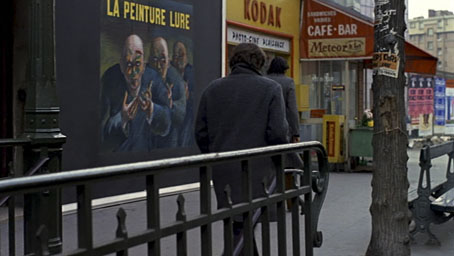
Among the many visual details which add to the unease is the appearance halfway through the film of billboards advertising…what? A painting exhibition? Or something more sinister? We never find out. The presence of these figures and their slogan—”La Peinture Lure”—remains as cryptic as many of the other unresolved questions which prey upon the beleaguered Trelkovsky.
polanski11.jpg

polanski12.jpg


Corso’s Postcard

polanski13.jpg

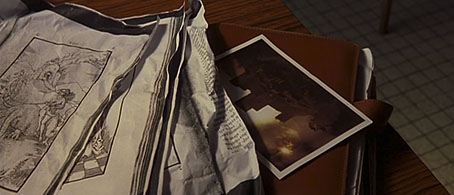
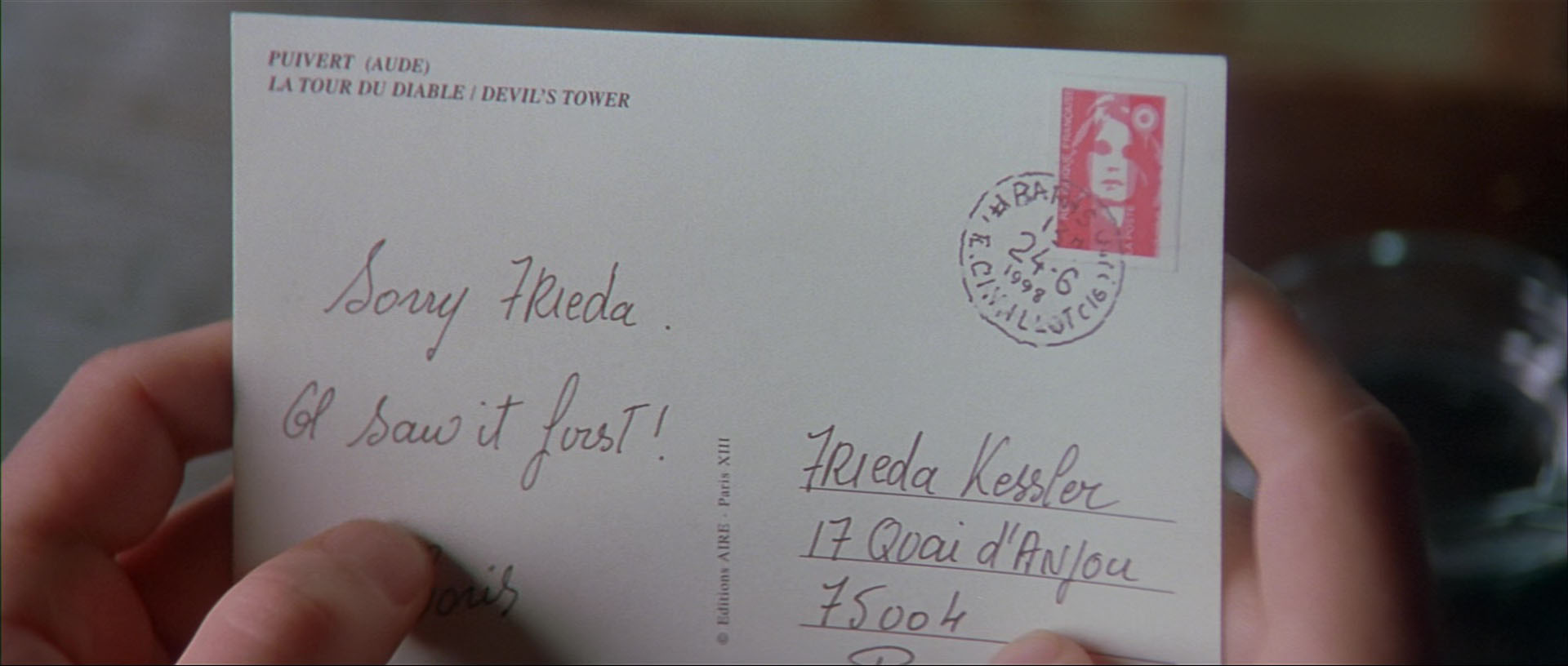
I’m in the minority of people who like The Ninth Gate (1999) a great deal even though it takes some liberties with Arturo Pérez-Reverte’s wonderful novel The Dumas Club. Once again, the bibliographic details are perfectly done, a crucial matter in a film about the antiquarian book trade. Near the end of the film Dean Corso (played by Johnny Depp) finds a postcard that leads him to the final location. On the back of the card there’s a blink-and-you-miss-it detail. Polanski’s wife, Emmanuelle Seigner, plays the mysterious and nameless woman who follows Corso throughout the film. By this point we already know she possesses occult powers so it’s not really surprising to see her face in the postage stamp, something that Corso doesn’t seem to notice.
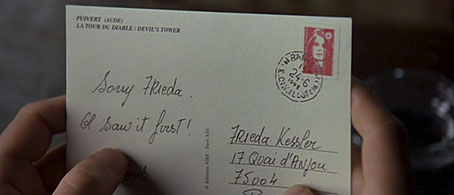
polanski14.jpg

Previously on { feuilleton }
Repulsion posters
Atalanta Fugiens
Le Grand Macabre
Les Temps Morts by René Laloux
The writhing on the wall

Weekend links 141

nguyen.jpg

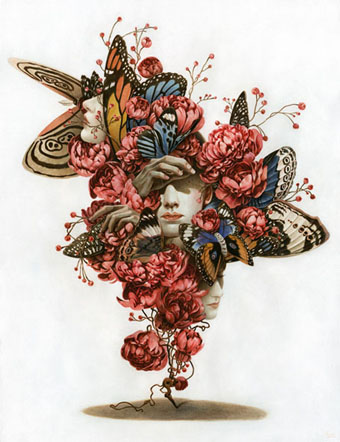
From the Beautiful Faces series (2012) by Tran Nguyen.

• “What possessed a generation of young European artists, and a few Americans, to suddenly suppress recognizable imagery in pictures and sculptures? Unthinkable at one moment, the strategy became practically compulsory in the next.” Peter Schjeldahl on the birth of abstraction.

• “A profanely mystical work of hyperpurple theory-porn, ObliviOnanisM is an auto-erotic intellectual fiction envisioning the phantastical unending odyssey of a young woman, Gemma, whom you will never know.”

Psychedelia—An Ancient Culture, A Modern Way of Life, a 520-page history of psychedelic culture by Patrick Lundborg. Related: Ken Kesey talks about the meaning of the Acid Tests.

[Hodges] made a convincing case that Turing’s teenage crush on a fellow schoolboy, Christopher Morcom, was an important catalyst for his lifelong preoccupation with the relationship between brain and mind. Morcom’s unexpected death at the age of eighteen was a shattering blow to Turing, who began to reflect on whether his friend’s consciousness might survive after death or whether it was simply a result of complex material processes and expired when life did. Hodges also linked the famous “Turing Test”, in which a computer attempts to pass as an intelligent human being, to Turing’s own dilemma as a gay man in a homophobic world. (Turing called his test the “imitation game”, and Hodges observed, “like any homosexual man, he was living an imitation game, not in the sense of conscious play acting, but by being accepted as a person that he was not”.)

Michael Saler reviews three books about computing pioneer Alan Turing

• Paul Gallagher at Dangerous Minds looks at Flowers, Lindsay Kemp’s theatrical staging of Genet’s Our Lady of the Flowers.

David Pearson designed a new edition of George Orwell’s Nineteen Eighty-Four for Penguin.

• Quadtone – Lumisonic Rotera: Mariska de Groot plays a light-to-sound instrument.

“Cash Mobs” Go Global—Battle Spreads Against Chain Store Dominance.

Cities and the Soul: a feast of Italo Calvino links at MetaFilter.

25 dessins d’un dormeur, Jean Cocteau, 1929.

Haunted Decor: a Flickr group.

Computer In Love (1966) by Perrey & Kingsley | Computer Love (1981) by Kraftwerk | Computer Love (1992) by The Balanescu Quartet

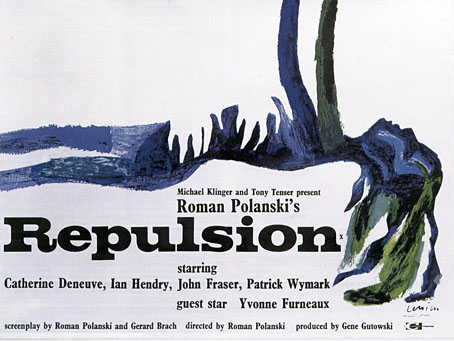
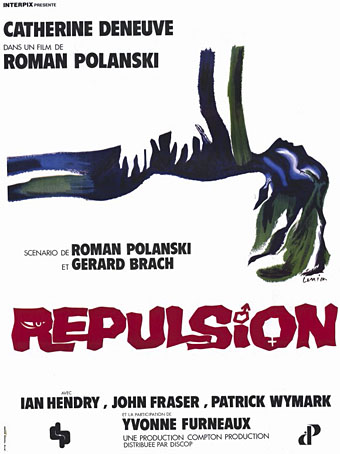
Repulsion posters

repulsion1.jpg

More Roman Polanski. The BFI is running a season of the director’s work through January and February so Repulsion (1965) and Chinatown (1974) have been put back into circulation nationwide. I don’t live in London but I have a large number of Polanski’s films on DVD so it looks like this month will also see a mini-season in south Manchester. Anchor Bay released a set of Polanski’s first three films (plus a disc of his short works) a few years ago, a great collection whose only flaw was a lack of Jan Lenica’s poster art for Repulsion and Cul-de-Sac (1966). I don’t know what posters are being used to promote the new release of Repulsion but something using Lenica’s artwork would seem essential.

repulsion2.jpg

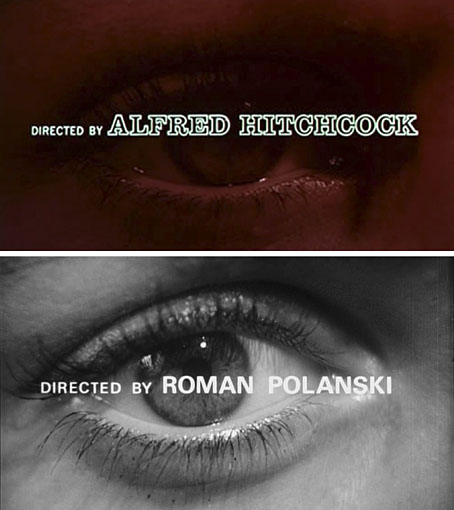
The colour and brush style of the prone figure is very typical of Lenica but when combined with either the Clarendon typeface in the British example above, or the blocky lettering for the French poster, a Saul Bass-like design appears. The gender and eye symbols in the hand-drawn lettering reinforce a resemblance which I’d guess was deliberate. The title sequence for Repulsion, with the credits sliding across a close view of Catherine Deneuve’s eyeball, could almost have been created by Bass; the director’s credit (below) requires no further argument.

repulsion7.jpg

Continue reading “Repulsion posters”

Geschichte der Nacht

klopfenstein.jpg

Houses, lines of houses, streets, miles of pavements, piledup bricks, stones. Changing hands. This owner, that. Landlord never dies they say. Other steps into his shoes when he gets his notice to quit. They buy the place up with gold and still they have all the gold. Swindle in it somewhere. Piled up in cities, worn away age after age. Pyramids in sand. Built on bread and onions. Slaves Chinese wall. Babylon. Big stones left. Round towers. Rest rubble, sprawling suburbs, jerrybuilt. Kerwan’s mushroom houses built of breeze. Shelter, for the night.

Epigraph from Geschichte der Nacht; a quote from Ulysses by James Joyce

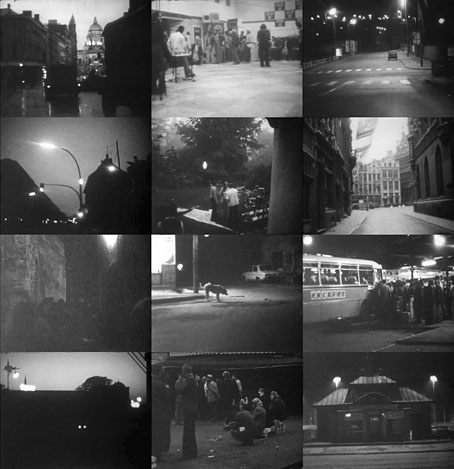
Commissioning the Third Ear Band to create the score for Roman Polanski’s Macbeth was an assuredly good move. Using their music to embellish static scenes of European cities at night is a less obvious one but not as inappropriate as it might seem. Swiss filmmaker Clemens Klopfenstein uses the group’s music sparingly in Geschichte der Nacht (1979), an hour-long record of unidentified streets in unidentified cities after dark. When there’s no music you have the location sound. There’s no narrative, not even in the common documentary sense, simply the atmosphere of neglect that falls over a city during the night and the early hours of the morning. The copy linked here is at Ubuweb where the contents aren’t always permanent. Watch it while you have the chance. Via Ghetto Raga, a Third Ear Band blog.