Weekend links 234

dezso.jpg

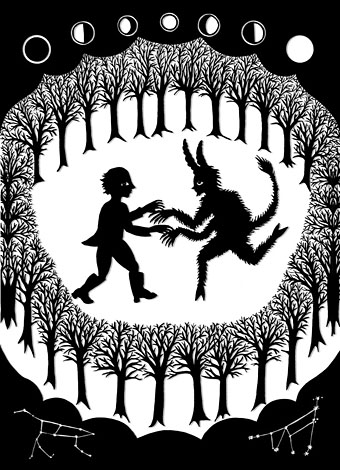
The Devil in the Green Coat by Andrea Dezsö, an illustration for a new, uncensored edition of the Grimm Brothers’ Fairy Tales.

• That { feuilleton } object of cult attention, Penda’s Fen, a 1974 television film by David Rudkin directed by Alan Clarke, continues its long journey out of the shadows. To coincide with a screening in London of a 16mm print, Sukhdev Sandhu looks back at a unique drama, and examines its connections to other British films of the period. There’s still no sign of a DVD release although rumours persist. Related: Penda’s Fen at A Year In The Country.

• “One of the reasons I’m sure I found the horror genre congenial is that it’s almost always focused on the body. The body is the center of all horror films.” David Cronenberg talking to Calum Marsh about his novel, Consumed.

• Mix of the week: Antony Hegarty’s Future Feminist Playlist, and Secret Thirteen Mix 134 by James Ginzburg & Yair Elazar Glotman. Related: Nimbes by Joaniele Mercier & James Ginzburg.

• Another week, another Kickstarter: Suzanne Ciani: A Life in Waves is a planned feature-length documentary about the American synthesist and composer.

• “[Marjorie] Cameron’s connections to Scientology and powerful men once drew headlines, but now her art is getting its due,” says Tanja M. Laden.

Jay Babcock found a Hawkwind Tarot spread in International Times for 1971. Is this an overlooked Barney Bubbles design?

• “Tempered in the flames of hell”: Helen Grant on the precursors of Robert Louis Stevenson’s The Bottle Imp.

Hawthonn: Phil and Layla Legard (and others) remember John Balance with a special musical project.

Derek Jarman Super 8 by James Mackay, a book of stills from Derek Jarman’s Super 8 films.

• “Coltrane’s free jazz wasn’t just ‘a lot of noise’,” says Richard Brody.

This might be the world’s first book on colour palettes.

Paris 1971 (1971) by Suzanne Ciani | The Fifth Wave: Water Lullaby (1982) by Suzanne Ciani | Blue Amiga (2014) by NeoTantrik & Suzanne Ciani
Necrology, a film by Standish Lawder

necrology.jpg

O dark dark dark. They all go into the dark,
The vacant interstellar spaces, the vacant into the vacant,
The captains, merchant bankers, eminent men of letters,
The generous patrons of art, the statesmen and the rulers,
Distinguished civil servants, chairmen of many committees,
Industrial lords and petty contractors, all go into the dark,
And dark the Sun and Moon, and the Almanach de Gotha
And the Stock Exchange Gazette, the Directory of Directors,
And cold the sense and lost the motive of action.

TS Eliot, East Coker from Four Quartets

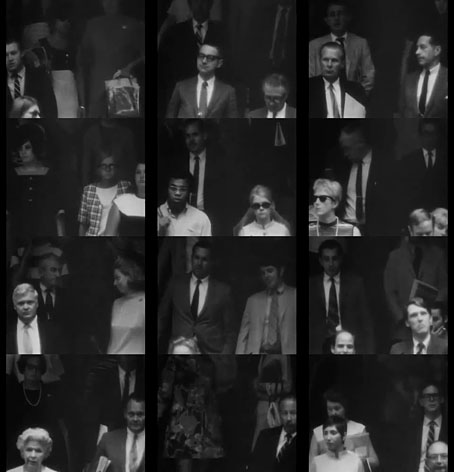
Necrology (1970), a 12-minute film by Standish Lawder.

MCMLXX

data70.jpg

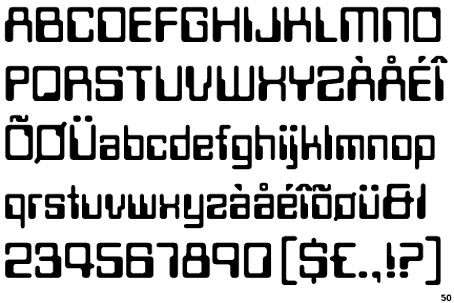
Data 70, a typeface by Bob Newman.

The presence of electronic artists Data 70 in the Spatial mix at the weekend had me thinking about the preponderance of cultural items that were given “70” as a suffix in the 1960s or in the year 1970. The air of futuristic optimism in the 60s drew attention to the birth of a new decade in a manner that hadn’t really happened before, and certainly didn’t happen for 1980 by which time the optimism had been sunk by a decade of political and fuel crises, and the end of the space race.

Data 70 take their name from the “futuristic” computer-like typeface designed by Bob Newman in 1970. Newman’s typeface wasn’t the first of the Space Age designs—Colin Brignall’s Countdown appeared in 1965—but Data 70 was everywhere in the 1970s. Data 70 (the group) dedicated a piece of music to Newman.

A few more 70s follow. These are only the ones I’ve been able to remember or stumble across so I’m sure there are more. And note: to qualify for this micro-category something has to be named “70” only where the suffix signifies modernity or the future, no Expo 70 (the world’s fair in Osaka) or anything annual that happened to be labelled 70 as part of a series.

boccaccio.jpg

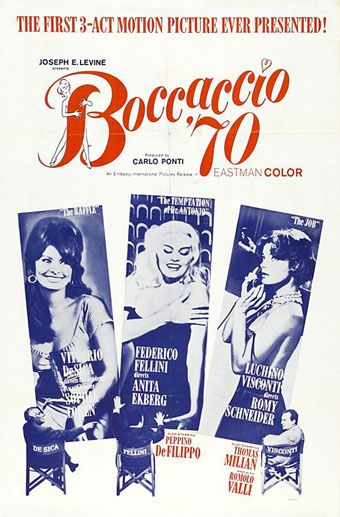
Boccaccio 70 (1962).

The label might imply the future but the predominant tone of these entries is sex. Boccaccio 70 set things in motion by updating the Decameron to modern Italy. Despite the claims of the poster, anthology films are nothing new, and this one has four stories directed by Vittorio De Sica, Federico Fellini, Mario Monicelli and Luchino Visconti. Italo Calvino was one of the writers.

Continue reading “MCMLXX”

Maximiliana oder die widerrechtliche Ausübung der Astronomie

ernst1.jpg

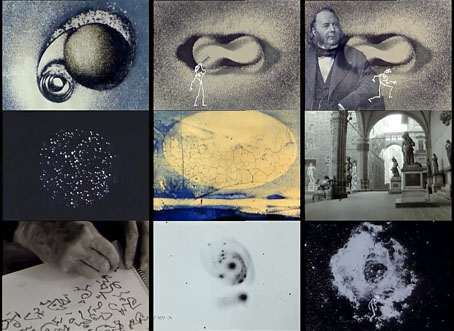
The title of this 10-minute film translates as Maximiliana or the Illegal Practice of Astronomy which is also the name of an art book created by Max Ernst in 1964. The film was a collaboration between Ernst and filmmaker Peter Schamoni, the subject being German astronomer and lithographer Ernst Wilhelm Leberecht Tempel (1821–1889). Tempel’s astronomy was “illegal” because he was regarded as an amateur by other astronomers which meant he was denied permission to name his discoveries. Maximiliana was the name Tempel and physicist Carl August von Steinheil decided on for an asteroid that Tempel discovered in 1861. This was deemed unacceptable so the asteriod was given the name Cybele instead (now 65 Cybele).

ernst2.jpg

Some of this is related in Schamoni’s film but you’ll need an understanding of German to appreciate the detail. The film is worth a look for other reasons, notably some shots of Ernst filling sheets of paper with the curious hieroglyphs that cover the surfaces of some of his later paintings. These hieroglyphs also feature in the Tempel book, and one of them appears in the film as an animated figure. Peter Schamoni made a number of art films including an excellent feature-length documentary about Max Ernst in 1991. That’s also on YouTube but untranslated so you’ll need some good German (and French) to appreciate it.

Previously on { feuilleton }
Max and Dorothea
Dreams That Money Can Buy
La femme 100 têtes by Eric Duvivier

Fog Line, a film by Larry Gottheim

fogline.jpg

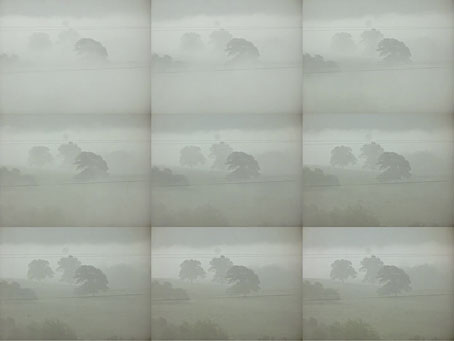
As a piece of minimalist cinema, Fog Line (1970) makes Michael Snow’s Wavelength seem hyperactive. In a static 11-minute shot, trees and fields emerge from drifting fog; no sound or music, just the trees, a few suspended wires and the fog. Immerse yourself here.

fog.jpg

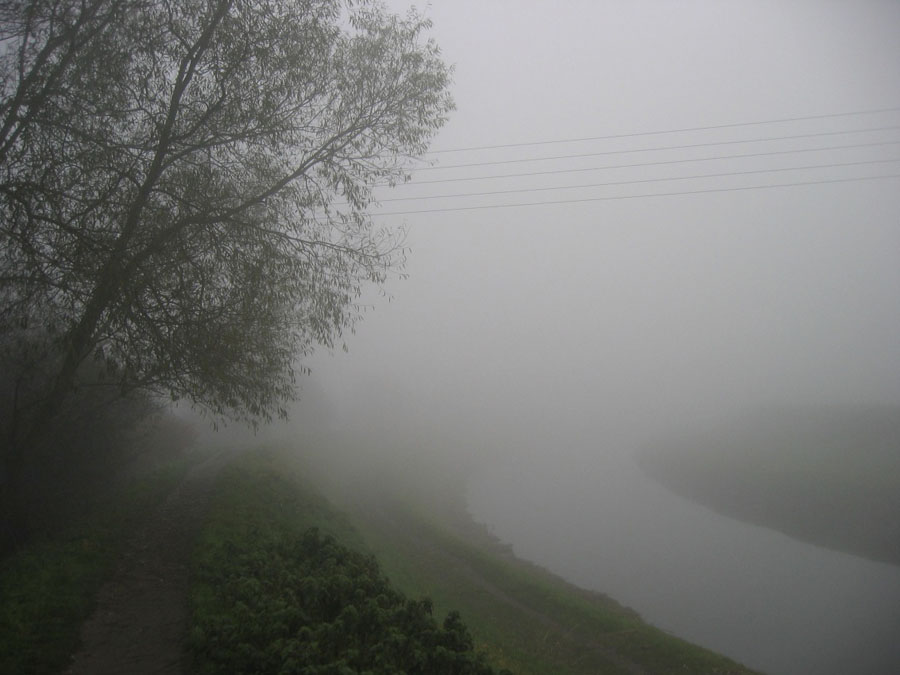
Gottheim’s film reminded me of the photos I took in 2005 one damp and chilly November afternoon on the banks of the River Mersey. The river snakes through south Manchester on its way to Liverpool, and is a pleasant place to walk when the ground isn’t as sodden as it was on this occasion. There’s a few more photos from that session here.

Previously on { feuilleton }
Wavelength
La Région Centrale