The Mascot, a film by Wladyslaw Starewicz

mascot1.jpg

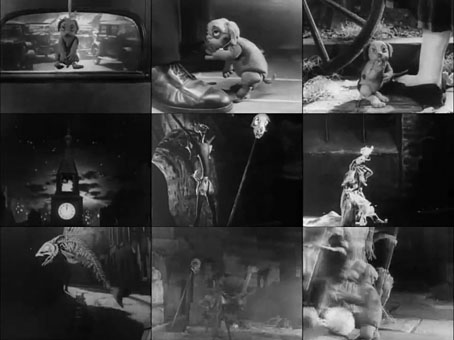
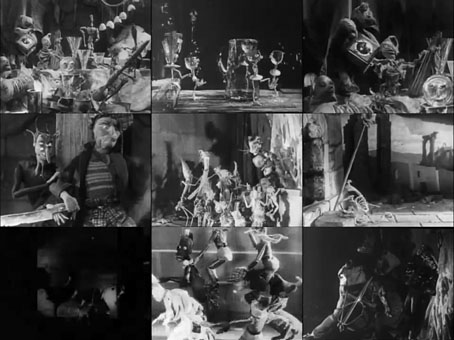
A recent interview with the Brothers Quay mentioned The Mascot (1933), a Starewicz animation I’d not seen, so here it is. IMDB has a summary:

A toy stuffed dog has just been sewn together when it hears a young child ask for an orange. The child’s mother explains that they have no money, and so she cannot buy any oranges. The dog is then packed up along with a box full of other toys to be sold, but it soon winds up in the street. The dog picks up an orange from a curbside stand, and hopes to take it home to the child. But that night, before the dog can get back to the child’s home, it must face a series of strange and frightening adventures.

A toy’s separation from its owner followed by a fraught journey home is essentially the plot of all the Toy Story films, but Starewicz’s short is rather more grotesque than anything you’ll get from Pixar, especially in the carnivalesque second half. There’s a choice of viewing (and quality) at YouTube, Ubuweb or the Internet Archive.

mascot2.jpg

Weekend links 273

pelcer.jpg

Byronic I by Boris Pelcer. Via Full Fathom Five.

• “Music determines everything in terms of our narrative. Music demands, music suggests. Whereas traditional Hollywood animation is all based on character development—you know, there’s Toy Story and it’s Tom Hanks’s voice pushing the thrust of the action. For us, décor is all part of it. It’s the objects, a sense of atmosphere, the stimmung (mood) of what’s happening in this landscape where the puppet is just, invariably, a tiny element.” The Brothers Quay talking to JW McCormack about their films, and about Quay, a short documentary by Christopher Nolan.

• Croissants with Cthulhu: Stephanie Gorton Murphy reports on the Cthulhu Prayer Breakfast at last week’s NecronomiCon. I didn’t attend this: abject silliness is the last thing I want at 8 o’clock in the morning.

• “…a light daze for the rest of the afternoon, detrimental to studying but advantageous for daydreaming.” Italo Calvino on his cinema-going youth.

Only in that brief moment of absolute uncertainty – when both options seem equally plausible and implausible, when neither thought can be accepted or rejected, when everything can be explained and nothing can be explained – only in that moment do we really have this horror of philosophy, this questioning of the principle of sufficient reason. It is for this reason that Todorov qualifies his definition by stating that the “fantastic occupies the duration of this uncertainty.”

Eugene Thacker in an extract from Tentacles Longer Than Night (Horror of Philosophy, vol. 3), Zero Books, 2015

• It’s always good to hear some new rumblings by Emptyset. The Guardian has a stream of side 1 of the latest release, Signal.

• David Rudkin’s Penda’s Fen receives a film screening at the Whitechapel Gallery, London, on Saturday, 5th September.

Sea Calls Me Home, another song from the forthcoming Julia Holter album.

• Digital visualizations of imagined future landscapes by Mike Winkelmann.

• Mix of the week: The Ivy-Strangled Path Vol. IX by David Colohan.

• Cherchez la femme: Women and Surrealism at Sotheby’s, NYC.

• At It’s Nice That: 50 years of A Humument by Tom Phillips.

April 16, 1963: Housewife on LSD

Tentaclii: a Lovecraft blog

Signal (1981) by Phew | Signals (1983) by Brian Eno with Daniel Lanois and Roger Eno | Signals (2010) by The Soundcarriers

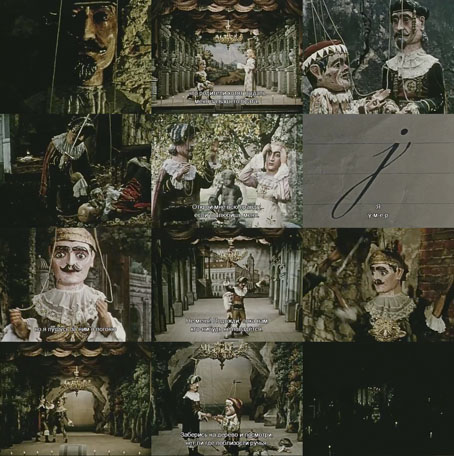
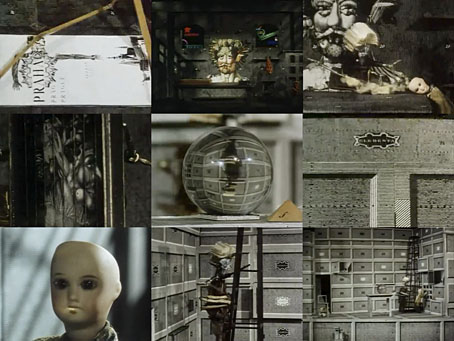
The Cabinet of Jan Švankmajer, a film by the Brothers Quay

quays1.jpg

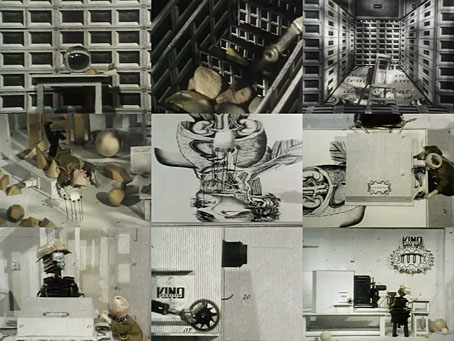
A busy week here (for a change) so this is a bit of a lazy choice but there is a Wunderkammer present. The Quays made this in 1984 for a Švankmajer documentary, and it’s still one of my favourites: Švankmajer as subject, lots of Prague references, and wonderful music (borrowed from Švankmajer’s own films) by Zdeněk Liška. This is also one of the few films you’ll see with animated characters demonstrating some film animation of their own. Watch it here.

quays2.jpg

Elsewhere on { feuilleton }
The Quay Brothers archive

The Metamorphosis of Mr Samsa, a film by Caroline Leaf

metamorphosis.jpg

Caroline Leaf’s adaptation of Franz Kafka’s most famous story was made by animating sand on a pane of illuminated glass. Leaf made several films using this technique which gives painterly, if monochromatic, results, and is probably less time-consuming than other techniques that aim for similar effects. This is one story that’s best treated as an animation (or theatre, as Steven Berkoff demonstrated); Kafka’s Ungezeifer is a famously difficult word to translate into English, and an even more difficult concept to bring to life in a film studio.

Previously on { feuilleton }
Kafkaesque
Screening Kafka
Designs on Kafka
Kafka’s porn unveiled
A postcard from Doctor Kafka
Alexandre Alexeieff and Claire Parker
Steven Soderbergh’s Kafka
Kafka and Kupka

Shadowland, a film by Anthony Lucas

shadowland.jpg

I forget who recommended this to me but the tip was probably a result of my recent work with silhouettes on Ishbelle Bee’s book covers. Shadowland (1988) is a short student film which, for the most part, concerns the conflict between stick-figure humans and an army of giant winged insects. It’s not quite a silhouette work in the manner of Lotte Eisner since the figures and decor all show some solidity. Everything is in shadow, however, hence the title. Watch it here.