Ray Harryhausen’s swords and sorceries

golden1.jpg

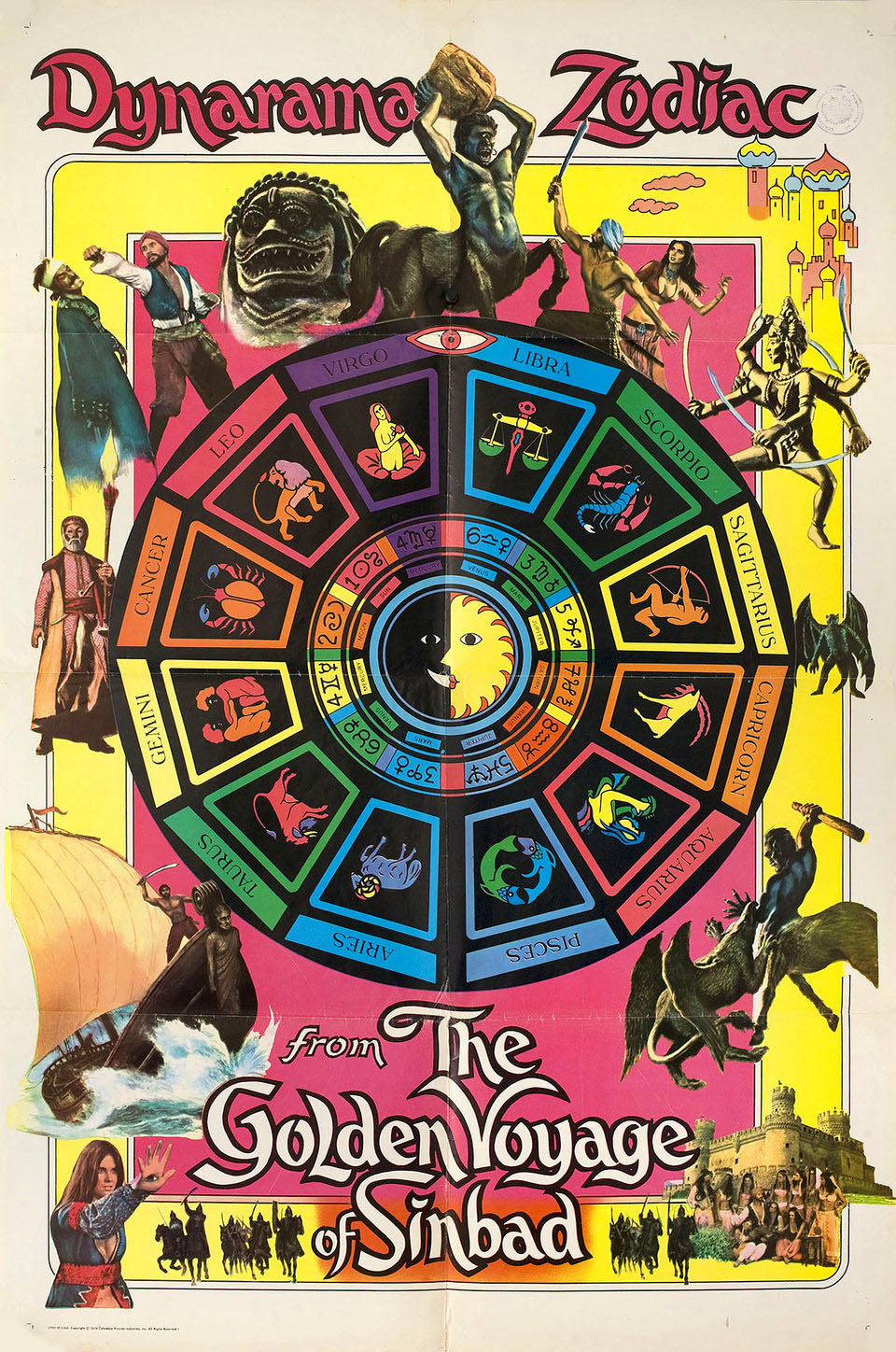
It was the 1970s: promoting Sinbad with a Zodiac poster for the blacklight brigade.

Last month I took advantage of the recent Indicator sale to buy blu-rays of a couple of favourite Ray Harryhausen films, together with Indicator’s reissued box of the three Harryhausen Sinbad features: The 7th Voyage of Sinbad (1958), The Golden Voyage of Sinbad (1973), and Sinbad and the Eye of the Tiger (1977). I’m very familiar with these films but hadn’t seen them for many years. Watching them again made me realise for the first time what perfect examples they are of sword-and-sorcery cinema even though you never see them classed as such. I’ve been reading sword-and-sorcery fiction for almost as long as I’ve been watching Ray Harryhausen films but this rather obvious insight hadn’t occurred to me before, no doubt because I’d always regarded the Sinbad cycle as Arabian Nights fantasies in the manner of The Thief of Bagdad. The 1940 version of the latter happened to be a Harryhausen favourite which prompted his decision to film an Arabian adventure following his monster-on-the-rampage pictures of the 1950s. He subsequently asked The Thief of Bagdad‘s composer, Miklós Rózsa, to score The Golden Voyage when Bernard Herrmann was unable to do so.
seventh.jpg

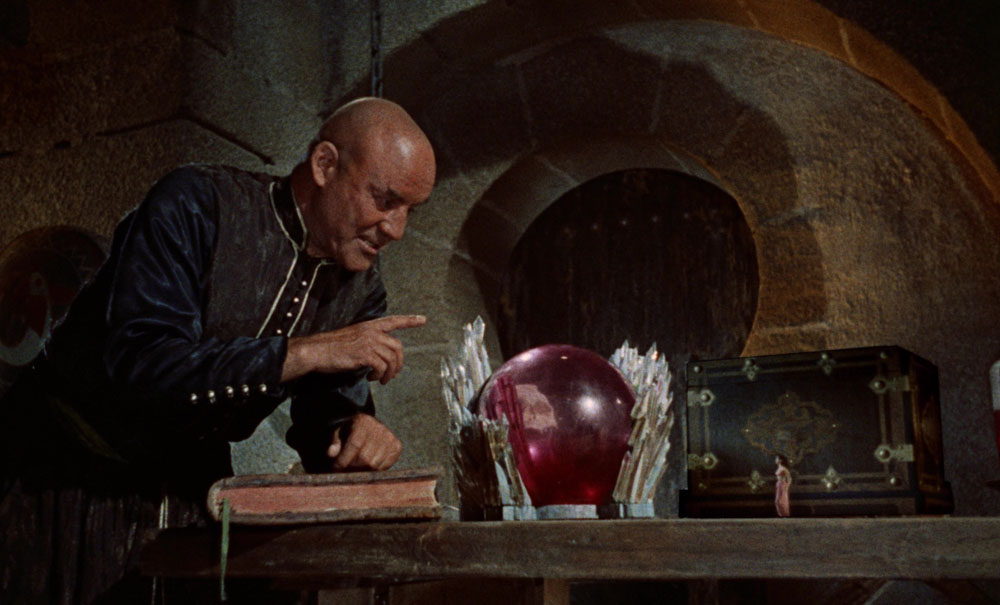
Sokurah (Torin Thatcher) with a shrunken Princess Parisa (Kathryn Grant).

The 7th Voyage is at least based on the original Sinbad tales but the second and third films have little to do with The Arabian Nights beyond Sinbad’s persona and a handful of cultural references. If you swapped the Arabian names for invented ones then you’d be even closer to the stories of Clark Ashton Smith and his colleagues at Weird Tales than the films already are. Smith’s sorcery-infused fiction is the key here even though his stories are light on sword-play. The sight of a shaven-headed Torin Thatcher as Sokurah, the duplicitous magician in The 7th Voyage, was so strongly reminiscent of one of Smith’s many sorcerers—he even looks a little like Virgil Finlay’s depiction of Dwerulas from The Garden of Adompha—that I couldn’t help but watch the films this time as though they were adaptations of Smith’s fantasies. In The 7th Voyage the similarity is most evident in the scene where Sokurah demonstrates his powers to the caliph by temporarily turning a handmaiden into a serpent-woman, and the later scenes in Sokurah’s underground fortress. Smith and his cohorts in the pulp magazines were of course refashioning elements from The Arabian Nights and from other legends so none of this should be surprising. The 7th Voyage may take some of its scenes from The Arabian Nights but the story establishes the template which the sequels follow, with Sinbad pitted against a magic-wielding adversary.
Continue reading “Ray Harryhausen’s swords and sorceries”

11 Preliminary Orbits Around Planet Lem by the Brothers Quay

lem.jpg

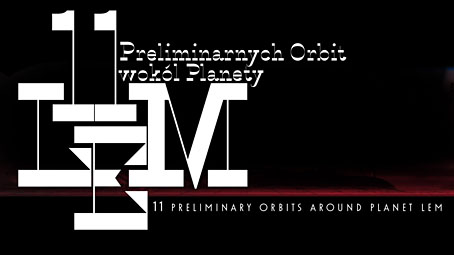
Here come the Quays again with another short documentary for the Polish Cultural Institute. This was posted only a few days ago to acknowledge the centenary of the birth of writer Stanisław Lem. It’s only the briefest run through Lem’s career as a writer of science fiction but it does include a sequence that lists the films adapted from his work which is a useful reminder of all the ones I’ve yet to see. And the piece ends with an extract from Maska, the Quays’ own adaptation of a Lem short story, and a favourite of mine among their recent films. (Thanks to Tomas for the tip!)

Elsewhere on { feuilleton }
The Quay Brothers archive

VadeMecum by the Brothers Quay

quays1.jpg

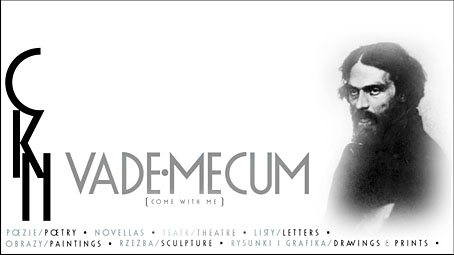
After mentioning the Brothers Quay last week it occurred to me that I hadn’t searched around for a while to see what they might have been up to recently. They continue to be productive, and only a couple of months ago released a new 12-minute short, VadeMecum, which was produced for the Polish Book Institute. This is the Quays in their documentary mode, presenting the troubled life of Polish poet and artist Cyprian Kamil Norwid, together with extracts from his poetry and examples of his drawings. Norwid’s existence was news to me so the piece successfully achieved its goal of informing the unenlightened. Last month the brothers talked to Mikolaj Glinski at Culture.pl about their fascination with Polish art and literature.

quays2.jpg

Meanwhile, the Quays are no doubt continuing to work on their third feature film, Sanatorium Under the Sign of the Hourglass, in which they return to the writings of Bruno Schulz. Schulz’s story collection was adapted by Wojciech Has in 1973 as The Hourglass Sanatorium, a film I recommend most highly. The quality of the Quays version may be judged by this six-minute preview which immediately sets itself apart from the Has film with its puppets modelled on Schulz’s illustrations. I’ll be waiting impatiently for this one.

Elsewhere on { feuilleton }
The Quay Brothers archive

Weekend links 594

klinger.jpg

Eva und die Zukunft (1898) by Max Klinger.

• “It is no exaggeration to say that MAD invented the modern, postwar American takedown.” Thomas Larson reviews Seeing MAD: Essays on Mad Magazine’s Humor and Legacy.

• At the Internet Archive: Cartoon Modern: Style And Design In Fifties Animation (2006) by Amid Amidi, a book which has been made available as a free download by its author.

• New music: A preview of Metta, Benevolence by Sunn O))), recorded live in the Mary Anne Hobbs’ radio show in 2019; Veils by Víz; The Mountain (Blakkat Dub) by Ladytron.

• At Public Domain Review: Claude Mellan’s The Sudarium of Saint Veronica (1649), an engraving made with a single continuous line.

• “For Harry Houdini, séances and Spiritualism were just an illusion,” says Bryan Greene.

TheStencil is Steven Heller’s font of the month.

• At Dennis Cooper’s: Derek Jarman Day.

Nicky Mao’s favourite music.

Mad Man Blues (1951) by John Lee Hooker | Mad Pierrot (1978) by Yellow Magic Orchestra | Mad Keys (2002) by Al-Pha-X

Mask of the Red Death, 1969

masque.jpg

More animation, and more Edgar Allan Poe, although the story is reduced to a minimal trace in this 1969 short from the Zagreb animation studios. I’ve no idea whether the title is a misreading (or mistranslation) of Poe’s or a deliberate play on the masks used in the masque but I’ve gone with the most common labelling. Directors Branko Ranitovic and Pavao Stalter use a paint technique to sketch the stages of a tale that continues to resonate today. Watch it here.

Previously on { feuilleton }
The Pendulum, the Pit and Hope
The Tell-Tale Heart from UPA