Animating the pinscreen

pinscreen1.jpg

Before the Law (1962).

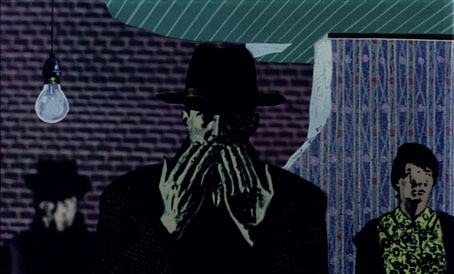
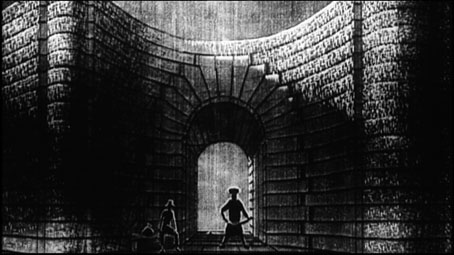
The animated films of Alexandre Alexeieff and Claire Parker have been featured here on several occasions even though they remain hard to find. I linked to a YouTube collection a few years ago but—typically for YT rarities—it’s no longer available. One example that many people will have seen is Before the Law, the short prologue and film-within-the-film that appears in Orson Welles’ adaptation of Kafka’s The Trial. Before the Law, like all the Alexeieff and Parker films, was produced with the pinscreen, a unique piece of animation technology invented by the couple. The pinscreen’s white board contains thousands of tiny pins whose angled shadows can be manipulated by pushing the pins in or out to create sharp lines or subtle monochrome shades.
pinscreen2.jpg

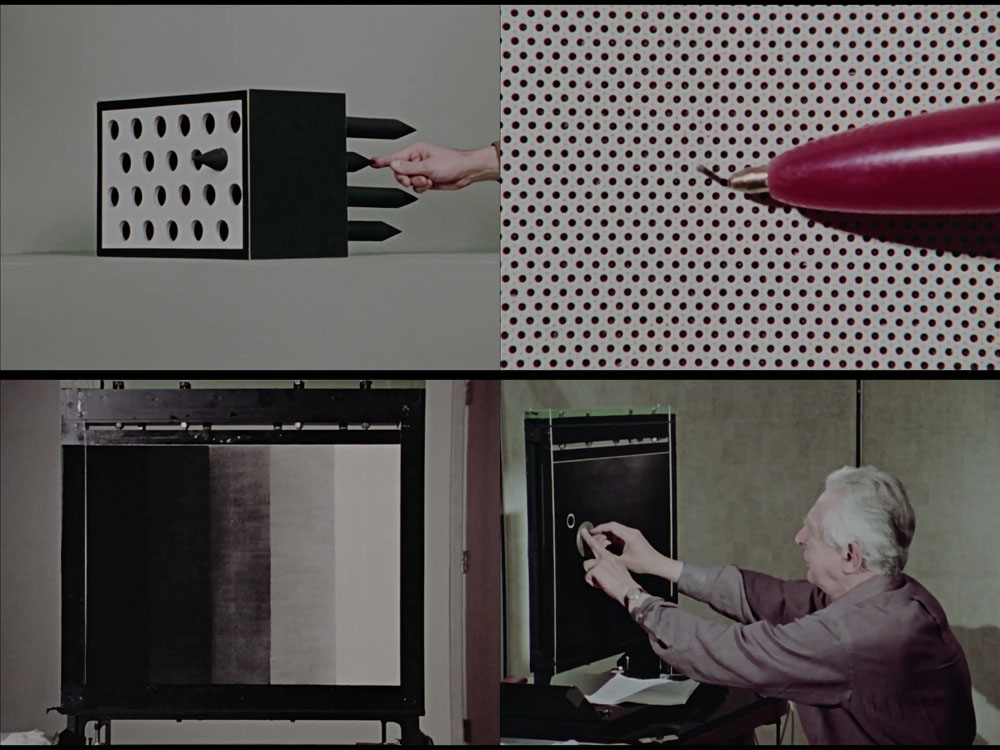
The pinscreen technique is almost always mentioned when Alexeieff and Parker’s work is being discussed but the structure and operation of the board hasn’t always been very clear. For a long time I thought that “pinscreen” was merely a useful name, and that the pins must be more like nails, rather like those desktop toys that mould your face or hand. This film from 1972, The Alexeieff-Parker Pin Screen [sic], opens with a detailed description of the device, immediately confirming that, yes, those really are thousands of tiny black pins set into a board. The documentary was made for the National Film Board of Canada by another great animator, Norman McLaren, who can be seen hovering in the background from time to time. McLaren and the NFB wanted to record Alexeieff and Parker discussing the pinscreen and its operation so a tutorial might be preserved for future animators.
pinscreen3.jpg

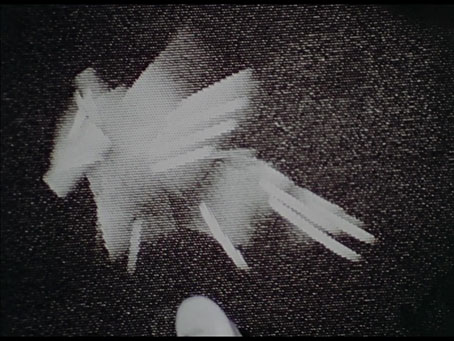
The pair are seen introducing a smaller version of their original pinscreen to a group of would-be users, a board containing 240,000 pins; the screen used to create Before the Law was four times the size with over a million pins. The operation of the device seems slow and cumbersome at first, especially when great care has to be taken to draw lines or shapes by raising or lowering the pins without damaging them at all. But having a surface that was both static yet manipulable must have offered advantages over more traditional animation methods using paint or charcoal. The most surprising detail for me was seeing Alexeieff and Parker working on both sides of the screen, with Alexeieff pushing in the pins to create light areas and Parker pushing them out again to return the area to its original black. The documentary ends with a short sequence showing animation experiments made by the students.

I said earlier that Alexeieff and Parker’s films can be hard to find but there was a DVD collection released a few years ago which I recall trying to order from some French website that wouldn’t co-operate. I thought it might be thoroughly unavailable by now but copies are still on sale at the very reliable Re:voir so I’ve just ordered one. For a taste of Alexeieff and Parker’s prowess with this kind of animation there’s En Passant (1944), two miraculous minutes illustrating a French-Canadian folk song.

Previously on { feuilleton }
The pinscreen works of Alexandre Alexeieff & Claire Parker
The Nose, a film by Alexandre Alexeieff & Claire Parker
Alexandre Alexeieff and Claire Parker
Quay Brothers posters

quays01.jpg

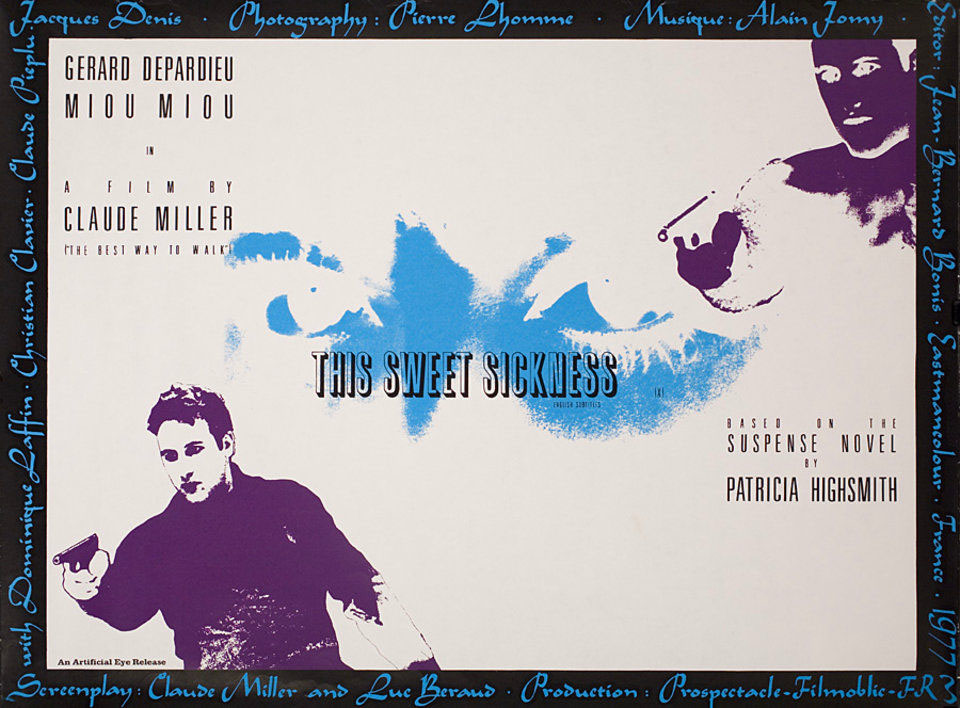
This Sweet Sickness (1977).

Looking around for Quay Brothers designs turned up an item I hadn’t seen before, a poster for the UK release of a French film by Claude Miller, This Sweet Sickness, starring Gérard Depardieu. I’ve not seen the film either, nor have I read the Patricia Highsmith novel on which it was based although a copy of the book has been sitting on my shelves for some time, together with a couple of other unread Highsmiths. The poster dates from just before the Quays started to get serious about their own film-making.

quays02.jpg

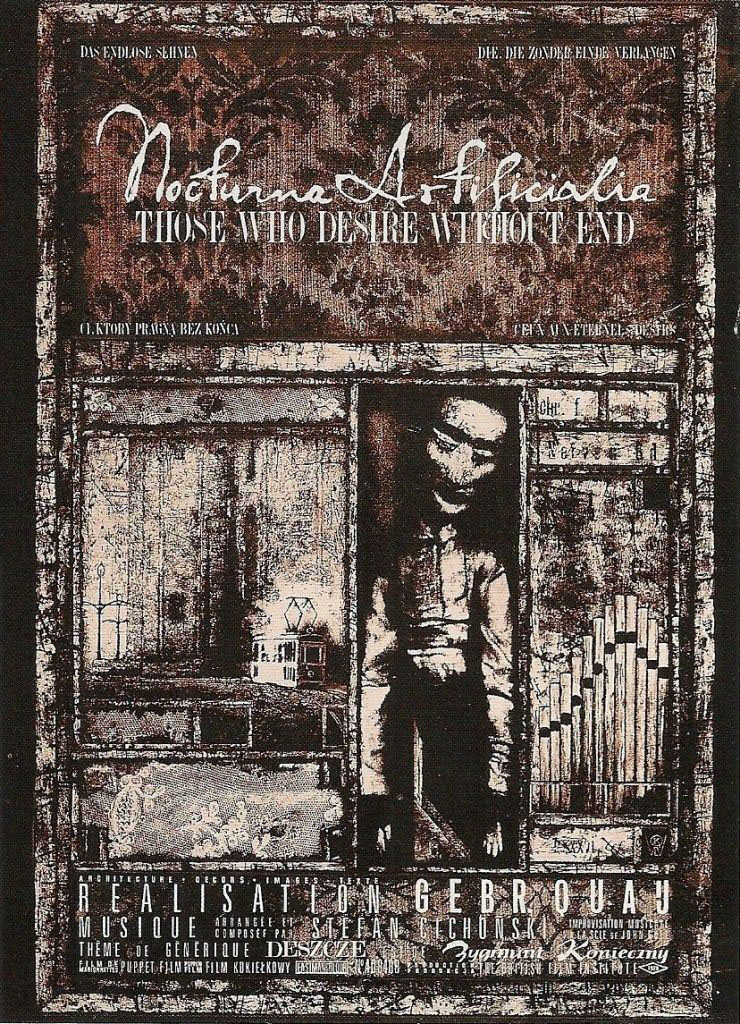
Nocturna Artificiala: Those Who Desire Without End (1979). The organ pipes, which don’t appear in the film, are an allusion to the improvised organ score by Stefan Cichonski.

Being graphic designers as well as film-makers puts the Quay Brothers in a very rare class, one where they not only make the films but also design the posters used to promote their films. Offhand, I can only think of the late Eva Švankmajerová as being in the same company so it’s perhaps fitting that her husband and artistic collaborator, Jan Švankmajer, was the subject of an early film by the Quays.

quays03.jpg

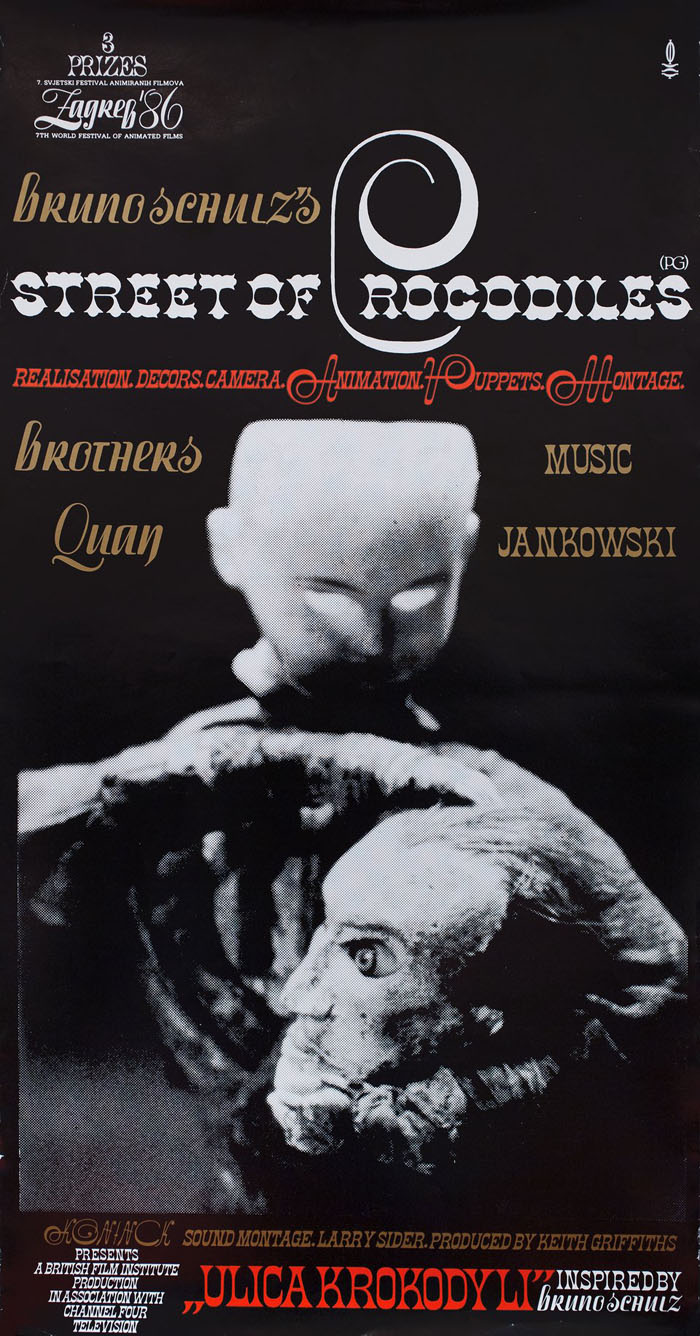
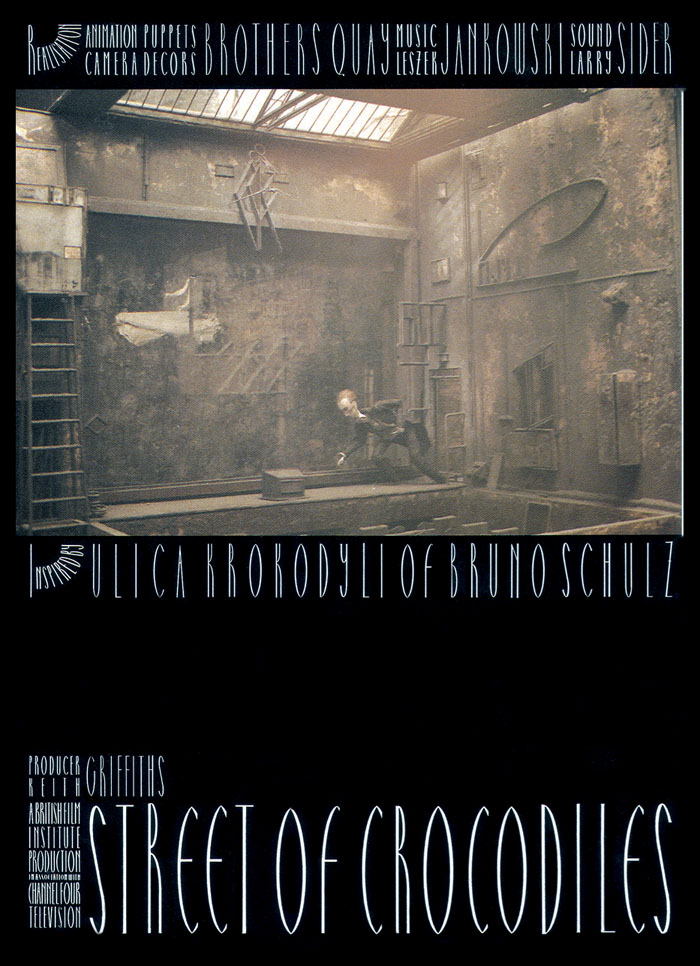
Street of Crocodiles (1986).

quays04.jpg

quays05.jpg

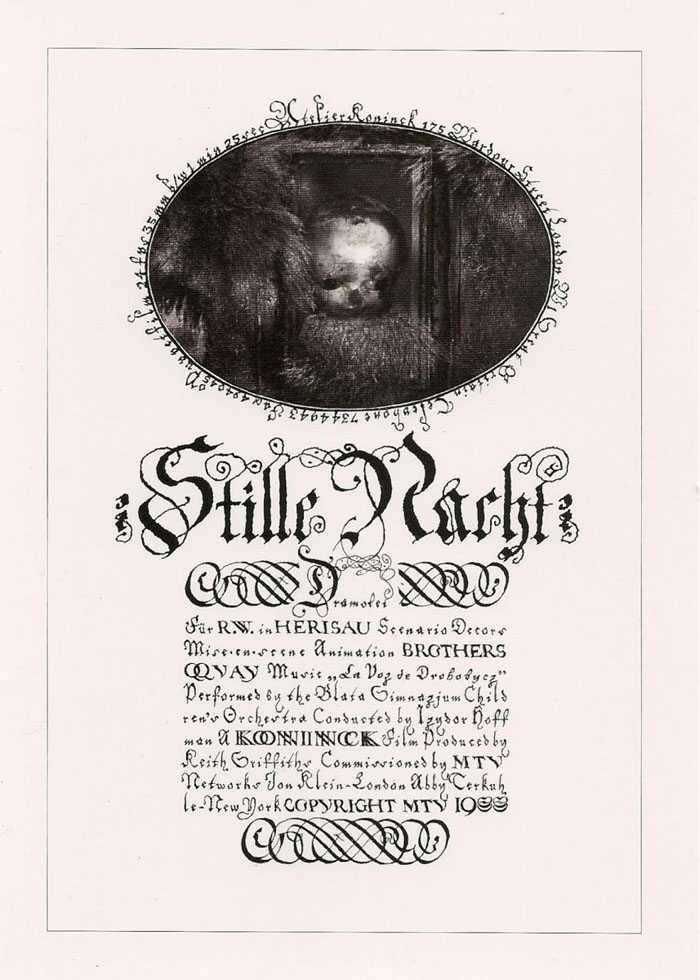
Stille Nacht: Dramolet (1988). An early use of Heinrich Holzmüller’s typographic designs.

Continue reading “Quay Brothers posters”

Weekend links 610

durer.jpg

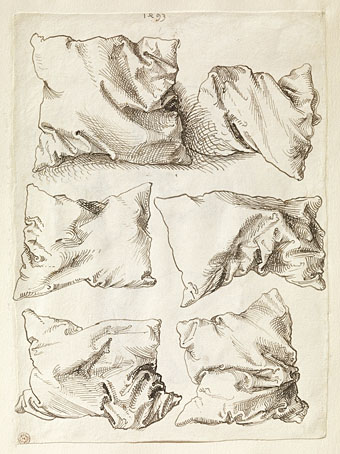
Pillow Studies (1493) by Albrecht Dürer.

• “Without ever writing a song, without ever fronting a group, Khan changed the face of British music.” Michael Hann talks to Morgan Khan about bringing New York Electro to the UK with his Streets Sounds label.

James Balmont offers “an introduction to Japan’s visceral cyberpunk cinema in five cult films”. This reminds me that I’ve not seen Shinya Tsukamoto’s Tetsuo films for years. Time to reacquaint myself.

• At Aquarium Drunkard: 15-minutes of Alice Coltrane from 1970, talking about her music and performing with Pharoah Sanders et al. Amazing.

Clive Hicks-Jenkins presents Beauty & Beast, an animated fairy tale made to showcase his toy theatre design.

• Carl Dreyer’s horror masterpiece, Vampyr (1932), is released on blu-ray by Eureka in May.

• At Wormwoodiana: Mark Valentine explores the mysteries of the Egg Language.

• DJ Food unearths paintings by Syd Mead for a Celcon Steel brochure, 1965.

• Jamie Sutcliffe enters The Strange World of Junji Ito.

• Mix of the week: Isolatedmix 117 by Refracted.

Keeley Forsyth‘s favourite music.

Electrocharge (1980) by Blackbeard | Electrodub1 (1980) by Chris Carter | Ano Electro (Andante) (1993) by The Sabres Of Paradise

Three short films by Marcell Jankovics

jankovics1.jpg

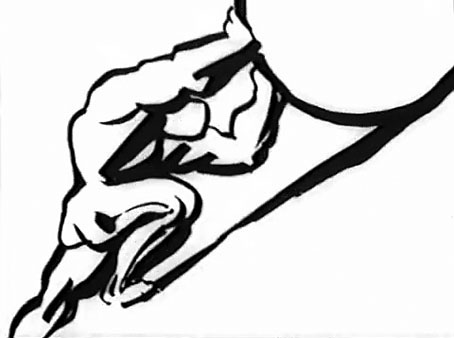
Sisyphus (1974).

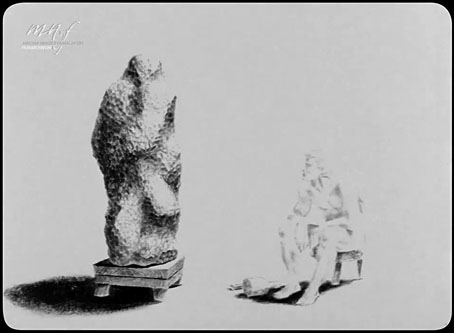
Hungarian animator Marcell Jankovics died in May last year but he lived just long enough to see his most celebrated feature, Son of the White Mare (1981), restored and released for the first time in the USA. The film—which I haven’t yet managed to see—is one of those that gets described as “most psychedelic ever”, a grand and rather unwise claim when other animated features such as Belladonna of Sadness (1973) and Paprika (2006) are very “psychedelic” in their own different ways (and both films I’d recommend, incidentally). Psychedelic or not, Son of the White Mare is beautifully styled and vividly coloured, to a degree that puts it at the polar extreme to these three shorts from Jankovics, all of which are exercises in hand-drawn, black-and-white minimalism.

jankovics2.jpg

The Struggle (1977).

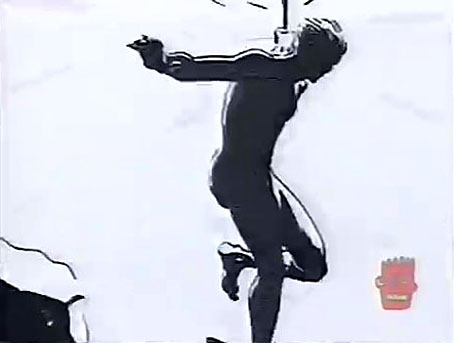
Hungarian animation from the Cold War era tends to be overshadowed by the films produced by the studios in Poland and the former Czechoslovakia, but animated films from all the Eastern Bloc nations were a fertile medium for symbolic expressions of frustration with the politics of the time. It’s a commonplace observation that repressive regimes inspire a flourishing of metaphor and symbolism in the arts. I don’t know whether Jankovics was being deliberately allegorical with these three shorts but when two of them concern familiar figures from Greek mythology you start to look for subtext. The films are all very brief but they’re also technically impressive. I especially like the way Sisyphus manages to convey a sense of colossal weight with nothing more than a few calligraphic flourishes.

jankovics3.jpg

Prometheus (1992).

Short films by Gérald Frydman

frydman01.jpg

Scarabus.

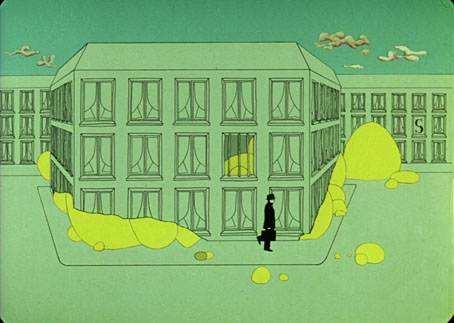
After writing about Gérald Frydman’s animated short Scarabus (1971) last year it’s taken me all this time to get round to watching the other films on his Vimeo channel, most of which are also animations. Scarabus was of interest for its deftly-crafted Surrealism, and there’s more of the same in some of these later films, especially Agulana. As with another Belgian director, Raoul Servais, Frydman directs all his films but doesn’t always animate them himself, hence the variety of art styles.

frydman02.jpg

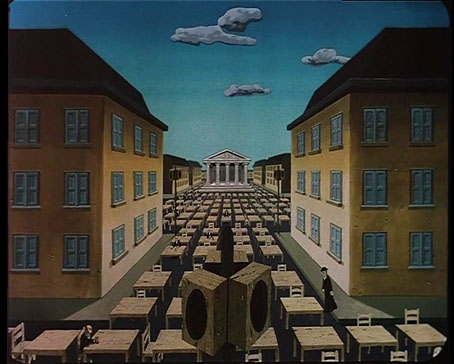
Agulana (1976) is a kind of sequel to Scarabus with human figures being menaced and oppressed in a transforming environment. The Magritte quotient in films such as this raises the question of whether Magritte-ness (for want of a better term) is a quality unique to René Magritte or a component of the general Belgian character. Jonathan Meades insists on the latter in an excellent film of his own about Belgium.

frydman03.jpg

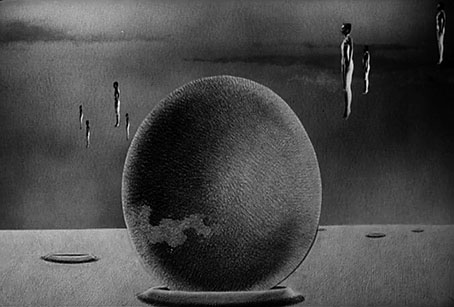
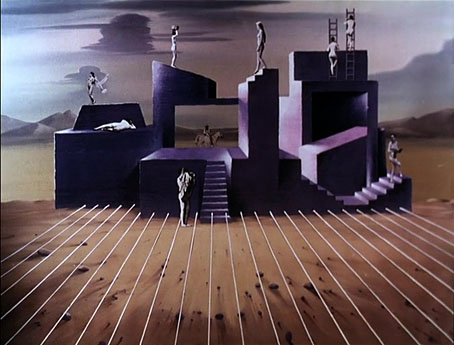
Alepha (1980) is more Surrealism, which in this case brings to mind the animated films of Piotr Kamler. Naked figures drift over landscapes filled with ambulatory spheres, vast spikes and other structures. Where Kamler favoured electronic soundtracks by Luc Ferrari and Bernard Parmegiani, Frydman has regular collaborator Alain Pierre provide a score of electronic drones.

frydman04.jpg

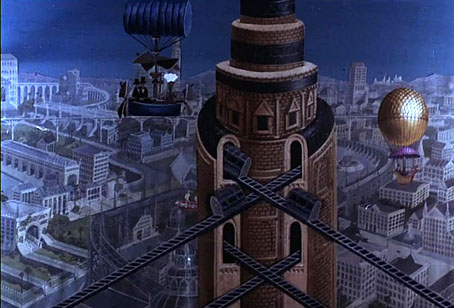
La Photographie (1983) is the first of two short films set in the 19th century. This one is little more than an anecdote, with a bored family forced to remain motionless while their photograph is taken, a process that lasts for the entire duration of the film. Outside the studio we see a Jules Verne wonderland of new inventions—dirigibles, rapid transport, electric light, typewriters and so on—where the frenetic activity contrasts with the inertia of the photographic process.

frydman05.jpg

Le Cheval de Fer (1984) is another photographic anecdote, this time concerning the wager prompted by an argument about whether a horse’s legs left the ground when it was galloping (and if so, at what point). The argument was famously settled by Eadweard Muybridge who invented a system to photographically record animal locomotion, thus paving the way for cinema, and for film animation.

frydman06.jpg

Les Effaceurs (1991) is Surrealism of a dark and disturbing kind with people urgently trying to scrub away their facial features.

Also on Frydman’s channel is La Sequence Silverstein (2000), a short science-fiction scenario which he wrote but didn’t direct. This one is live action and with dialogue in unsubtitled French. It not bad but I prefer the animations.

Previously on { feuilleton }
Raoul Servais: Courts-Métrages
Scarabus, a film by Gérald Frydman
L’Araignéléphant
Le labyrinthe and Coeur de secours
Chronopolis by Piotr Kamler