Weekend links 663

wt.jpg

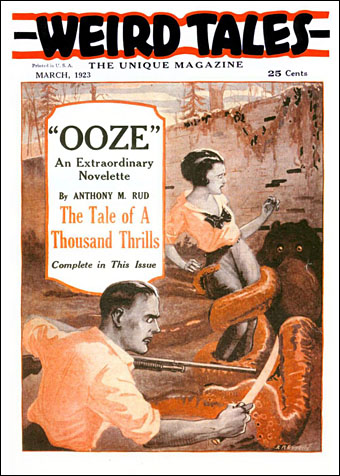
Weird Tales celebrates its centenary this month (although the first issue was on the shelves in February, 1923). Thirty years later, one of the last issues from the initial run had Slime by Joseph Payne Brennan as the story featured on its cover. The magazine maintained a viscous consistency if nothing else. Tentacular art by RR Epperly.

• A big surprise in yesterday’s Bandcamp Friday was the announcement of Singularity, a new album by synth ensemble Node. Or new-ish since the previously unreleased recording is almost 30 years old:

Singularity is the legendary “lost” Node album. Recorded at the same time as their original sessions in 1994 this has DiN stalwart Dave Bessell join Buller & Flood alongside original member Gary Stout who was later replaced by Mel Wesson for the two DiN releases. Presented here for the first time, mastered to modern standards but otherwise untouched and in its original form and recorded to two track with no overdubs.

Node have never been very prolific—two decades separate their first album from their second—so this was very welcome. The new release includes a bonus addition of the 16-minute version of Terminus, one of their best pieces which has only been available previously on a scarce CD-single.

• Steven Watson at Print Mag on skeuomorphic magazine design that turns print into play. Now I want to design a book that fits inside a cassette box.

• RIP jazz giant Wayne Shorter, and David Lindley, co-founder of one of my favourite psychedelic groups, the incredible Kaleidoscope.

• S. Elizabeth at Unquiet Things on The Sensitive Plant, a poem by Percy Shelley illustrated by Charles Robinson.

• Christopher Parker at Smithsonian Magazine asks “Did Salvador Dalí paint this enigmatic artwork?” Yes, he did.

Tangerine Dream in 1973 playing Atem live (with pre-recorded drums) on Spotlight, an Austrian TV show.

• New music: Mohanam by Shakti, and Area Code 601 by William Tyler & The Impossible Truth.

• At Spoon & Tamago: Bento boxes inspired by notable Japanese architecture.

• At Tentaclii: Ian Miller cover art for metal albums.

Northern lights seen across the UK.

New Blue Ooze (1970) by Kaleidoscope | Ooze Out And Away, Onehow (1986) by Harold Budd/Simon Raymonde/Robin Guthrie/Elizabeth Fraser | Ooze (1986) by 23 Skidoo
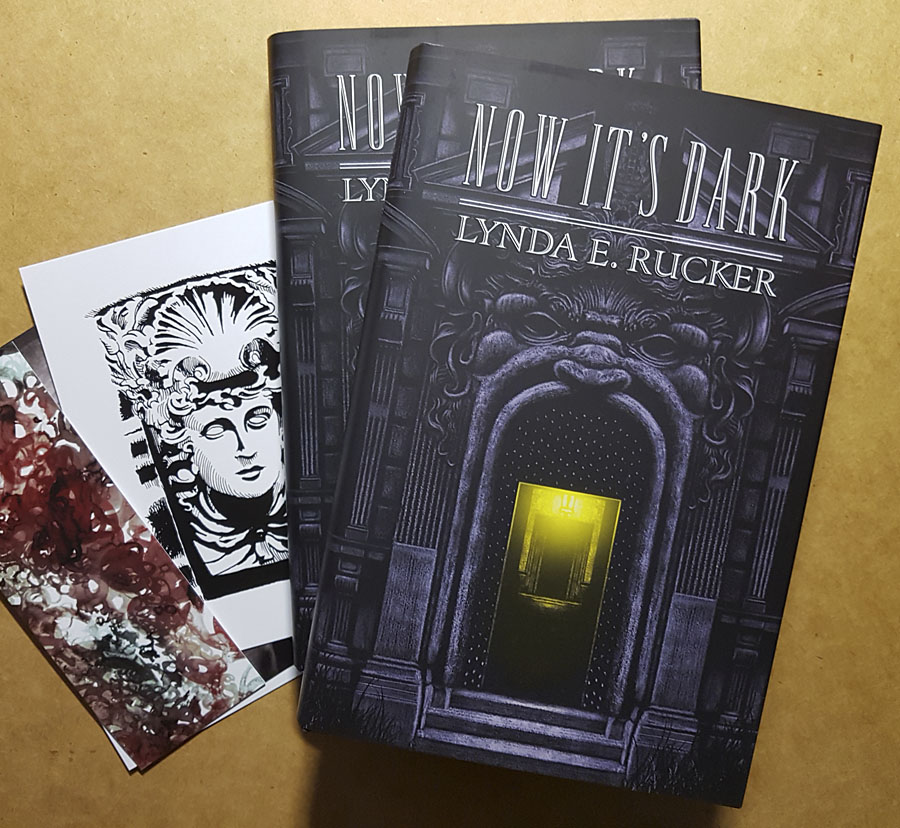
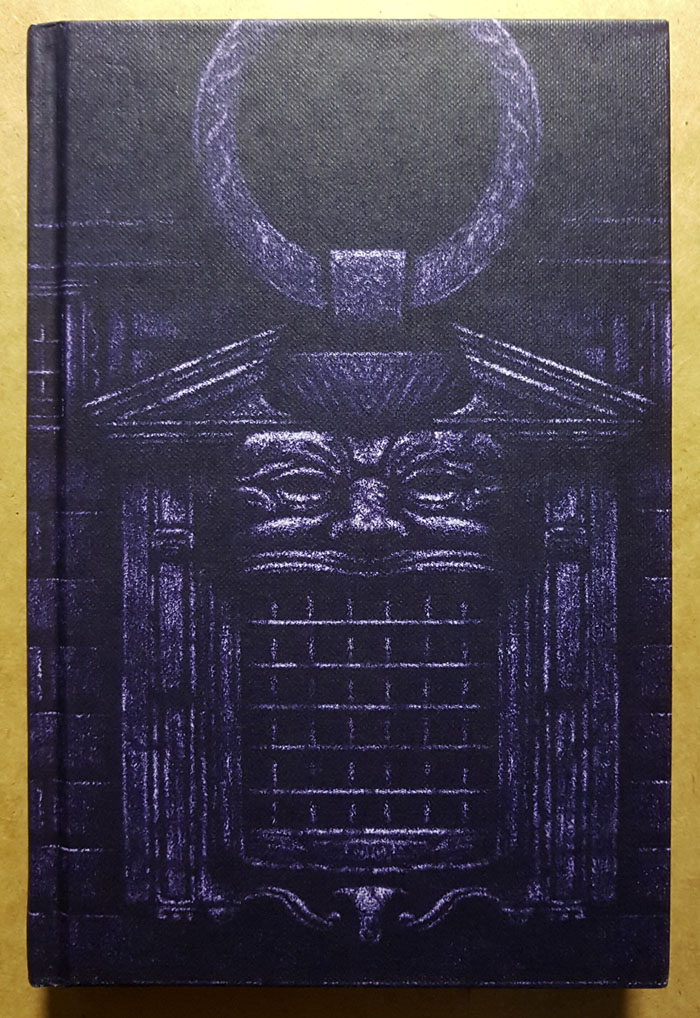
Now it’s here

rucker1.jpg

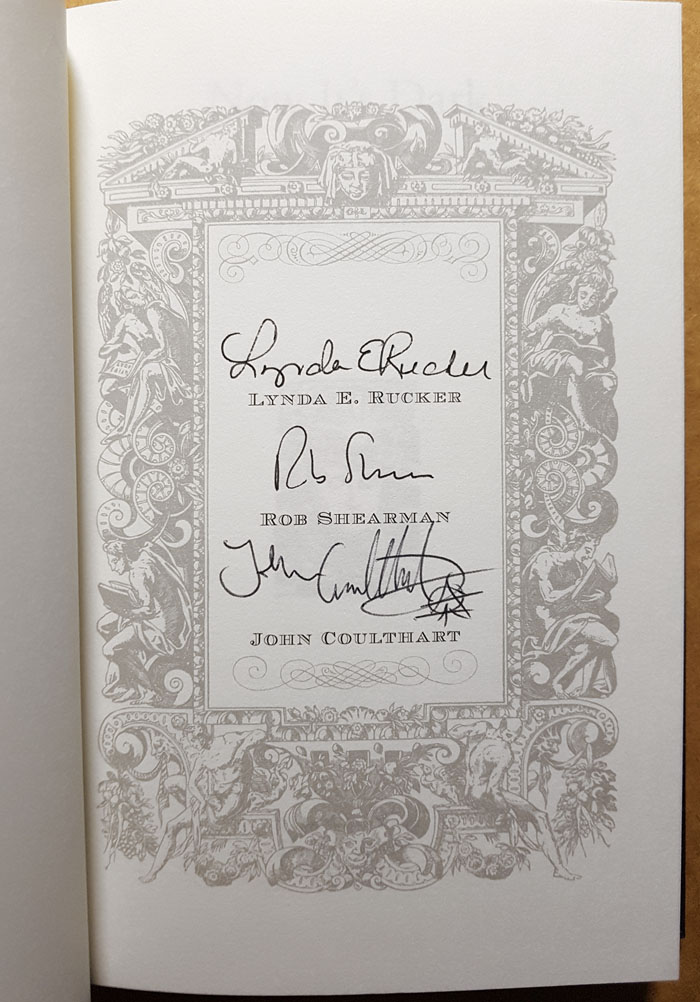
Arriving in the post this week, the Lynda E. Rucker story collection with my art on the dustjacket and the printed boards. This is a typically high-quality production from Swan River Press which comes with the usual complement of postcards and bookmark. I’ve already written something about the art but now the book is in print you can see the texture of the stock that covers the boards. I like the way this works with the texture of the drawing.

The book is available now. All copies are signed by the author, by Rob Shearman (who wrote the introduction), and by myself.

rucker2.jpg

rucker3.jpg

The Poster: An Illustrated Monthly Chronicle

poster01.jpg

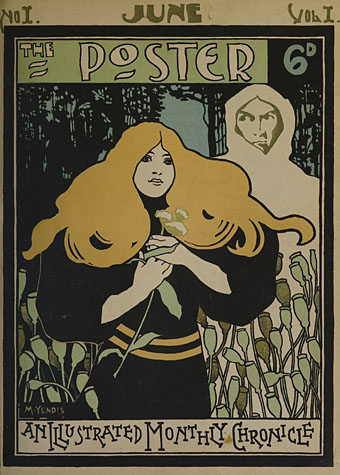
Art by Mosnar Yendis.

This is the kind of thing I love to find: five volumes of a British magazine devoted to poster artists and their creations being published at a time—1898 to 1900—when the Art Nouveau style was spreading its convolvulus-like tendrils across Europe. Poster art is a predominantly commercial medium which means the articles are more concerned with the mechanics of the business than you’d find in a rival publication such as The Studio. Artists (male and female) are interviewed, trends are analysed, there are at least two features examining what the magazine calls “cribbing” (or one poster swiping from another), also a profile of the “Aerograph”, an early model of that fixture of 20th-century illustration, the airbrush. And when it comes to illustration, The Poster is as much concerned with the practice as with the posters themselves when so many of the people featured were also illustrating books or magazines. The publishers’ admiration of Aubrey Beardsley’s work is shown in the amount of mentions he receives as well as the articles they run. Beardsley had died a few months before the magazine was launched but his influence and reputation was firmly established by this time.

poster13.jpg

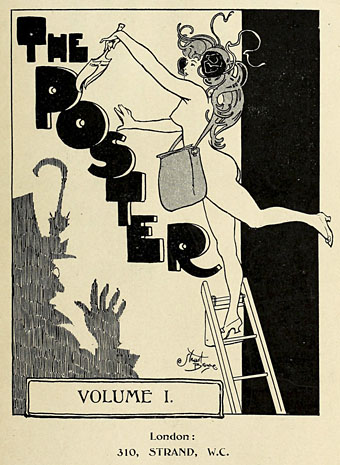
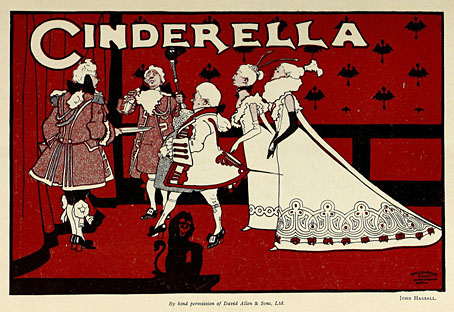
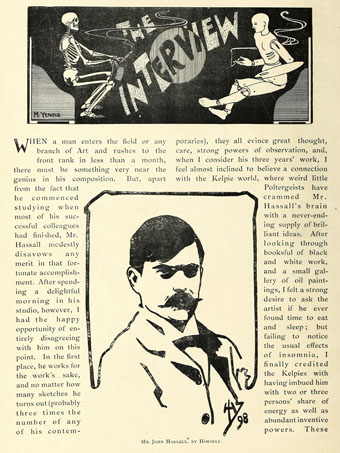
All five volumes of The Poster contain a wealth of pictorial material so, with the exception of the Sidney Sime drawing, the examples shown here are from the first volume alone. Below you’ll find two illustrations by Charles Robinson pastiching the Beardsley style which the magazine claims are the best imitations they’ve seen, a debatable opinion but I hadn’t seen the drawings before. The first volume also includes an interview with illustrator John Hassall, a name that few people today would recognise, while those that do may confuse him with similarly-named musicians. Hassall’s work is still known to many Britons, however, via his “Jolly Fisherman“, a poster for the Great Northern Railway promoting the seaside resort of Skegness. The Cinderella picture below is one of many Hassall pieces in the magazine.

The Poster, Volume 1
The Poster, Volume 2
The Poster, Volume 3
The Poster, Volume 4
The Poster, Volume 5

poster10.jpg

poster11.jpg

poster12.jpg

Continue reading “The Poster: An Illustrated Monthly Chronicle”

Weekend links 661

rubin.jpg

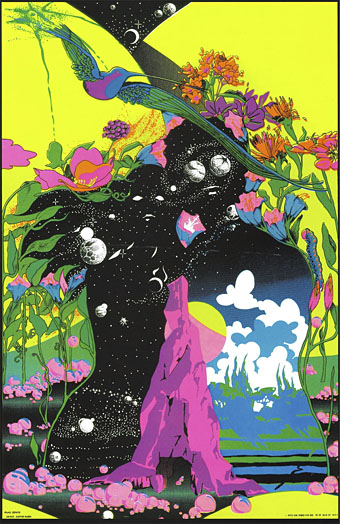
Zephyr (1970), a blacklight poster by Jupiter Rubin. Via.

• I wouldn’t usually expect Clark Ashton Smith’s Zothique to be mentioned at Literary Hub for any reason, but there it is. Emily Temple recommends some of the best stories from a century of Weird Tales that you can read online.

• Mixes of the week: A mix for The Wire by Gamut Inc, and The Last of Us, “a non-stop mix of ambient soundscapes, experimental electronics and modern classical music”.

• “…Yaggy believed that wonder was the helpmate of learning.” Sasha Archibald on Levi Walter Yaggy’s Geographical Maps and Charts (1887/93).

Stylistically, Beardsley’s pictures for Salome are among his most derivative and original. In the sharpness of their lines and great swaths of black and white, we see the well-documented influences of Japanese woodcuts and Ancient Greek vase-painting. And yet, Beardsley’s work bridges these grand traditions of East and West with such fresh dynamism and taboo as to be undeniably, and ultimately definitionally, Nouveau.

Mirror and Window Both: The Brief Superabundance of Aubrey Beardsley by A. Natasha Joukovsky

• New music: Rhinog Fawr by Somatic Responses, and Sargo/Posidonia by Sleep Research Facility/Llyn Y Cwn.

• “Why is there such a voracious consumer appetite for miniature things?” asks Steven Heller.

• At Dennis Cooper’s: Spotlight on…Julio Cortázar Blow Up and other Stories (1967).

• At Unquiet Things: The Prolific Pioneering Pulp Art Of Ed Emshwiller.

Random images from DJ Food’s desktop.

Miniature Sun (1989) by XTC | Adventures In A Miniature Landscape (2009) by Belbury Poly | Miniature Magic (2020) by Plone

Great Work of Time

greatwork.jpg

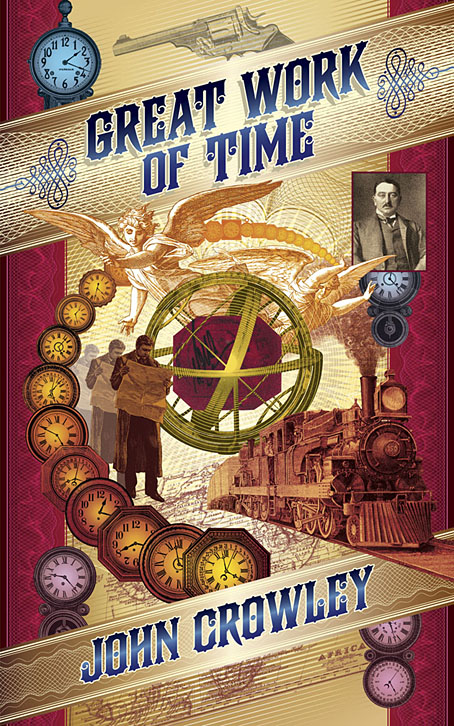
More science fiction. I said a couple of weeks ago that I was up to date with all my cover art from last year but I’d forgotten about this return to Victoriana. In mitigation, I started work on the design in January last year. I’ve done a lot of other work in the meantime while waiting for the book to be announced on the publisher’s website, which it was last month.

Great Work of Time is an award-winning novella by John Crowley that Subterranean Press are reprinting in a numbered edition signed by the author. Crowley is an exceptional writer so I was very pleased to be asked to work on this one. I’ve also designed the interior—which will be printed with black and magenta inks—and created a small number of spot illos. The story concerns a group of select individuals, The Otherhood, who attempt to perpetuate the British Empire by manipulating history, a scheme that might be considered the colonialism of time as well as space. The unintended consequences that result from this are more complicated and weirder than you usually find in time-travel stories, while Crowley’s conception of time is a lot more sophisticated than the stereotype of a linear route which temporal voyagers enter or leave at different places. I could say more but doing so would expose the workings of a very elaborate piece of clockwork. This is one of those stories that you finish reading and immediately want to read again.

I’m still not sure when Great Work of Time will be published but the pre-order page is here.

Previously on { feuilleton }
The Time Machine