Weekend links 286

ahmed.jpg

One of Faig Ahmed‘s melted Azerbaijani rugs.

• “I asked [William Burroughs] about the future of typography and he said that letterforms would go back to hieroglyphs, similar to the ancient Egyptians.” Jonathan Barnbrook discussing the thinking behind his design for blackstar, the new David Bowie album.

• “…a thick, yellow fog fills the air, sinks, crawls on the very ground; at 30 paces a house or a steam-ship look like ink-stains on blotting paper.” PD Smith review London Fog, a history of the capital’s lethal pea-soupers by Christine Corton.

• At Rue Morgue: Dejan Ognjanovic asks seven writers and editors why HP Lovecraft is still relevant. Related: big thanks to Paul Gallagher for plugging my Lovecraft calendar at Dangerous Minds.

• Some end-of-year weirdness from Moon Wiring Club: Into The Chattering Ground, a sample of the new releases available at the MWC website.

Elaine Lustig Cohen: accidental graphic designer. Related: book covers and other designs by Elaine Lustig Cohen.

• The tomb that architect John Soane built for his wife inspired the shape of Gilbert Scott’s red telephone box.

• Mix of the week: Stephen O’Malley at the controls of Stuart Maconie’s Freak Zone on BBC Radio 6.

• At Dirge Magazine: S. Elizabeth talks to Alice Rogers about art and occultism.

Simon Callow on taking 25 years to write a three-volume life of Orson Welles.

Todd Haynes on Cate Blanchett, Saul Leiter and Queer Cinema.

Le Freak (1978) by Chic | Freak (2003) by LFO | Jovan Freak (Rune Lindbaek Nomaden Mix) (2012) by Georges Vert

Digging the Rubble

rubble01.jpg

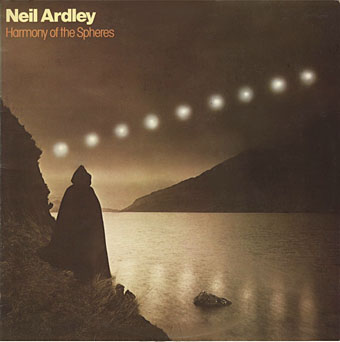
1: The Psychedelic Snarl.

A few words in praise of Rubble, the 20-disc collection of (mostly) British psychedelic singles released by the Bam Caruso label from 1984 to 1991. A reader of Rob Chapman’s Psychedelia and Other Colours would find the Rubble series an indispensable companion to the second half of the book which explores the unique styles of British psych. Ideally you’d read the book while having these and other compilations close at hand, something I didn’t manage so I’ve been going through the discs myself this week, listening out for some of the many singles that Chapman discusses. The Rubble title is a nod to Lenny Kaye’s 1972 collection Nuggets: Original Artyfacts from the First Psychedelic Era, 1965–1968, the first reappraisal of the garage/psych era whose success spawned Nuggets II: Original Artyfacts from the British Empire and Beyond, 1964-1969, a not-so-good attempt to do the same for the UK, and Children of Nuggets: Original Artyfacts from the Second Psychedelic Era, 1976-1995. The original Nuggets was followed by the long-running Pebbles series which sprawls over 28 discs collecting obscure garage singles.

rubble02.jpg

2: Pop-Sike Pipe Dreams.

What I like about the Rubble series, apart from its covering a favourite zone of musical history, is the way that each volume is titled in a suitable manner beyond a mere number: the title of volume 8, All The Colours Of Darkness could have been used by Coil during their LSD period. Then there’s the sleeve designs by the great Phil Smee, one of the founders of Bam Caruso, the collector of many of the featured singles, and a first-rate artisan of psychedelic graphics: there’s a Louis Wain cat on volume 2, and more of those letterforms by Roman Cieślewicz on volume 10. Smee deserves a post of his own but covering such a lengthy career would be a daunting task: Discogs lists 784 separate releases, and that’s only his design work. The design on the first run of Rubble albums was credited to “Harvey S. Williams”, a Smee pseudonym playing on the name of Elektra Records art director William S. Harvey. Harvey S. Williams was also the designer of the short-lived and rather wonderful Bam Caruso magazine, Strange Things Are Happening, issues of which are advertised in the inner sleeves of the early Rubble albums. (The magazine borrowed its title from a 1968 single by Rings and Things which is featured on Rubble 4.)

rubble03.jpg

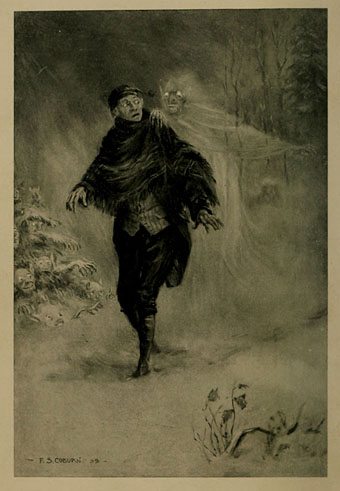
3: Nightmares In Wonderland.

The Rubble series has been reissued on CD many times, and is currently available as The Rubble Collection, a glossy cube containing all 20 discs in card sleeves together with two booklets that reprint Phil Smee’s original sleeve notes and band photos. The Rubble albums sound a little rough today when many of the songs which were taken directly from old singles have been resurrected and can be heard elsewhere in better quality. Subsequent compilations have also cherry-picked many of the better selections but this is still the ideal place to start if you want to immerse yourself in the toyshop/kitchen sink surrealism that is British psychedelia.

• See also: Richard Norris reminiscing about working at Bam Caruso, and choosing 20 favourite British psych records.

rubble04.jpg

4: The 49 Minute Technicolour Dream.

Continue reading “Digging the Rubble”

Weekend links 284

molinier.jpg

Les Hanel I by Pierre Molinier. There’s more at The Forbidden Photo-Collages of Pierre Molinier.

• Western anti-hero Josiah Hedges, better known as Edge, was the creation of prolific British author Terry Harknett. The famously violent Edge novels, credited to “George G. Gilman”, were ubiquitous on bookstalls in the 1970s. They were Harknett’s most successful works, and are still collectible today; if you’re interested there are 61 of them to search for. Amazon Originals have just launched Edge as a new TV series although anything for a mass audience is unlikely to retain the exploitative qualities of novels that often sound like pulp precursors of Blood Meridian.

Related: Terry Harknett discusses the creation of the Edge series at Drifter’s Wind; Ben Bridges on Harknett’s career, including a look at the writer’s many other Western and thriller novels; Bill Crider on Edge, Harknett and the British group of Western novelists known as “The Piccadilly Cowboys”.

• Boyd McDonald’s queer-eye film guide, Cruising the Movies: A Sexual Guide to Oldies on TV (1985), has been republished by Semiotext(e) in an expanded edition. Related: True Homosexual Experiences: Boyd McDonald and Straight to Hell by William E. Jones.

• “…a film that plumbs the dark recesses of all our imaginations: dangerous, glorious, absurd, vivid and terrifying by turns.” Charlotte Higgins on her favourite film, The Red Shoes (1948).

Art Forms from the Abyss, a new collection of illustrations by Ernst Haeckel for the report of the HMS Challenger expedition (1872–76). Related: Silentplankton.com

• “The biggest kick I ever get is to find myself pursuing some group of images without knowing why,” says M. John Harrison in conversation with Tim Franklin.

• “Plots didn’t interest him much. They were just pegs on which to hang characters and language.” Barry Day on Raymond Chandler.

• “Zdeněk Liška’s music thrived in unrealities,” says David Herter in a lengthy appraisal of the great Czech film composer.

• At Dirge Magazine: S. Elizabeth delights in the dark decor of Dellamorte & Co.

• Nabokov scholar Brian Boyd selects his ten favourite Nabokov books.

• Mix of the week: The Ivy-Strangled Path Vol. XIII by David Colohan.

Take me to the cosmic vagina: inside Tibet’s secret tantric temple.

• Pour Un Pianiste (1974) by Michèle Bokanowski | 13’05” (1976) by Michèle Bokanowski | Tabou (1992) by Michèle Bokanowski

Graft by Matt Hill

graft1.jpg

UK edition.

This latest cover design has been made public much sooner than some of the other things I’ve been working on this year. Graft is another cover for Angry Robot, a novel set in near-future Manchester by local author Matt Hill. The title plays on the multiple meanings of the word “graft”, not only the colloquial term for work (honest or otherwise) but also the sense of a medical graft. Once again, Barnes & Noble have provided a convenient précis:

Manchester, 2025. Local mechanic Sol steals old vehicles to meet the demand for spares. But when Sol’s partner impulsively jacks a luxury model, Sol finds himself caught up in a nightmarish trans-dimensional human trafficking conspiracy.

Hidden in the stolen car is a voiceless, three-armed woman called Y. She’s had her memory removed and undertaken a harrowing journey into a world she only vaguely recognises. And someone waiting in the UK expects her delivery at all costs.

Now Sol and Y are on the run from both Y’s traffickers and the organization’s faithful products. With the help of a dangerous triggerman and Sol’s ex, they must uncover the true, terrifying extent of the trafficking operation, or it’s all over.

Not that there was much hope to start with.

A novel about the horror of exploitation and the weight of love, Graft imagines a country in which too many people are only worth what’s on their price tag.

graft2.jpg

US edition.

The challenge with this one was to create something that might be read as futuristic yet also included elements of the real Manchester. All the buildings are worked up from photos of my own, many of them taken during a long day out spent wandering around the Cornbrook area and Salford Quays. The latter has been extensively redeveloped in recent years so there’s a lot of new architecture out there, including the new BBC headquarters. The elegant pylons are the supports of the Lowry Bridge which can be raised to allow ships into the docks.

I couldn’t settle on a final colour scheme for this one so I made a number of variations then let author and publisher decide. This resulted in three covers: the UK edition, US edition and e-book. It took a while but I think I’m happiest now with the blue-and-purple version. Matt Hill talks about Graft here.

graft3.jpg

E-book.