Weekend links 284

molinier.jpg

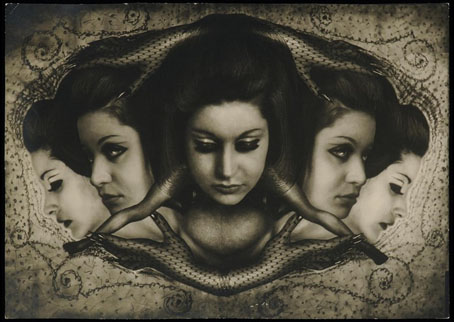
Les Hanel I by Pierre Molinier. There’s more at The Forbidden Photo-Collages of Pierre Molinier.

• Western anti-hero Josiah Hedges, better known as Edge, was the creation of prolific British author Terry Harknett. The famously violent Edge novels, credited to “George G. Gilman”, were ubiquitous on bookstalls in the 1970s. They were Harknett’s most successful works, and are still collectible today; if you’re interested there are 61 of them to search for. Amazon Originals have just launched Edge as a new TV series although anything for a mass audience is unlikely to retain the exploitative qualities of novels that often sound like pulp precursors of Blood Meridian.

Related: Terry Harknett discusses the creation of the Edge series at Drifter’s Wind; Ben Bridges on Harknett’s career, including a look at the writer’s many other Western and thriller novels; Bill Crider on Edge, Harknett and the British group of Western novelists known as “The Piccadilly Cowboys”.

• Boyd McDonald’s queer-eye film guide, Cruising the Movies: A Sexual Guide to Oldies on TV (1985), has been republished by Semiotext(e) in an expanded edition. Related: True Homosexual Experiences: Boyd McDonald and Straight to Hell by William E. Jones.

• “…a film that plumbs the dark recesses of all our imaginations: dangerous, glorious, absurd, vivid and terrifying by turns.” Charlotte Higgins on her favourite film, The Red Shoes (1948).

Art Forms from the Abyss, a new collection of illustrations by Ernst Haeckel for the report of the HMS Challenger expedition (1872–76). Related: Silentplankton.com

• “The biggest kick I ever get is to find myself pursuing some group of images without knowing why,” says M. John Harrison in conversation with Tim Franklin.

• “Plots didn’t interest him much. They were just pegs on which to hang characters and language.” Barry Day on Raymond Chandler.

• “Zdeněk Liška’s music thrived in unrealities,” says David Herter in a lengthy appraisal of the great Czech film composer.

• At Dirge Magazine: S. Elizabeth delights in the dark decor of Dellamorte & Co.

• Nabokov scholar Brian Boyd selects his ten favourite Nabokov books.

• Mix of the week: The Ivy-Strangled Path Vol. XIII by David Colohan.

Take me to the cosmic vagina: inside Tibet’s secret tantric temple.

• Pour Un Pianiste (1974) by Michèle Bokanowski | 13’05” (1976) by Michèle Bokanowski | Tabou (1992) by Michèle Bokanowski
Ballet Adagio, a film by Norman McLaren

ballet.jpg

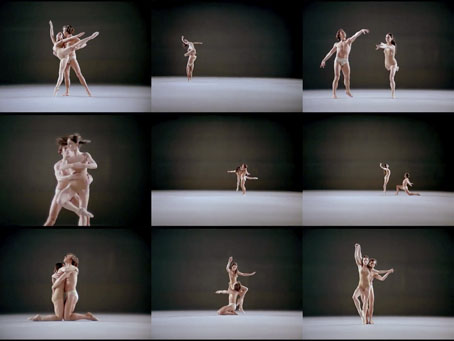
In which Norman McLaren once more brings film technology to the world of dance. McLaren’s earlier Pas de Deux (1968) used optical printing to multiply the movements of the dancers in a manner similar to Marey’s chronophotographs; in Ballet Adagio the entire dance is shown in slow motion, a common enough technique but one you seldom see applied to ballet. The music is Albinoni’s Adagio. The latter technique was employed again in the homoerotic Narcissus (1983) which can be seen in full at the NFB website.

Previously on { feuilleton }
Lodela, a film by Philippe Baylaucq
Pas de Deux by Norman McLaren
Norman McLaren

Eurydice…She, So Beloved, a film by the Brothers Quay

eurydice.jpg

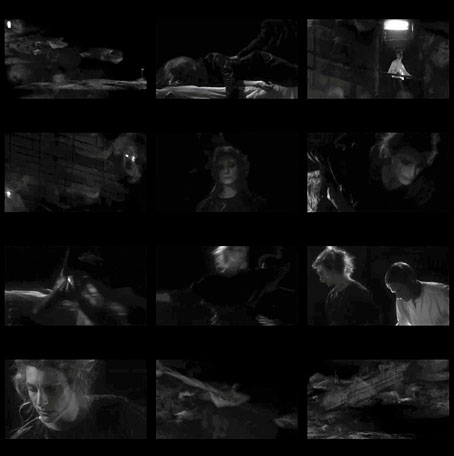
Another recent short from the Quays that’s yet to be given a wider release, Eurydice…She, So Beloved (2007) is an opera/dance piece subtitled “Film ballet in homage to the 100th anniversary of Claudio Monteverdi’s Orfeo“. Orfeo (Simon Keenlyside) sings an aria while Hermes (Kenneth Tharp) rouses Eurydice (Zenaida Yanowsky) from her sleep in a suitably Stygian and rather industrial Underworld. Watch it here.

Elsewhere on { feuilleton }
The Quay Brothers archive

Oskar Schlemmer’s Triadic Ballet

schlemmer.jpg

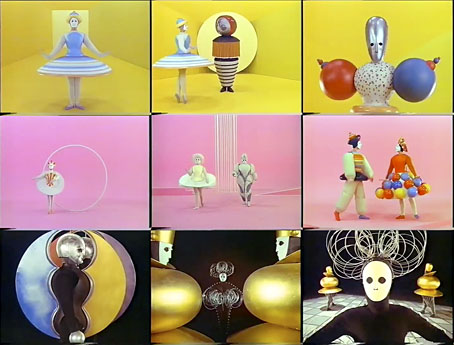
Oskar Schlemmer’s Triadic Ballet of the 1920s is one of the more famous products of the Bauhaus movement, a radical reinvention of the medium which encased the dancers in cumbersome costumes. The outfits and stage designs are familiar from Bauhaus histories but you’re less likely to see an actual performance, something that’s possible with this 30-minute film made in 1970. The ballet is in three acts: yellow, pink and black. Erich Ferstl wrote the music for the filmed reconstruction by Margarete Hasting, the original score by Paul Hindemith being lost.

The ballet has additional interest for me in having influenced part of the Reverbstorm book. Oskar Schlemmer’s Bauhaus logo is reworked in the opening and closing pages together with other Bauhaus-derived graphics, but I also looked at Schlemmer’s ballet costumes when I was planning the final section which required a stylised transformation of Lord Horror. In the end I used a sketch by one of Schlemmer’s pupils, Klaus Barthelmess, for the Horror figure but the Barthelmess drawing was also of a dancer, and is very similar to some of Schlemmer’s designs, especially the silver-headed robot-like figures that appear in the black section of the ballet.

Previously on { feuilleton }
Reverbstorm: Bauhaus Horror

The Devil’s Cabaret

devil1.jpg

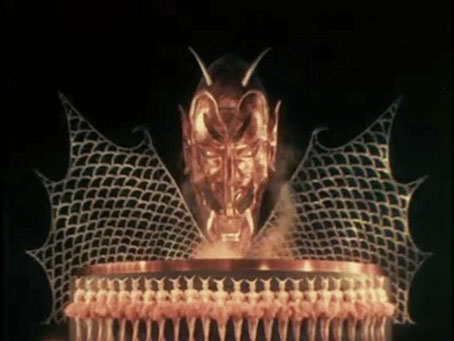
Halloween approaches so here’s a frivolous piece of Hollywood Diablerie. The Devil’s Cabaret (1930) was one of several short films made to showcase dance sequences shot for The March of Time, an MGM musical abandoned by the studio halfway through production. The footage from the earlier film is a short ballet sequence featuring a company of horned ballerinas dancing around an enormous, leering Devil’s head. Dimitri Tiomkin composed the music. All the footage was shot using an early Technicolor process so the film is subtitled “A Colortone Novelty”.

devil2.jpg

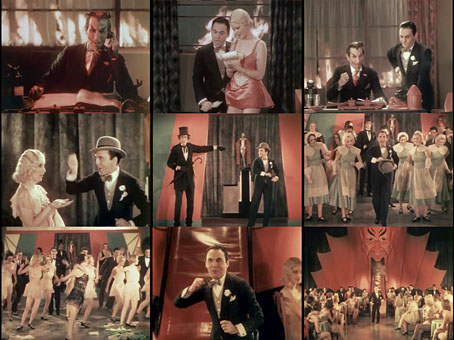
The framing narrative is a sequence of short sketches that offend many of the principles the Hays Code was brought in to protect a few years later. An uncredited Charles Middleton (Ming the Merciless in the Flash Gordon films) is a CEO-like Satan urging his Vice President Howie Burns (geddit?) to counter Heaven’s successes by bringing more souls to Hades (the word “Hell” only gets used at the end but after 1934 it was banned from use altogether). Burns does this by interrupting a religious meeting on Earth with a jazzy dance sequence that turns into a strip show; everyone in the audience rushes to join the damned. Once in Hades the newcomers are treated to the March of Time ballet. Elsewhere there’s some laboured humour, references to the Wall Street Crash and Prohibition, and a fair amount of salacious dialogue. Films such as these are always a good reminder of how risqué Hollywood could be before everyone adopted the production code. (Thanks to Gabe for the tip!)

The Devil’s Cabaret: part one | part two

Previously on { feuilleton }
Chocolate devils
Harry Lachman’s Inferno